Amethyst and rose quartz are both varieties of quartz, so they sit at the same hardness, take the same care and wear together easily. Amethyst is traditionally kept for calm and clarity, rose quartz for warmth and self-kindness. This guide covers what each stone brings, how to wear the pair and how to look after them.
Key takeaways
- Both stones are quartz, sitting at 7 on the Mohs scale with no cleavage, so they can be worn and stored together with no hardness mismatch to manage.
- Amethyst is the violet variety, coloured by traces of iron in the crystal structure. Rose quartz is the pink variety, its colour attributed to microscopic inclusions aligned inside the stone.
- In the crystal tradition amethyst is kept for calm and clear thinking, rose quartz for warmth, patience and self-kindness. The two are used as a companionable pair rather than a competing one.
- Alternating beads, paired bracelets, a two stone pendant layer or one stone in each hand during quiet time are the formats people settle on most often.
- Care is identical: warm soapy water, no ultrasonic or steam cleaners, and no prolonged direct sun, because both colours can fade with sustained light.
Why are amethyst and rose quartz paired so often?
They are paired because the two halves of the combination do different jobs. Amethyst is long associated with calm, clear thinking and rest, while rose quartz is associated with warmth, tenderness and self-kindness. Practically, both stones are quartz, so the pair wears as one set with no hardness mismatch to work around.
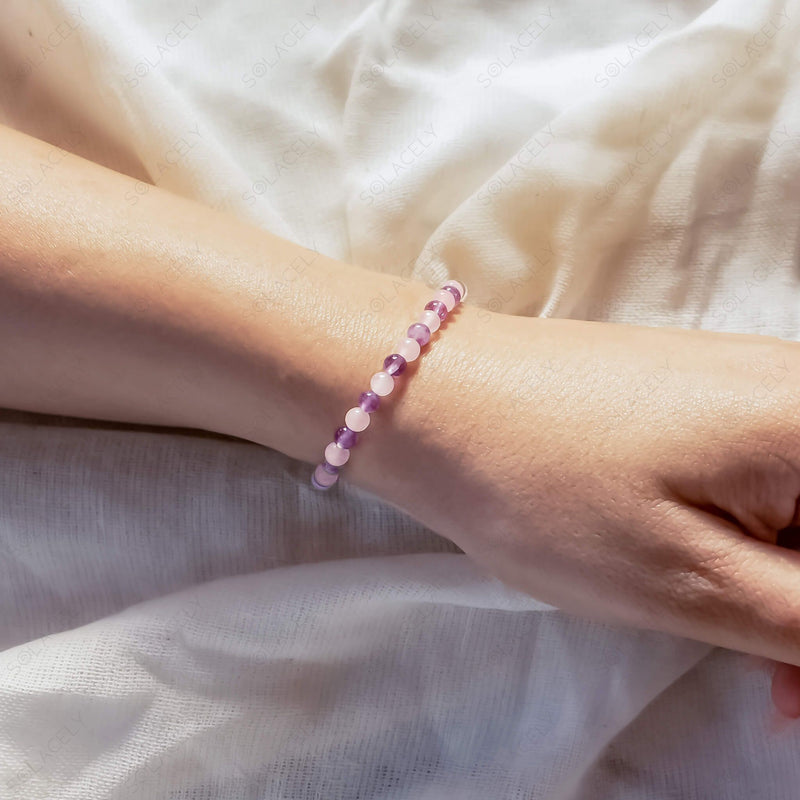
The colour case is the warmest of any amethyst pairing. Soft pink against violet sits close enough on the spectrum to harmonise, yet far enough apart to read clearly in a beaded bracelet or a pair of tumbles on a shelf. That is why the combination turns up so consistently in jewellery: it flatters most skin tones and it does not fight with whatever else you are wearing.
In practice, people reach for the two together at the same moments. A stretch of stress where you want to settle the mind and be gentler with yourself. A period of grief or change. The first weeks after a move, a break up or a new job. Amethyst is the steadying half, rose quartz the softening half, and the tradition treats them as complementary rather than overlapping. If you want the wider picture, our guide to crystal pairings for amethyst sets out the other stones it is commonly combined with.
What amethyst brings to the pairing
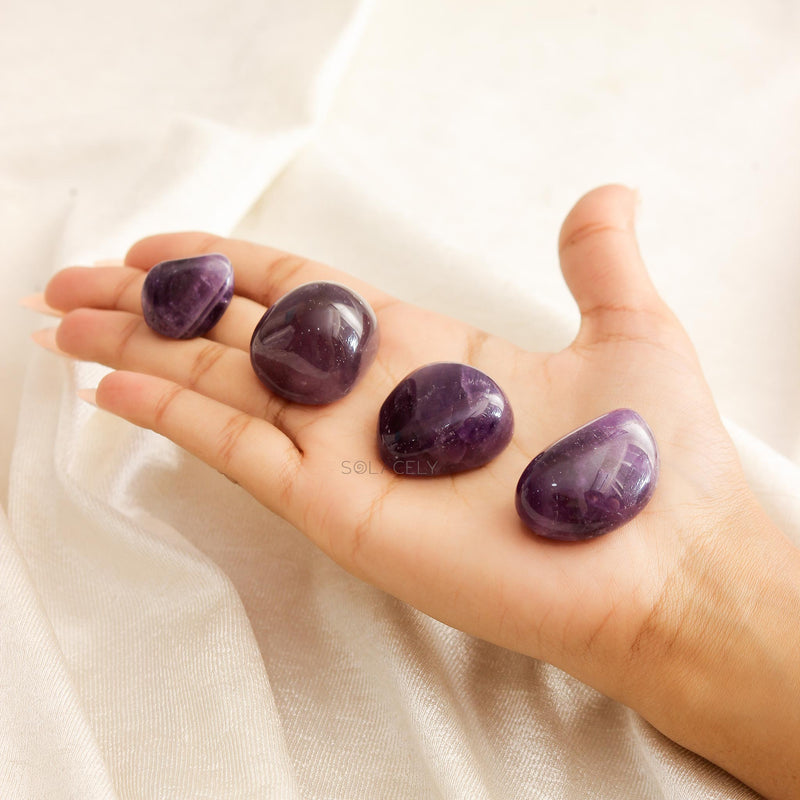
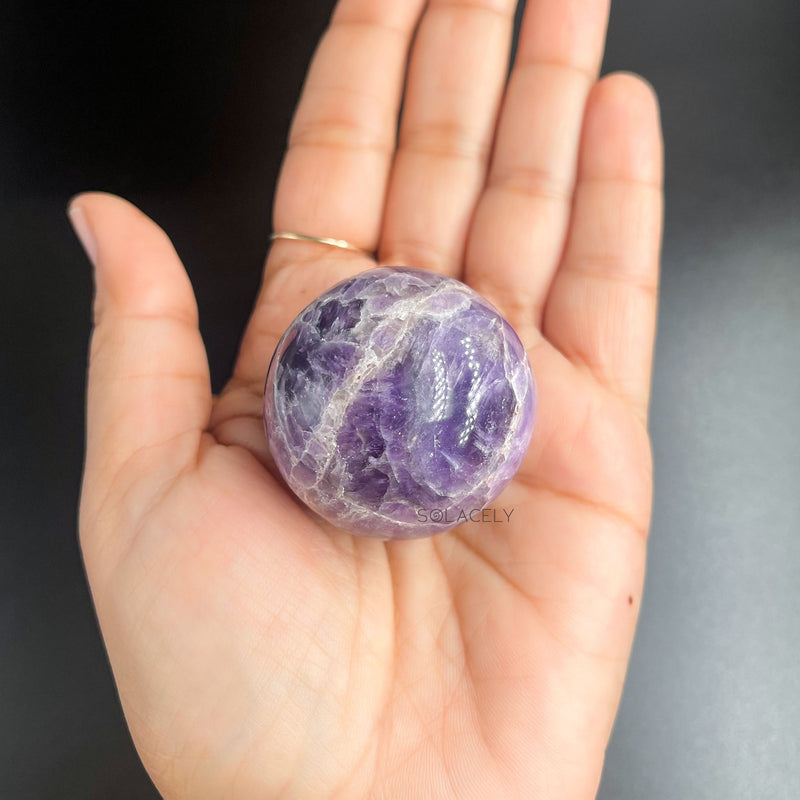
Amethyst is the violet variety of quartz, coloured by traces of iron held within the crystal structure. Gemmological grading places quartz at 7 on the Mohs scale, hard enough to wear every day without fuss. In the crystal tradition amethyst is kept for calm, for clearer thinking and for the hour before sleep.
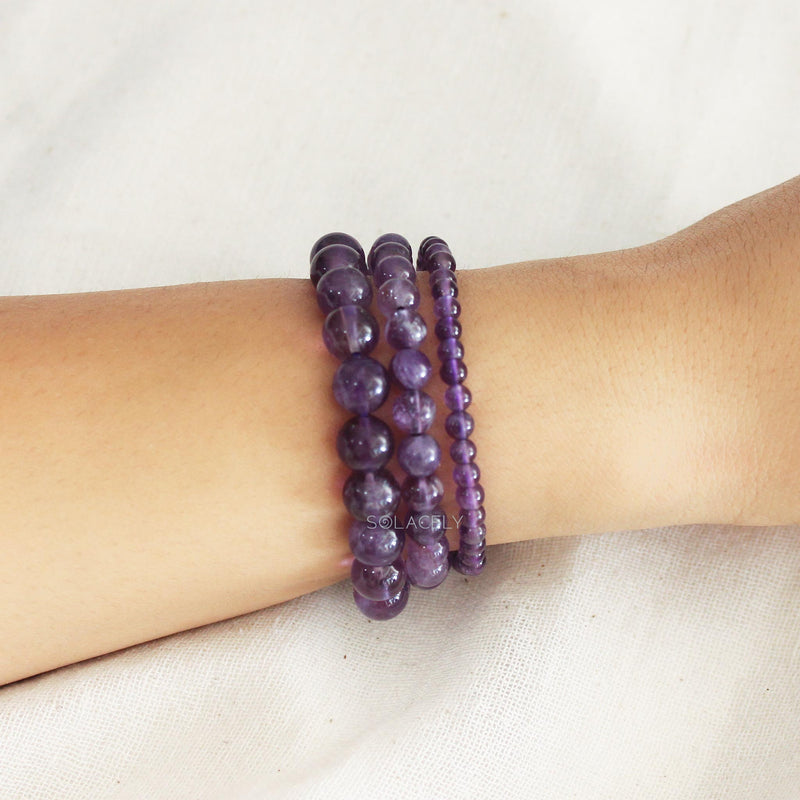
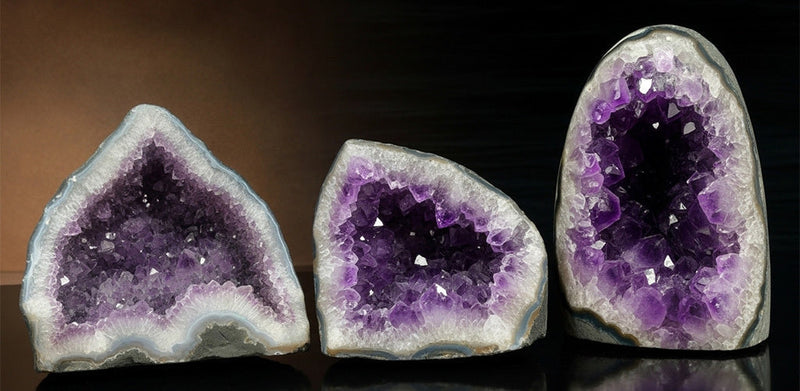
Its colour runs from a pale lilac through to a deep, saturated purple, and good material often shows colour zoning, where bands of stronger violet sit against lighter areas within a single crystal. Some pieces are cut to spread that colour evenly, others are left raw so you can see the terminated points growing out of a grey quartz base. Both are worth having. Choose the depth of purple you actually want to look at, because a stone you like the look of is a stone you keep using.
Amethyst is the traditional February birthstone and has been set into rings, rosaries and ceremonial jewellery for centuries. People keep it on a bedside table, in a coat pocket during a long week, or on the wrist as a daily cue to slow down and think before answering. Our full amethyst meaning and properties guide covers its history, colours and uses in more depth.
What rose quartz brings to the pairing
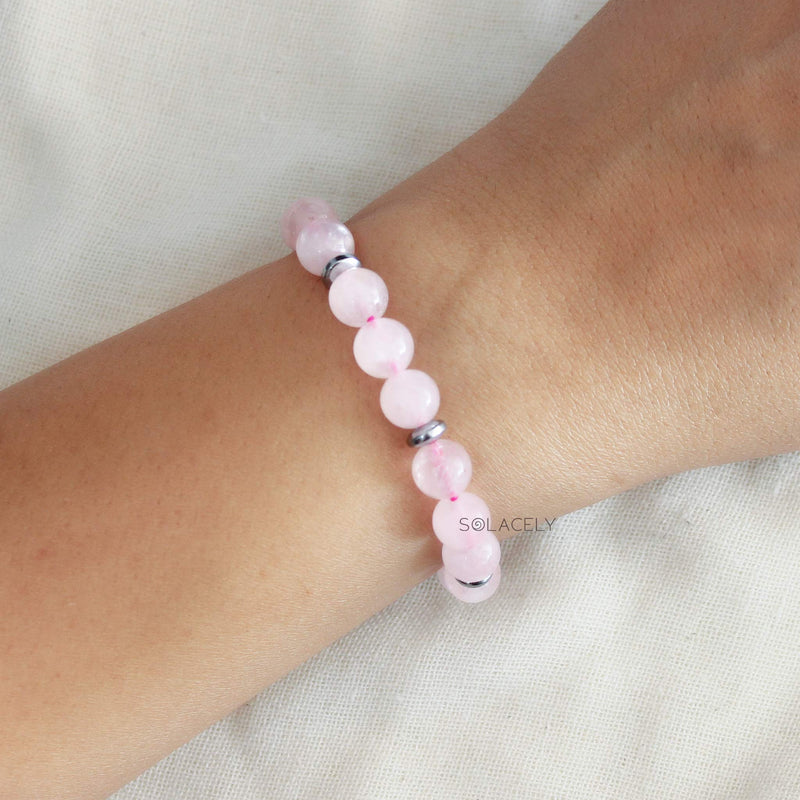
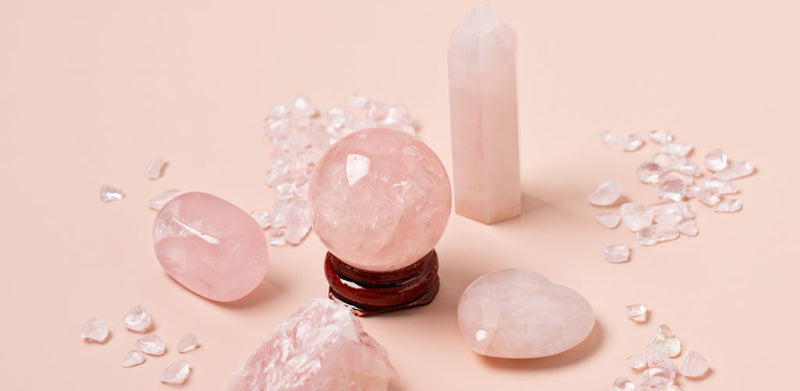
Rose quartz is the pink variety of quartz, usually milky to translucent rather than glassy, with its colour spread softly through the whole stone. Gemmological research attributes that pink to microscopic inclusions aligned within the quartz. People reach for rose quartz for warmth, patience and self-kindness, and it is the stone most often given as a token of affection.
The shade ranges from the faintest blush to a fuller rose, and the slightly cloudy body is part of the character rather than a flaw in it. Held up to a window, many pieces glow softly from within. Cut as a domed cabochon, some material shows asterism, a six rayed star that floats across the surface as you turn it, produced by the same fine inclusions that give the stone its colour. Star rose quartz is a lovely thing to own if you come across it.
Traditionally, rose quartz is the stone of the heart in the broadest sense: partners, friendships, family and, most often of all, the relationship you have with yourself. It is worn as a reminder to be as generous with yourself as you would be with someone you love. Many people find it most useful somewhere they will see it first thing, which is why it so often lives on a bedside table or a bathroom shelf. Our rose quartz meaning and properties guide goes further into its varieties and uses.
Amethyst and rose quartz side by side
On paper the two stones are close to identical, because they are the same mineral in two colours. They share hardness, density, absence of cleavage and care requirements. What differs is the colour cause, the traditional association and the chakra each is placed with in modern crystal practice. The table below sets it out.
| Property | Amethyst | Rose quartz |
|---|---|---|
| Mineral | Quartz | Quartz |
| Colour | Pale lilac to deep violet | Blush to full rose pink |
| Colour cause | Traces of iron in the structure | Microscopic aligned inclusions |
| Mohs hardness | 7 | 7 |
| Cleavage | None | None |
| Usual clarity | Transparent to translucent | Translucent to milky |
| Traditionally kept for | Calm, clarity, rest | Warmth, patience, self-kindness |
| Chakra placement | Crown and third eye | Heart |
| Cleaning | Warm soapy water | Warm soapy water |
| Sunlight | Colour can fade in prolonged sun | Colour can fade in prolonged sun |
Because the two rows that usually cause trouble in a pairing, hardness and cleavage, come out the same, this is one of the least demanding combinations to own. Neither stone will scratch the other and neither needs a different cleaning routine. If you like the mineralogy side of it, our overview of the types of quartz crystals covers the rest of the family, including citrine and smoky quartz.
How to wear and use amethyst and rose quartz together
The simplest approach is one wrist, one bracelet, alternating beads. Because both stones take daily wear equally well, you can also stack two separate bracelets, layer two pendants, or keep a tumble of each in a pocket. There is no correct arrangement, only the one you will actually keep up.
- Alternating beaded bracelet. Violet and pink beads in 6mm or 8mm, in one strand. The most popular format, and the easiest to wear with anything.
- Stacked bracelets. One bracelet mainly amethyst, one mainly rose quartz, worn together. Traditionally the receiving hand is the left, so many people put the pair there. Our note on which hand to wear a rose quartz bracelet explains the reasoning.
- Paired bracelets for two people. One person mainly amethyst, the other mainly rose quartz, each with a few accent beads of the other stone. A common choice for anniversaries and partner gifts.
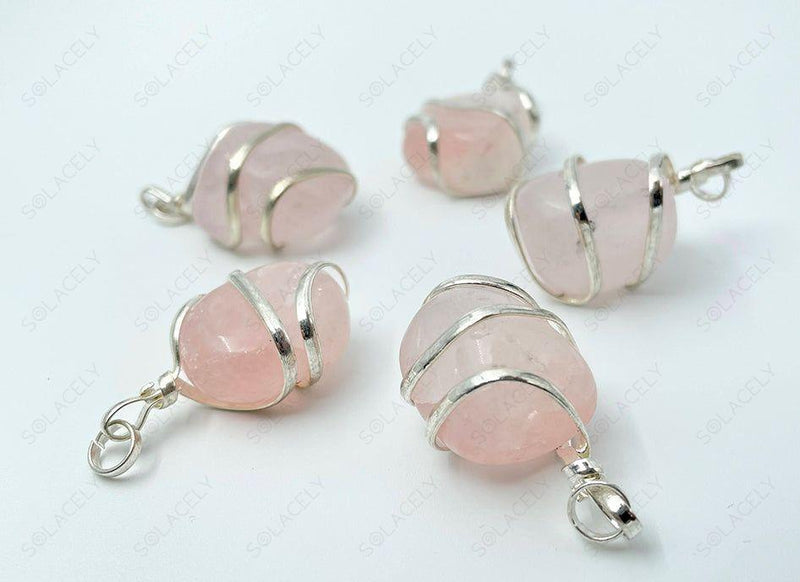
- Layered pendants. An amethyst drop on a shorter chain and a rose quartz drop on a longer one. Both are stable in the same conditions, so nothing needs separating at the end of the day.
- One in each hand. During quiet time, hold amethyst in one hand and rose quartz in the other. People usually put amethyst in the dominant hand for the settling half and rose quartz in the other for the softening half.
- Bedside pair. A small amethyst cluster and a rose quartz tumble on the same shelf, close enough to catch your eye when you wake up.
For placement around the home, the bedroom is where the combination is most often kept, since both stones are associated with rest and warmth rather than drive. A living room shelf works well too, particularly a spot where afternoon light does not sit directly on the stones for hours.
How to care for both stones
Care is the easiest part of this pairing, because the two stones want exactly the same things. Warm soapy water and a soft cloth clean both safely. Keep them away from ultrasonic and steam cleaners, away from harsh household chemicals, and out of prolonged direct sunlight, since sustained light can fade both colours over time.
Storage is equally straightforward. The two can share a pouch or a dish without any risk to each other. What they do need protecting from is harder material, so keep them apart from anything with a higher hardness that could leave a mark on a polished surface, and take beaded bracelets off before swimming or showering so the elastic and thread last longer.
For cleansing in the ritual sense, moonlight overnight is the gentlest option and suits both stones. A selenite plate, incense smoke and sound from a bowl or bell are the other three methods people use most. Sun charging is the one to skip here, given the fade risk on both colours, so a windowsill overnight rather than a windowsill all afternoon.
- Keep both stones out of prolonged direct sun so the violet and the pink stay strong.
- Warm soapy water and a soft cloth only. No ultrasonic cleaners, no steam.
- Never put stones in drinking water or a water bottle.
- Store away from harder gems, and store beaded jewellery flat rather than stretched.
- Small tumbles, chips and beaded bracelets are a choking and strangulation risk, so keep them well out of reach of babies and young children.
Crystals are kept as part of a personal ritual and are not a treatment for any medical or emotional condition. If something is causing you persistent distress, please speak to your doctor or another qualified professional, and carry on with any care that has already been arranged for you. Keep stones out of drinking water, and keep small tumbles, chips and beaded jewellery away from babies and young children, for whom they are a choking and strangulation risk.
Sources
Written by Chetena Sharma. Reviewed by the Solacely editorial team.
Frequently asked questions
About the author


Written by Chetna Sharma, crystal healing practitioner and co-founder of Solacely. Chetna has worked with healing crystals for over a decade and curates Solacely's protective stone collection.