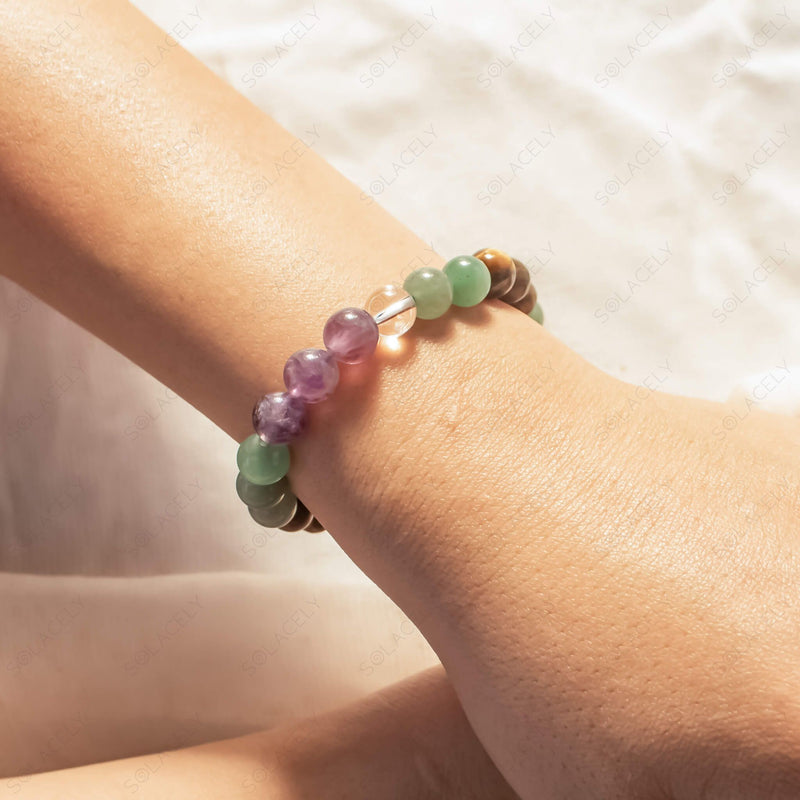
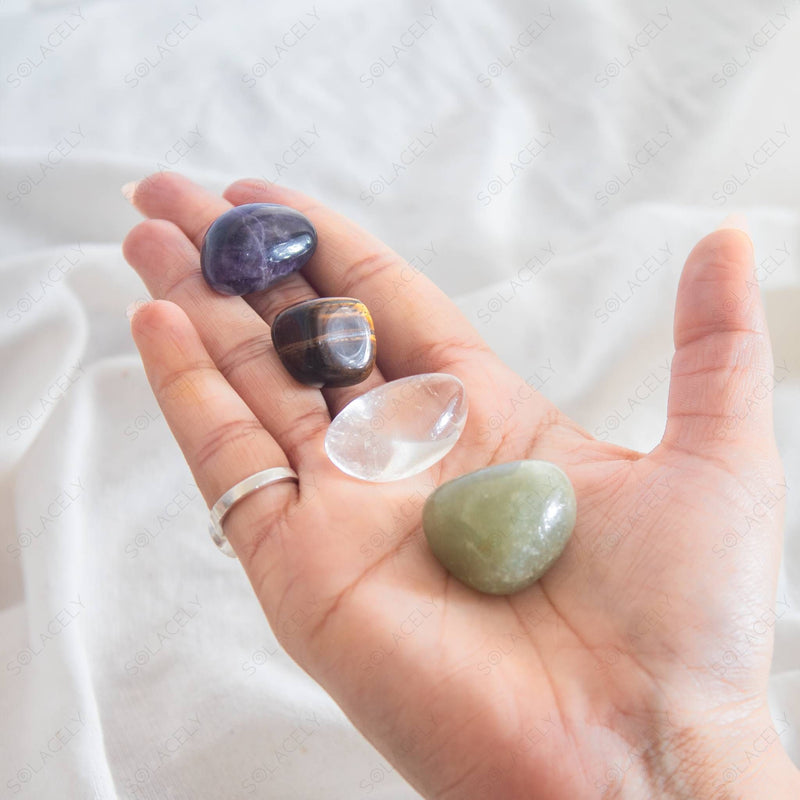
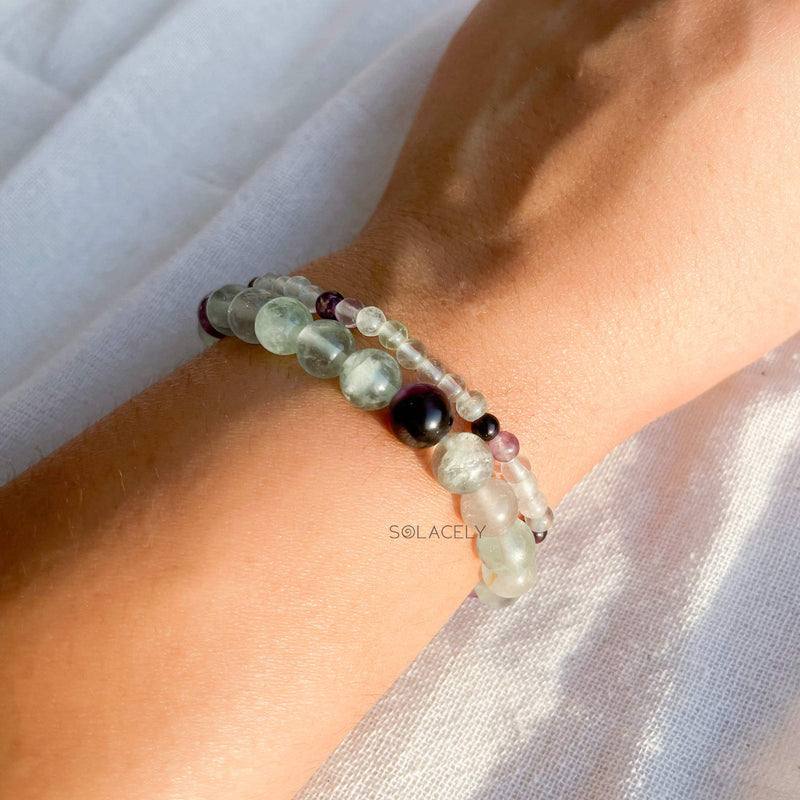
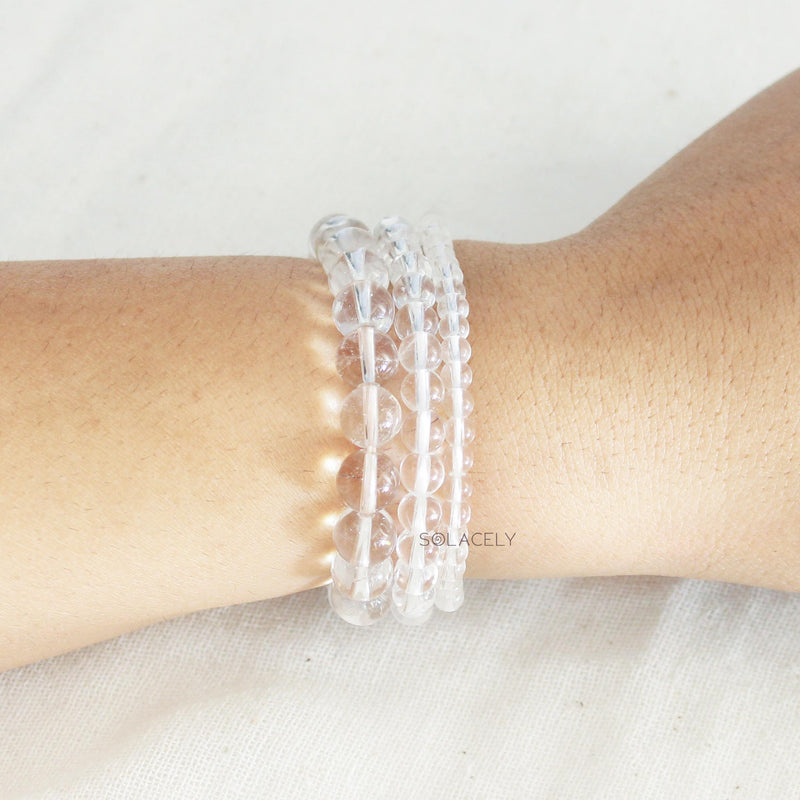
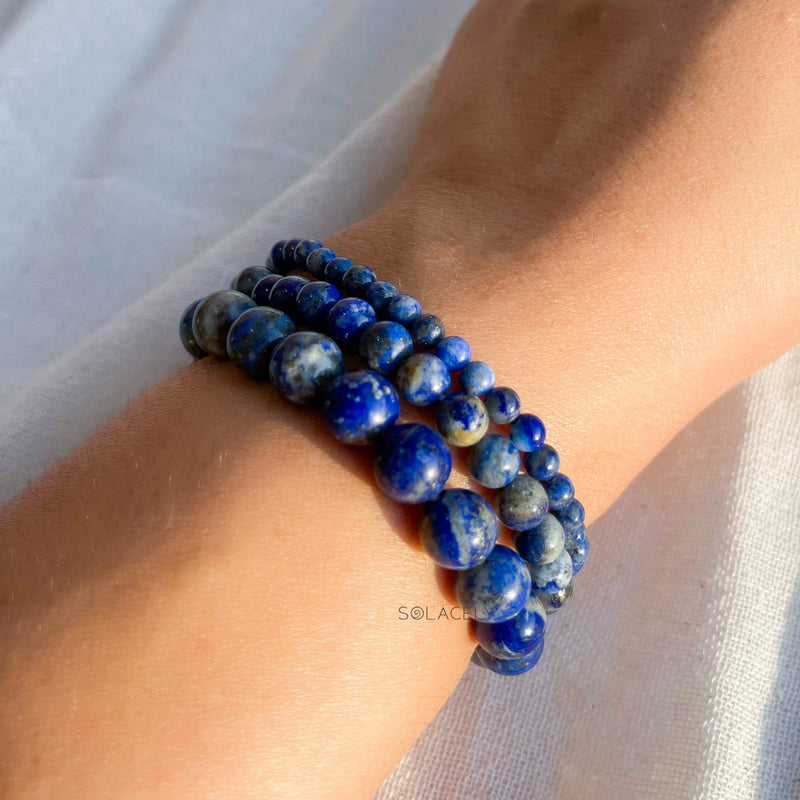
The best crystals for concentration are the clarifying, focusing stones: fluorite for cutting through mental fog, clear quartz for sharpening focus, sodalite for clear, logical thinking, tiger's eye for staying on task, and amethyst for calm, unhurried attention. They do not boost your brain on their own. Their honest role is as a focus cue and a calming anchor: keeping a stone at your workspace and setting an intention to concentrate helps you settle in, resist distraction, and do deep, sustained work, which is where real concentration begins.
Key Takeaways
- Top crystals for concentration: fluorite (clears mental fog), clear quartz (focus), sodalite (clear thinking), tiger's eye (staying on task), amethyst (calm focus).
- Their honest benefit is a focus cue and calming anchor, not a brain boost; the concentration comes from the ritual and your habits.
- Use one by keeping it at your workspace, holding it to set an intention before deep work, or as a phone alternative when distracted.
- They work best alongside real focus habits: removing distractions, single-tasking, and taking regular breaks.
- These are traditional, belief-based associations offered as reflective self-care, not a proven boost to concentration or memory.
Which crystals are best for concentration?
When people look for crystals for concentration, they usually want to focus for longer without their mind wandering. The stones linked with this are the clear, mentally sharpening ones. Fluorite is the classic concentration stone, prized for cutting through mental fog; clear quartz is used to sharpen and amplify focus; and sodalite brings clear, logical thinking when thoughts feel scattered.
Tiger's eye adds the willpower to stay on a task rather than drift, and amethyst offers a calm, unhurried focus for when concentration is broken by stress or restlessness. Which one suits you depends on what breaks your concentration, whether that is brain fog, scattered thoughts, distraction, or an anxious, busy mind that will not settle.
The honest way to understand them all is as a cue for focus, not a cognitive boost. These stones overlap with the study focus in our guide to crystals for reading books, and with the clear-thinking theme in our note on green aventurine and sodalite.
The best crystals for concentration, at a glance
Each stone targets a slightly different obstacle to focus, so it helps to match the stone to what most breaks your concentration. The table below sums up the main choices and what tradition assigns to each.
| Crystal | Traditional theme | Best when your focus is broken by |
|---|---|---|
| Fluorite | Mental clarity | Brain fog and mental clutter |
| Clear quartz | Focus, amplifying intention | A general lack of sharpness |
| Sodalite | Logic, clear thinking | Scattered, tangled thoughts |
| Tiger's eye | Willpower, staying on task | Distraction and drifting |
| Amethyst | Calm focus | Stress and a restless mind |
You do not need them all; one stone that matches your main distraction is plenty. Many people keep fluorite or clear quartz on the desk and reach for amethyst when stress is the thing breaking their focus. For turning that focus into getting started on a task, our guide to crystals for action is a natural companion.
How crystals help you concentrate
The honest mechanism is a cue and a calmer mind, not a boost to your brain. There is no scientific evidence that a crystal improves concentration, memory, or cognition through its own energy. What a stone genuinely does is give your focus a physical anchor: keeping it at your workspace and setting an intention to concentrate marks the start of focused time, which helps you settle in.
That cue works through habit and attention. When you always reach for the same stone before deep work, it becomes a signal to your brain that it is time to focus, much like a familiar playlist or a tidy desk. And when distraction strikes, turning your attention to the stone for a moment and taking a breath is a small mindfulness reset that pulls you back to the task.
The calming side matters too, because concentration often fails under stress. Pausing to hold a stone and breathe is a simple mindfulness practice, and the U.S. National Center for Complementary and Integrative Health notes that mindfulness can help many people manage stress and steady their attention. A calmer mind concentrates more easily, so the stone earns its place as a focus and calm cue, not a cognitive enhancer.
How to use crystals for concentration
Using concentration crystals is simple, and the aim is to build a focus ritual you will actually keep. Let the stone mark the start of focused time and anchor you when you drift. Here are common ways people use them.
- Keep one at your workspace. A fluorite or clear quartz on your desk is a steady, visible cue to focus whenever you sit down.
- Set an intention before deep work. Hold the stone for a moment and name how long you will focus, then begin without distractions.
- Use it as a phone alternative. When the urge to check your phone hits, hold the stone and return to the task instead.
- Reset when you drift. Notice you have wandered, touch the stone, take a slow breath, and gently refocus.
- Carry one for study or meetings. A tumbled stone in your pocket brings your focus cue wherever you need to concentrate.
Whichever you choose, let the stone cue the focus and let good habits do the concentrating. For a soothing approach when a restless, overactive mind is what breaks your focus, our guide to crystals for overthinking pairs well with amethyst.
Choosing and caring for your concentration crystals
Choose a stone whose colour and feel you like, since you are more likely to keep one you enjoy on your desk. A tumbled or palm stone is easy to hold and carry, while a small fluorite point or clear quartz cluster makes a nice focal piece for a workspace. There is no need to spend much; one stone you actually use beats a collection you ignore.
Care varies by stone. According to the Gemological Institute of America, quartz, which includes clear quartz, amethyst, and tiger's eye, rates 7 on the Mohs hardness scale, so these handle daily desk use and a wipe with a soft cloth. Fluorite is softer at about 4, so handle it gently and keep it from knocks. Keep amethyst and tiger's eye out of prolonged strong sunlight, which can fade them.
If you like to cleanse your stones, the quartz varieties tolerate a brief cool rinse, moonlight, or sound, while softer fluorite is best cleansed with gentle, dry methods. Many people reset a stone's intention at the start of a work week. Our step-by-step on how to cleanse and charge crystals covers which method suits which stone.
Pairing concentration crystals with focus habits
A concentration crystal does its best work alongside a few proven focus habits, since the stone supplies the cue and the habits supply the deep work. Think of the crystal as the trigger that starts a focused session you have set up in advance.
Three habits pair especially well. First, remove distractions before you start, silence your phone, close spare tabs, and let the stone mark the clean slate. Second, single-task, since concentration collapses when you split it, so give one thing your whole attention while the stone sits in view. Third, work in focused blocks with short breaks, a rhythm many people find sustainable, using the stone to cue the start of each block.
Layer the crystal on top of these and it becomes genuinely useful, a small, tangible nudge into focused work, rather than a hoped-for boost to your brain. The concentration is built by the habits; the stone simply helps you begin and return to them.
Common mistakes with concentration crystals
A few misunderstandings can keep a concentration stone from playing its genuine, supportive role. Keep these in mind so a crystal actually helps you focus.
- Expecting a brain boost. Crystals do not improve cognition. The stone cues focus; your habits and attention do the concentrating.
- Keeping distractions nearby. A focus stone cannot compete with a buzzing phone. Remove distractions first, then let the stone cue the work.
- Trying to multitask. Concentration needs single-tasking. Give one thing your full attention with the stone as your anchor.
- Soaking fluorite. Fluorite is soft and dislikes prolonged water, so keep it dry and handle it gently.
- Collecting without using. A drawer of focus stones does nothing. One stone on your desk, used daily, is worth far more.
Frequently Asked Questions
Which crystal is best for concentration?
Fluorite is the classic choice for concentration, prized for cutting through mental fog, with clear quartz for sharpening focus, sodalite for clear thinking, tiger's eye for staying on task, and amethyst for calm focus. Choose the one that matches what breaks your concentration. These are traditional associations that work as a focus cue and calming anchor, not a proven boost to the brain. The concentration comes from your habits, with the stone as a reminder.
Do crystals really improve concentration?
There is no scientific evidence that crystals improve concentration, memory, or cognition through their energy. What genuinely helps is the ritual: keeping a stone at your workspace and setting an intention to focus cues your brain that it is time to concentrate, and holding it to reset when you drift is a small mindfulness practice. So a concentration crystal works as a focus and calm cue, not a cognitive enhancer. The focus comes from your habits and attention.
How do I use a crystal to focus while working?
Keep a focus stone like fluorite or clear quartz on your desk, hold it for a moment before deep work to set an intention for how long you will focus, and use it as an alternative to reaching for your phone when distracted. When you notice you have drifted, touch the stone, breathe, and gently refocus. Remove distractions first, single-task, and let the stone cue and anchor the session.
Which crystal helps with focus and calm together?
Amethyst is the go-to when a restless or stressed mind is what breaks your concentration, since it is associated with calm as well as focus. Holding it and breathing slowly settles the mind enough to concentrate, a small mindfulness practice. Fluorite and clear quartz suit pure focus, while amethyst adds the calm. If stress is your main distraction, amethyst is a gentle, effective choice alongside good focus habits.
How do I care for concentration crystals?
Clear quartz, amethyst, and tiger's eye are quartz stones at 7 on the Mohs scale, so wipe them with a soft cloth and keep amethyst and tiger's eye out of strong sunlight. Fluorite is softer at about 4, so handle it gently and keep it dry, since it dislikes prolonged water. To cleanse the stones spiritually, use a brief rinse, moonlight, or sound for the quartz varieties, and gentle dry methods for fluorite.
Can crystals help with focus problems or ADHD?
No. Crystals cannot treat attention difficulties or ADHD, and there is no evidence they improve concentration medically. Their honest role is as a focus ritual and calming cue that can support good habits, not a treatment. If poor concentration is persistent and affecting your work, study, or daily life, please speak with a qualified doctor or professional, since it can be linked to stress, sleep, or conditions like ADHD. Treat crystals only as a gentle supplement.
Sources
- Gemological Institute of America - Quartz description and varieties (clear quartz, amethyst): https://www.gia.edu/quartz
- Encyclopaedia Britannica - Fluorite, mineral properties and Mohs hardness: https://www.britannica.com/science/fluorite
- National Center for Complementary and Integrative Health (NIH) - Meditation and Mindfulness: What You Need To Know: https://www.nccih.nih.gov/health/meditation-and-mindfulness-what-you-need-to-know
About the author


Written by Chetna Sharma, crystal healing practitioner and co-founder of Solacely. Chetna has worked with healing crystals for over a decade and curates Solacely's protective stone collection.