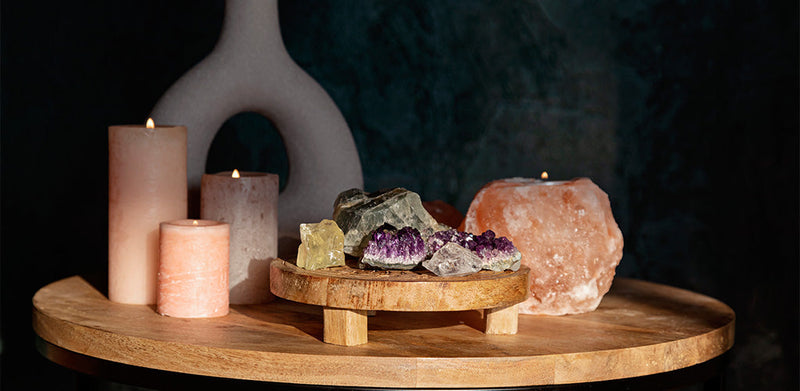
Crystals used as home decor need to survive being looked at every day, which is a different test from being meaningful. Amethyst clusters, selenite towers, agate slices, crystal trees and polished spheres are the formats that hold up. The single most important rule is that a sunny windowsill will fade half of them.
Key takeaways
- Formats that work as decor: geodes and clusters, towers, spheres, agate slices, crystal trees.
- Amethyst, rose quartz, citrine, smoky quartz and fluorite all fade in sustained direct sun. Permanently.
- Selenite is soft and water soluble. Keep it out of bathrooms and never rinse it.
- Traditional placement follows what each room is for, which makes it easy to remember.
- Dust clusters with a soft dry brush. A cloth cannot reach between the points.
- Fewer, larger pieces read better than a crowded shelf of small ones.
Choosing by format, not by meaning
If a piece is going to sit on a mantelpiece for five years, how it looks matters more than what it means. Five formats do the job properly.
| Format | Works because | Best in |
|---|---|---|
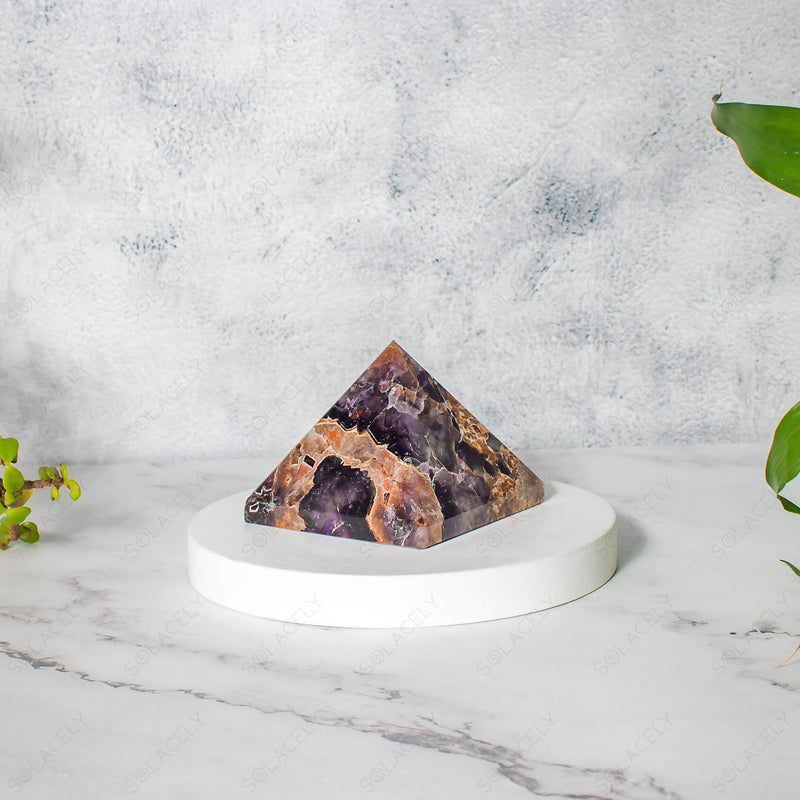
| Geode or cluster | Texture and depth, reads well from across a room | Living room, hallway |
| Tower or point | Vertical line, good beside books or plants | Desk, shelf |
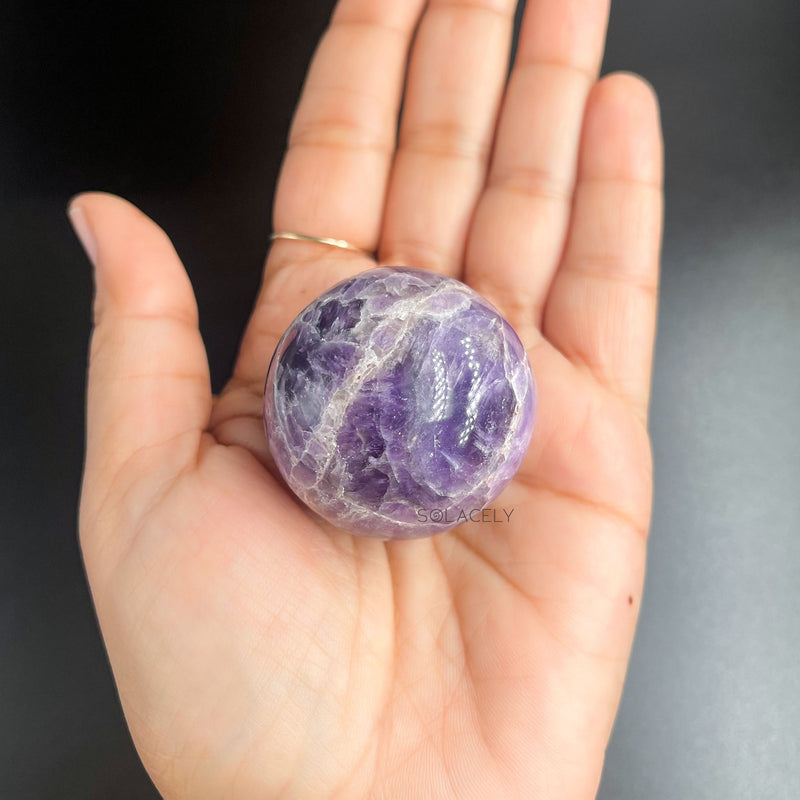
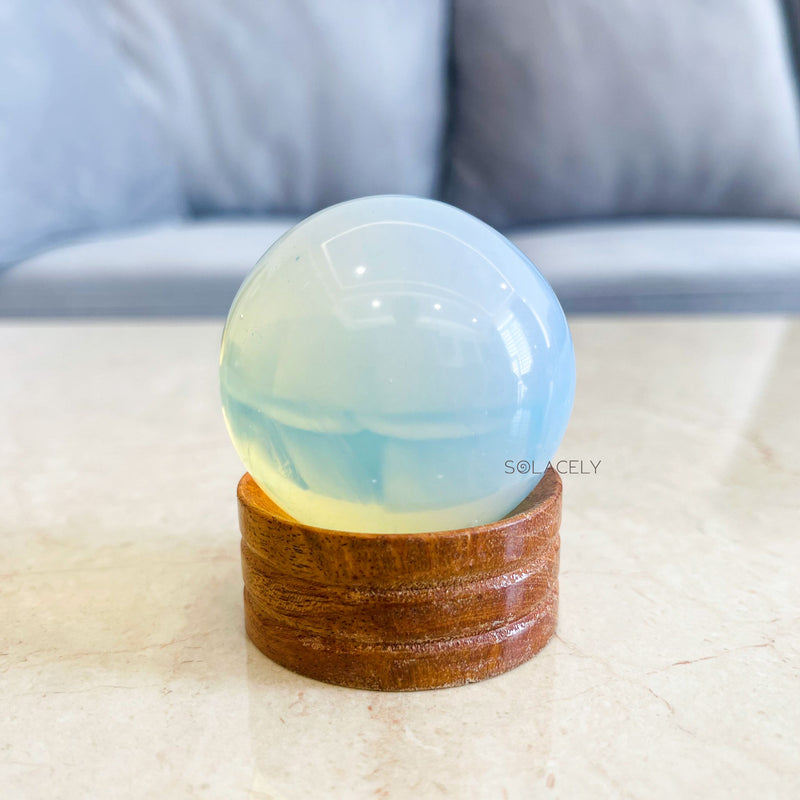
| Sphere | Catches and holds light, no sharp edges | Coffee table, sideboard |
| Agate slice | Flat and graphic, works as a coaster or wall piece | Side table, wall |
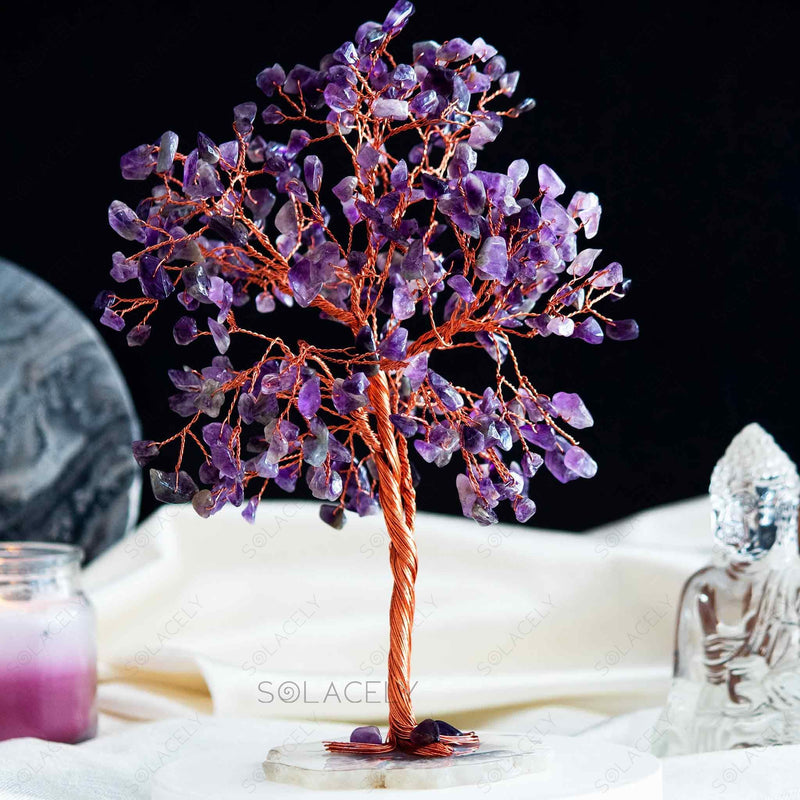
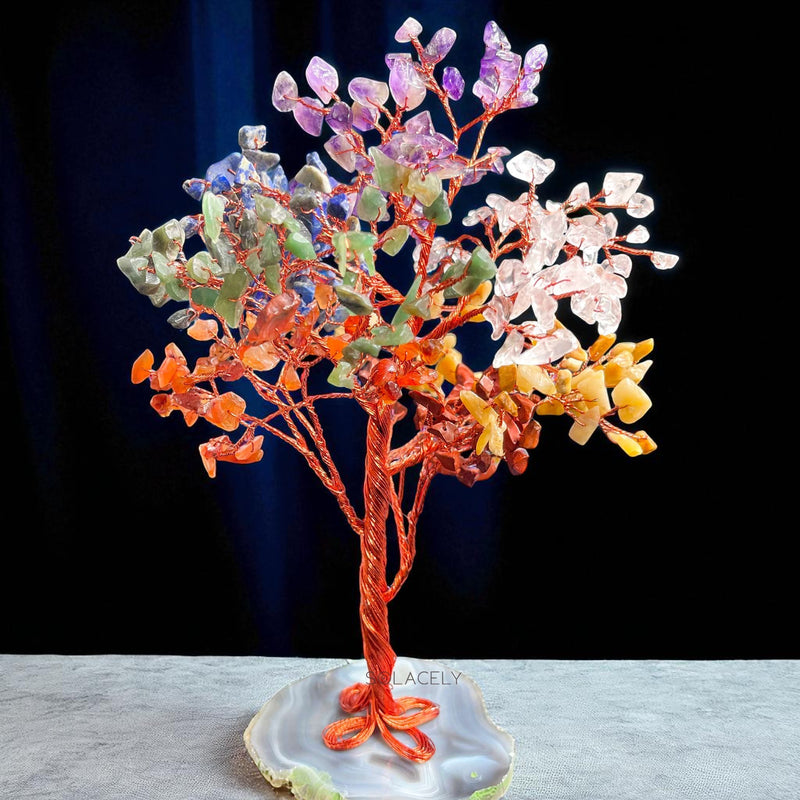
| Crystal tree | Small, decorative, reads as an ornament first | Desk, windowless corner |
The usual mistake is quantity. A shelf of twenty small tumbles looks like clutter. Two well chosen pieces with space around them look deliberate, and each one keeps its meaning instead of dissolving into a collection.
The sunlight problem
This deserves its own section because it is the one thing that actually damages crystals in homes, and it comes disguised as good practice.
Amethyst, rose quartz, citrine, smoky quartz and fluorite all have light sensitive colour, and months of direct sun will fade them permanently. A bright south facing sill is the worst place in the house for any of them, and it is also where most people instinctively put a crystal because that is where it looks best.
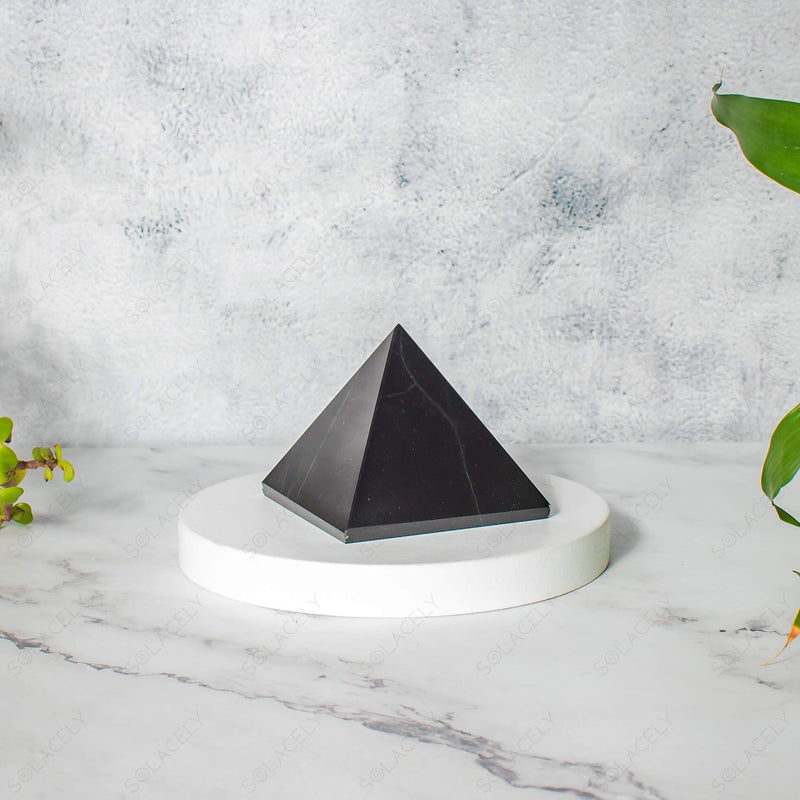
Put them on a shelf, a mantelpiece or a table set back from the glass. The stones that genuinely do not mind strong light are black tourmaline, obsidian, hematite, agate and jasper. If you want something on the window itself, choose from those.
Room by room, following the tradition
Traditional placement is easy to remember because it follows what each room is for rather than any complicated system.
- Entrance. Black tourmaline or obsidian, framed as a threshold stone. This is the oldest placement in the practice.
- Living room. Rose quartz or amethyst, chosen for shared space and settling. This is where a larger statement piece belongs.
- Bedroom. Amethyst or selenite, both associated with rest. Keep them on a nightstand rather than under a pillow.
- Kitchen or workspace. Citrine, from the old habit of keeping a piece where money and work happen.
- Bathroom. Very little. Humidity is bad for selenite, pyrite and hematite, and good for nothing.
Our guides to crystals for the living room, crystals for the bedroom and crystals for the home go room by room in more detail.
The selenite warning
Selenite towers are everywhere in interiors photography and they are the piece most often damaged by their owners. Selenite is a form of gypsum, soft at 2 on the Mohs scale, which means a fingernail will scratch it. It is also slightly soluble in water.
So: no bathroom, no kitchen counter beside a sink, no rinsing, no damp cloth. Dust it with a soft dry brush and handle it by the base. A selenite tower kept dry lasts indefinitely. One kept in a steamy bathroom clouds and roughens within a year.
Keeping decor crystals clean
Dust is the real maintenance issue, and it settles deep between the points of a cluster where a cloth cannot reach. A soft dry paintbrush or a makeup brush kept for the purpose does the job in seconds. Do it every few weeks rather than deep cleaning occasionally.
For polished pieces and tumbles, warm soapy water and a soft cloth work. The exceptions are selenite, which stays dry, and pyrite, which oxidises with moisture. Dry everything properly before putting it back.
Buying well
Buy fewer and bigger. One good amethyst cluster does more for a room than six small pieces, and it will still be there in ten years. Check that a piece stands on its own without needing to be propped, since a wobbling geode gets moved to a drawer.
Colour enhanced agate slices, in bright pinks, blues and purples, are a long standing and stable part of the decorative stone trade. They hold their colour indefinitely and they are a good way to bring a specific shade into a room, so choose between those and natural banding on looks alone.
The uses described here reflect traditional and cultural crystal practice. They are not medical claims and are not a substitute for professional healthcare or advice.
Sources
Written by Chetena Sharma. Reviewed by the Solacely editorial team.
Frequently asked questions
About the author


Written by Chetna Sharma, crystal healing practitioner and co-founder of Solacely. Chetna has worked with healing crystals for over a decade and curates Solacely's protective stone collection.