Amethyst, rose quartz, and clear quartz are the stones most often chosen for children, kept for calm, kindness, and focus. The trick is choosing the right size and form: a larger display piece on a shelf rather than a small tumble, and no jewellery worn during sleep. Get that part right and a crystal becomes a lovely fixture of a bedtime routine, something that is theirs.
Key Takeaways
- Amethyst, rose quartz, and clear quartz are the traditional choices, kept for calm, kindness, and focus.
- Choose a larger piece, a sphere, pyramid, or crystal tree, rather than a small tumble.
- Keep loose stones away from under-threes and any child who still mouths things.
- No crystal jewellery during sleep or unsupervised play.
- The bedtime ritual is what children remember. Thirty seconds, every night, is enough.
Choosing the right stones
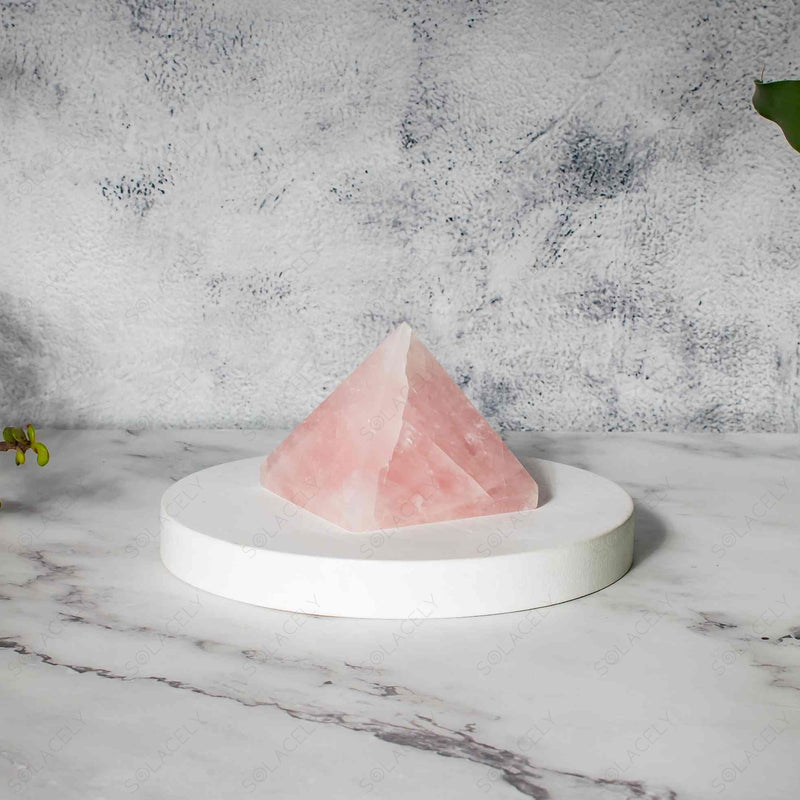
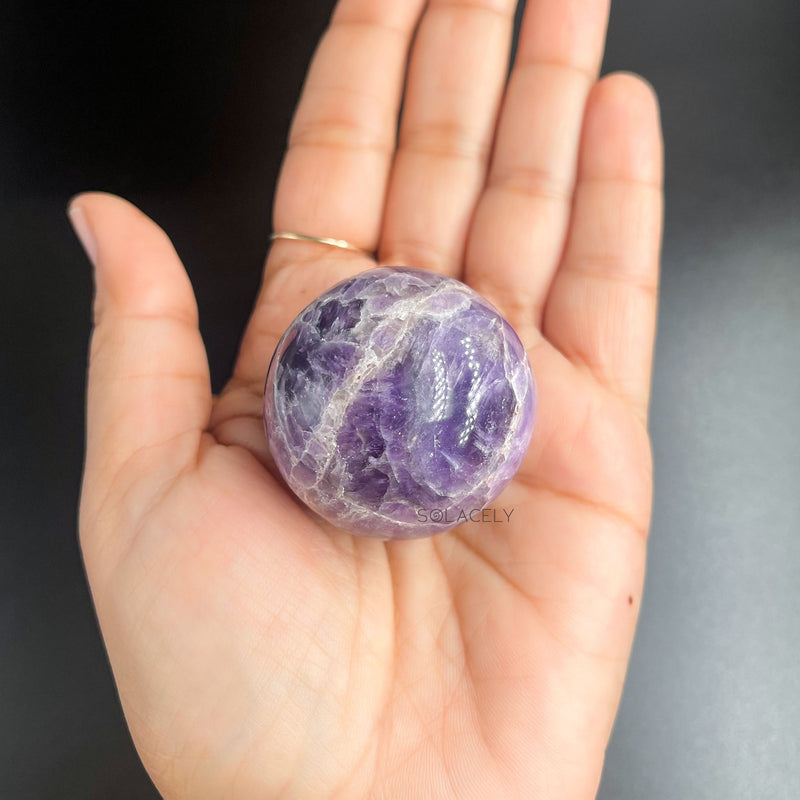
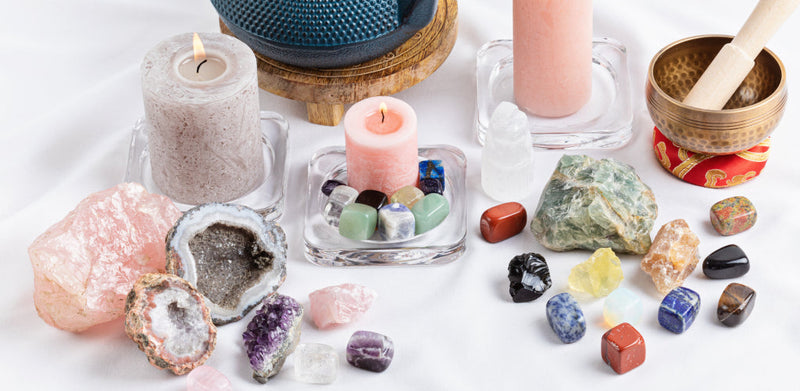
Three stones do most of the work here, and they are chosen for meanings a child can actually grasp. Amethyst is the calm one, the purple stone for settling at the end of the day. Rose quartz is the kind one, traditionally the stone of gentleness and friendship. Clear quartz is the bright one, associated with clarity and focus.
All three are quartz, sitting at 7 on the Mohs hardness scale as Encyclopaedia Britannica describes, which matters practically: they are hard, they do not flake or powder, and they survive being handled by someone who is not gentle with their possessions.
Green aventurine and tiger's eye are good additions for an older child, both durable and both with meanings that land well. Let the child choose between them if you can. A stone they picked themselves gets used; a stone chosen for them tends to end up in a drawer.
Choosing the right size and form
This is the part that decides whether a crystal is a good idea in a particular house, and it comes down to size rather than mineral.
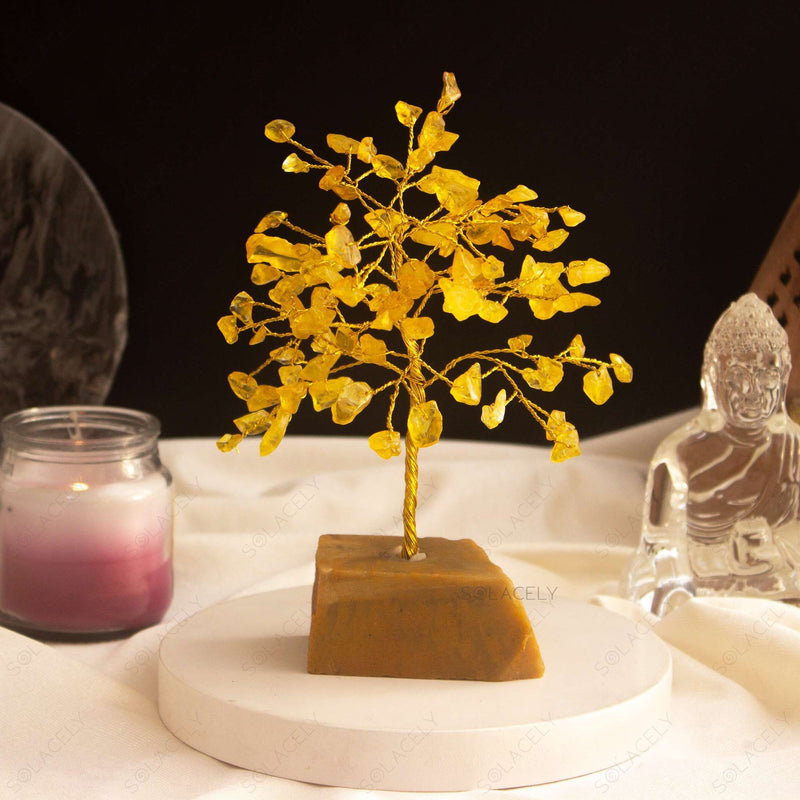
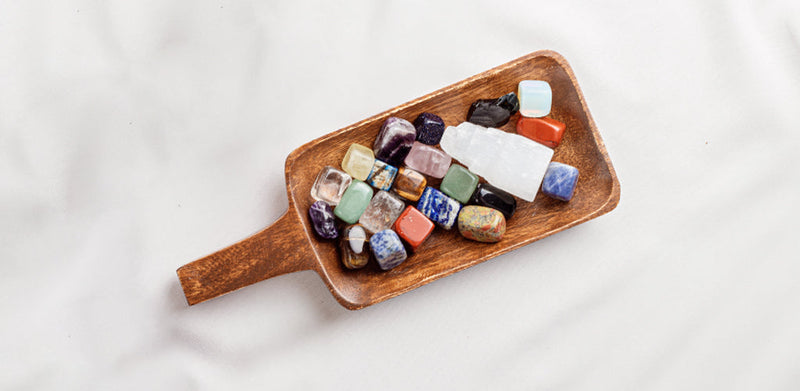
Go for larger pieces: a sphere, a small pyramid, a crystal tree, or a chunky display specimen. These read as special, they look lovely on a shelf, and they are far too big to be a hazard. Small tumbled stones are the ones to hold back until a child is older, because a smooth, rounded, pocket-sized object is exactly the shape small children put in their mouths.
For a sense of scale, the US Consumer Product Safety Commission small parts test for under-threes uses a cylinder 3.17 cm long and 3.17 cm across; anything that fits entirely inside it counts as a hazard. A typical tumble sits right around that size. So for under-threes, and for any older child who still mouths things, keep loose stones out of the room and put a larger piece up on a shelf instead.
Jewellery: the one firm rule
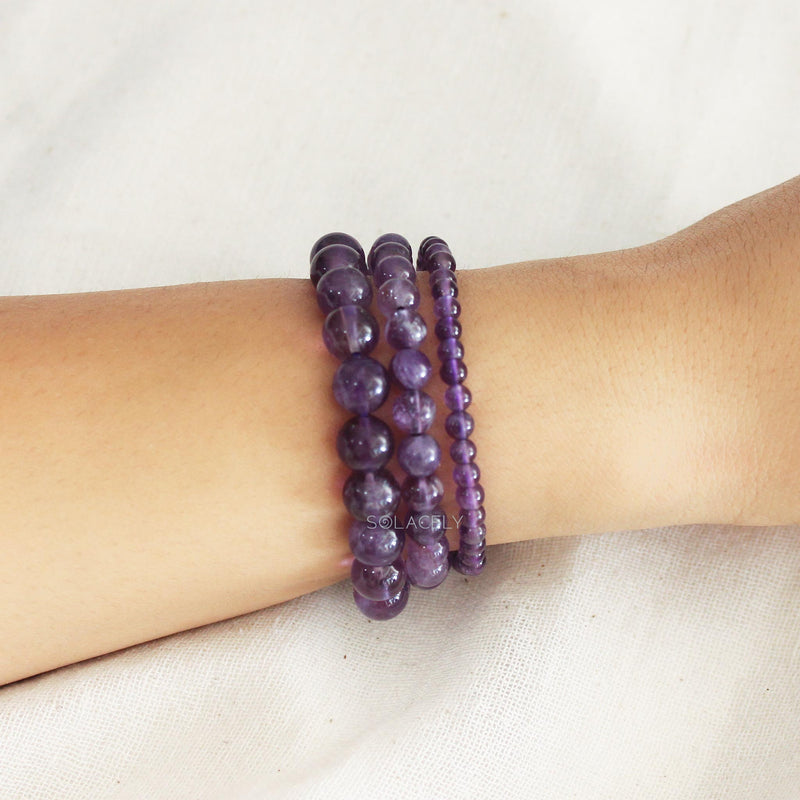
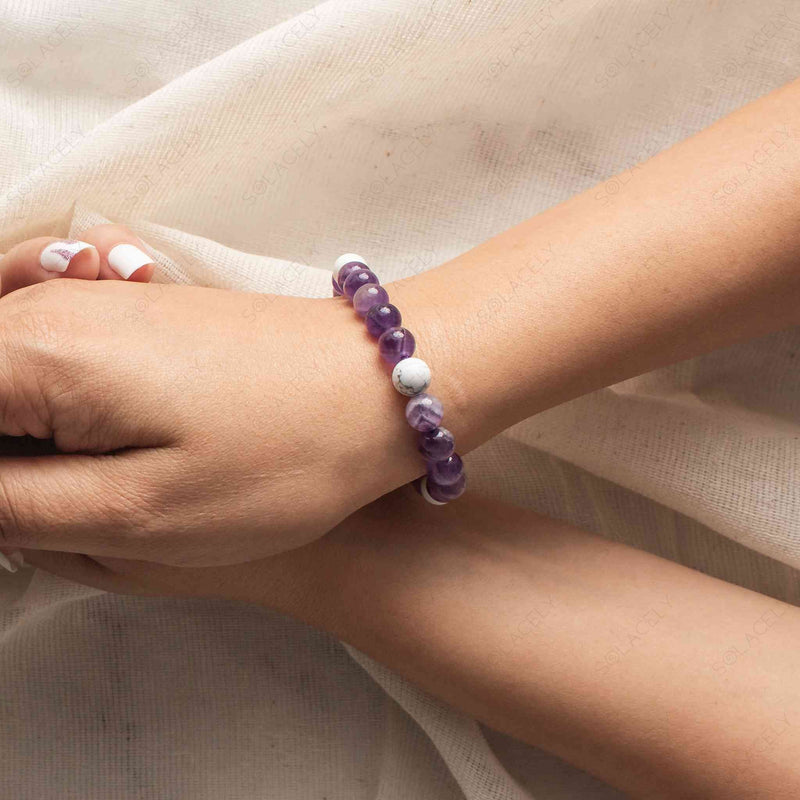
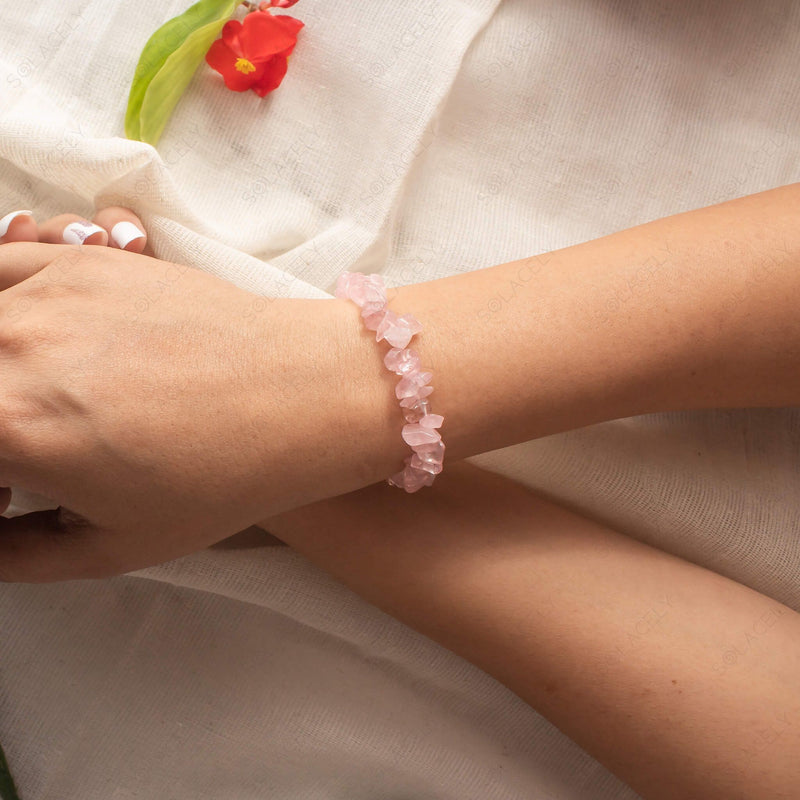
Crystal bracelets are lovely on an older child, and there is one rule worth keeping absolutely: nothing worn during sleep, and no necklaces on young children at all.
The FDA safety communication on jewellery marketed for teething sets out why, and it is worth reading once so the rule sticks. In practice it costs nothing: a bracelet comes off at bedtime alongside the socks, and the crystal moves to the bedside shelf where it is part of the wind-down anyway.
If your child does wear a beaded bracelet, check the elastic every few weeks, since a worn cord scatters beads across the floor. Our guide on which hand to wear a crystal bracelet on covers fit and care.
Stones to keep for yourself
A few popular display minerals are better kept on your own shelf rather than a child's, for straightforward material reasons.
| Good for children | Keep for grown-ups | Why |
|---|---|---|
| Amethyst, rose quartz, clear quartz | Malachite, chrysocolla | Copper-bearing |
| Green aventurine, tiger's eye | Galena, cerussite | Lead-bearing |
| Spheres, pyramids, crystal trees | Cinnabar | Mercury-bearing |
| Large polished specimens | Raw pyrite, selenite | Dust, flaking, water damage |
The left column covers everything a child needs. Everyone washes hands after handling stones, and no stone ever goes in drinking water. Our guide to crystals for children's bedrooms covers placement around the room.
The bedtime ritual
This is the part children actually remember, and it is worth keeping almost comically short so it survives the nights when everyone is tired.
Put the stone somewhere visible from the bed. At bedtime, the child looks at it and says one good thing about the day. That is the whole thing. Thirty seconds. Some children like to add one hard thing too, which quietly opens a door for anything they have been carrying around.
What makes it work is that it is predictable and it is theirs. A consistent close to the evening helps a child settle, and having an object involved gives the routine a shape they can hold onto. The U.S. National Center for Complementary and Integrative Health notes that mindfulness practices can help many people manage stress, and this is the child-sized version.
If a child is genuinely struggling with sleep, worry, or behaviour, a chat with your GP or their school is the right next step, and a bedtime ritual sits happily alongside that. For starting your own practice, crystals for beginners is a good place to begin.
Sources
- US Consumer Product Safety Commission - Small Parts for Toys and Children's Products
- US Food and Drug Administration - Safety risks of teething necklaces, bracelets and other jewelry
- Encyclopaedia Britannica - Quartz, mineral properties and Mohs hardness
- National Center for Complementary and Integrative Health - Meditation and Mindfulness
Frequently asked questions
About the author


Written by Chetna Sharma, crystal healing practitioner and co-founder of Solacely. Chetna has worked with healing crystals for over a decade and curates Solacely's protective stone collection.