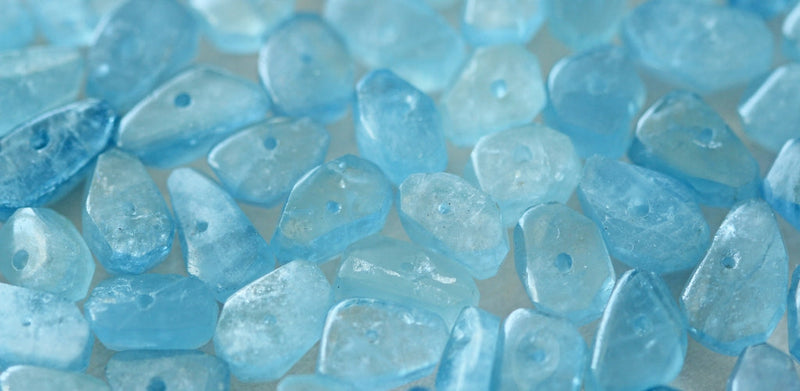
Hematite and aquamarine put a heavy iron oxide next to a light blue beryl. In crystal practice the pair is worn for staying steady while speaking clearly, which is why people reach for it before interviews, hard conversations and long journeys. Hematite is the anchor. Aquamarine is the voice.
Key takeaways
- Hematite is iron oxide, opaque, dense and roughly 5 to 6 on the Mohs scale. Aquamarine is a blue variety of beryl at 7.5 to 8.
- The pairing is traditionally used for grounded communication: hematite for physical steadiness, aquamarine for calm and honest expression.
- Aquamarine is the modern March birthstone, and warming beryl to settle its blue is a long established practice across the coloured stone trade.
- Hematite takes a mirror polish and feels unusually heavy for its size, which is how most people recognise it in the hand.
- Care differs. Aquamarine handles warm soapy water well, while hematite beads dislike long soaks and can develop rust spots.
- Every metaphysical use described here is traditional belief, not medical fact.
What is the difference between hematite and aquamarine?
Chemically the two share almost nothing. Hematite is an iron oxide, opaque and noticeably heavy for its size. Aquamarine is a transparent blue beryl. Geology.com notes that hematite is the most important ore of iron and always leaves a red brown streak, whatever colour the polished piece looks.
Hematite in brief
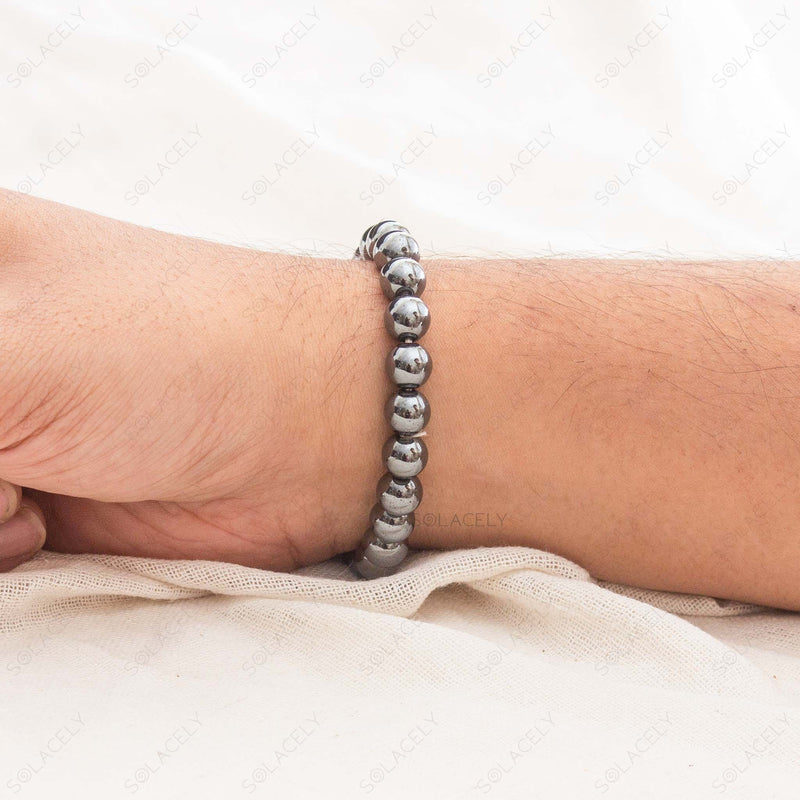
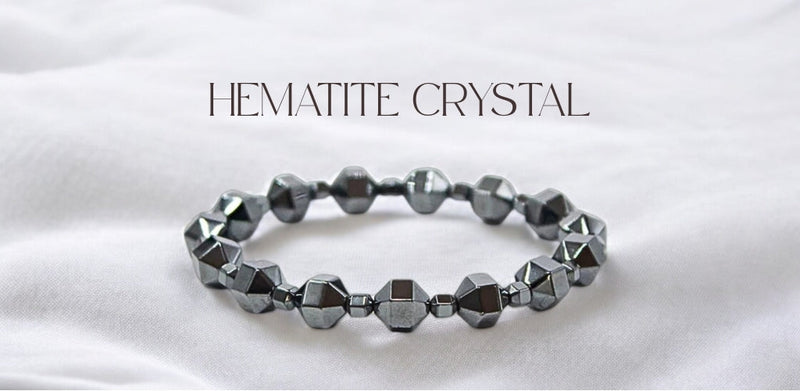
Hematite sits around 5 to 6 on the Mohs scale, so it is softer than quartz and scratches more easily than people expect from something that looks like metal. The Greek root of the name, haima, means blood, and it points to that red streak rather than to the silvery surface. Density is the giveaway in the hand. A hematite bead sits heavy in the palm, well beyond what its size suggests.
One distinction is worth knowing before you shop. Beads sold as magnetic hematite or hematine are made to carry a strong magnetic pull, and they have a following of their own among people who like that pull in a bracelet. Mined hematite is only very weakly drawn to a magnet, so simply tell the seller which of the two you are after. For the fuller picture, our hematite meaning and properties guide sets out how the mined stone forms and how it is finished.
Aquamarine in brief
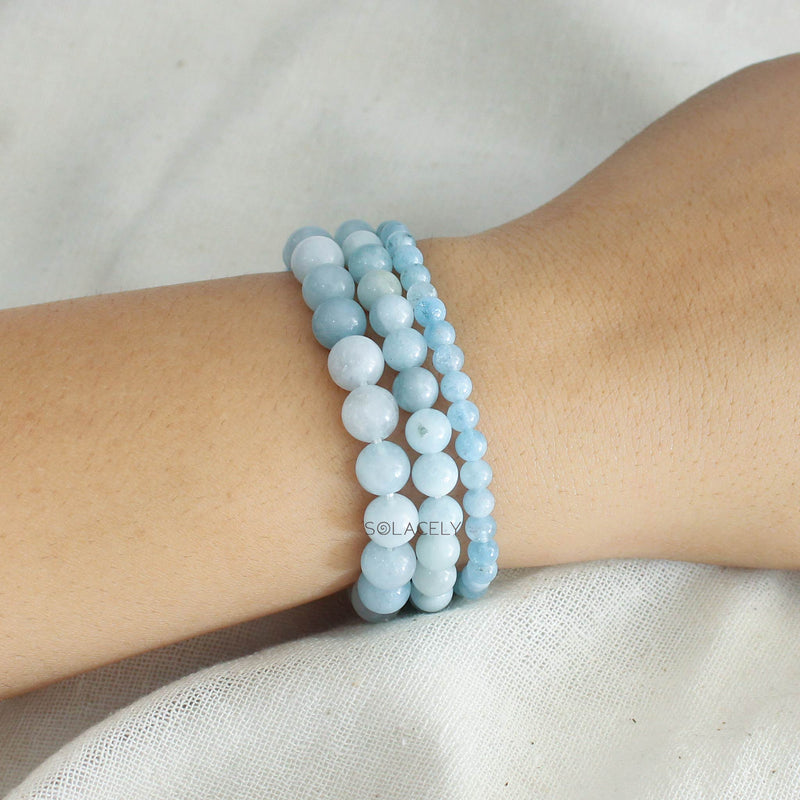
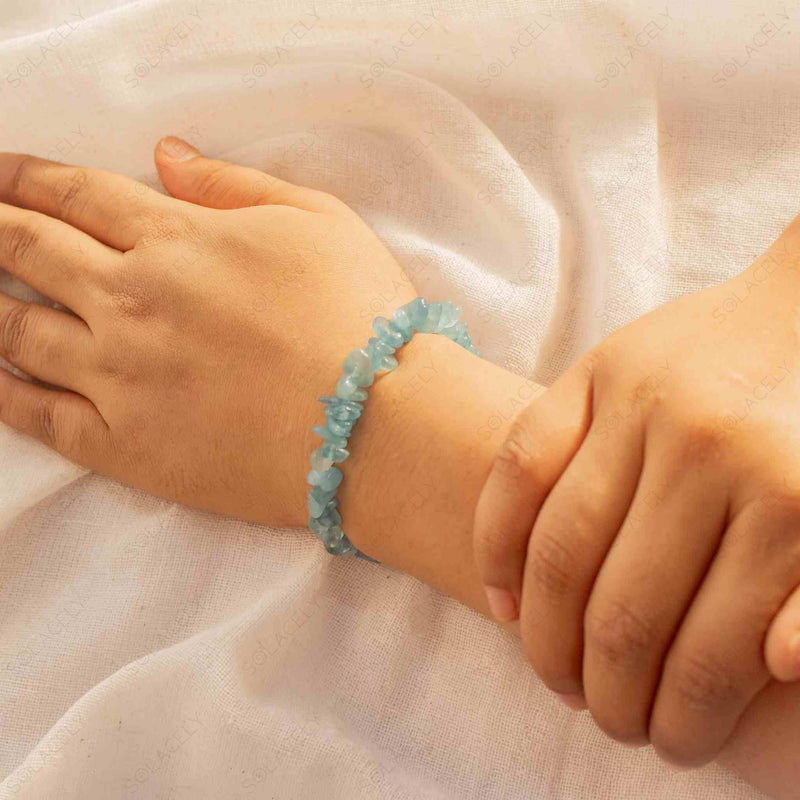
Aquamarine belongs to the beryl family, the same mineral species as emerald, and owes its blue to traces of iron. The Gemological Institute of America places aquamarine at 7.5 to 8 on the Mohs scale and lists it as the modern March birthstone. Beryl itself is a beryllium aluminium silicate that grows in six sided prisms, which is why rough aquamarine often looks like a blue crayon.
Warming beryl to settle its blue and draw off greenish tones is a long established practice across the coloured stone trade, and gemmological bodies including GIA describe the result as stable and permanent. Colour then runs from the palest sea blue through to a deep saturated tone, with the deeper blues costing more. Choose the depth of blue you want to wear, and our aquamarine crystal guide covers the grading in more detail.
Why do people pair hematite with aquamarine?
Because the two stones pull in different directions without fighting each other. Hematite is traditionally worn for grounding and physical steadiness. Aquamarine is traditionally worn for calm and clear expression. Together the intention is simple: stay rooted in your body while your mind and voice stay loose.
Most pairings that survive beyond a season have this kind of division of labour. Two grounding stones can feel flat and slightly heavy. Two heart or throat stones can feel drifty. This combination sets one at each end, which is also how it gets described in chakra language, with hematite read as a root stone and aquamarine as a throat stone. If that framing interests you, the throat chakra crystal guide goes further into it.
There is a plain visual argument too. Cool silver grey against pale sea blue is a restrained, almost corporate palette. It reads as jewellery first and crystal second, which matters if you want to wear it into a meeting room without explaining yourself.
What is this combination used for in practice?
Speaking situations, mostly. In our experience of what customers actually ask for, hematite and aquamarine gets chosen for presentations, viva exams, salary conversations, first dates and flights. The thread running through all of those is the same: your body wants to bolt and your words need to stay orderly.
- Before you speak. Hold the hematite, feel the weight, then take a slow breath. The weight in the palm is a large part of why people reach for this stone before speaking.
- Difficult conversations. Aquamarine's long association with honest, unheated speech is the traditional reason it turns up in this context.
- Travel. Aquamarine was carried by sailors as a protective talisman in European folklore, which is where its travel reputation comes from.
- Overthinking at night. This pairing is a poor fit for sleep. Hematite is stimulating for many wearers, so keep it off the bedside table.
If you want the same calm without hematite's weight, smoky quartz and aquamarine is the softer version of this idea. If you want the opposite, more armour and less articulacy, hematite and black tourmaline is the heavier protective pairing.
Hematite and aquamarine compared
A side by side view makes the practical differences obvious, particularly around durability. One of these stones can be worn hard and the other cannot, and that single fact decides most buying questions.
| Hematite | Aquamarine | |
|---|---|---|
| Composition | Iron oxide | Beryl, a beryllium aluminium silicate |
| Hardness | About 5 to 6 Mohs | 7.5 to 8 Mohs |
| Appearance | Opaque, metallic grey to black | Transparent to translucent, pale to deep blue |
| Weight in hand | Unusually heavy | Light for its size |
| Traditional use | Grounding, steadiness, focus | Calm, clear speech, safe travel |
| Birthstone status | Not a birthstone | Modern March birthstone |
| Water | Quick rinse only, dry at once | Warm soapy water is fine |
How should you wear or place the pairing?
A two strand stack is the easiest format and the most forgiving one. Many wearers put hematite on the non dominant wrist and aquamarine on the dominant side, on the reasoning that grounding sits with the receiving hand and expression with the acting hand. Practice varies between guides, and comfort and habit matter more than doctrine.
- Bracelets. Stack two single stone strands, or choose one strand that alternates the two. Keep hematite beads away from harder stones in the same stack.
- Pendants. An aquamarine drop sits near the throat, which suits its traditional association. Hematite is better as a bead or a pocket piece than as a delicate pendant.
- Pocket stones. One tumbled hematite in a jacket pocket is the most discreet option for a nervous morning.
- Desk. Hematite near the keyboard, aquamarine near the phone. It is a memory cue as much as anything else.
Rings are the one format we would avoid for hematite. At 5 to 6 on the Mohs scale it takes knocks badly, and a chipped edge on a polished hematite ring is very visible.
How do you clean and care for them?
Treat them separately, because identical handling damages one of them. Aquamarine is hard, stable and happy in warm soapy water with a soft brush. Hematite is softer, and the iron in it reacts to prolonged moisture. Rust spots on strung hematite beads are a common and avoidable complaint.
Keep perfume, hairspray and hand cream off both. Put jewellery on last, once cosmetics have dried. Store hematite away from quartz family stones, since anything harder will leave scratch marks on that mirror polish. The Mohs hardness scale published by Geology.com is the quickest way to judge what any new stone in your collection can safely take.
For energetic cleansing, moonlight, sound or a short rest on selenite suit both stones. Skip salt water entirely. Skip long sun sessions too, since strong light is unkind to many coloured stones.
When does a different pairing suit better?
When the intention is armour rather than articulacy. Aquamarine is a light, cooling stone in tradition, and it sits alongside hematite rather than adding weight to it. Black tourmaline, smoky quartz and black onyx are the pieces people reach for when they want a firm boundary, and any of the three will happily share a wrist with hematite.
The other case is plain preference. A few wearers find hematite too stimulating to keep on the skin all day, and if that is you, hold on to the aquamarine and swap in a gentler grounding stone such as smoky quartz or moss agate. The combination is a tool rather than a prescription, and the version you actually wear is the one that does the work.
The properties described here reflect traditional and cultural belief around crystals. They are not medical claims and are not a substitute for professional healthcare. If you are managing a health concern, including anxiety or a speech difficulty, speak to a qualified practitioner.
Sources
Written by Chetena Sharma. Reviewed by the Solacely editorial team.
Frequently asked questions
About the author


Written by Chetna Sharma, crystal healing practitioner and co-founder of Solacely. Chetna has worked with healing crystals for over a decade and curates Solacely's protective stone collection.