Sound healing, also called sound therapy, is the practice of using sound vibration from instruments like singing bowls, gongs, tuning forks, and chanting to help the body relax and the mind settle. You lie down, the practitioner plays sustained tones, and you rest inside the sound. It's a calming ritual, not a medical cure.
Key Takeaways
- Sound healing uses vibration from instruments (Tibetan and crystal singing bowls, gongs, tuning forks, chimes) and the human voice to promote deep relaxation and a meditative state.
- The most-cited study, Goldsby et al. 2017, found 62 people reported significantly less tension, anger, fatigue, and anxiety after a 60-minute singing bowl session, but it had no control group, so evidence stays preliminary.
- A typical session runs 45 to 75 minutes: you lie down warm and still while a practitioner layers slow, sustained tones around the room.
- The oldest formal sound tradition is nada yoga, the 'yoga of sound', alongside mantra and Om chanting and the ringing of temple bells.
- A good beginner Tibetan singing bowl is an entry-level to mid-range buy; crystal bowls and full sets cost considerably more. Treat sound work as complementary self-care, not a treatment.
What sound healing (sound therapy) actually is
Sound healing is a relaxation practice that uses musical vibration to guide the body and mind into a calm, meditative state. A practitioner plays sustained tones from singing bowls, gongs, tuning forks, or the voice while you rest and listen. There's no medicine and no touch, just sound. People also call it a sound bath.
The name 'sound bath' is literal in feeling, not in water. You are surrounded by waves of overlapping tone, and the idea is to let them wash over you while you do nothing but breathe. Some sessions are one-to-one with tuning forks held near the body. Others are group sound baths where twenty people lie on mats in a hall while bowls and a gong fill the space.
What sound healing is not: a diagnosis, a drug, or a replacement for medical care. It sits in the same family as guided meditation, restorative yoga, and slow breathing. The instruments are the hook, but the real mechanism people report is simple. You stop, you get quiet, and your nervous system gets a chance to downshift. For the specific tools involved, our guide to sound bowls breaks down the metal and crystal types.
How sound healing is thought to work
Sound healing is thought to work mainly by promoting relaxation: slow, steady tones give the mind a single thing to rest on, which can calm the breath and quiet mental chatter. Practitioners also point to resonance, the physical feeling of vibration in the body, and to 'entrainment,' the tendency of body rhythms to fall into step with a steady external pace.
Here's the plausible part, framed honestly. When you lie still and focus on a long, unbroken tone, you're doing a form of focused meditation. Attention narrows, the shoulders drop, and breathing tends to slow on its own. That's a well-understood relaxation response, and it doesn't require any special claim about the instruments.
Then there's the part that gets overclaimed. You'll see confident talk of 'healing frequencies,' cells being 'retuned,' and specific Hz numbers that 'cure' specific conditions. Be skeptical there. Different notes can absolutely feel different, and a low gong hits the chest in a way a high chime does not. But the strong versions of those frequency claims are not backed by solid clinical evidence. If you're curious about the actual notes bowls produce and which are used for calm, our singing bowl frequencies chart lays them out without the mysticism.
What the research actually shows
The honest answer: the research is early and thin, with a few small, promising studies and no large trials. The most cited is Goldsby et al. (2017), published in the Journal of Evidence-Based Complementary & Alternative Medicine. In it, 62 adults (mean age about 50) reported significantly less tension, anger, fatigue, depressed mood, and anxiety after a single 60-minute singing bowl meditation.
Those results sound impressive, and the p-values were strong. But read the design before you get carried away. It was an observational study with no control group. Everyone knew they were at a relaxing sound session, and there was nothing to compare against, so we can't separate the sound itself from the effect of simply lying down quietly for an hour with your eyes closed. The authors say as much and call for further, more rigorous work.
Newer systematic reviews of singing bowl and sound meditation studies reach a similar verdict. A handful of small studies point toward reduced stress, lower tension, and better mood, but sample sizes are tiny, methods vary, and randomized controlled trials are largely missing. So the fair summary is this: sound healing looks like a pleasant, low-risk way to relax, and early data leans positive, but nobody has proven it treats or cures any medical condition. The National Center for Complementary and Integrative Health takes the same cautious line on meditation and relaxation broadly: helpful for stress and wellbeing for many people, not a substitute for medical treatment.
| Study or source | What it looked at | What it found | Big caveat |
|---|---|---|---|
| Goldsby et al. 2017 (n=62) | Mood and tension after one 60-min singing bowl session | Less tension, anger, fatigue, anxiety; more spiritual wellbeing | No control group; single session |
| Small HRV and mood studies | Heart rate, mood after sound meditation | Some signs of relaxation and calmer heart rhythm | Very small samples, mixed methods |
| Systematic reviews (2020s) | Pooled singing bowl and sound studies | Early, positive-leaning signal | Few RCTs; low overall quality |
What a sound healing session looks like
A sound healing session usually runs 45 to 75 minutes and asks almost nothing of you. You lie on a mat or recline, cover up with a blanket, close your eyes, and stay still. The practitioner then plays a slow, layered sequence of tones, moving between bowls, gongs, chimes, or forks, while you rest and breathe.
Most sessions follow a loose arc. It opens gently, often with a settling breath or a single bowl. The middle builds into fuller, overlapping sound, sometimes a rolling gong that you feel as much as hear. Then it thins out again and ends in silence, which many people say is the most striking part. You are not trying to concentrate or 'achieve' anything. Drifting, dozing, and mind-wandering are all fine.
A few practical notes for a first session:
- Wear warm, loose clothes. Body temperature drops when you lie still, so bring an extra layer or a blanket.
- Skip a heavy meal beforehand. Lying down full is uncomfortable, and you want to relax, not digest.
- Arrive with no agenda. There's no correct experience. Some feel deep calm, some feel emotional, some just get a good rest.
- Hydrate afterwards. People often feel spacey and slow leaving a sound bath, so give yourself a few quiet minutes before driving.
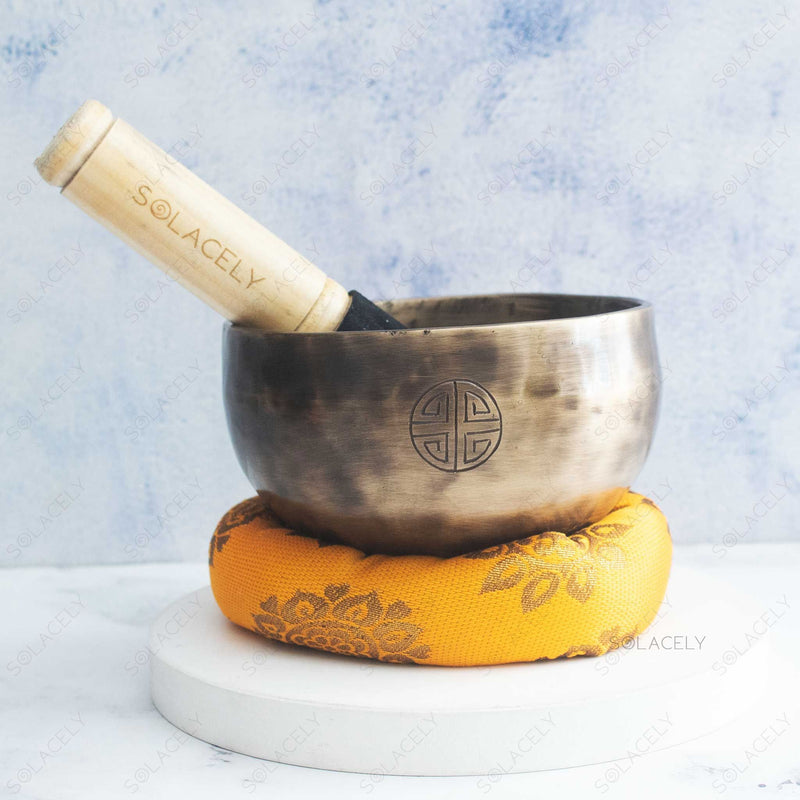
If you'd rather start at home with one instrument, a Tibetan bowl is the easiest entry point. Our Tibetan singing bowl meditation guide walks through a simple solo practice, and if sleep is your goal, singing bowls for sleep covers a short wind-down routine.
Instruments used in sound healing
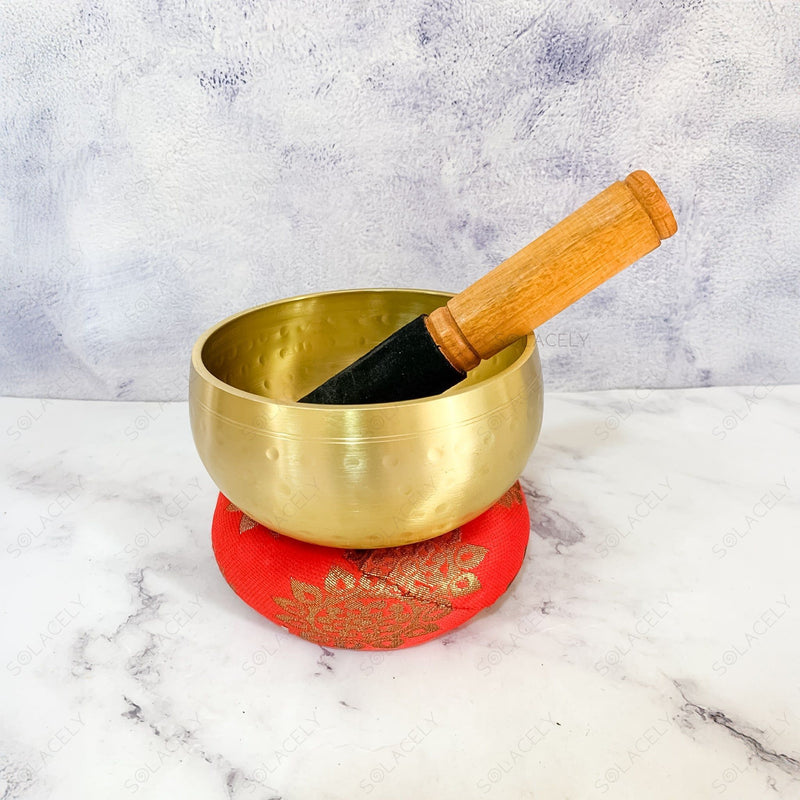
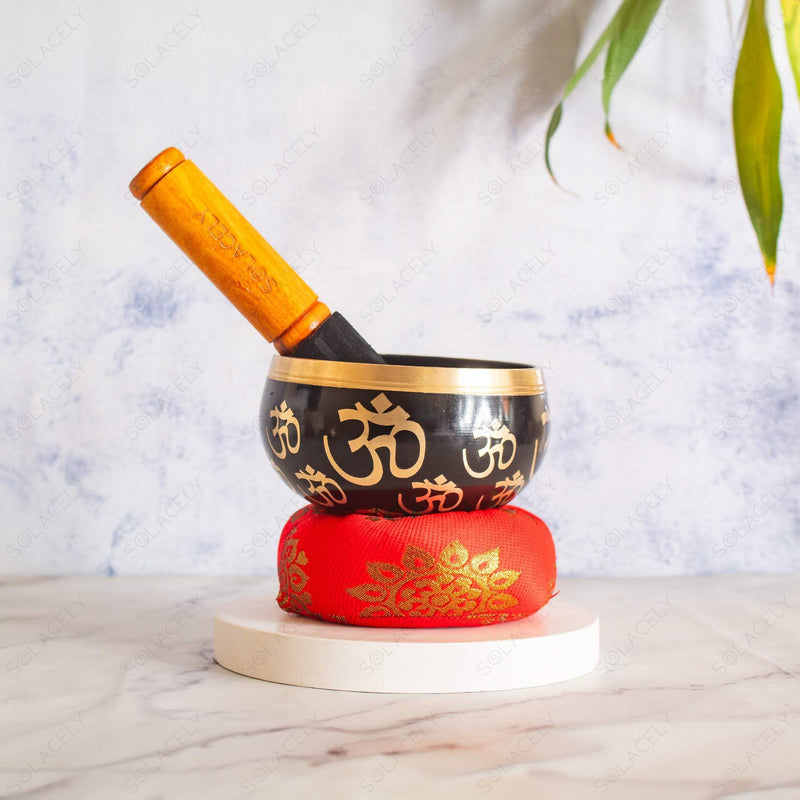
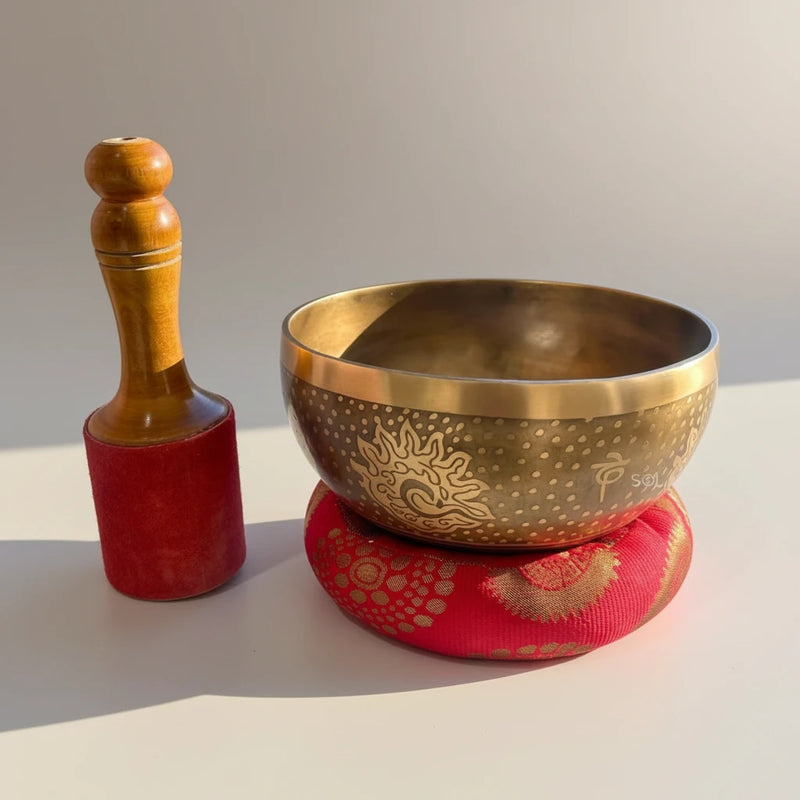
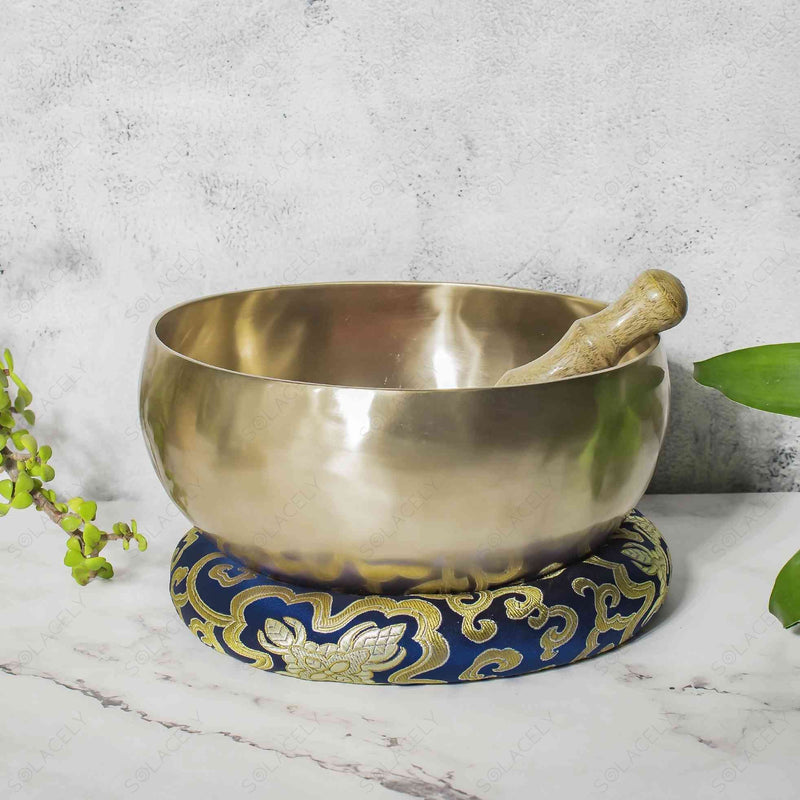
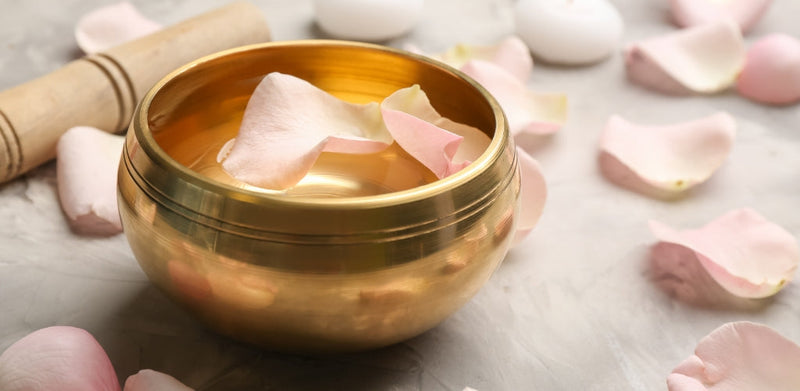
Sound healing draws on a small family of instruments, each with a different texture. Metal and crystal singing bowls give sustained, ringing tones. Gongs produce a huge, wavelike wash. Tuning forks deliver precise single notes, sometimes placed near the body. Chimes and the human voice, through humming and chanting, round out the palette.
Each tool feels distinct, and practitioners often layer them. A grounding low bowl under a bright chime creates the shimmer people associate with a sound bath. There's no single 'best' instrument; it comes down to the sound you find soothing.
| Instrument | Sound quality | Common role in a session |
|---|---|---|
| Tibetan (metal) singing bowl | Warm, complex, humming overtones | The workhorse; grounding tones and rim play |
| Crystal singing bowl | Pure, clear, glassy, long-sustaining | Bright, sustained notes; often tied to chakra themes |
| Gong | Huge, rolling, full-body wash | Peak of a session; deep, enveloping sound |
| Tuning fork | Precise single pitch | Focused, one-to-one work near the body |
| Chimes and bells | Light, sparkling, brief | Transitions, openings, and endings |
| Voice (humming, chanting) | Human, resonant, intimate | Mantra, Om, and toning |
Beginners almost always start with a Tibetan singing bowl because it's forgiving, portable, and affordable. To compare a single bowl against a graduated collection, see our singing bowl set guide.
Benefits people report vs overclaimed myths
People most commonly report deep relaxation, lower stress, a quieter mind, better sleep, and an emotional release after sound sessions. Those are real, valuable, and consistent with what relaxation and meditation generally do. The problem is the myths bolted on top, which promise cures, cellular 'retuning,' and disease reversal that the evidence simply doesn't support.
Keeping the two apart protects you from disappointment and from spending on false promises. Here's an honest split:
| Reasonable to expect | Overclaimed, treat with caution |
|---|---|
| A deeply relaxed, meditative state | 'Cures anxiety, depression, or disease' |
| Lower felt stress and tension | 'Retunes your cells to a healing frequency' |
| A calmer mind, easier sleep that night | 'Detoxifies the body through vibration' |
| A pleasant emotional release | 'A specific Hz number treats a specific illness' |
| A restful pause in a busy week | 'Replaces therapy, medication, or medical care' |
Think of the honest column as the reason to go and the cautious column as marketing to ignore. Sound work is a genuinely nice way to unwind, and for many people that's more than enough. For a grounded look at the mental side specifically, our guide to singing bowl benefits for the mind stays on the same honest footing. And if you want the wider practice and history, the singing bowl hub links every guide in one place.
The older roots: nada yoga, mantra, and temple bells
The yogic tradition has its own ancient relationship with sound as a spiritual tool, long before 'sound bath' became a wellness term. Nada yoga, literally the 'yoga of sound,' treats sound and vibration as a path to meditation and inner stillness. Mantra repetition and the chanting of Om use the voice as the instrument, and the ring of a temple bell has marked sacred space for centuries.
If sound healing already feels familiar to you, that's why. When you chant Om and feel the hum settle in your chest, you're doing something very close to what a modern toning session aims for. Mantra, in the Vedic and yogic tradition, is sacred sound repeated to focus the mind, and Om is treated as the primordial vibration. The steadiness of the repetition is the point, much like resting on a single bowl tone.
Temple bells add another layer. That bright, ringing note struck at the threshold of a shrine is meant to clear the mind and draw attention inward as you cross into it. Whether you frame that as devotion or as a nervous-system cue to arrive and pay attention, the effect rhymes with what a sound practitioner is after. If bells and chanting are already part of your life, you know how quickly sound can change the mood of a room. A metal singing bowl simply gives you a portable version of that at home.
How to try sound healing at home
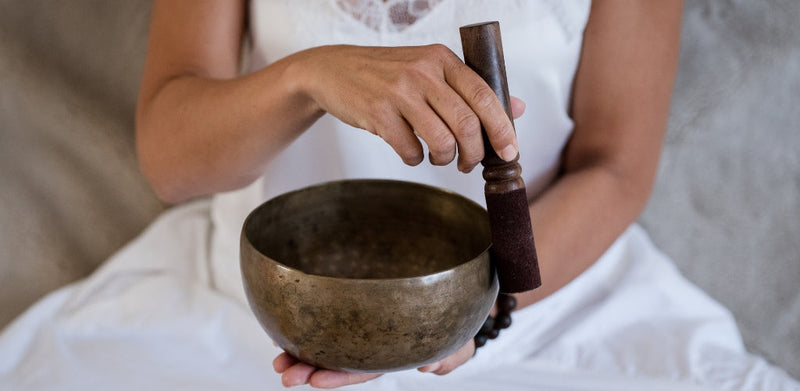
You can start sound healing at home with one Tibetan singing bowl, a quiet ten minutes, and no experience. Sit or lie down, strike the bowl softly, and listen until the tone fully fades before striking again. That's the whole practice. Add a few rounds of Om chanting if you like, and let the sound, not effort, do the settling.
A quick, honest note on cost and choosing. A decent beginner Tibetan singing bowl sits in the entry-level to mid-range band. The very cheapest bowls often sound thin and short, which defeats the purpose, while crystal bowls and multi-bowl sets climb into premium territory. For most people at home, one good mid-range metal bowl is plenty.
A simple starter routine:
- Settle. Sit comfortably, back tall, bowl resting on your flat palm or a cushion.
- Strike gently. Tap the rim once with the mallet and just listen to the full ring decay.
- Breathe with the tone. Let each strike be a slow inhale and a slower exhale.
- Add the rim, optionally. Circle the mallet steadily around the outside rim to draw out a continuous singing tone.
- Close in silence. After a few rounds, sit still and notice the quiet. That pause is the practice.
Keep it short and regular rather than long and rare. Five honest minutes most days will do more for you than an occasional hour. And remember what it is: a calming ritual you'll look forward to, not a treatment you're relying on.
Sources
- Goldsby TL, Goldsby ME, McWalters M, Mills PJ. Effects of Singing Bowl Sound Meditation on Mood, Tension, and Well-being: An Observational Study. Journal of Evidence-Based Complementary & Alternative Medicine, 2017
- PubMed record for the Goldsby et al. singing bowl study (PMID 27694559)
- National Center for Complementary and Integrative Health (NIH) — Meditation and Mindfulness: What You Need To Know
Frequently asked questions
About the author


Written by Chetna Sharma, crystal healing practitioner and co-founder of Solacely. Chetna has worked with healing crystals for over a decade and curates Solacely's protective stone collection.