The 12 astrological houses are twelve divisions of the sky in a birth chart, each governing a distinct area of life, from identity and money to relationships, career, and the spiritual. In this tradition the wheel starts at the Ascendant (the eastern horizon at your birth) and moves counterclockwise, so every house maps onto a different part of your story.
Key Takeaways
- A birth chart is split into 12 houses, each covering one life theme: self, money, siblings, home, creativity, work, partnership, transformation, belief, career, community, and the inner life.
- Houses, signs, and planets are three different layers. The house is the area of life, the sign is the flavour, and the planet is the active energy playing out there.
- The 1st house begins at the Ascendant, the point rising on the eastern horizon at your exact birth time, which is why a precise birth time matters.
- Houses 1, 4, 7, and 10 are the 'angular' houses, traditionally read as the most powerful because they anchor the chart's four corners.
- Astrology here is a cultural and interpretive tradition for reflection, not a science. Read your houses the way you would a personality lens, not a forecast.
What are the 12 astrological houses?
The 12 houses are twelve segments of a horoscope wheel that each represent a field of life. The sky at your birth is divided into these sections, and where the Sun, Moon, and planets fall shows which life areas they are said to colour. The system is ancient: according to Encyclopaedia Britannica, casting a horoscope by houses traces back to Hellenistic astrology over two thousand years ago.
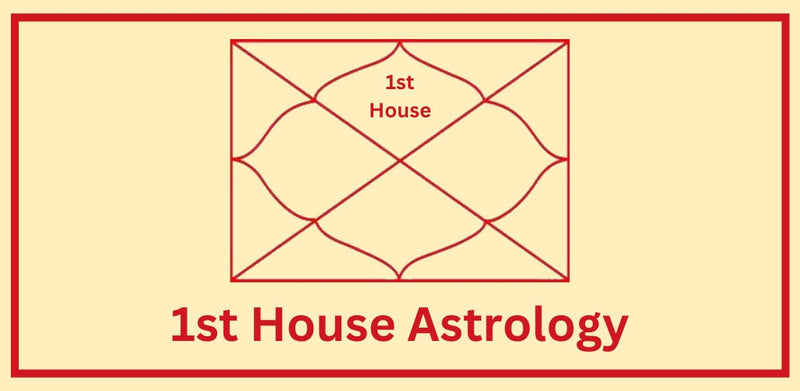
Think of the chart as a clock face turned counterclockwise. The Ascendant sits at the nine o'clock position and marks the cusp of the 1st house. From there the houses run in order, 1 through 12, each roughly a slice of the circle. The lower half of the wheel (houses 1 to 6) is often read as the personal, inward hemisphere; the upper half (houses 7 to 12) as the outward, social hemisphere.
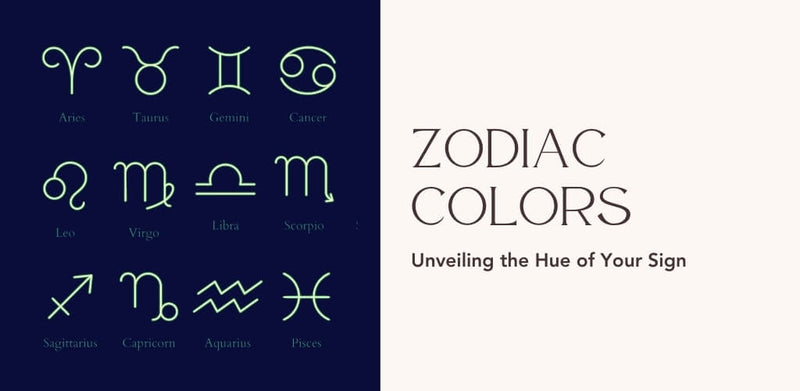
None of this is a measured force. In Indian astrology (Jyotish) the houses are called bhavas, and the same twelve-fold logic appears, self, wealth, siblings, home, and so on, though the calculation differs. Whether you read a Western chart or a Vedic one, the houses are a way of organising life into themes you can reflect on. If you are new to sign meanings alongside the houses, our zodiac colours guide is a gentle companion.
Houses vs signs vs planets: how they fit together
Houses, signs, and planets are three layers that combine to make a chart readable. The house is the where (the area of life), the sign is the how (the style or mood), and the planet is the what (the active energy). A planet in a sign in a house is read as one energy, expressed in one style, playing out in one part of life.
A simple sentence structure helps. 'Mars (drive) in Aries (bold, direct) in the 10th house (career)' would be read, in this tradition, as someone who pursues their profession with force and independence. Change any one layer and the reading shifts. The three are not interchangeable, and confusing them is the most common beginner mistake.
Here is the distinction at a glance.
| Layer | What it means | Everyday analogy |
|---|---|---|
| House | The area of life affected | The room in the house |
| Sign | The style or flavour of energy | The decor of the room |
| Planet | The active force at work | The person in the room |
The signs bring their own colour to each house, and understanding both together deepens a reading. If you want to explore how a single sign is described, our Libra birthstone guide covers that sign's traditional associations in more detail.
How to find your houses (and why birth time matters)
To find your houses you need three details: your date of birth, your exact time of birth, and your place of birth. The time is the crucial one. The Ascendant, which sets the 1st house, moves through all twelve signs roughly every 24 hours, changing about every two hours, so a chart cast for the wrong time places every house incorrectly.
The steps are straightforward. First, find your birth time from a hospital record, birth certificate, or family memory, as close to the minute as you can. Second, enter the date, time, and city into a birth-chart calculator or take it to an astrologer. Third, the chart returns your Ascendant sign and shows which sign sits on each of the twelve house cusps, and where your planets land.
- Get the time right. Even 20 minutes can shift a cusp into the next sign.
- Use your exact birthplace, since latitude changes the house layout.
- Note your Ascendant first, as it anchors the whole wheel.
- Then read planet by house, not planet by sign alone.
If you don't know your birth time at all, some traditions use a 'whole sign' chart that leans on your date and place. It is less precise about houses but still workable. For a deeper look at where the wheel begins, our first house astrology guide unpacks the Ascendant on its own.
The 12 houses and what each one governs
Each of the twelve houses is traditionally assigned a cluster of life themes, running from the self outward to the collective and the unseen. Below is what each house is said to govern in the classical Western tradition, with the natural sign and ruling planet each house is linked to. Read these as themes for reflection, not fixed rules about your life.
First House (Ascendant): self and identity
The 1st house is the house of the self. It covers your outward personality, physical appearance, first impressions, and the way you meet the world. Its cusp is the Ascendant, the sign that was rising on the eastern horizon at your birth. Naturally linked to Aries and Mars, it is read as the 'front door' of the chart. Our first house guide goes deeper on this.
Second House: money and values
The 2nd house governs money, possessions, earning power, and self-worth. It describes how you make and hold resources, and what you truly value. Linked to Taurus and Venus, it is the house of the tangible: income, belongings, and the security they bring. Our second house guide explores its themes of value and stability.
Third House: communication and siblings
The 3rd house rules communication, thinking, learning, short journeys, and siblings. It is the house of the everyday mind, how you speak, write, and process information, and of your immediate surroundings and neighbours. Linked to Gemini and Mercury, it shapes curiosity and connection. Our third house guide covers it in full.
Fourth House: home and roots
The 4th house governs home, family, ancestry, and your inner emotional foundation. It sits at the base of the chart and is read as your roots, your childhood, and the private self behind the public face. Linked to Cancer and the Moon, it is one of the four angular houses. Our fourth house guide unpacks its meaning.
Fifth House: creativity and pleasure
The 5th house rules creativity, romance, children, play, and self-expression. It is the house of joy, what you make, whom you flirt with, how you have fun, and the spark of doing things for love rather than duty. Linked to Leo and the Sun, it is warm and expressive. Think hobbies, art, and the heart's delight.
Sixth House: work, health, and routine
The 6th house governs daily work, health, habits, and service. It describes your routines, your approach to wellbeing, and the small duties that keep life running, colleagues, chores, and self-care. Linked to Virgo and Mercury, it is the house of the practical everyday. It closes the personal, lower half of the wheel.
Seventh House: partnership and marriage
The 7th house rules one-to-one partnerships: marriage, committed relationships, and close business alliances. Sitting directly opposite the 1st house, it is the 'other' to your 'self.' Linked to Libra and Venus, it is an angular house and traditionally central to relationship readings. It also covers open enemies and legal partners.
Eighth House: transformation and shared resources
The 8th house governs transformation, intimacy, shared money, inheritance, and the deep cycles of endings and beginnings. It is read as the house of what we merge with others and what changes us profoundly. Linked to Scorpio and Pluto (and Mars in older systems), it is intense and private. Our crystals for Scorpio guide speaks to this sign's depth.
Ninth House: belief, travel, and higher learning
The 9th house rules philosophy, higher education, long-distance travel, and spiritual belief. It is the house of the big picture, your worldview, faith, and the search for meaning beyond the familiar. Linked to Sagittarius and Jupiter, it expands the mind outward. Think universities, pilgrimages, and guiding principles.
Tenth House: career and public life
The 10th house governs career, reputation, ambition, and public standing. Sitting at the top of the chart, its cusp is the Midheaven, the most visible point in the wheel. Linked to Capricorn and Saturn, it is an angular house read as your legacy and life direction, how the world sees your work.
Eleventh House: community and hopes
The 11th house rules friendships, groups, networks, and long-term hopes. It is the house of the collective, the communities you belong to, the causes you join, and the future you wish for. Linked to Aquarius and Uranus (and Saturn traditionally), it looks outward to society and shared dreams.
Twelfth House: the inner and hidden
The 12th house governs the subconscious, solitude, rest, endings, and the spiritual. It is the most private house, read as dreams, hidden matters, and what dissolves the ego. Linked to Pisces and Neptune (and Jupiter traditionally), it closes the wheel before the self begins again at the 1st. Many read it as the house of surrender and retreat.
Angular, succedent, and cadent houses
The twelve houses are also grouped into three types of four, each carrying a different weight in a reading. The four angular houses (1, 4, 7, 10) are considered the most powerful, because they mark the chart's four corners: the Ascendant, the base, the Descendant, and the Midheaven. Planets here are read as strong and action-oriented.
The succedent houses (2, 5, 8, 11) follow the angles and are linked to stability, resources, and consolidation, what you build and hold. The cadent houses (3, 6, 9, 12) come before the next angle and are tied to learning, adjustment, and transition, what you process and adapt.
| House type | Houses | Traditional theme |
|---|---|---|
| Angular | 1, 4, 7, 10 | Action, initiative, the strongest placements |
| Succedent | 2, 5, 8, 11 | Stability, resources, holding and building |
| Cadent | 3, 6, 9, 12 | Learning, flexibility, transition and release |
This grouping is why two people can have the same planet yet read it differently: a planet in an angular house is emphasised, while the same planet in a cadent house is read as quieter. It is one more layer of interpretation, not a hard hierarchy.
House cusps, rulers, and empty houses
A house cusp is the dividing line where one house begins, and the sign sitting on that cusp shapes how the house is read. Each cusp has a 'ruler,' the planet that governs the sign on that line, and where that ruling planet sits elsewhere in the chart is said to link the two areas of life together. This is how astrologers weave a chart into a single story.
A common worry among beginners is the 'empty house,' a house with no planets in it. In this tradition an empty house is not a blank or a problem. It simply means that life area runs on the theme of the sign on its cusp and its ruling planet, without a planet spotlighting it. Most charts have several empty houses, and it is entirely normal.
Reading cusps and rulers is where a chart becomes personal rather than generic. If astrology draws you toward specific dates and cosmic timing, our Lion's Gate Portal 888 guide looks at one such moment in the astrological year.
Sources
- Encyclopaedia Britannica, astrology: history, the horoscope, and the house system. britannica.com
- Encyclopaedia Britannica, horoscope, the chart of the heavens and its twelve houses. britannica.com
- Encyclopaedia Britannica, Ascendant and the rising sign in a natal chart. britannica.com
Frequently asked questions
About the author


Written by Chetna Sharma, crystal healing practitioner and co-founder of Solacely. Chetna has worked with healing crystals for over a decade and curates Solacely's protective stone collection.