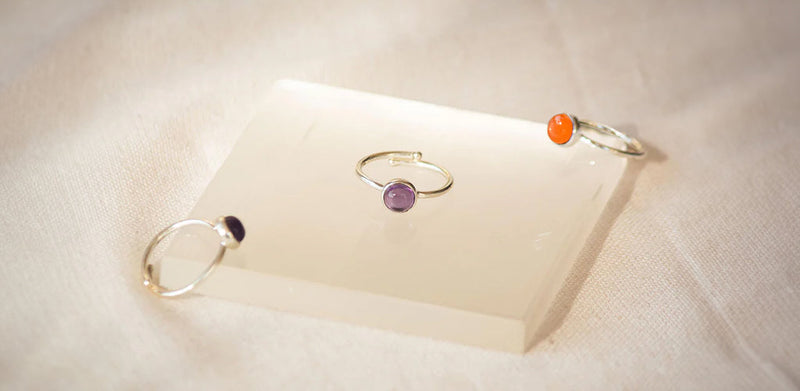
An amethyst ring is purple quartz set for daily wear. Amethyst rates 7 on the Mohs scale, which is durable enough for regular use but soft enough to scratch, so setting, sizing and cleaning all matter. Colour quality and cut are what separate a stone that glows from one that sits flat.
Key takeaways
- Amethyst is the purple variety of quartz, coloured by iron impurities and natural irradiation. It rates 7 on the Mohs scale and is the February birthstone.
- Prolonged sunlight can fade amethyst, so long charging sessions on a windowsill slowly cost you colour.
- Look for an even medium to dark purple with no pale patch on one side. A ring sits lower and in more shadow than a pendant, so choose slightly brighter than feels right in the shop.
- For everyday wear, a bezel or low profile setting protects the girdle and corners far better than high claws.
- Clean with warm soapy water and a soft brush, and store the ring in its own pouch.
Why do people choose an amethyst ring?
Amethyst gives you a strong purple in a stone hard enough to wear daily, without the price of a sapphire. Amethyst is the purple variety of quartz and the birthstone for February, which makes it a common choice for birthday rings, anniversary rings and gifts that need to mean something.
The colour comes from iron in the quartz structure combined with natural irradiation underground. Quartz is one of the most abundant minerals in the Earth's crust, which is exactly why amethyst stays affordable at ring size. Before large Brazilian deposits were worked in the nineteenth century, the stone sat alongside ruby and emerald in European regalia. Supply changed that. The look did not change.
The traditional associations are the other half of the appeal. Amethyst has long been linked with clear thinking, sobriety and calm, and modern crystal practice usually assigns it to the crown and third eye chakras. Our fuller amethyst meaning and properties guide covers that side properly.
What colour should an amethyst ring be?
Look for a medium to dark purple that holds its colour evenly across the whole stone. The most valued material shows red or blue flashes under light, and the trade uses names like Deep Siberian for the top end and Rose de France for pale lilac. Even colour matters more than depth alone.
Colour zoning is the first thing to check. Amethyst often grows with the purple concentrated in bands or at the crystal tips, so a poorly oriented cut can leave a pale patch on one side. Tilt the ring under a lamp and again in daylight before you commit. Zoning that hides in a showcase becomes obvious on a hand.
Cut quality does real work here. A shallow stone shows a window, a washed out area in the middle where light passes straight through instead of bouncing back. Deeper cuts hold colour, which is why two stones of the same weight can look nothing alike.
One thing buyers underestimate: a ring sits lower and in more shadow than a pendant, and your own hand blocks light from below. A stone that reads rich under shop spotlights can look flat at a desk. Choose slightly brighter than feels right in the store.
How do you choose an amethyst ring you will wear every day?
Buy the stone you enjoy looking at in ordinary light, then check the ring is built for your week. Amethyst rates 7 on the Mohs scale, so clarity, cut style and proportion matter as much as colour once the ring leaves the display case.
Clarity comes first. Good amethyst is usually eye clean, meaning you see nothing without magnification at normal reading distance. Faint veils and fine feathers are common and completely harmless when they sit away from the edges. What is worth a second look is a fracture that reaches the surface near the girdle, because that is where knocks land.
Cut style changes the whole mood of the ring. Brilliant facets throw light and read brighter on a hand. Step cuts like the emerald cut give long clean flashes and show colour depth beautifully. A cabochon gives soft glow under a rounded top that shrugs off contact, which makes it quietly the most practical choice for anyone who works with their hands.
Bringing out colour with gentle warmth is a long established and entirely stable practice across the coloured stone trade, and it is part of why so much amethyst reaches the counter with rich, even purple. Choose the shade you actually want to look at. A good seller will happily talk you through where a stone came from and how it was finished.
Then match the stone to the hand. A large centre stone on a slim band looks dramatic and catches on everything, while a five to eight millimetre stone in a low setting disappears into a day at work. In our experience, the people who choose the smaller stone end up wearing it four times as often. Try both on before deciding.
Which finger and hand should you wear an amethyst ring on?
Any finger you like. Tradition points at a few: the left ring finger for commitment, the index finger for authority in palmistry, and the little finger for negotiation. Crystal practice often calls the left hand receiving and the right hand giving.
That receiving and giving idea is one of the warmer parts of the tradition, and plenty of people use it to decide. If wearing amethyst on your left hand helps you set an intention for the day, that is reason enough. If it does not speak to you, wear the ring wherever it looks best on you.
The practical argument runs alongside it. Your dominant hand takes most of the knocks: door handles, keyboards, gym bars, steering wheels. A stone at Mohs 7 collects surface scratches faster there, so a non dominant hand placement buys years of polish. The same reasoning applies to beads, which we cover in the guide to which hand to wear a crystal bracelet on.
What setting and metal suit a Mohs 7 stone?
Choose a bezel or a low profile setting for daily wear. Quartz sits at 7 on the Mohs hardness scale, above steel but below topaz, sapphire and diamond. That is durable, not invincible, and the edges of a faceted stone are where damage starts.
Here is the part most guides skip: ordinary household dust contains quartz, which sits at exactly the same hardness as amethyst. That is why any stone at or below 7 gradually loses its polish through normal handling rather than through one dramatic knock. A bezel covers the girdle and takes that abrasion instead.
Shape follows the same logic. Rounds, ovals and cushions have no sharp points. Marquise, pear and princess cuts end in corners that chip, so they need V shaped claws or a protective rim. If a stone carries a fracture reaching the surface, give it a bezel and treat it gently whatever its shape.
For metal, platinum and 14 or 18 carat gold hold prongs well over decades. Sterling silver is softer, bends more easily and tarnishes, though it flatters the colour and keeps the price down. Rhodium plating on white gold wears off and needs redoing every few years. If you are still comparing stones, the best crystals for rings roundup is a useful next read.
How should an amethyst ring fit?
It should slide on with light resistance and come back over the knuckle with a small tug. Measure at the end of the day at normal room temperature, and measure on three separate days before ordering. Fingers change size with heat, salt, exercise and altitude, often noticeably within one day.
Ring size is really inner circumference. UK sizes use letters and US sizes use numbers, but both map to a measurement in millimetres, so ask for the millimetre figure when you buy online. That number travels between systems without confusion.
Band width changes the fit too. A wide band contacts more skin and reads tighter than a narrow one at the same nominal size, so jewellers commonly suggest going up a quarter to a half size once a band passes roughly six millimetres. If your knuckle is much larger than the base of your finger, ask about sizing beads or a hinged shank instead of sizing up and living with a ring that spins.
One amethyst specific point on resizing: heat can alter the colour of amethyst, so a careful jeweller removes the stone before putting a torch anywhere near the shank. Ask whether they plan to do that. It is a fair question and a good bench will not mind it.
How do you clean and care for an amethyst ring?
Warm water, a drop of mild washing up liquid and a soft brush handle almost everything. Rinse and dry fully. Amethyst can fade with prolonged exposure to strong light and heat, so keep the ring away from long sun sessions and away from steam cleaners.
Ultrasonic machines are a conditional yes. They are generally fine for clean amethyst, but they are best avoided for stones that are fracture filled or heavily included, because the vibration can open an existing fracture. If you are not sure what your stone is carrying, soap and water is always the safe answer.
The sunlight point deserves emphasis, because windowsill charging is such a popular habit. Hours of direct sun, month after month, quietly lighten purple quartz over the years. Moonlight, sound, a short rinse or a rest on selenite give you the same ritual without the cost to the colour.
| Task | Do this | Avoid |
|---|---|---|
| Routine cleaning | Warm water, mild soap, soft brush | Bleach, acetone, abrasive paste |
| Deep cleaning | Have a jeweller check the setting first | Steam, plus ultrasonic on included or filled stones |
| Cleansing ritual | Moonlight, sound, a short rinse | Hours in direct sun |
| Storage | Its own soft pouch | Loose beside harder stones |
| Daily wear | On last, after lotion and perfume dry | Gym, gardening, chlorinated pools |
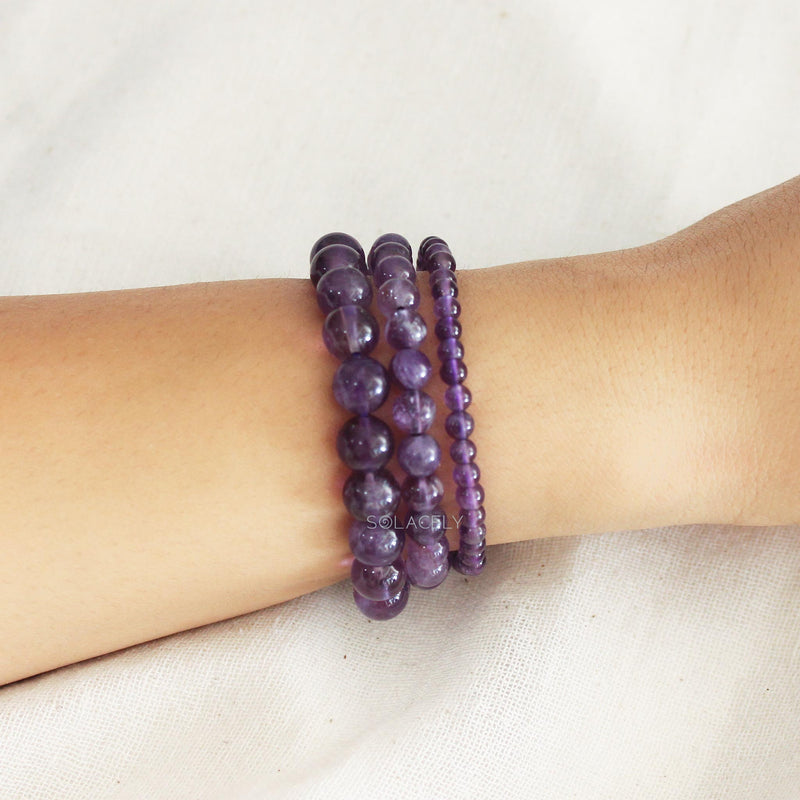
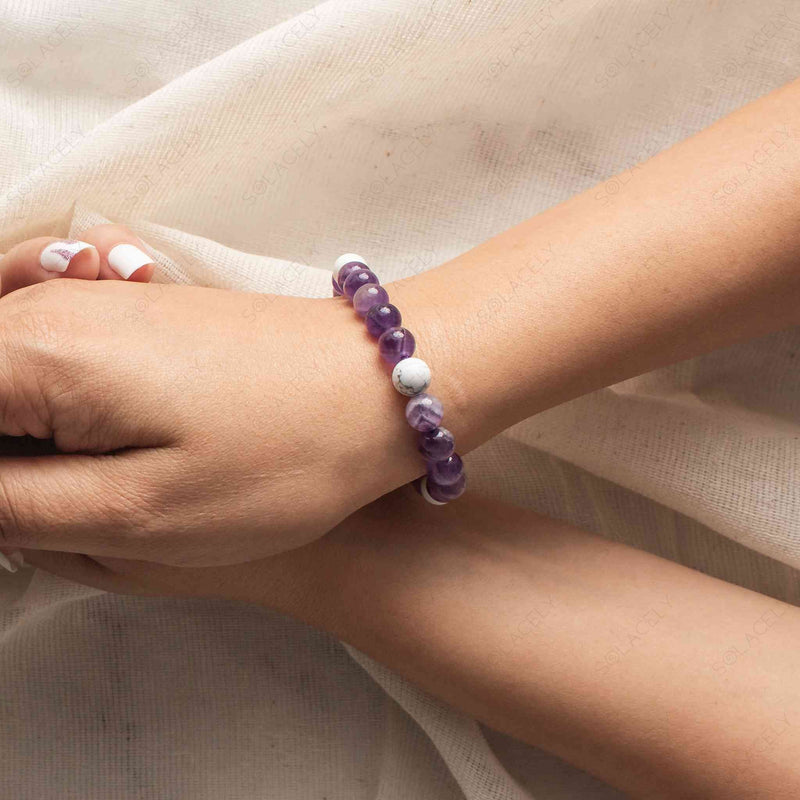
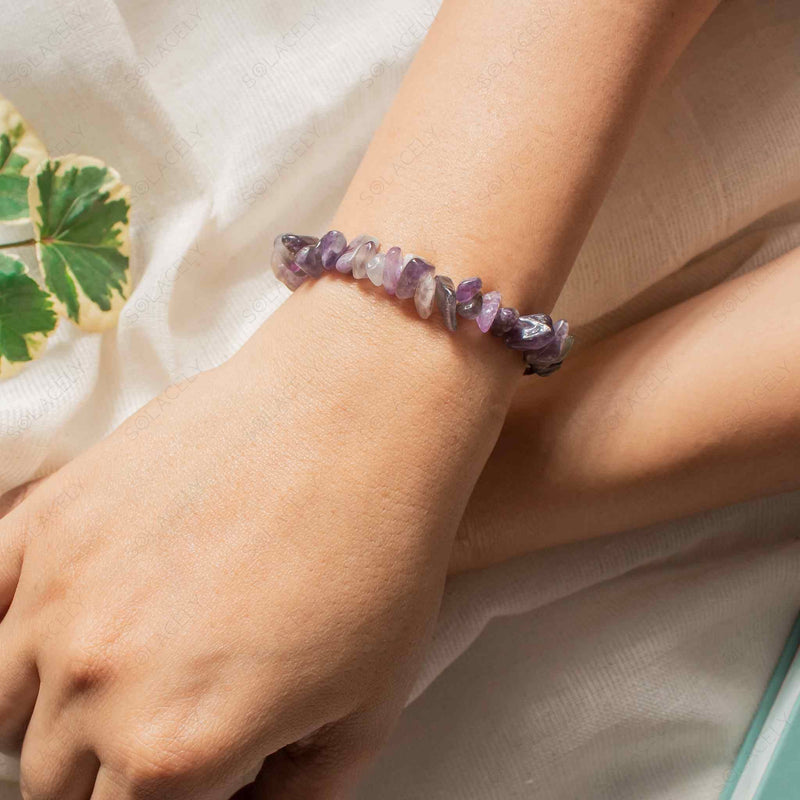
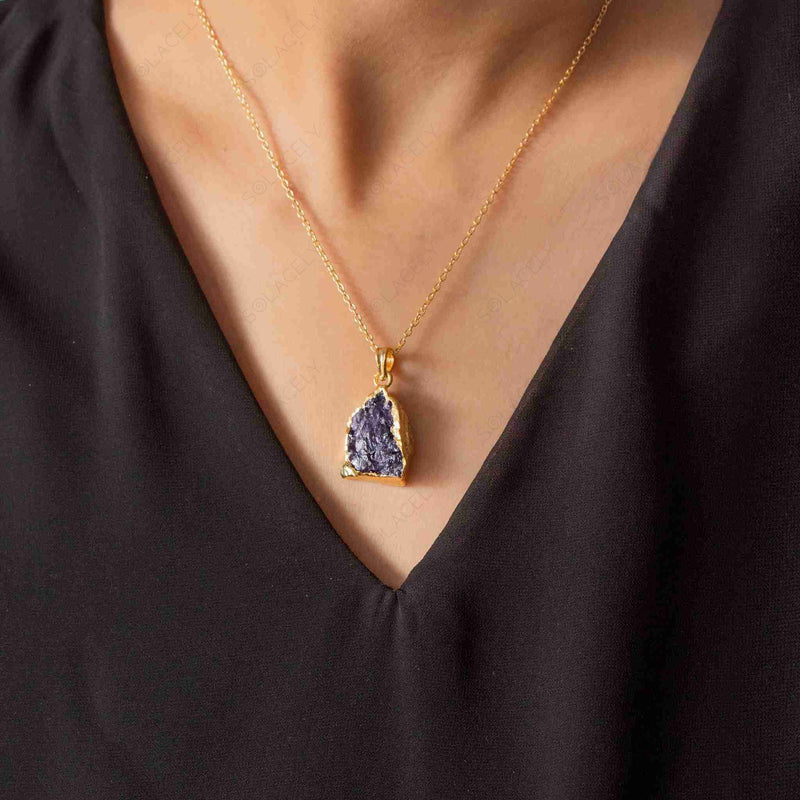
Take the ring off for workouts, gardening, swimming and household cleaning. Store it separately so harder stones cannot scratch it. If you want the same stone in a format that takes fewer knocks, the amethyst jewellery guide covers pendants and bracelets as well.
The properties described here reflect traditional and cultural belief around crystals. They are not medical claims and are not a substitute for professional healthcare. If you are managing a health concern, speak to a qualified practitioner.
Sources
Written by Chetena Sharma. Reviewed by the Solacely editorial team.
Frequently asked questions
About the author


Written by Chetna Sharma, crystal healing practitioner and co-founder of Solacely. Chetna has worked with healing crystals for over a decade and curates Solacely's protective stone collection.