Agate is a mineral, a banded variety of chalcedony quartz. A geode is a shape, a hollow rock lined with crystal. They are not competing categories, which is why the comparison confuses people: a geode can be lined with agate, and a great many agates began life inside one.
Key takeaways
- Agate names a material. Geode names a structure. One is what the stone is, the other is what shape it grew in.
- Agate is banded chalcedony, a microcrystalline form of quartz, at 7 on the Mohs hardness scale.
- A geode is a rounded, hollow rock whose cavity is lined with crystal, which may be amethyst, quartz, calcite, celestite or agate.
- Agate geodes are the overlap: banded agate around the rim, often with a quartz or amethyst centre.
- Choose agate for something to wear or hold, and a geode for something to keep on a shelf.
What is agate?
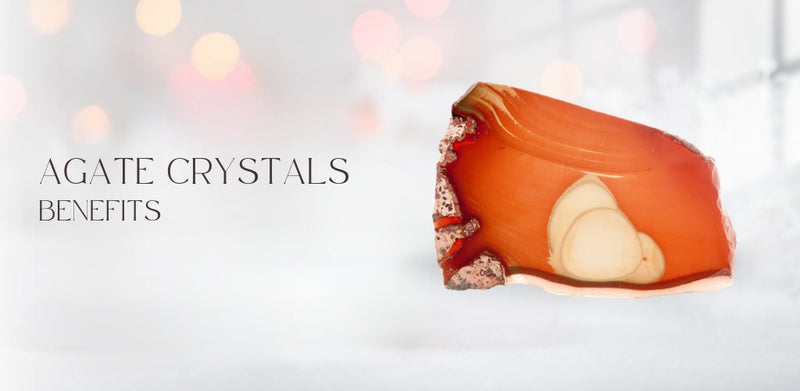
Agate is a banded variety of chalcedony, which is quartz made of crystals too small to see individually. The bands are its signature: concentric rings or parallel stripes in grey, white, blue, red, brown or black, laid down as silica-rich water deposited layer after layer in a cavity.
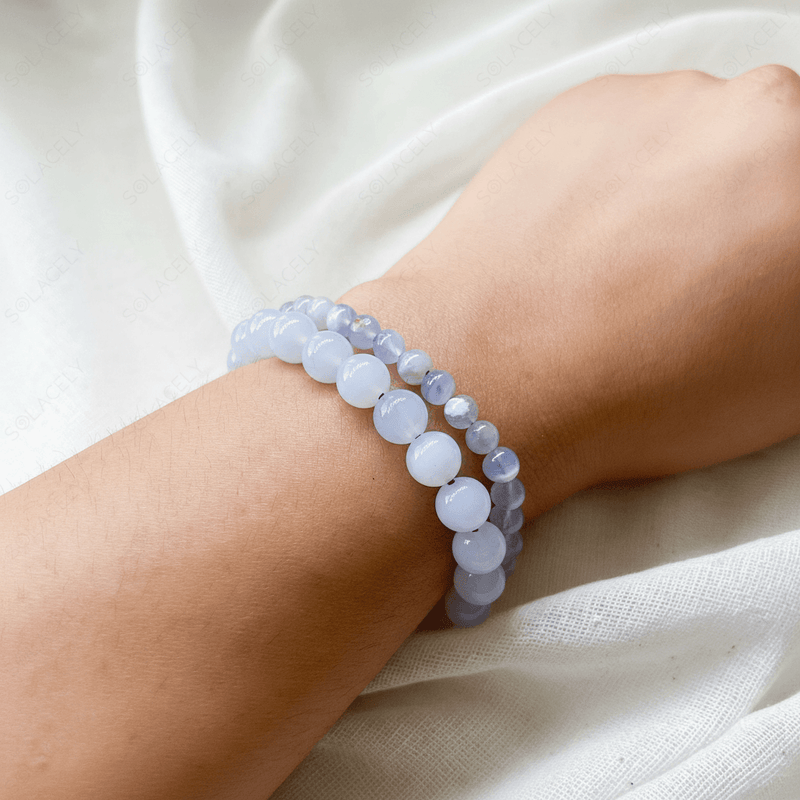
Because it is quartz, agate is hard, sitting at 7 on the Mohs scale, and it takes a high polish. That combination is why it turns up as beads, cabochons, bookends, coasters and slices. It is tough enough for a bracelet worn every day and handsome enough for a table.
In crystal tradition agate is the steadying stone, long associated with balance, patience and evenness of temper. Blue lace agate is kept for calm speech, red agate for warmth and drive, moss agate for growth. Our fuller guide to agate crystals and their meanings goes variety by variety.
What is a geode?
A geode is a rock with a hollow centre lined with crystal. From the outside it is unremarkable, a rounded lump of dull grey or brown. Cut or cracked open, it reveals a cavity of crystal points or banded layers, and that hidden interior is the entire point of collecting them.
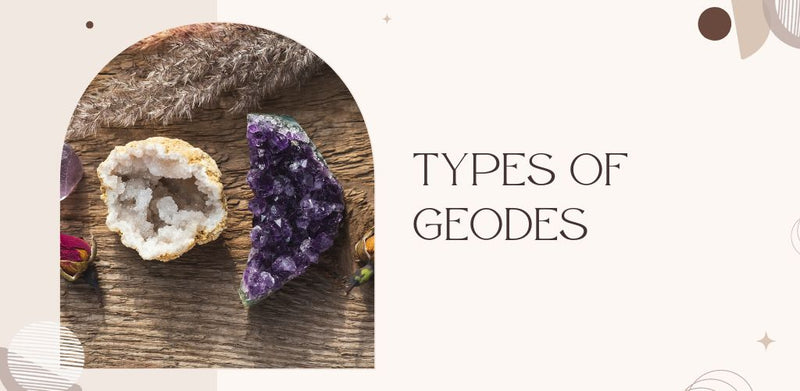
The word describes the structure, not the mineral. Whatever crystallised inside gives the geode its name, so you get amethyst geodes, clear quartz geodes, celestite geodes, calcite geodes and agate geodes. The same hillside can yield several kinds depending on the chemistry of the water that moved through the rock.
Geodes begin as a void, usually a gas bubble in cooling lava or the space left behind by a buried root or shell. Mineral-rich groundwater seeps in and deposits crystal on the walls, building inward very slowly. Our guide to the types of geodes covers each variety in turn.
Agate compared with a geode
The clearest way to hold the difference is that agate answers "what is it made of" and geode answers "what shape did it grow in". A stone can be both at once, or either on its own. The table sets out where they genuinely differ.
| Agate | Geode | |
|---|---|---|
| What the word names | A material, banded chalcedony quartz | A structure, a hollow crystal-lined rock |
| Interior | Solid throughout | Hollow, lined with crystal |
| Appearance | Concentric or parallel bands | Plain shell, crystal cavity within |
| Hardness | 7 on the Mohs scale | Depends on the lining, 3 for calcite up to 7 for quartz |
| Usual form | Beads, slices, cabochons, coasters | Halves, cathedrals, whole nodules |
| Traditionally kept for | Balance, patience, steady temper | The quality of whichever crystal lines it |
Where the two overlap
An agate geode is both things at once, and it is common. The cavity fills from the walls inward with banded agate first, then, if the mineral supply holds out, quartz or amethyst points grow in the space that remains. Cut across, you see agate rings around the rim and crystal in the middle.
If the cavity fills completely, there is no hollow left and the result is a solid agate nodule rather than a geode. That is the whole distinction in a sentence: the hollow is what makes it a geode, and running out of mineral before running out of space is what leaves the hollow.
Both belong to the quartz family, which is why the two words end up in the same conversation so often. Our overview of the types of quartz crystals shows how agate, amethyst, citrine and clear quartz all sit on the same family tree.
Which should you choose?
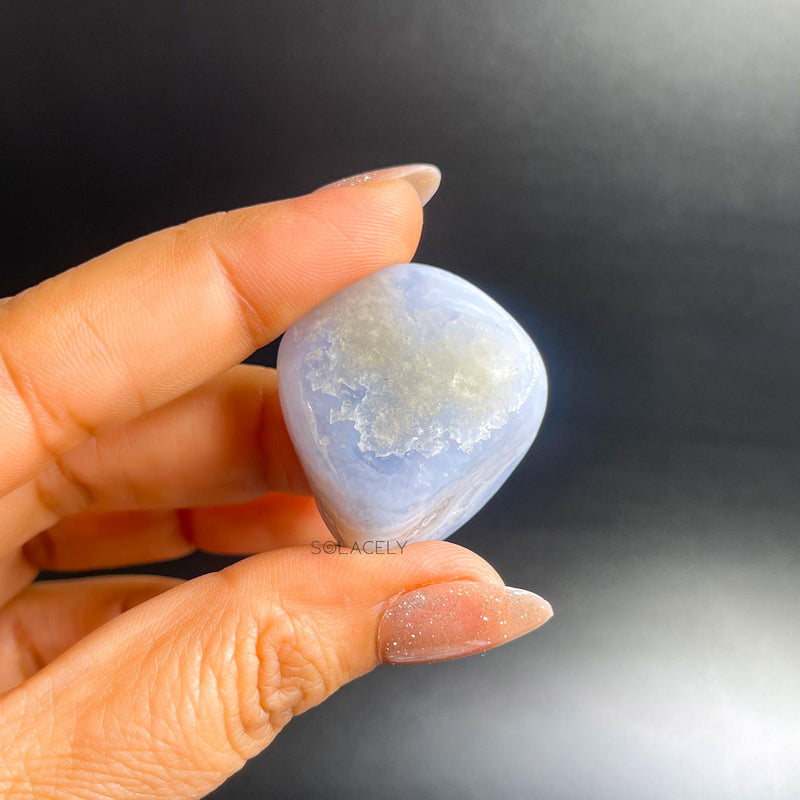
Choose agate if you want something to wear or carry. It is hard, it polishes beautifully, and it comes as bracelets, pendants and pocket-sized tumbles. Blue lace agate is the calm-speech choice, red agate the warm and energising one, and a plain grey banded slice is quietly handsome on a desk.
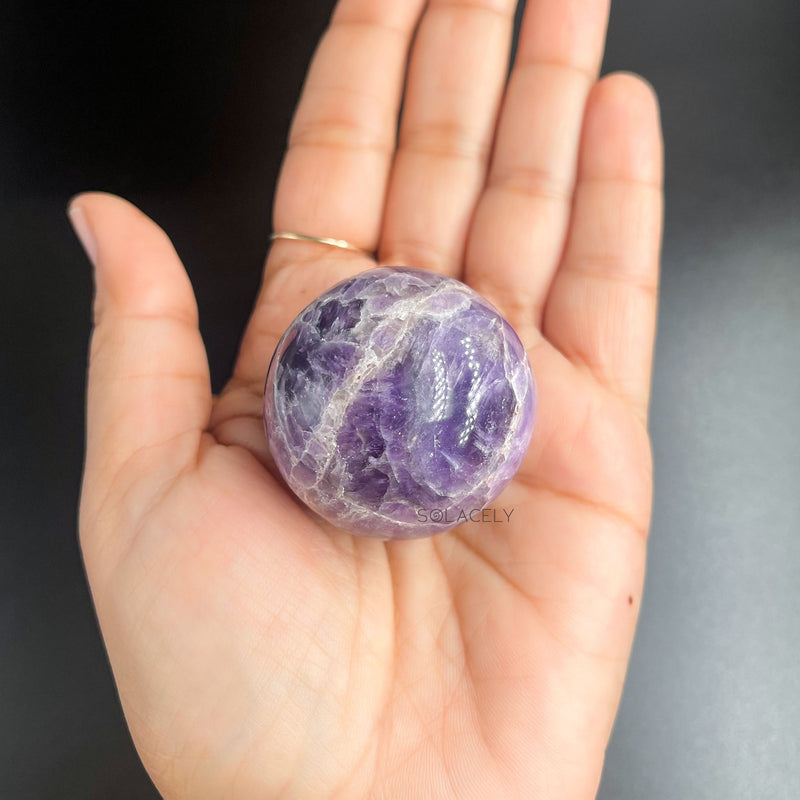
Choose a geode if you want a presence in a room. Geodes are display pieces, kept on shelves, mantelpieces and console tables, and they hold a corner in a way a small stone cannot. An amethyst geode in a bedroom is the classic pairing, traditionally kept for rest and a quieter mind.
If you want both qualities, an agate geode half is the obvious answer: banded rings you can trace with a finger and a crystal interior that catches the light. It is also the piece that makes the relationship between the two words immediately obvious to anyone who picks it up, which is why agate geode halves are so often the first thing a new collector buys.
Caring for agate and geodes
Agate is easy. At 7 on the Mohs scale it shrugs off everyday wear, and warm soapy water with a soft cloth is all a bracelet or slice needs. Take it off before the gym or a swim, and store it away from harder stones that could scratch the polish.
Geodes ask for a little more thought, because care depends on what lines the cavity. Quartz and amethyst tolerate a brief rinse. Celestite and calcite are soft, close to 3 on the scale, and must stay dry, and calcite reacts to acids, so keep vinegar and lemon-based cleaners away. Dust between the points with a soft dry brush.
Keep amethyst, whether as a geode or a bead, out of long hours of hard direct sun, since prolonged strong light fades the colour permanently. For cleansing in the spiritual sense, sound, incense smoke and moonlight suit both agate and geodes, and our guide to how to cleanse and charge crystals sets out each method.
Agate and geodes are kept as part of a long-standing spiritual and cultural tradition. They are not a medical device or treatment, and they do not diagnose, treat, cure or prevent any condition. Nothing here replaces advice from a doctor or other qualified professional. Cut geodes can have sharp crystal edges and heavy pieces can fall, so keep them out of reach of babies and young children.
Sources
- Geology.com, Agate: banded chalcedony and its varieties
- Geology.com, Geodes: formation and structure
Written by Chetena Sharma. Reviewed by the Solacely editorial team.
Frequently asked questions
About the author


Written by Chetna Sharma, crystal healing practitioner and co-founder of Solacely. Chetna has worked with healing crystals for over a decade and curates Solacely's protective stone collection.