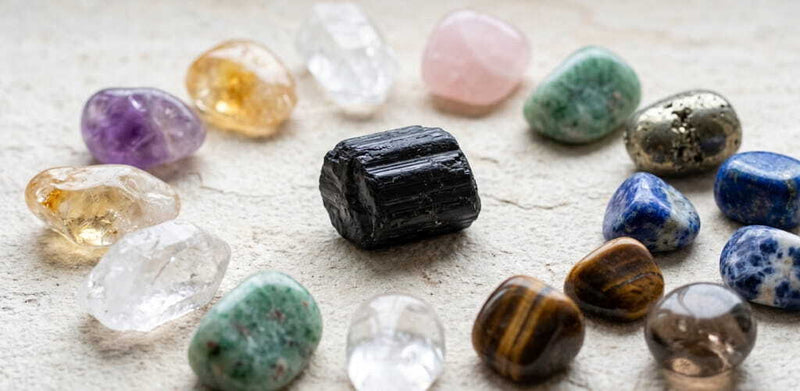
Black tourmaline and citrine is the pairing people choose when a week needs both a boundary and some forward motion. The dark stone is kept for grounding and holding a line, the gold one for confidence and opportunity. They also share a hardness, which makes the pair easy to wear daily.
Key takeaways
- Black tourmaline is schorl, the iron rich member of the tourmaline group, at 7 to 7.5 on the Mohs scale. It is the most abundant tourmaline in nature by a wide margin.
- Citrine is the yellow to orange variety of quartz, at 7. Matched hardness means neither stone marks the other in a stacked bracelet.
- Traditional practice puts tourmaline at the root for grounding and citrine at the solar plexus for confidence, so the pair covers boundaries and momentum together.
- Citrine's merchant's stone nickname is genuinely old. European traders kept a piece in the coin purse, and the habit is recorded in period lapidary writing.
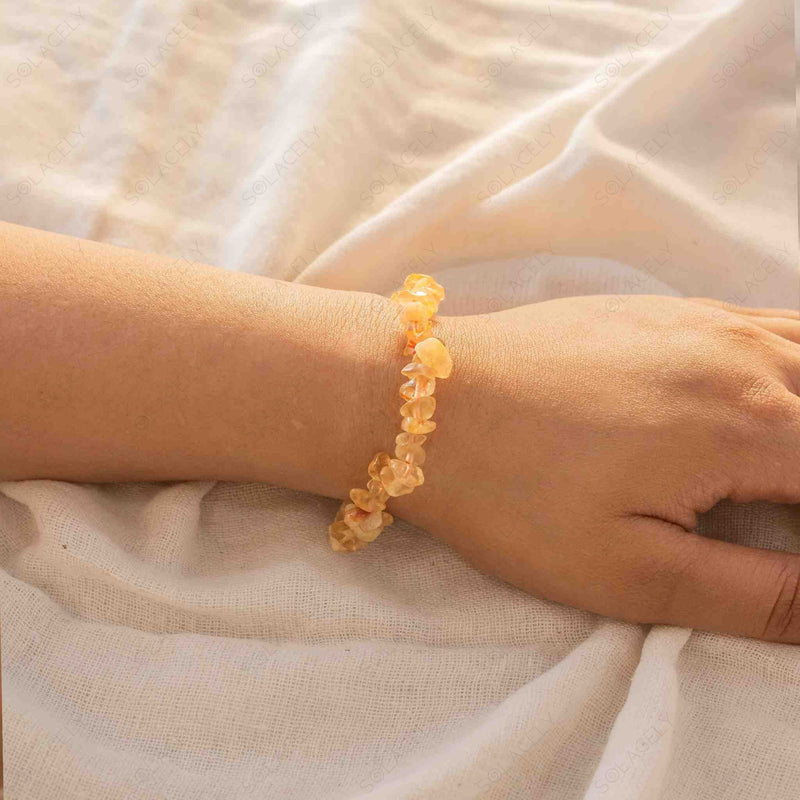
- Citrine runs from a pale champagne through honey to a deep madeira gold. Choose the depth you want to wear.
- Everything described here is traditional belief and cultural practice.
Why are black tourmaline and citrine paired?
Because they split the work rather than doubling it. Most popular pairings run on colour contrast or on one stone amplifying another. This one runs on a different axis: defence and offence, the boundary that lets you say no and the nerve that lets you say yes to the right thing.
In chakra language the two sit low and middle. Black tourmaline is placed at the root, where practitioners talk about staying in your own space. Citrine is placed at the solar plexus, the centre tied to personal power and forward action. Between them they cover a working day rather than a mood.
In our experience it is the self-employed who reach for this combination most: freelancers, salespeople, coaches, anyone whose week involves both protecting their deep work time and chasing the next thing. If you want the wider set of partners for either stone, our guides to black tourmaline combinations and citrine combinations lay them out.
What is black tourmaline?
Black tourmaline is properly called schorl, the sodium and iron member of the tourmaline group. Tourmaline is a complex borosilicate, and boron is what makes the group mineralogically distinctive. The iron is what makes this one black. Geology.com describes tourmaline as occurring in more colours than any other mineral group, with schorl accounting for the overwhelming majority of what is found in the ground.
It sits at 7 to 7.5 on the Mohs scale with no real cleavage, which makes it genuinely tough for everyday jewellery. The one thing to know is that it is brittle, so a hard drop onto tile can chip it even though it resists scratching well. The bulk of commercial supply comes from Minas Gerais in Brazil, with more from Tanzania, Nigeria, Madagascar, Mozambique, Namibia, Pakistan and the United States.
It also has an unusual physical property worth knowing. Tourmaline is pyroelectric and piezoelectric, meaning it develops a small electrical charge when its temperature shifts or when it is put under pressure. Dutch traders in the eighteenth century used warmed tourmaline to draw ash out of their pipes, and that liveliness is part of why the stone gathered such an active reputation. Our black tourmaline guide covers the rest.
What is citrine, and which shade should you choose?
Citrine is quartz, silicon dioxide, coloured yellow to orange by traces of iron sitting in the crystal structure. Like all quartz it is 7 on the Mohs scale with no cleavage, and it breaks conchoidally like glass. That combination makes it durable enough for rings as well as bracelets, which is unusual among the stones people keep for practice.
Brazil is the main commercial source, with large deposits in Rio Grande do Sul, Minas Gerais, Bahia and Goiás. The Ural Mountains produce material too, often alongside amethyst in the same geodes, and where a single stone shows both colours at once the trade calls it ametrine.
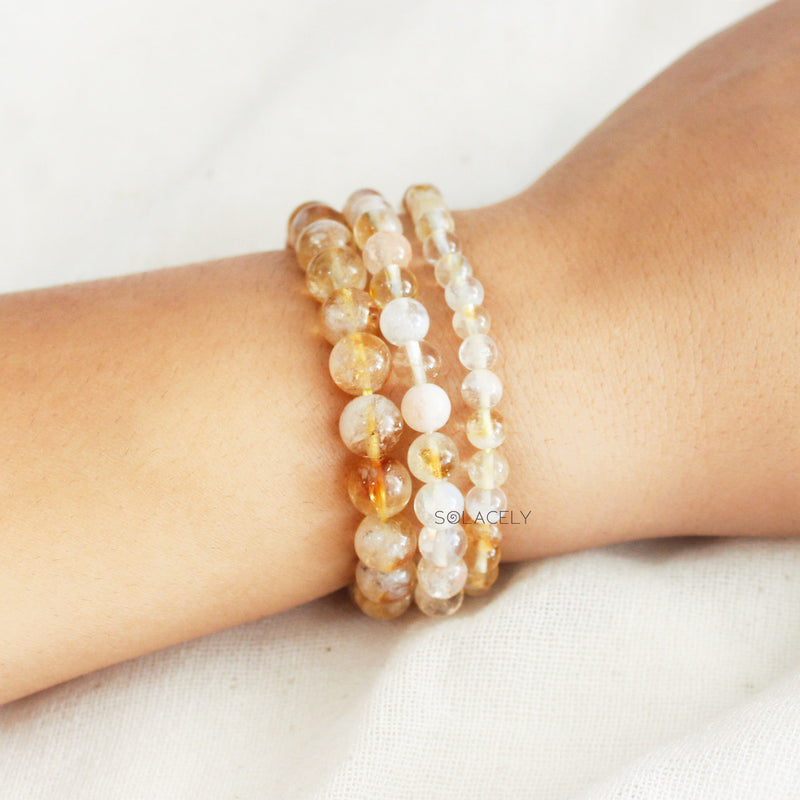
The colour range is the thing to choose on. Warming quartz to draw out its golden tones is a long established practice across the coloured stone trade, industrialised since the early twentieth century, and the colour it produces is stable and permanent. That is why citrine runs all the way from a soft champagne lemon through honey to the deep reddish gold sold as madeira, and why a matched bracelet is easy to find. Pick the depth of gold you actually want on your wrist, and ask your seller about origin and finish for a larger piece. Our citrine guide walks through the shades.
Where does the merchant's stone name come from?
This is one of the few wealth traditions in crystal practice that comfortably predates the modern wellness industry, and it is worth telling properly.
European merchants in the twelfth to fifteenth centuries kept small citrines in their leather coin purses and pocketbooks, on the belief that the yellow stone drew wealth in and kept funds from slipping away. The practice carried into Renaissance jewellery, where citrine intaglios were carved with merchant marks and used as seals on goods, sitting a step below the carnelian and lapis reserved for noble seals. The habit is recorded in period European lapidary literature.
The modern version is unchanged in spirit. A tumbled citrine in the wallet or the coin pocket, and the same intention behind it. It is the most directly historical use of this pairing, and the one customers ask about most.
A matched hardness pair
Black tourmaline at 7 to 7.5 and citrine at 7 sit close enough that neither systematically wears the other down, which is rare among popular pairings and is the practical reason this one holds up.
| Property | Black tourmaline | Citrine |
|---|---|---|
| Mineral | Schorl, a borosilicate | Quartz with trace iron |
| Hardness | 7 to 7.5 Mohs | 7 Mohs |
| Cleavage | None, but brittle on impact | None, conchoidal fracture |
| Colour | Opaque black | Pale champagne to deep madeira gold |
| Traditional role | Grounding and boundaries | Confidence and abundance |
| Sunlight | Untroubled | Keep out of long exposure |
| Best formats | All | All, including rings |
How do you use the pairing?
Five formats cover almost everyone, and the wallet one is the oldest.
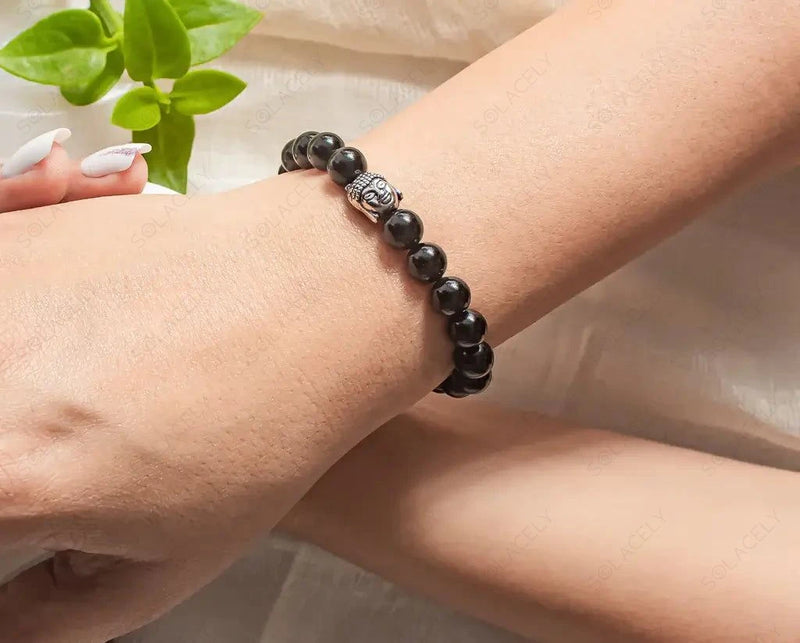
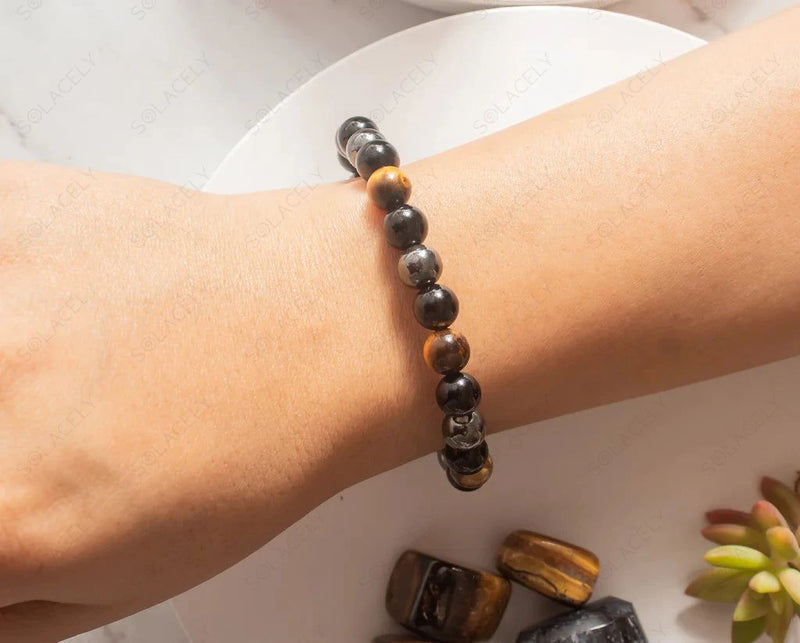
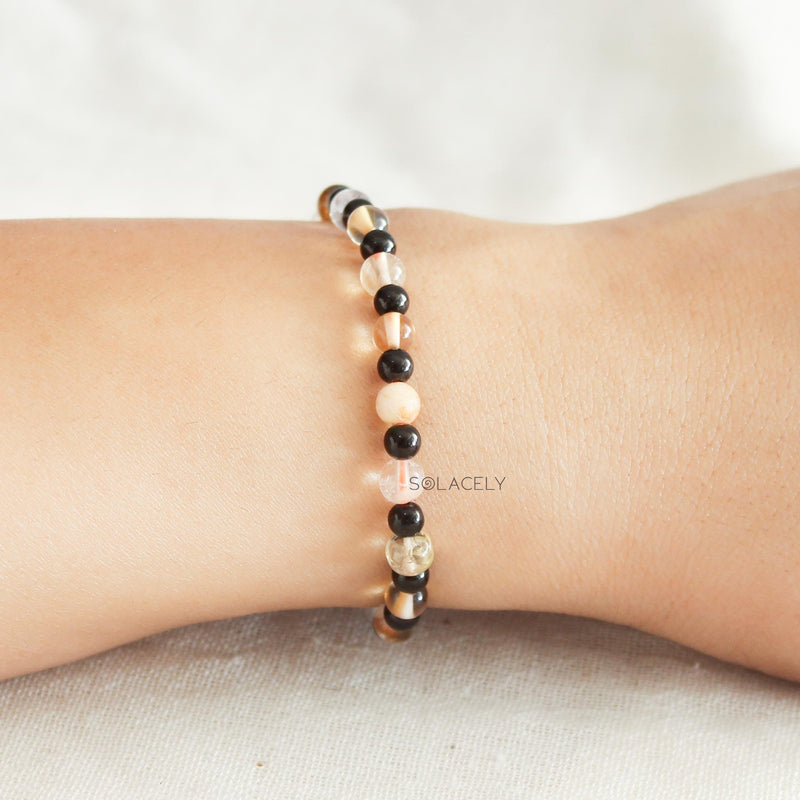
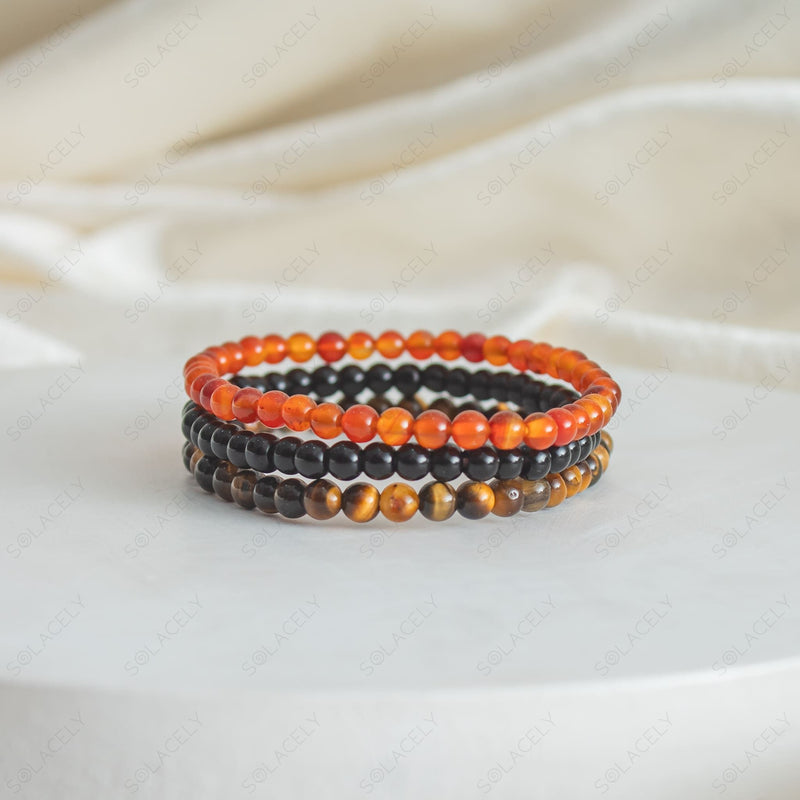
- Beaded stack. Alternating black and gold beads at 6mm or 8mm. The matched hardness means the polish stays even across both stones for years.
- Pendant pair. A tourmaline pendant with a citrine cabochon on a separate chain. Citrine is hard enough for a ring too, which few practice stones are.
- Wallet carry. A small citrine in the coin pocket with a tourmaline in another pocket as the guard stone. Straight out of the medieval habit.
- Desk placement. Tourmaline near whatever brings work in, the inbox or the door. Citrine near whatever sends it out, the invoicing or the sketchbook.
- In the hand. Tourmaline in the dominant hand for steadiness, citrine in the other for the thing you are moving toward.
For the broader protective set rather than this specific pairing, our crystals for protection guide compares the usual options side by side.
How do you care for them?
Both are hard and chemically stable, so care is straightforward. Warm water, a drop of mild soap and a soft cloth handles ordinary wear on either. Dry them properly, particularly around bead holes on a strung piece.
Skip ultrasonic and steam cleaners on citrine. Rapid temperature change is unkind to it, and there is no need for either machine when soapy water does the job. Black tourmaline tolerates more but gains nothing from it, and it dislikes thermal shock as well.
On light, citrine is the one to watch despite its sunny reputation. Long exposure pales it and the colour does not come back, so brief morning light or moonlight suits it better than an afternoon windowsill. Black tourmaline is untroubled either way. Store the two in separate pouches, because even matched hardness produces contact dulling over years. For energetic cleansing, moonlight, sound or a rest on selenite suit both, and a thirty second rinse under cool water is fine if you dry them straight after.
The properties described here reflect traditional and cultural belief around crystals. They are offered for reflection and wellbeing and are not medical advice, a diagnosis, or a treatment for any condition, and nothing here is financial advice. If you are making a significant financial decision, speak with a qualified adviser. Keep small stones away from young children, and never place crystals in drinking water.
Sources
Written by Chetena Sharma. Reviewed by the Solacely editorial team.
Frequently asked questions
About the author


Written by Chetna Sharma, crystal healing practitioner and co-founder of Solacely. Chetna has worked with healing crystals for over a decade and curates Solacely's protective stone collection.