Blue apatite and howlite pair a clarifying stone with a quieting one. Apatite is traditionally kept for focus and clear thinking, while howlite is kept for settling a mind that will not stop turning. Together they suit anyone whose problem is mental noise rather than lack of energy.
Key takeaways
- Blue apatite is kept for clarity, focus and motivation; howlite for quieting mental chatter.
- Both are soft: apatite around 5 on the Mohs scale, howlite around 3.5.
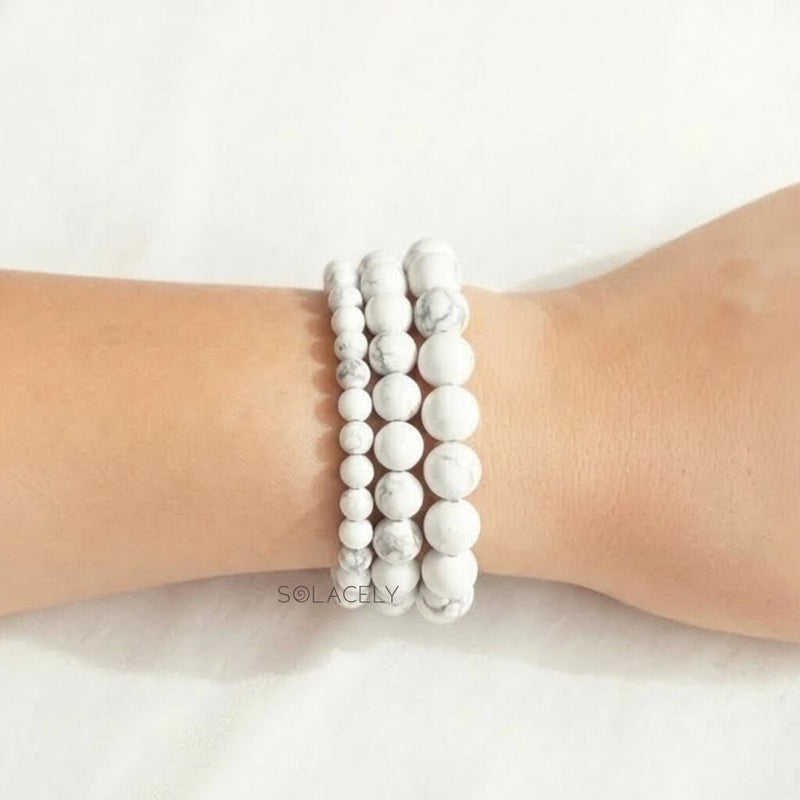
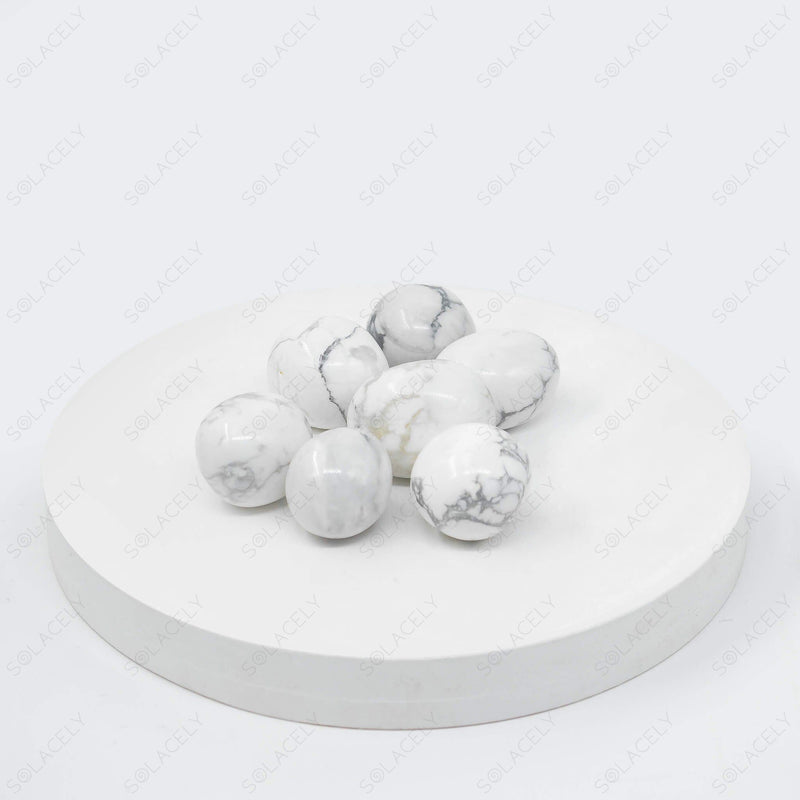
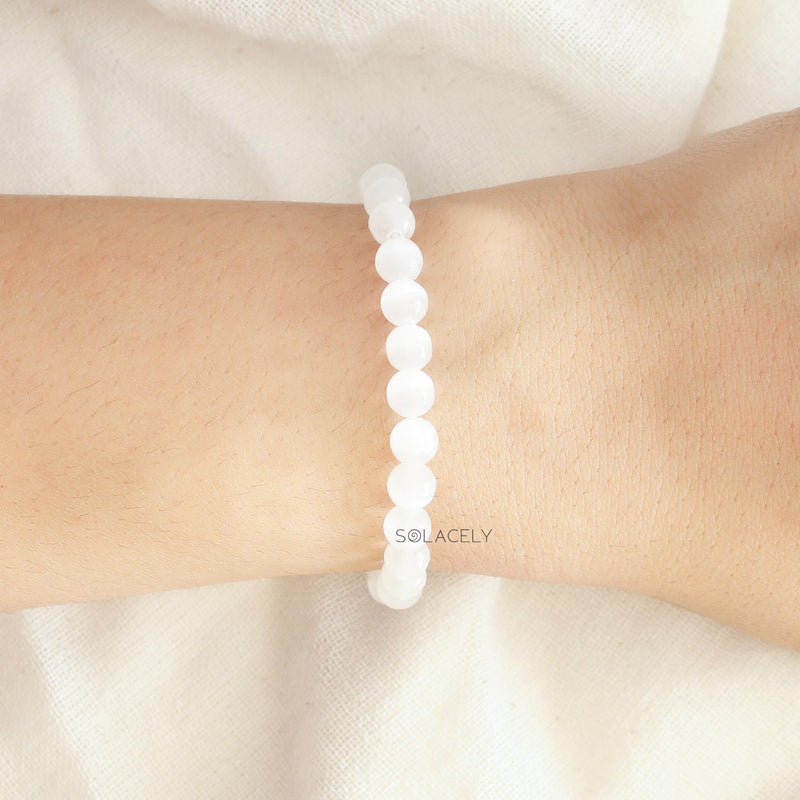
- Howlite's white body with grey veining is unmistakable, and it takes colour beautifully.
- The pairing suits overthinking and poor sleep rather than low energy.
- Keep both away from harder stones in storage, since either will mark easily.
What each stone brings
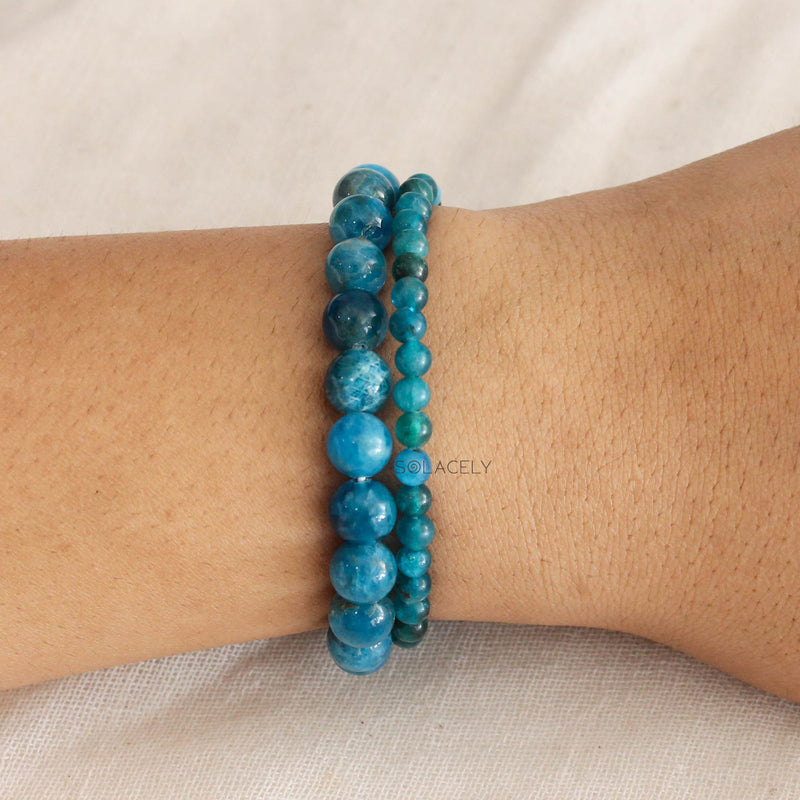
Blue apatite is a calcium phosphate whose colour runs from soft sea blue to a vivid teal. In tradition it is the clarity stone, kept for cutting through fog and for working out what the actual question is. It is also one of the few blue stones associated with motivation rather than only with calm.
Howlite is the opposite half. A white borate mineral with fine grey veining running through it like marble, it is traditionally kept for quiet: settling a racing mind, easing the rehearsal of conversations that already happened, and generally turning the volume down.
The two together cover a specific and very common difficulty. Apatite gives the thinking somewhere to go, and howlite stops it going everywhere at once. The howlite guide covers that stone in full.
Why the pairing works
Most calming pairings are built entirely from soft, quiet stones, which is lovely but can leave a person calm and still stuck. This one keeps a clarifying stone in the mix, so the quiet has somewhere to lead.
The recurring picture is somebody whose head is busy rather than tired. Too many open threads, a decision that has been turned over too many times, or the specific evening problem of being unable to stop thinking about work. Howlite handles the noise and apatite handles the sorting.
Visually they also work together in a way that suits the intention. Howlite's soft white against apatite's bright blue reads calm rather than busy, which is exactly the tone you want from a set kept for a crowded mind.
Comparing blue apatite and howlite
| Blue apatite | Howlite | |
|---|---|---|
| Mineral | Calcium phosphate | Borate mineral |
| Look | Sea blue to vivid teal | White with fine grey veining |
| Hardness | Around 5 Mohs | Around 3.5 Mohs |
| Traditionally kept for | Clarity, focus, motivation | Quiet, calm, easing overthinking |
| Best format | Pendant, tumbled stone | Tumbled stone, bedside piece |
| Care | Brief wipe, keep dry | Brief wipe, avoid long soaking |
Both are soft enough that storage matters more than usual. Keep the pair away from quartz family stones, and give howlite in particular its own pouch, since at 3.5 almost anything will mark it.
How to use the pair
The natural split follows the time of day. Apatite belongs where the thinking happens and howlite where it needs to stop.
- Desk. Apatite beside the notebook, for the sorting-out part of the day.
- Bedside. Howlite on the nightstand, as the marker that the day has finished.
- Pocket pair. Both carried through a week where the head has been especially loud.
- Held together. One in each hand for a few slow breaths, which is the simplest version.
If overthinking is really the whole issue, crystals for overthinking narrows to that directly, and the best crystals for sleep covers the evening end of it.
Howlite and its many colours
Howlite is one of the most versatile materials in a crystal shop because its porous white body takes dye beautifully. Blue howlite is the most common coloured version, and it has become a familiar and well loved material in its own right.
Coloured howlite is properly part of the tradition rather than an exception to it, and it holds its colour through ordinary wear. Plenty of people keep both, natural white for the bedside and blue for a bracelet, since the two look quite different on the wrist.
For this particular pairing, natural white howlite is usually the better choice, because the contrast against apatite's blue is what makes the set read clearly. That said, choose whichever you actually prefer to look at.
Caring for both
Both stones are soft and porous, so the care is the same and it is simple: a soft, barely damp cloth, dried straight away, rather than any soaking. Neither should meet an ultrasonic or steam cleaner.
Keep them away from household chemicals, perfume and hairspray, which dull any porous surface over time. Put jewellery on last, after cosmetics have dried, which is good practice for the whole collection but matters more with these two.
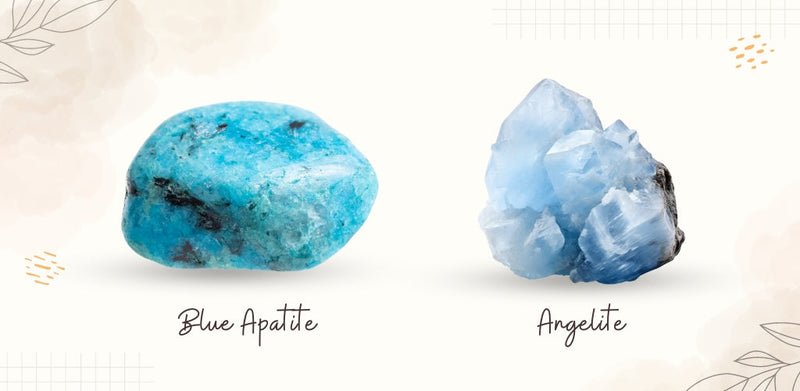
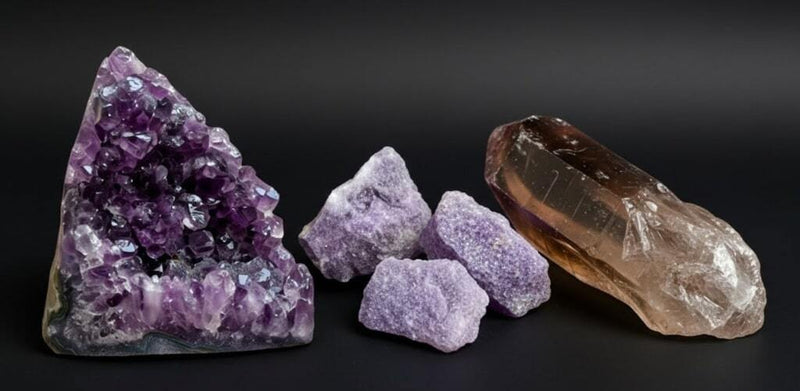
For energetic cleansing, moonlight, sound or a rest on selenite all suit them well, and there is no need for salt or water with either. For the other apatite pairings, see blue apatite and angelite and blue apatite and amethyst.
Who this pairing suits
It suits people whose difficulty is noise rather than energy. Anyone who lies awake rehearsing, anyone with too many half-finished thoughts, and anyone who finds pure calming stones leave them peaceful but no further forward will get more from this combination.
It suits less well anyone who is flat rather than busy. If the problem is having no energy at all, a warmer stone belongs in the set instead, since neither apatite nor howlite is kept for lift. But for a crowded head, the pairing is well matched to the job.
An evening routine built around the pair
Because this set is aimed at mental noise, it works best attached to the end of the day rather than the start. The shape most people settle into is simple and repeatable.
The useful first step is not the stone at all: write down whatever is unresolved before the light goes off. A notebook beside the bed gives the loop somewhere to land, which is what actually stops the rehearsing. The howlite then marks the end rather than competing with the thinking.
Apatite belongs earlier in the same evening, wherever the sorting happens. If you plan tomorrow at a desk or a kitchen table, that is where it goes. Keeping the two stones in different rooms is a small thing that stops them blurring into one general intention.
Choosing the two stones
With apatite, decide between the soft sea blue and the vivid neon teal, since both are properly apatite and the difference is entirely taste. Check the edges for chips, which soft stones pick up in transit more than harder ones do.
With howlite, look for clean white with well distributed grey veining. The veining is the character of the stone, so a piece with an interesting pattern is worth holding out for, and the material is inexpensive enough to be choosy about.
Tumbled palm stones are the format that suits both best. They are cheap, pleasant to hold, and there is no setting or clasp to worry about with two stones this soft.
The properties described here reflect traditional and cultural belief around crystals. They are offered for reflection and wellbeing and are not medical advice, a diagnosis, or a treatment for any condition. If you are managing persistent sleep difficulty, anxiety or any health concern, please speak with a qualified healthcare professional. Keep small stones away from young children, and never place crystals in drinking water.
Sources
Written by Chetena Sharma. Reviewed by the Solacely editorial team.
Frequently asked questions
About the author


Written by Chetna Sharma, crystal healing practitioner and co-founder of Solacely. Chetna has worked with healing crystals for over a decade and curates Solacely's protective stone collection.