Citrine Crystal: Meaning, Benefits & Properties (2026 Guide)

Benefits of Citrine
Benefits of Citrine

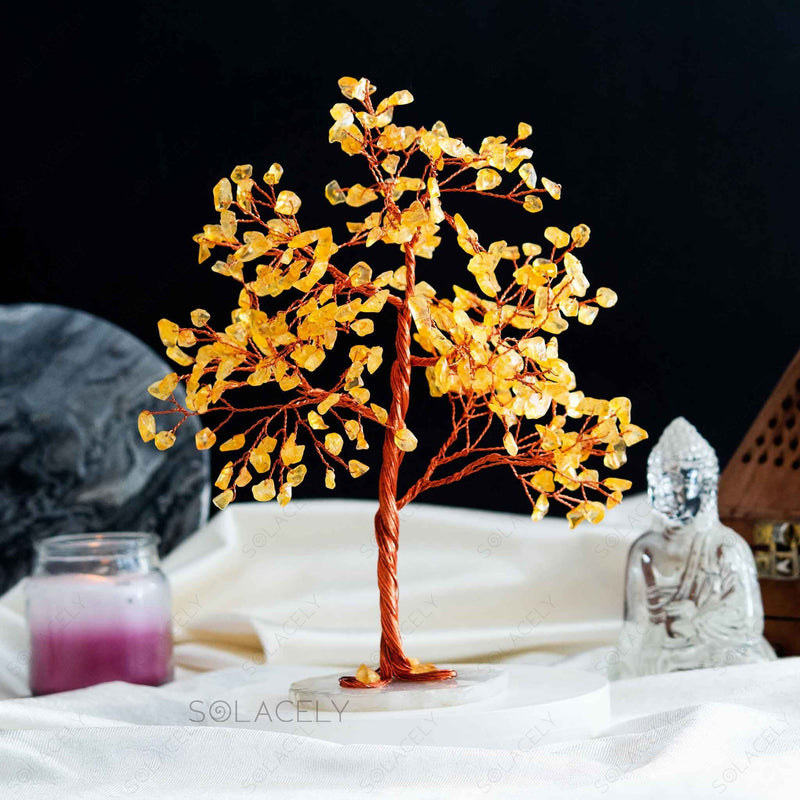
Citrine is the golden member of the quartz family. Mineralogically, it's silicon dioxide (SiO₂) with a Mohs hardness of 7, the same as amethyst, rose quartz, and clear quartz (Britannica; Geology.com). Its warm yellow-to-orange colour comes from colloidally suspended hydrous iron oxide within the crystal (Britannica). It's one of November's two birthstones alongside topaz, the traditional gem gift for a 13th wedding anniversary, and one of the most popular workspace and abundance stones in the modern crystal tradition. This guide covers the verified mineralogy, the iron-oxide story behind the gold colour, the solar plexus chakra association, and the right way to cleanse and care for citrine.

Key Takeaways
  • Citrine is silicon dioxide (SiO₂, Mohs 7), the yellow-to-orange member of the quartz family (Britannica).
  • The golden colour comes from colloidally suspended hydrous iron oxide inside the crystal (Britannica) — pure mineral chemistry, not a coating.
  • Citrine is one of November's two birthstones (alongside topaz) and the traditional 13th-anniversary gemstone (Geology.com).
  • Crystal-healing use: solar plexus chakra (Manipura), associated with confidence, willpower, and abundance. Traditionally called the "merchant's stone" or "success stone."
  • Major sources: Brazil (the leading producer, especially eastern Brazilian pegmatites), with significant production from Madagascar, Uruguay, Russia, Spain, Argentina, Bolivia, and Mexico (Geology.com).
  • Care: durable enough at Mohs 7 for daily wear, but avoid sustained direct sunlight, which can fade some specimens over time.

A note before we begin. Nothing here replaces medical or financial advice. Crystal healing is a complementary, faith-based practice. The spiritual and emotional benefits in this guide reflect long-standing tradition and personal experience, not clinical research.

What Is Citrine Crystal?

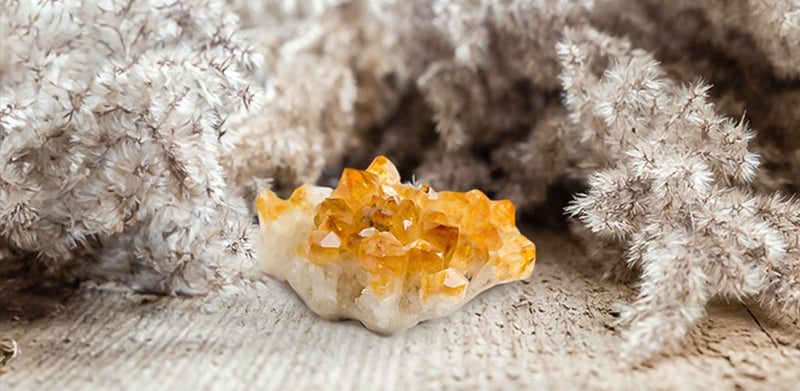
Citrine is the transparent, coarse-grained yellow variety of quartz (Britannica). At the chemistry level, it's silicon dioxide (SiO₂) with a Mohs hardness of 7 (Geology.com), part of the same trigonal-system quartz family that includes amethyst (purple), rose quartz (pink), smoky quartz (grey-brown), and clear quartz (colourless). The colour ranges from a soft pale lemon to a deep orange-honey, sometimes called "Madeira citrine" after the wine.

The name "citrine" comes from the Latin citrina, meaning lemon-yellow, the same root that gives us "citrus." It's a name that does what a name should: tells you what the stone looks like before you've even seen one. In our showroom, citrine is one of the three colours customers reach for when they walk in saying they want "something gold."

In crystal-healing tradition, citrine is the stone of confidence, abundance, and the energy you need to start something. Practitioners place it on the solar plexus during energy work and pair it with grounding stones like hematite or smoky quartz when someone reports feeling stuck or hesitant. The customers I see returning for second citrine pieces are almost always people in transition: new business, new role, new direction.

Citrine is part of the quartz family, sharing a Mohs 7 hardness and trigonal crystal structure with its more famous siblings. Source: Britannica; Geology.com.
The Quartz Family — Citrine and Its Siblings The Quartz Family — Citrine and Its Siblings All six are SiO₂ at Mohs 7 — the colour comes from trace impurities. Clear Quartz Rose Quartz Amethyst (Purple) Citrine (Yellow) Smoky Quartz Milky Quartz Same chemistry, same hardness, same crystal system. Just different impurities. Source: Britannica — Quartz; Geology.com — Citrine

What Gives Citrine Its Yellow Colour?

The honest mineralogical answer is more specific than the usual "iron makes it yellow." According to Britannica, citrine's colour comes from colloidally suspended hydrous iron oxide within the quartz crystal (Britannica). That's iron in the form of microscopic hydrated particles dispersed through the stone, scattering and absorbing light in the way that gives citrine its warm gold-to-orange transparency rather than the deeper colour of, say, smoky quartz.

This matters for one practical reason. Because the colour comes from iron particles inside the crystal rather than from a surface layer, citrine's gold isn't going to wear off, scratch off, or rinse off. It's structural, embedded in the mineral itself, and stable for normal jewelry wear. The one exception is sustained, intense direct sunlight: like many quartz colours, citrine can fade slowly over years if left baking on a hot south-facing windowsill all afternoon. Normal indoor light doesn't touch it.

Quartz of any colour is also piezoelectric (Britannica), meaning it generates a small electrical charge when squeezed. The same property is why quartz crystals run watches and radios. Crystal-healing tradition has long described citrine as "vibrating with abundance energy." The mineralogy gives that language at least a metaphorical hook.

Where Does Citrine Come From?

Brazil is the most important commercial source of citrine, particularly the pegmatites of eastern Brazil and the geode-bearing basalt fields of southern Brazil (Geology.com). Other producing countries include Argentina, Bolivia, Madagascar, Mexico, Russia, Spain, and Uruguay (Geology.com), with smaller historic sources in Scotland, the Urals, and North Carolina (Britannica). Brazilian citrine, especially from Minas Gerais and Rio Grande do Sul, has dominated the market for over a century.

Citrine's history runs deep. Greek and Roman jewellers cut and set yellow quartz for jewelry from at least the Hellenistic era, often in signet rings and intaglios. By the 17th century it had become a popular gem for Scottish jewelry, particularly in the dirks and brooches of the Highland tradition, which is part of why "Cairngorm citrine" became a recognisable variety name in the British jewelry trade.

One quietly modern detail: citrine is one of the two official birthstones for the month of November, alongside topaz (Geology.com), and the traditional gemstone gift for a 13th wedding anniversary in modern Western jewelry tradition. That's why we sell more citrine in October and November than in any other two months: it's the default November-birthday and milestone-anniversary stone for a huge slice of the calendar.

Major commercial sources of citrine, ordered by relative production importance. Brazil dominates the market; the others are significant secondary producers. Source: Geology.com; Britannica.
Major Commercial Sources of Citrine Major Commercial Sources of Citrine Relative importance — Brazil dominates; others are significant secondary producers. Leading Brazil Madagascar Uruguay Russia Spain Argentina Bolivia Mexico Eastern Brazilian pegmatites and basalt geode fields are the dominant source. Sources: Geology.com — Citrine; Britannica — Citrine

What Are the Benefits and Healing Properties of Citrine?

Crystal-healing tradition assigns citrine three layers of benefit: emotional (confidence, optimism, motivation), physical (energetic support tied to digestion and the solar plexus area, traditional only), and metaphysical (manifestation, abundance, business success). None of these claims is medically validated. They reflect long-standing tradition rather than clinical research.

Important. Citrine has not been shown in peer-reviewed clinical research to treat or cure any condition, including digestive, metabolic, or financial-stress concerns. Always consult a qualified healthcare provider for medical concerns. The benefits below describe traditional crystal-healing use, not medical effects.

Emotional Healing Properties

Citrine is the stone people reach for when they're tired of hesitating. Its associations cluster around confidence, optimism, the willingness to back yourself, and the energy needed to start something rather than think about starting it. Practitioners often pair it with rose quartz when the underlying issue is self-doubt rooted in self-criticism, and with clear quartz when the goal is clarity about a specific direction.

The most common phrase I've heard from customers about citrine is some version of "I needed something to push me through the launch." Whether the effect is energetic or simply ritual focus is a fair question. Practitioners would say "both."

Physical Healing Properties (Traditional)

In the crystal-healing tradition, citrine is associated with the solar plexus area — digestion, metabolism, and the kind of energetic vitality the tradition links to that region. Practitioners place it over the upper abdomen during energy work and sometimes pair it with carnelian for "fire-element support" or amber for a similar warm-energy stack.

None of this is medical treatment. Citrine hasn't been shown in any peer-reviewed study to influence digestion, metabolism, or any biological process. The "physical" tradition is best read as a metaphor for attention rather than a treatment claim.

The "Merchant's Stone" Tradition

Metaphysically, citrine is the abundance stone. It's traditionally called the "merchant's stone" or "success stone" because of a centuries-old practice of placing citrine in cash boxes, registers, wallets, and ledger drawers to draw and hold wealth. The tradition crosses cultures — South Asian, European, and American crystal-healing lineages all carry some version of it — and survives in the modern habit of keeping a citrine cluster on a business desk or near financial paperwork.

Practitioners often pair citrine with pyrite for "wealth grids" (gold colour plus structure), with green aventurine for opportunity, and with clear quartz to amplify intention. Used alone, citrine is most often programmed for a specific goal — a launch, a contract, a sales target — rather than a vague wish.

Which Chakra Does Citrine Activate?

Citrine is most strongly associated with the solar plexus chakra (Manipura), the energy centre between the navel and the lower ribs traditionally linked to confidence, willpower, personal authority, and self-direction. The pairing is intuitive. Solar plexus energy is golden and fiery in chakra colour theory, and citrine is a literal golden, sun-warm stone.

Some practitioners also use citrine secondarily on the sacral chakra for creativity work and on the crown chakra for spiritual abundance practice, though these placements are less common. Its primary home is solar plexus, and most modern crystal-healing protocols keep it there.

A simple way to use this: place a small citrine on the upper abdomen during a five-minute breath practice, set one specific intention around something you want to move on (a project to start, a conversation to initiate), and remove the stone afterwards. Specific intentions ("send the proposal by Friday") work better with citrine than vague ones ("more abundance").

How Can You Use Citrine Day-to-Day?

The three most common uses are jewelry, meditation, and workspace placement. Each has a slightly different goal, and the form of citrine you choose should match it. Tumbled stones are versatile for meditation. Faceted stones set in pendants and rings make beautiful daily-wear pieces. Larger raw clusters or geodes anchor a desk or business altar well.

Wearing Citrine Jewelry

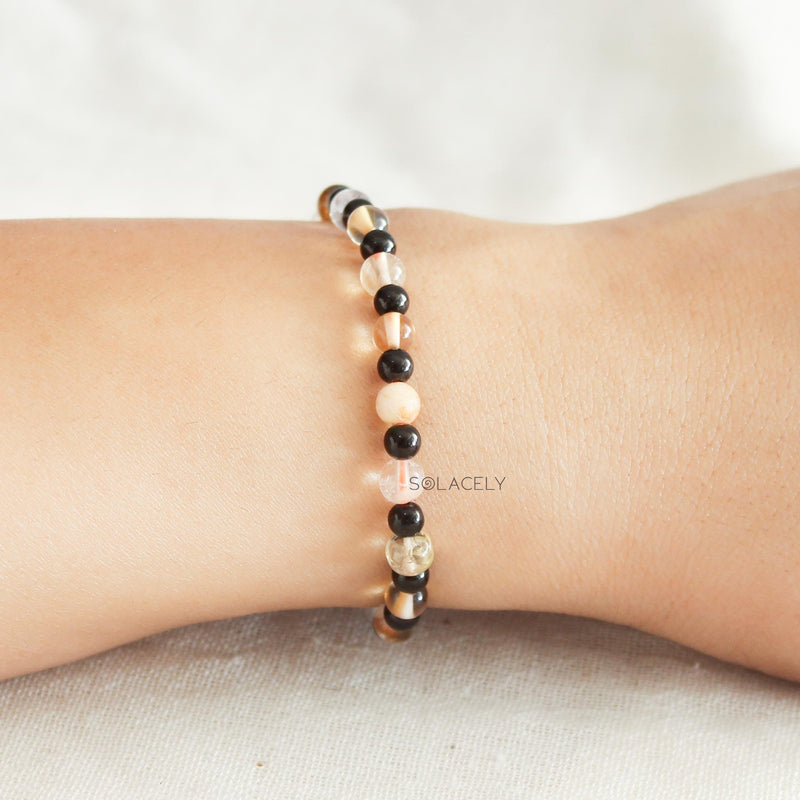
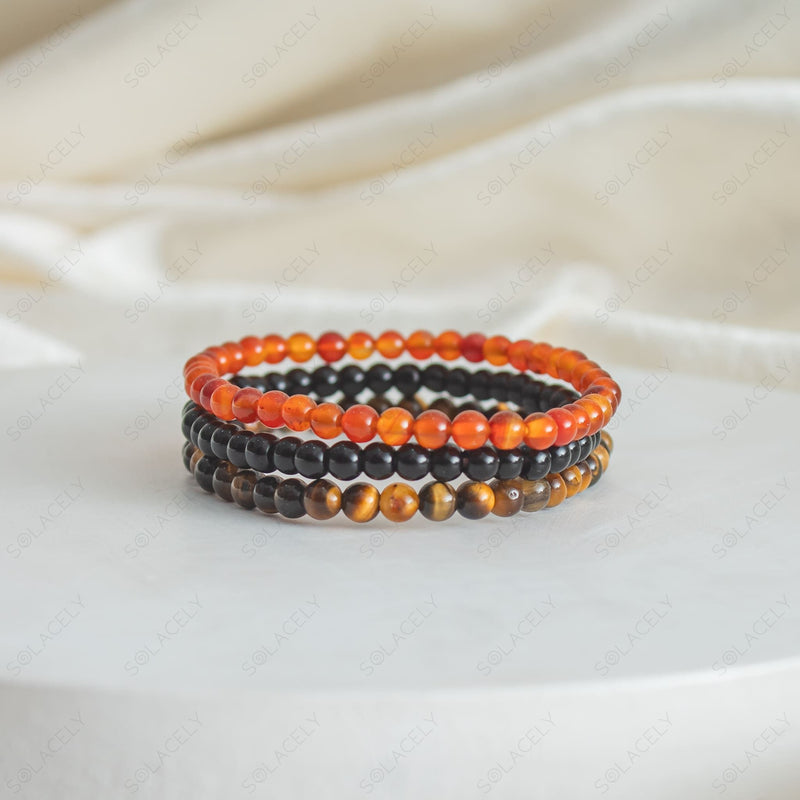
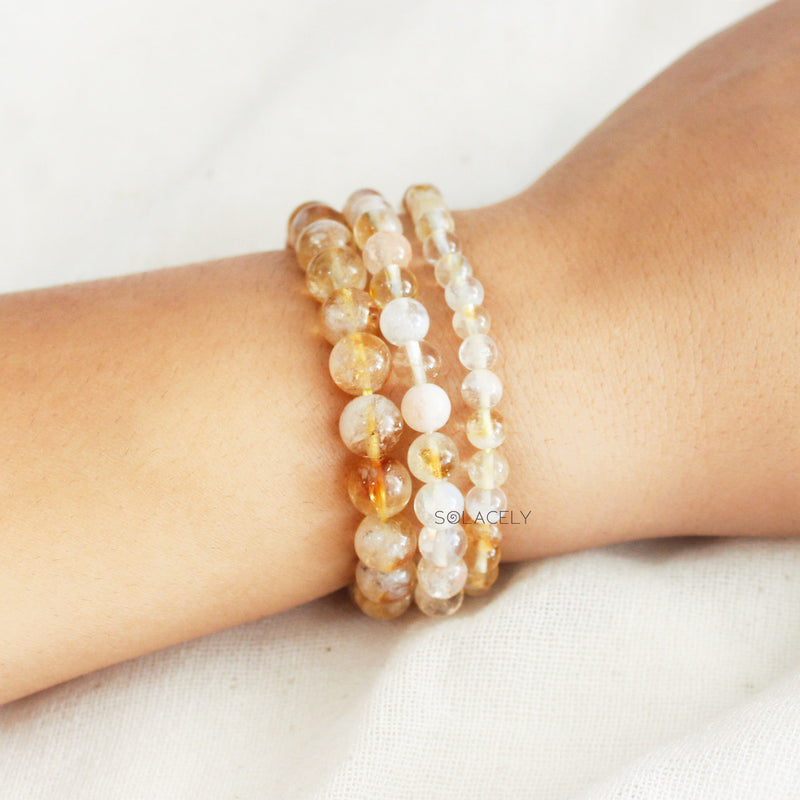
Citrine jewelry is one of the easier crystal-jewelry entry points because the stone at Mohs 7 wears well in daily use without obvious scratching. Faceted ovals and cushions set in yellow gold or rose gold are the most popular forms, since the metal echoes the stone's warmth. Beaded bracelets are the second most common form and pair naturally with clear quartz, pyrite, or green aventurine in stacked sets.

Citrine also pairs beautifully with amethyst — they're chemically the same mineral in different colours, and the visual contrast of warm gold next to cool purple is one of the most balanced two-stone palettes in crystal jewelry.

Citrine for Meditation

For meditation, hold a single tumbled citrine in your dominant hand and close the other around it. The stone's energy is bright rather than slow, so the practice tends to be shorter and more focused than, say, a moonstone or rose quartz session. Three to five minutes is enough.

A short citrine-specific meditation: three rounds of slow breathing, one stated intention out loud (specific, action-oriented), three more rounds, then put the stone down and do the next thing on your list. The point is propulsion, not depth.

Citrine at the Workspace

Citrine is the most-recommended workspace stone in the modern crystal tradition, on the strength of the merchant's-stone tradition alone. A raw cluster on a desk, a small citrine geode near a monitor, or a polished palmstone kept beside a laptop all work the same way: a visible cue tied to a specific abundance intention.

In feng shui terms, citrine is most often placed in the wealth corner (back-left from the front door of the room) or near the place where invoices, contracts, and business paperwork physically live. Consistency matters more than corner-of-room precision. A citrine you reset weekly with a stated intention will feel more "active" than one that's drifted into the role of dust collector.

How Do You Cleanse and Charge Citrine?

Citrine at Mohs 7 with no cleavage is durable enough that physical cleaning is straightforward: warm soapy water with a soft cloth handles tumbled stones and most jewelry. Skip ultrasonic cleaners and steam (sudden temperature shifts can crack any quartz). For energetic cleansing, dry methods are gentlest, and brief sunlight is fine — citrine is one of the few crystals where solar charging is traditionally appropriate.

Why Cleanse and Charge Citrine?

In crystal-healing practice, cleansing clears residual energy a stone has picked up from its environment or wearer. Even if you don't subscribe to the energetic side, regular cleansing is good physical hygiene for jewelry: it removes skin oils, dust, and lotion residue that dull the stone's natural sparkle.

A reasonable cadence: cleanse citrine once a month with normal use, more often if you wear a piece daily through workouts or use it as the focus of an active manifestation practice. Charging is a separate step (re-energising the stone toward a specific intention), traditionally done after cleansing.

How to Cleanse Citrine (4 Safe Methods)

  1. Sound. Hold the stone near a singing bowl or tuning fork for 30 to 60 seconds. Safe for every form of citrine, including jewelry.
  2. Smoke. Pass the stone through sage, palo santo, or incense smoke for about a minute. Don't hold it in direct flame.
  3. Moonlight. Set the stone on a windowsill overnight, ideally on a full or new moon. Bring it back inside before morning.
  4. Selenite or clear quartz contact. Rest the citrine on a selenite plate or beside a clear quartz cluster for 6 to 12 hours.

Skip ultrasonic and steam cleaners. Both can stress the stone. Salt water is mineralogically fine for citrine but can corrode metal jewelry settings and dry skin oils that protect the stone's polish.

How to Charge Citrine (4 Methods)

  1. Brief sunlight. The signature citrine charging method. Place the stone in indirect or short direct sunlight (15 to 30 minutes max). Solar charging matches its fire and gold associations. Don't leave citrine baking on a hot windowsill all afternoon — sustained intense sun can fade some specimens over years.
  2. Intention setting. Hold the cleansed stone, state one specific abundance or confidence intention out loud, and breathe with it for two to three minutes. Specific beats vague every time with citrine.
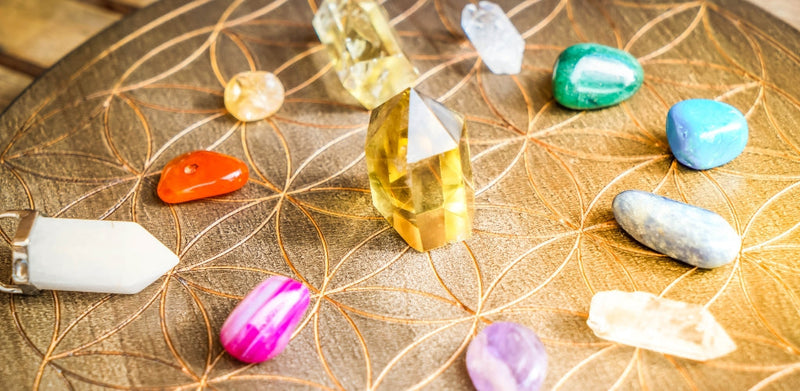
  3. Crystal grid. Place citrine at the centre of a grid surrounded by clear quartz points and small pyrite cubes to amplify a wealth or business intention. Leave for 24 hours.
  4. Money grid. Place citrine on top of folded paper currency, a contract, or a written sales goal for 12 to 24 hours. The traditional merchant's-stone activation, used for centuries.

Frequently Asked Questions

What is citrine crystal?

Citrine is the transparent yellow-to-orange variety of quartz (SiO₂, Mohs hardness 7), part of the same family as amethyst, rose quartz, and clear quartz (Britannica; Geology.com). Its warm golden colour comes from colloidally suspended hydrous iron oxide within the crystal (Britannica). It's one of November's two birthstones, alongside topaz.

Why is citrine called the "merchant's stone"?

Citrine has been called the "merchant's stone" or "success stone" for centuries because of its long traditional association with abundance, business, and prosperity. The nickname comes from the practice of placing citrine in cash boxes, registers, and wallets to draw and hold wealth, a tradition that continues in modern crystal-healing practice.

Which chakra is citrine for?

Citrine is most strongly associated with the solar plexus chakra (Manipura), the energy centre between the navel and lower ribs traditionally linked to confidence, willpower, personal authority, and self-direction. Its golden-yellow colour and solar, fire-element associations match the solar plexus colour symbolism almost exactly in modern crystal-healing practice.

Is citrine a November birthstone?

Yes. Citrine and topaz both serve as the official birthstones for the month of November (Geology.com). Citrine is also the traditional gemstone gift for a 13th wedding anniversary in modern Western jewelry tradition, which is part of why it's such a popular November-birthday and milestone gift.

Where does citrine come from?

Brazil is the most important commercial source of citrine, particularly the pegmatites of eastern Brazil and the geode-bearing basalt fields (Geology.com). Other producing countries include Argentina, Bolivia, Madagascar, Mexico, Russia, Spain, and Uruguay (Geology.com), with smaller historic sources in Scotland, the Urals, and North Carolina (Britannica).

Can citrine fade in sunlight?

Sustained direct sunlight can fade some citrine over time, particularly the more deeply orange specimens. Brief exposure for charging is fine, but avoid leaving citrine on a hot windowsill for hours each day. Indirect light or moonlight is gentler and removes the fade risk entirely.

Can citrine get wet?

Yes. Citrine at Mohs 7 with no cleavage is durable enough for warm soapy water cleaning with a soft cloth. Skip ultrasonic cleaners and steam (sudden temperature changes can damage any quartz). For energetic cleansing, sound, smoke, moonlight, and selenite contact are the gentlest options.

About the author

Chetena Sharma
Chetena Sharma

Written by Chetena Sharma, crystal healing practitioner and co-founder of Solacely. Chetena has worked with healing crystals for over a decade and curates Solacely's protective stone collection.
Back to blog
1 3