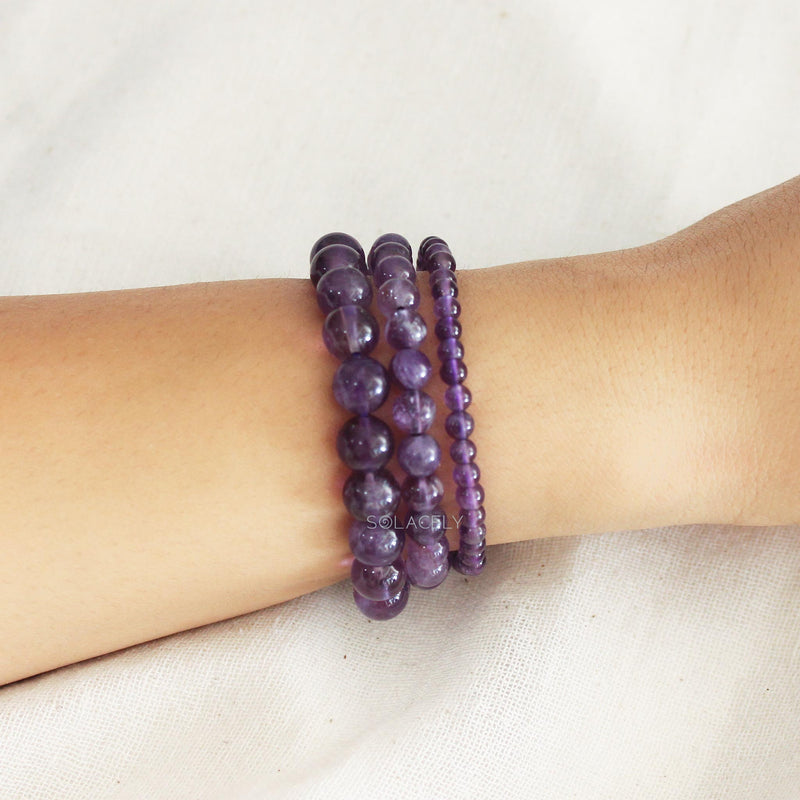
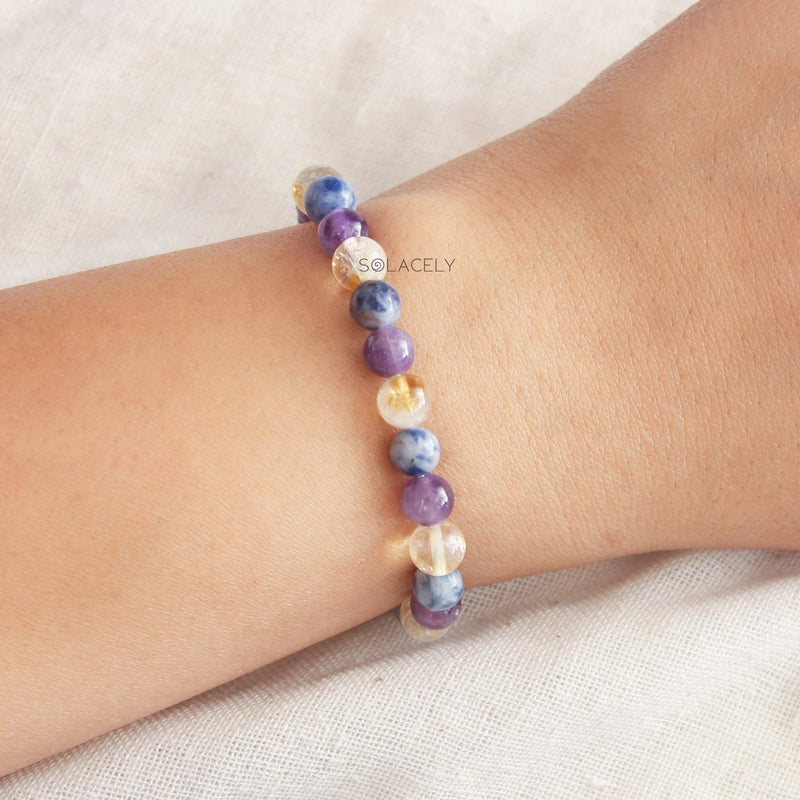
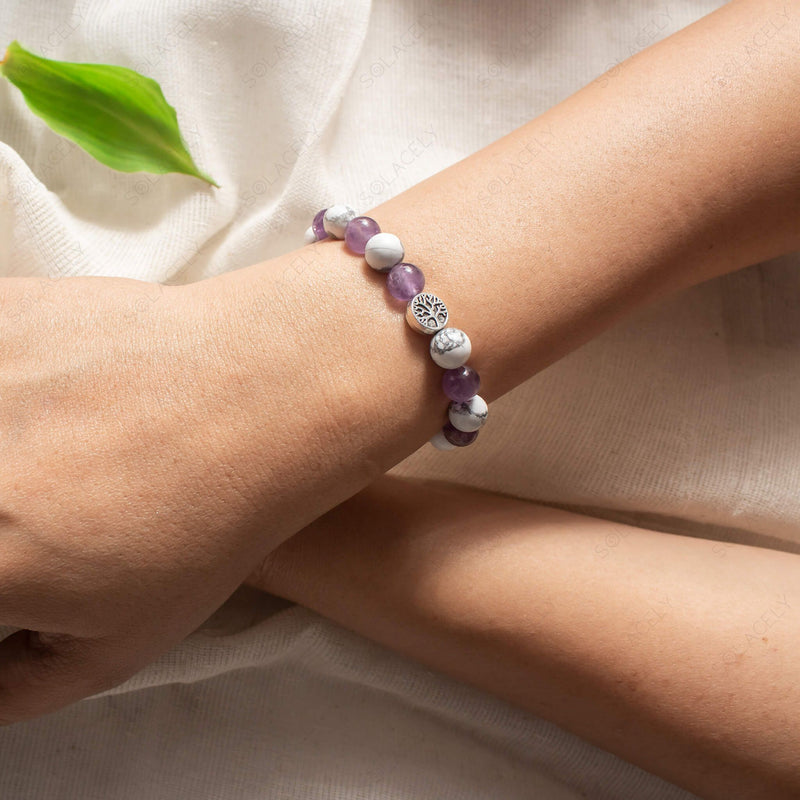
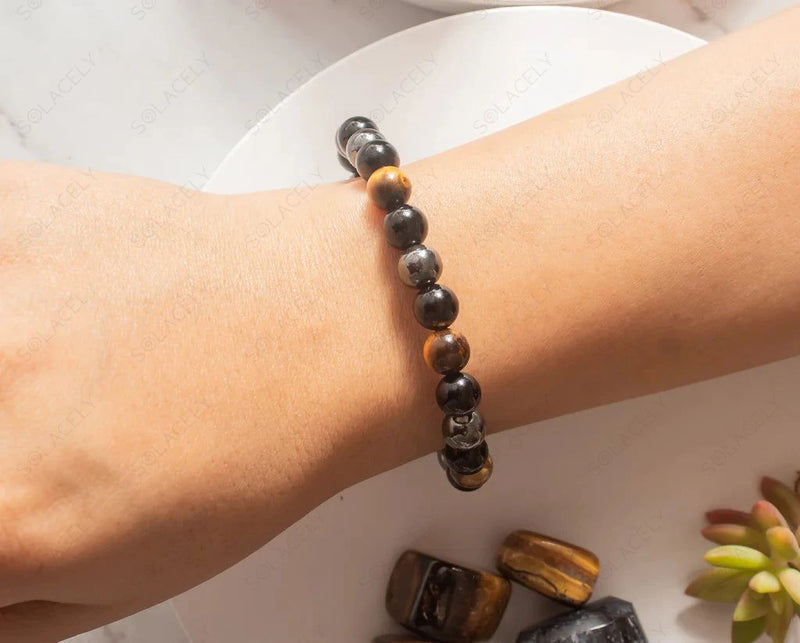
A crystal bracelet is a strand of polished gemstone beads worn on the wrist as a daily reminder of an intention. For a first bracelet, amethyst, rose quartz, citrine and black tourmaline are the four most people start with, because each has a clear traditional purpose and all four are hard enough for everyday wear.
Key takeaways
- Start with one bracelet, chosen for the intention you actually want to hold, rather than a set.
- Amethyst for calm, rose quartz for self-love, citrine for confidence and black tourmaline for grounding are the four classic beginner stones.
- Quartz family stones sit at 7 on the Mohs hardness scale, which is why they survive daily wear on a wrist.
- The left wrist is traditionally the receiving side and the right wrist the giving side.
- Cleanse with sound, moonlight or dry salt. Never soak selenite, and keep amethyst out of prolonged direct sun.
Why start with a bracelet rather than a stone?
A bracelet is the easiest crystal to keep up with. A tumble stone lives in a drawer, but a bracelet is on your wrist through the meeting, the commute and the difficult conversation, so the intention stays in view all day. That constancy is the whole appeal, and it is why bracelets are where most people begin.
They are also forgiving. Beads are pre-drilled, polished and strung, so there is nothing to learn about handling raw crystal points. Sizing is simple, most strands are elastic, and you can wear two together without any of them looking out of place. If you would like the wider picture before choosing, our guide to crystals for beginners covers the same ground for stones you hold rather than wear.
The ten crystal bracelets worth starting with
These ten cover the intentions people most often come looking for: calm, love, confidence, protection, courage, focus, luck and steadiness. You do not need all ten. Read the table, find the row that describes the thing you are actually carrying at the moment, and start there.
| Bracelet | Traditionally kept for | Chakra |
|---|---|---|
| Amethyst | Calm, rest, a quieter mind | Third eye and crown |
| Rose quartz | Self-love, gentleness, open-heartedness | Heart |
| Citrine | Confidence, optimism, abundance | Solar plexus |
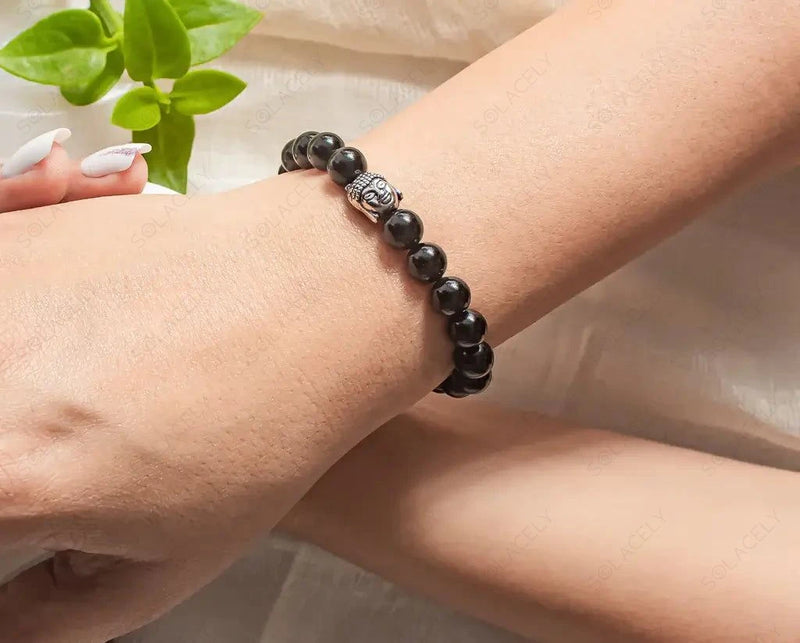
| Black tourmaline | Grounding and protection | Root |
| Pyrite | Drive, follow-through, prosperity | Solar plexus |
| Carnelian | Warmth, courage, creative momentum | Sacral |
| Tiger's eye | Steady nerve and clear decisions | Solar plexus |
| Moonstone | Cycles, intuition, new beginnings | Crown |
| Lapis lazuli | Truthful speech and study | Throat and third eye |
| Green aventurine | Luck and opportunity | Heart |
Which one should you actually buy first?
Pick by the sentence you would finish with "I would like to feel more...". If the answer is settled, choose amethyst. If it is kinder to myself, rose quartz. If it is sure of myself, citrine. If it is steady when everything is loud, black tourmaline. One bracelet, worn daily, does more than four in a bowl.
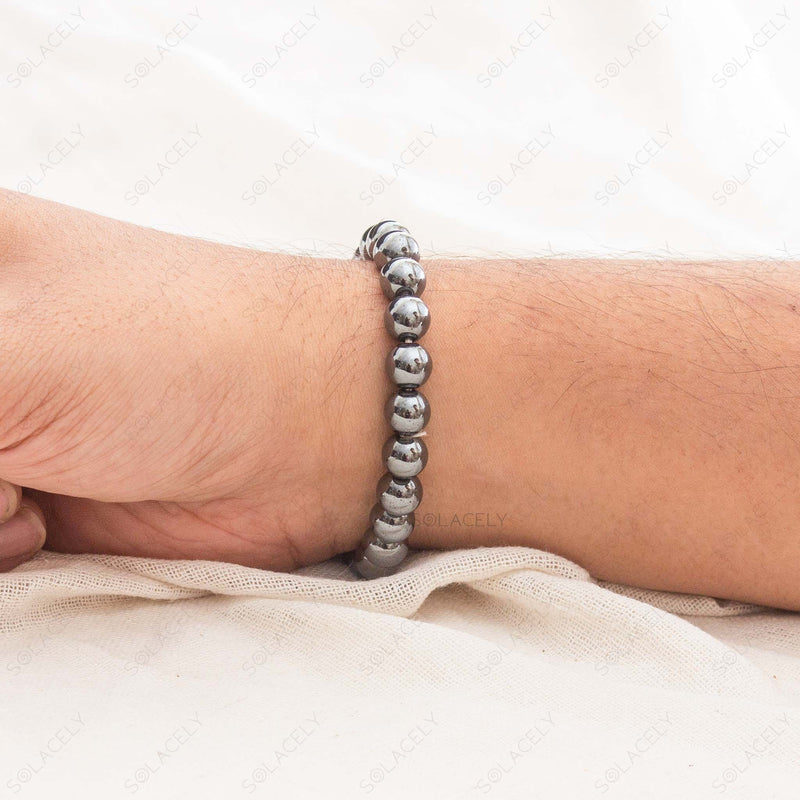
If two feel right, wear both. Amethyst with rose quartz is a gentle pairing for rest and self-kindness. Citrine with pyrite is the working pair for drive. Black tourmaline with hematite is the grounding pair for a heavy week. There is no rule against combining, and stacking is part of the pleasure of wearing them.
Beyond the first bracelet, the traditional properties of each stone open up quite a lot. Amethyst in particular has more depth than a single line allows, and our guide to amethyst meaning and properties is a good next read.
Which wrist should you wear it on?
In crystal tradition the left wrist is the receiving side and the right wrist the giving side. Wear a bracelet on the left when you want to take something in, such as calm or confidence. Wear it on the right when you want to send something out, such as compassion or steadiness into a room.
In practice, most people wear on the non-dominant wrist simply because it knocks against less. That is a perfectly good reason and it does not undo anything. If the tradition matters to you, our fuller note on which hand to wear your crystal bracelet goes wrist by wrist and stone by stone.
How to cleanse and charge a crystal bracelet
Cleansing is the small ritual that resets a bracelet, usually done weekly or after a heavy day. Sound, moonlight, dry salt and incense smoke are the four gentle methods, and all four suit beaded strands. Charging then sets the intention again, most often on a windowsill overnight under the full moon.
A few care points protect the piece. Elastic strands dislike prolonged soaking, so skip water baths for anything strung on cord. Selenite dissolves in water and must stay dry. Amethyst and citrine fade with long hours in strong sun, so charge them in moonlight rather than on a sunny sill. Pyrite must stay dry too. The full method is set out in our guide to how to cleanse and charge crystals.
Wearing and caring for it day to day
Put the bracelet on last, after moisturiser and perfume, and take it off first before a shower, a swim or the gym. Oils and chlorine dull polished beads over time. Roll it on and off rather than stretching it over a closed fist, which is what eventually tires the elastic.
Store it flat or coiled loosely in a pouch rather than hanging, and keep it away from harder stones that could scratch the surface. Small beads are a choking and strangulation risk, so crystal bracelets are not suitable for babies or young children. If a strand does break, the beads are almost always fine and a jeweller can restring them.
Building a small collection over time
Most people end up with three or four bracelets rather than ten, added one at a time as life asks for something different. A calm stone, a confidence stone and a grounding stone will carry you through most of what a year contains, and that is a complete collection by any sensible measure.
Let each new bracelet answer a real question rather than complete a set. When work turns demanding, citrine or pyrite earns its place. When a relationship needs softness, rose quartz does. When the world is loud, black tourmaline does. If you would rather browse by the piece than by the stone, our roundup of crystals for bracelets sets out the options side by side.
Crystal bracelets are worn as part of a long-standing spiritual and cultural tradition. They are not a medical device or treatment, and they do not diagnose, treat, cure or prevent any condition. Nothing here is a substitute for advice from a doctor or other qualified professional, and you should never delay or stop medical care because of a crystal. Beaded bracelets contain small parts and are not suitable for babies or young children.
Sources
- Geology.com, Mohs hardness scale and everyday gemstone durability
- Gemological Institute of America, Gem Encyclopedia
Written by Chetena Sharma. Reviewed by the Solacely editorial team.
Frequently asked questions
About the author


Written by Chetna Sharma, crystal healing practitioner and co-founder of Solacely. Chetna has worked with healing crystals for over a decade and curates Solacely's protective stone collection.