Amethyst, rose quartz, lepidolite, smoky quartz and citrine are the stones people most often keep close when the days feel heavy. They are carried as small steadying objects: held in a pocket, worn on the wrist, set on a bedside table. Depression is treatable, and the clinical route is the one that treats it. A stone keeps you company alongside that care.
Key takeaways
- Amethyst, rose quartz, lepidolite, smoky quartz and citrine are the five stones most often reached for in low moods, each traditionally kept for a different kind of comfort.
- Depression is treatable. A GP, a talking therapy, medication, or a combination of those is the route that treats it, and it is worth starting that conversation early.
- If therapy, a prescription or an appointment has already been arranged for you, keep going with it. A stone is something you add to your care, never something you swap in for it.
- Most people use one stone at a time rather than a whole collection: pocket in the morning, desk through the day, bedside at night.
- Amethyst and citrine fade in prolonged sun, so charge them under moonlight or on a shaded shelf rather than a hot windowsill.
Which crystals people keep close in low moods
There is no single stone for this. Most people choose by the feeling they would like more of: calm, warmth, steadiness, or a little lift. Amethyst and lepidolite are the quiet ones, rose quartz the kind one, smoky quartz the grounding one, and citrine and sunstone the bright ones.
| Stone | Traditionally kept for | How people usually carry it |
|---|---|---|
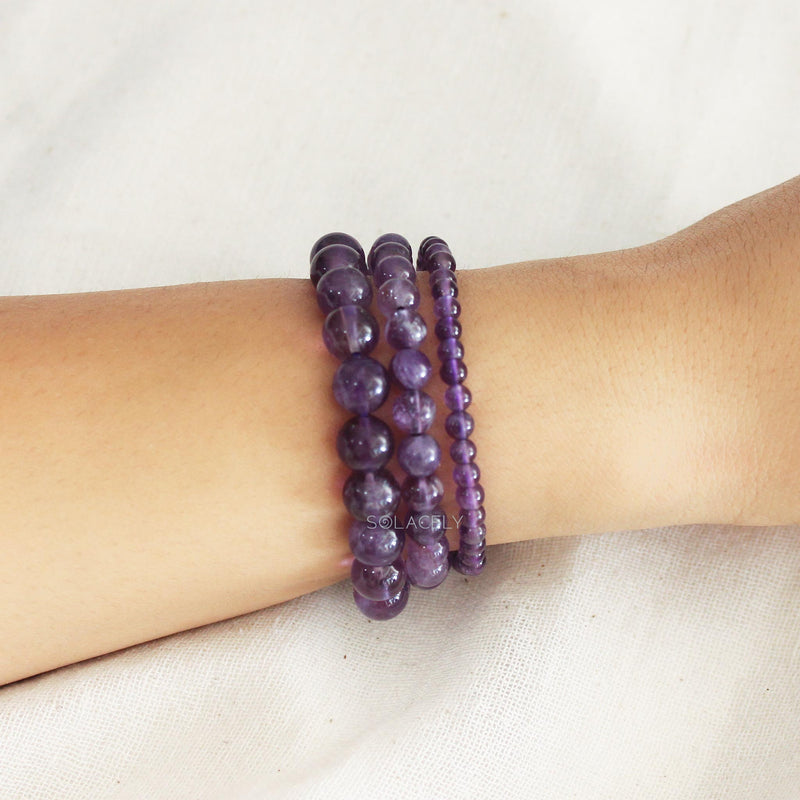
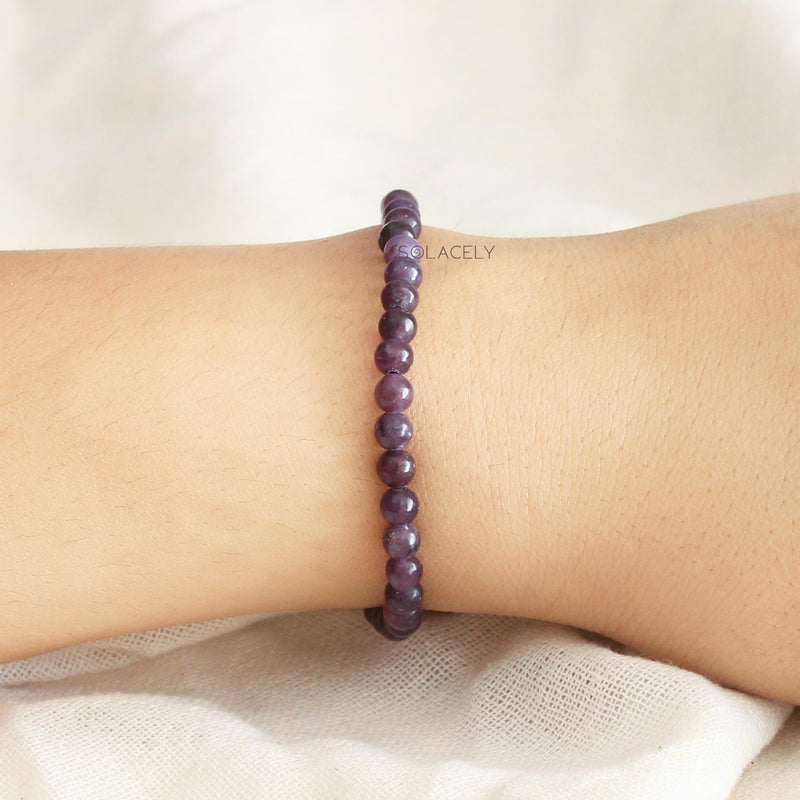
| Amethyst | Quiet, settled evenings and a slower mind at the end of the day | Bedside tumble or a beaded bracelet worn after work |
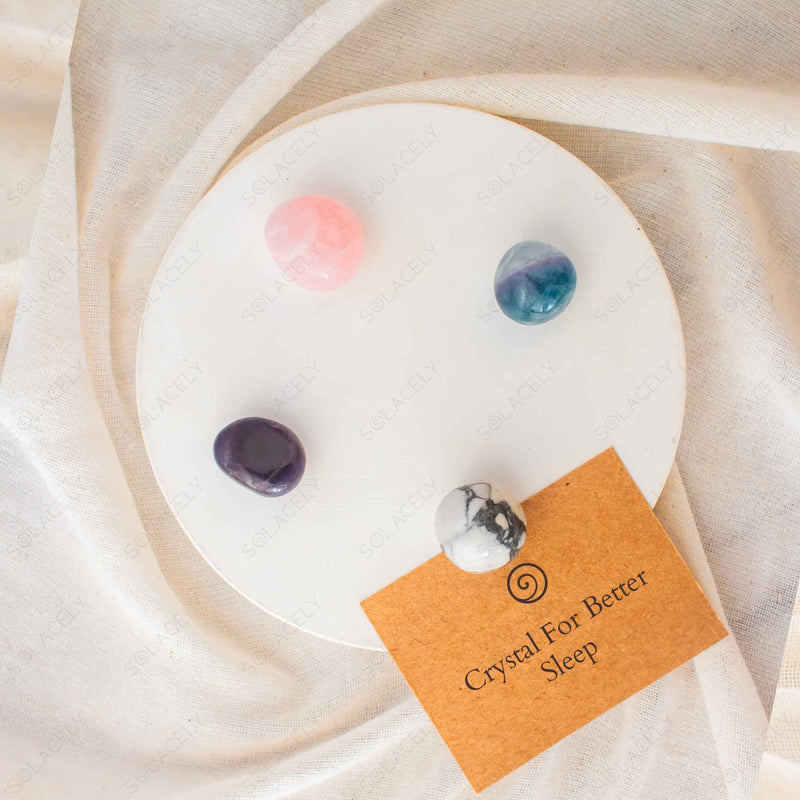
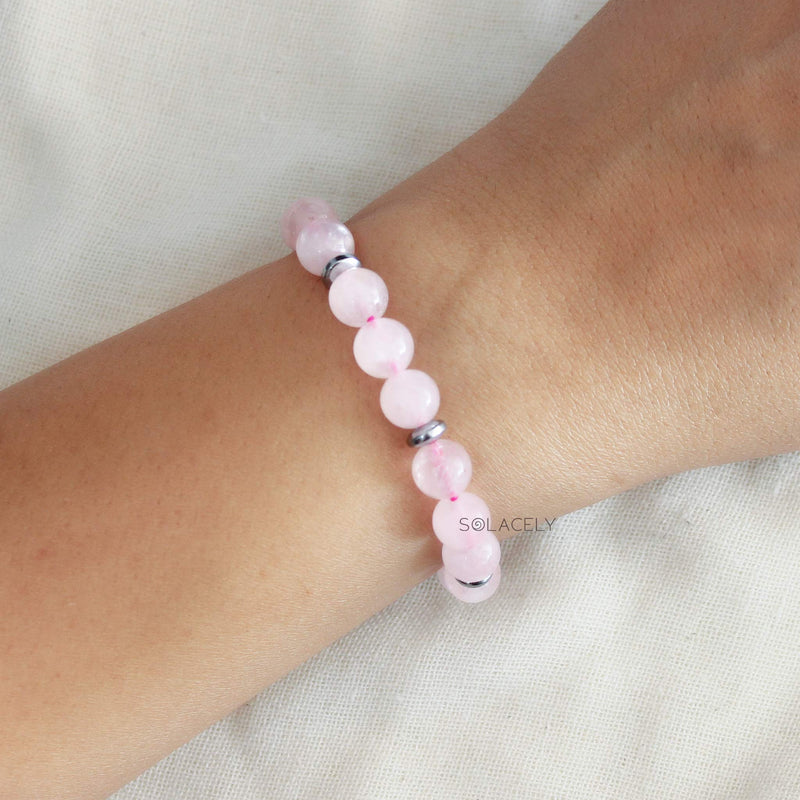
| Rose quartz | Softness towards yourself on the days you have little patience for yourself | Pocket tumble or a pendant worn close |
| Lepidolite | Steadiness through change and unsettled weeks | Bracelet, or a small piece held while sitting still |
| Smoky quartz | Feeling planted and back in the room | Held in the palm, or kept in a coat pocket |
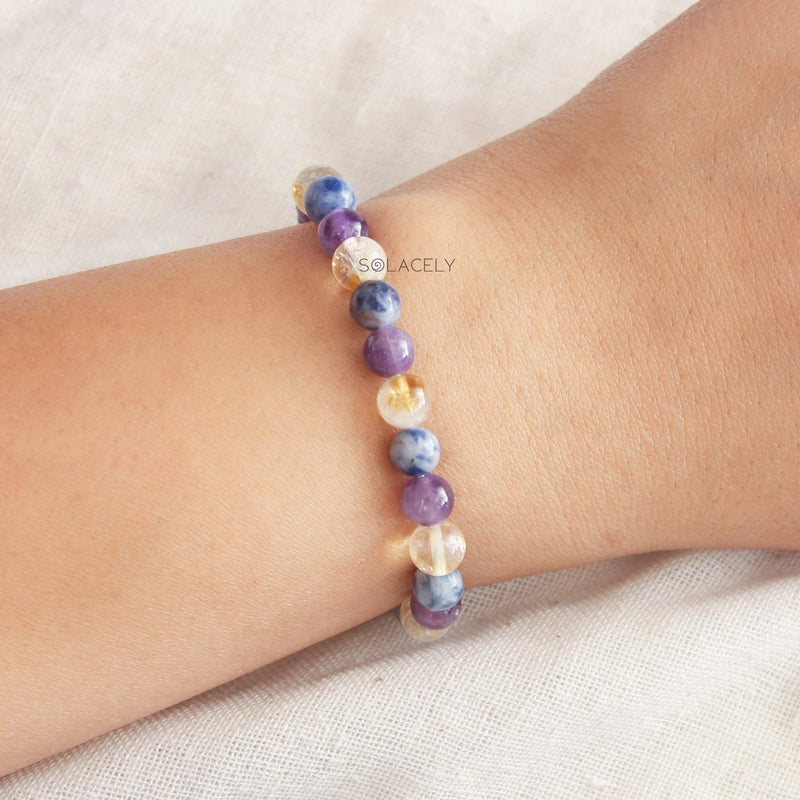
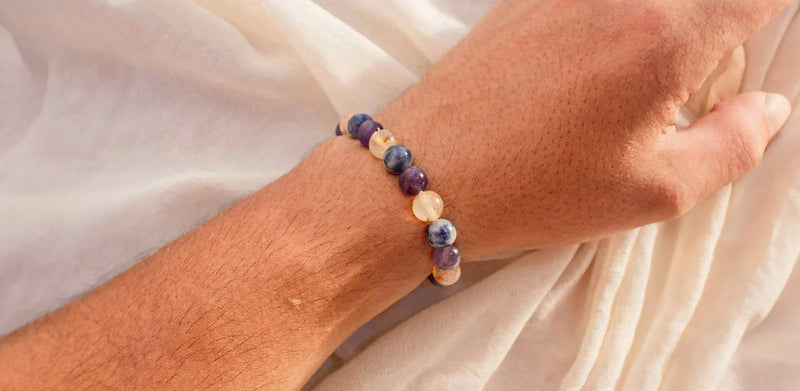
| Citrine | Warmth and a brighter outlook on flat mornings | Desk piece, or a bracelet worn on working days |
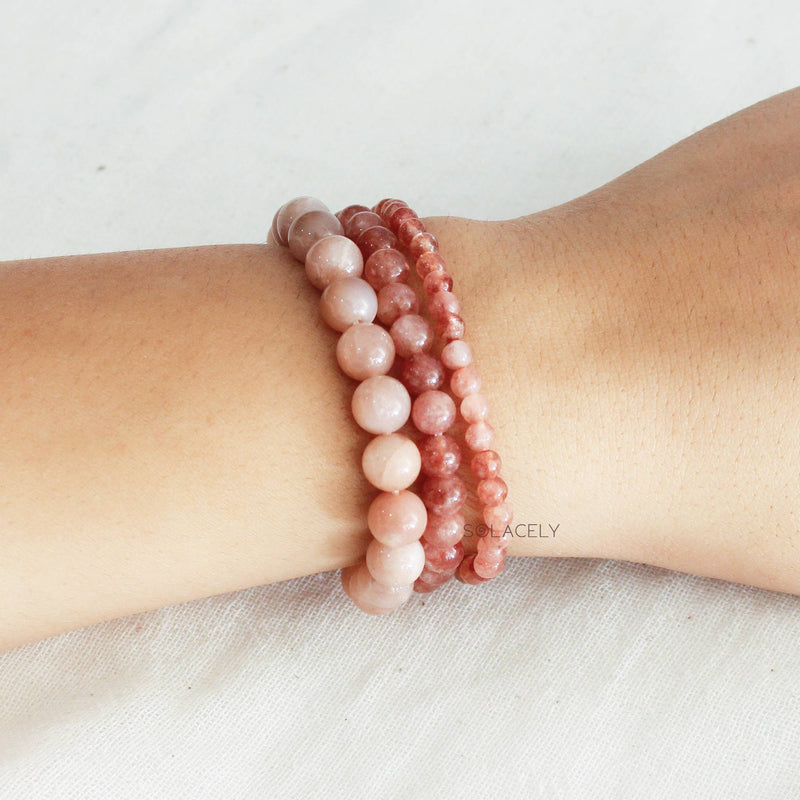
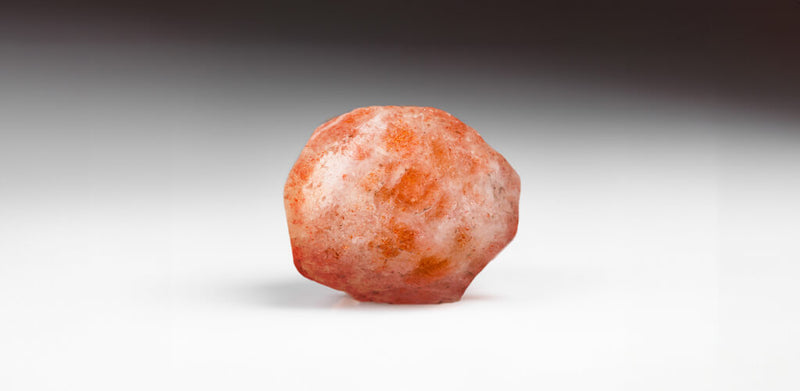
| Sunstone | Encouragement and a little forward motion | Carried on days that need starting |
Amethyst is the one most people meet first, and it is the one most often kept for evenings, when the mind is still running and the day will not close. If you want the fuller picture of the stone, our guide to amethyst meaning and properties covers its traditions in more detail, and it sits comfortably beside the stones people keep for a calmer bedtime.
Rose quartz is the stone people reach for when they are being hard on themselves, which is a familiar part of a low stretch. It is long associated with warmth turned inwards rather than outwards, and it appears again and again in collections built around emotional healing. Lepidolite, lilac and softly layered, is worn as a reminder that unsettled weeks pass. Smoky quartz is the one to hold when everything feels far away and you want to feel planted again.
Ways people use them through the day
The habit matters more than the size of the stone. Most people who keep a crystal for low moods use it as a marker: something they touch at a fixed point in the day, so that the pause happens whether or not they feel like pausing. Small and repeatable beats elaborate every time.
- Morning pocket. Choose one stone as you get dressed and name one thing you would like the day to hold. That is the whole ritual.
- Desk anchor. Keep a tumble beside the keyboard and pick it up when your shoulders climb. Many people pair this with the breathing they already use for anxious moments.
- Bath or shower. Set a stone on the edge of the bath, not in the water, and let the warm few minutes be the point.
- Bedside. A piece of amethyst on the nightstand is the most common set up of all, and it gives the evening a small closing gesture.
- Walk out. Carry a stone in a coat pocket on a short walk. The walk and the daylight do a great deal on their own.
People who find crystals helpful tend to describe the same thing: a physical object gives an intention somewhere to live. That is also why stones kept for positivity and happiness so often end up on a desk or a windowsill, where they are seen dozens of times a day.
When it is worth speaking to someone
It is worth speaking to someone sooner than most of us do. Depression is treatable, and treatment is what treats it: a GP appointment, a talking therapy, medication, or a combination chosen with you. If low mood has lasted more than a couple of weeks, or sleep, appetite, work or the people you love are being affected, that is reason enough to make the call.
Good moments to reach out include a low stretch that is not lifting, losing interest in the things that usually hold you, exhaustion that sleep does not touch, or the sense that you are managing rather than living. None of that has to reach a crisis point before it deserves attention. A GP can talk you through the options, and in many places you can also refer yourself to a talking therapy service without a doctor first.
If you feel unsafe, or you are having thoughts of harming yourself, call the emergency services on 999 in the UK or your local emergency number, or go straight to your nearest emergency department.
If something has already been arranged for you, keep going with it. Keep the appointment, stay with the therapy, and carry on taking any medicine exactly as it was prescribed, including on the weeks when you feel better. A stone can sit on the bedside table right beside all of it, as company for the stretch in between.
Building a small routine that holds
A routine you can do on your worst day is worth more than one designed for your best. Keep it to a few minutes, attach it to something you already do, and let it be unremarkable. The point is the return, not the performance, and one stone used daily beats six in a drawer.
- Pick one stone. Choose by the shade you actually want to look at, and hold a couple before deciding. The one you keep reaching for is your answer.
- Give it a place. Bedside table, desk, coat pocket. A stone with a home gets used.
- Attach it to a habit. The kettle boiling, the alarm going off, the laptop closing. These are the moments that already repeat.
- Name one thing. As you pick it up, say or think a single line: a person to message, a small task, a kindness towards yourself.
- Keep a note. A line a day in your phone about how things felt is quietly useful, and it gives you something concrete to show your GP.
Looking after your stones
Crystal care here is simple and mostly about protecting the stones from heat, water and each other. Rinse under cool running water and dry properly, or use moonlight and sound if you prefer to keep water away entirely. A soft pouch stops harder beads from marking softer ones in a drawer.
- Amethyst and citrine fade in prolonged sunlight, so charge them under moonlight or on a shaded shelf rather than a hot sill.
- Lepidolite is soft and flaky. Store it on its own and do not tumble it against harder beads.
- Never put stones in drinking water, and keep them out of the bath water itself.
- Small beads, chips and tumbles are a choking and strangulation risk, so keep them well away from children and pets.
- Wipe bracelets with a dry cloth after wear and take them off before swimming or showering, which keeps the elastic and the finish sound.
Solacely writes about crystals as a wellbeing and spiritual practice. This article is not medical advice, and crystals are not a treatment for depression or any other condition and do not change how any medicine works. Depression is treatable: please speak to your GP or another qualified health professional about how you are feeling, and continue with any therapy, appointment or prescription that has been arranged for you. Never delay, reduce or stop medical care because of a crystal practice.
Sources
- National Institute of Mental Health: Depression
- National Institute of Mental Health: Caring for Your Mental Health
Written by Chetena Sharma. Reviewed by the Solacely editorial team.
Frequently asked questions
About the author


Written by Chetna Sharma, crystal healing practitioner and co-founder of Solacely. Chetna has worked with healing crystals for over a decade and curates Solacely's protective stone collection.