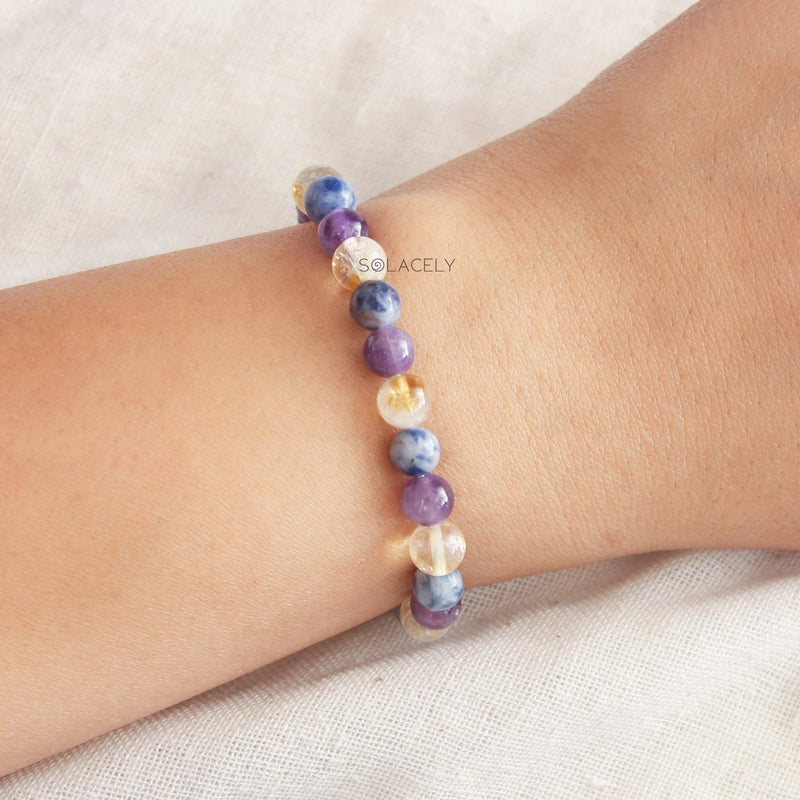
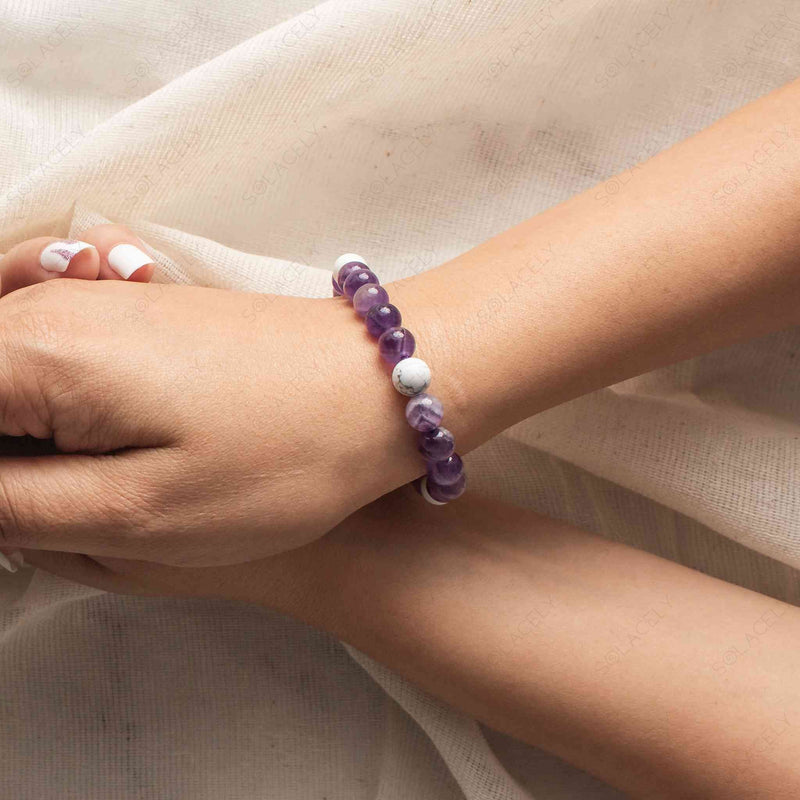
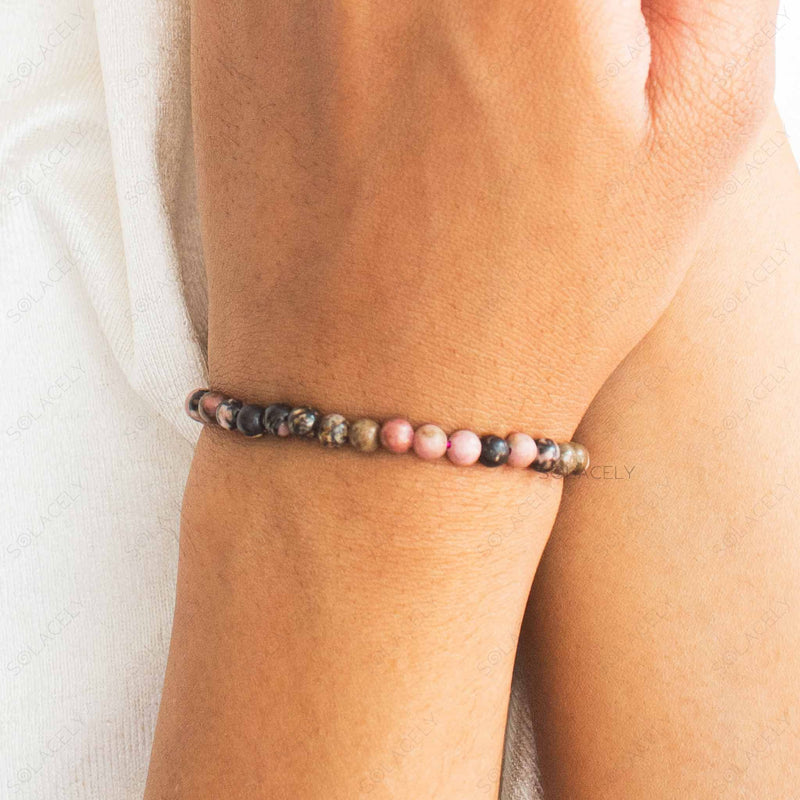
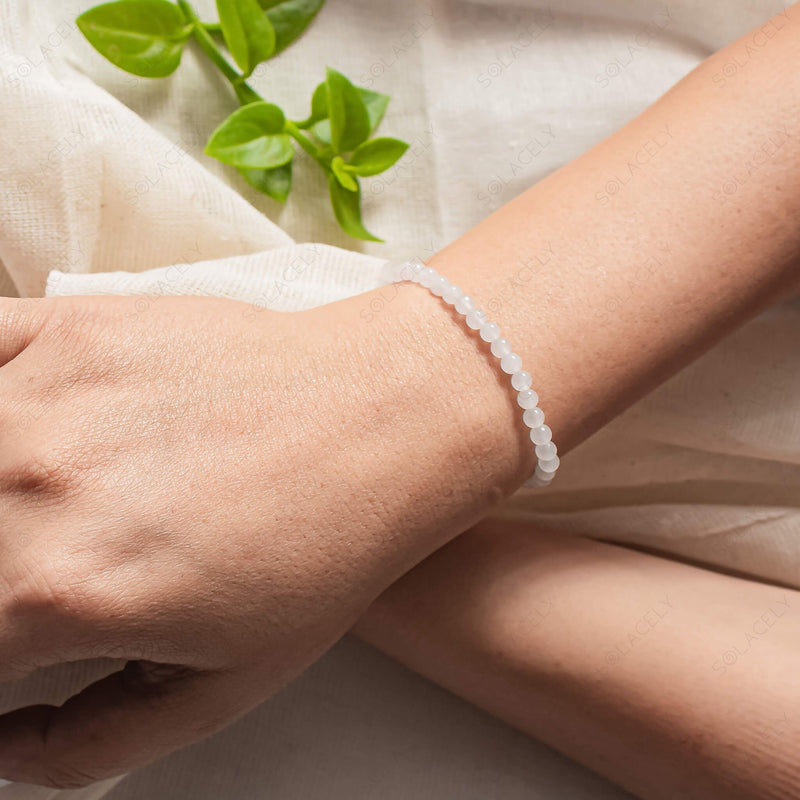
Lepidolite is the stone most associated with mood swings, followed by amethyst, rose quartz, blue lace agate and moonstone. The practice around them is about the pause: holding something and breathing before you reply, because most of the trouble a mood swing causes happens in what gets said during it.
Key takeaways
- Lepidolite heads the list because its tradition is specifically about volatility, not general calm.
- Use the stone to create a gap before responding.
- The routine: stone first, words second, ten breaths in between.
- Never put lepidolite in water. It is a soft mica and flakes along its layers.
- Match the stone to the pattern: cycle, sleep, relationship or speaking.
- Severe or prolonged swings are treated by a clinician. The stone is company alongside.
Why lepidolite heads every list
Most calming stones are recommended for a general state: anxious, unsettled, unable to sleep. Lepidolite is different, and its tradition is unusually specific. It is the stone named for volatility, for the swing itself rather than the low point, and that specificity is why it appears first in nearly every source on this topic.
It is a soft lilac mica, often flecked and layered, and it has a gentleness in the hand that suits what it is kept for. Because it is soft, it wants a little more care than a quartz, which is covered below.
The practice: build in the pause
The goal is not to stop a mood turning. It is to insert a gap between the turn and your response, because a mood swing you did not act on causes far less trouble than one you did.
- Notice the turn. Usually physical first: jaw, chest, shoulders, a sudden heat.
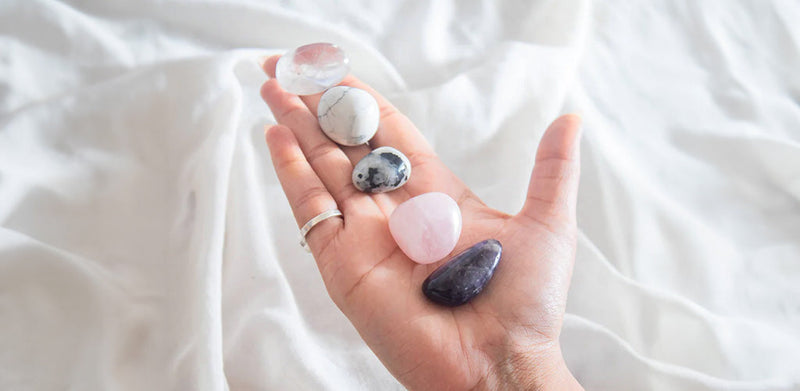
- Pick up the stone before replying to anything. This is the whole rule. Stone first, words second.
- Ten breaths. In for four, out for six, thumb moving across the surface on each exhale.
- Then decide. Reply, or leave it for an hour. Both are fine. The decision made after ten breaths is usually the better one.
Slow breathing of this kind is well supported for managing stress and anxiety. The stone's contribution is that it makes step two concrete. Deciding to pause is easy to forget; reaching for an object is a physical action you can build a habit around.
The five stones and their matches
| Stone | Traditionally kept for | Care note |
|---|---|---|
| Lepidolite | Rapid emotional swings | Soft mica, keep dry |
| Amethyst | Swings tied to poor sleep | Fades in sun |
| Rose quartz | Swings inside a relationship | Fades in sun |
| Blue lace agate | Snapping at people verbally | Durable, no issues |
| Moonstone | Swings that follow a cycle | Feldspar, chips if knocked |
Choose based on the pattern rather than the prettiest stone. If the swings track a monthly cycle, moonstone is the traditional match and our guide to crystals through hormonal change is the more relevant read. If they follow bad nights, sleep is the thing to work on, and crystals for insomnia covers that angle.
Caring for lepidolite specifically
Lepidolite is the most delicate stone in this group and the one most often damaged. It is a mica, sitting around 2.5 to 4 on the Mohs scale, and micas are built in sheets. Water works into those layers and lifts them, so the polished surface roughens and eventually flakes.
Wipe it with a dry cloth. Cleanse it with sound or smoke rather than water. Keep it in a pouch rather than loose in a bag with keys. Handled that way a pocket piece lasts for years.
When to speak to someone
Mood swings that are severe, that have lasted a long time, or that are disrupting work and relationships are treated by a clinician, and that is the route that addresses them. That is particularly true if there are periods of unusually elevated or driven mood as well as low ones, since that pattern has its own specific treatment.
A crystal ritual is good company alongside that care, and many people find it steadying. Our guides to crystals for calming and crystals for emotional healing take the same position.
The uses described here reflect traditional and cultural crystal practice, shared for reflection. Crystals are not a medical treatment and do not diagnose, treat, cure or prevent any condition. Lepidolite is a lithium bearing mica, and it is not an alternative to lithium medication or to any prescribed treatment. If mood swings are severe or persistent, speak to a qualified healthcare professional, and never stop or delay prescribed care.
Sources
Written by Chetena Sharma. Reviewed by the Solacely editorial team.
Frequently asked questions
About the author


Written by Chetna Sharma, crystal healing practitioner and co-founder of Solacely. Chetna has worked with healing crystals for over a decade and curates Solacely's protective stone collection.