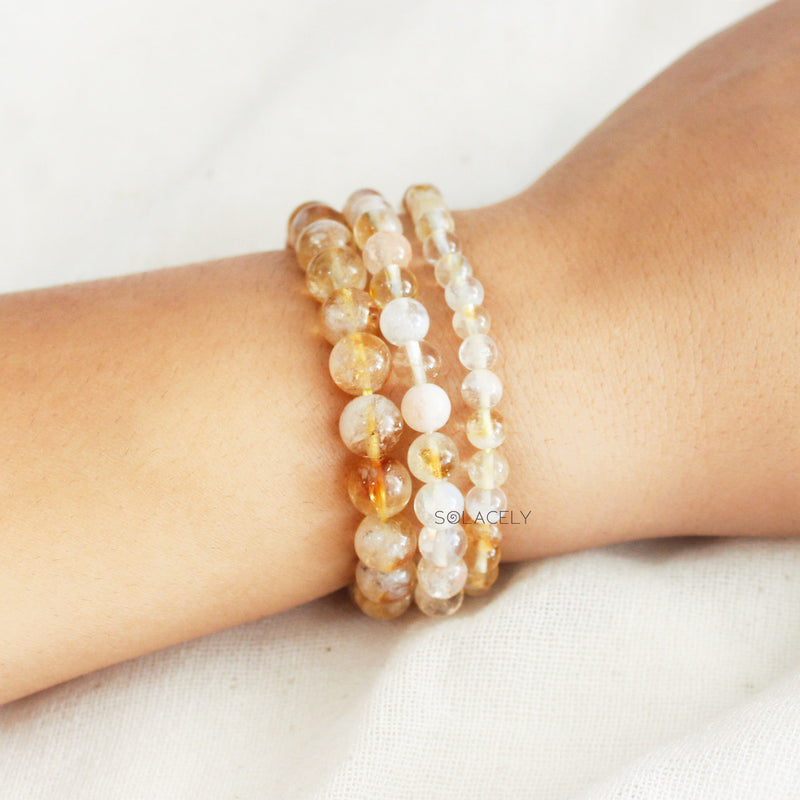
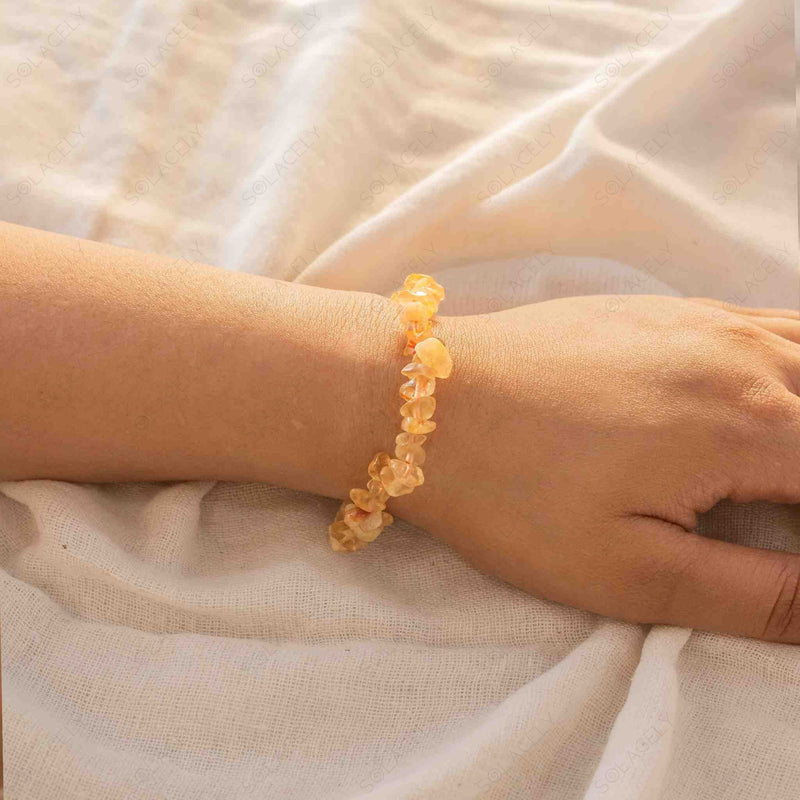
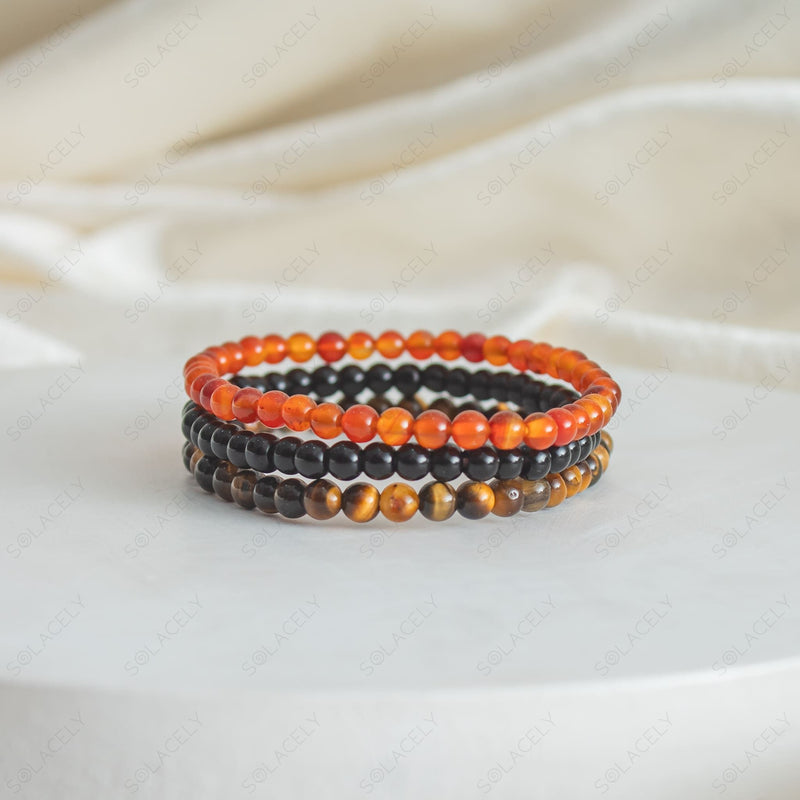
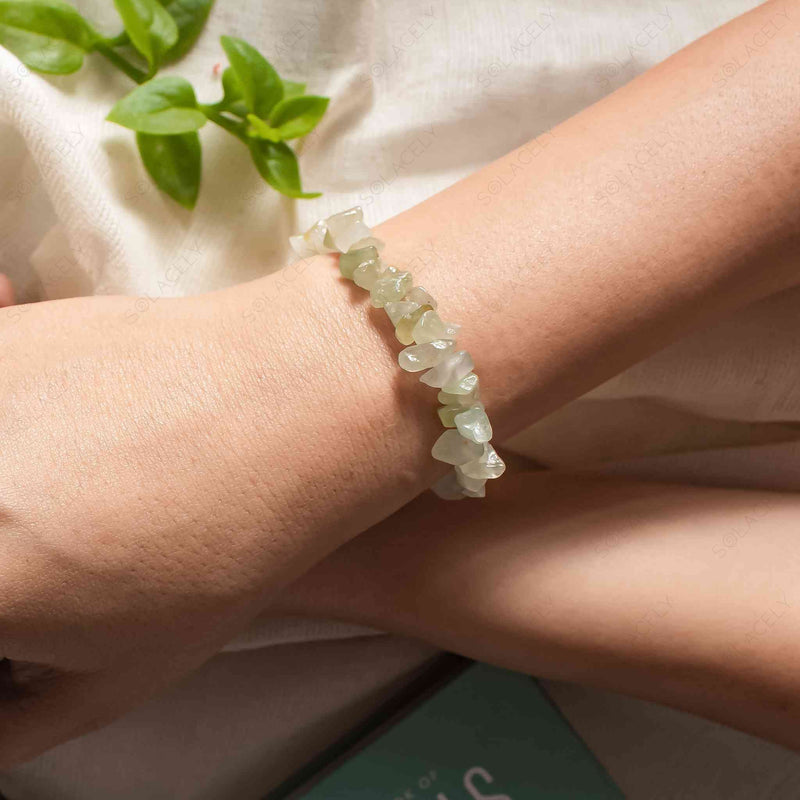
Citrine Crystal Combinations: 12 Best Pairings for Jewelry and Daily Wear
Citrine is the transparent, pale yellow to brownish orange variety of quartz, and it's one of the most jewelry-friendly stones in any crystal collection. The Gemological Institute of America rates it Mohs 7 with good toughness and confirms it's "suitable for all jewelry types," which means it holds up to daily wear in bracelets, rings, and pendants. As the global wellness economy reached $6.8 trillion in 2024 (Global Wellness Institute, 2025), more buyers are looking for crystal jewelry that's both energetically meaningful and built to wear. This guide covers all 12 best citrine pairings, the mineralogy you should know, and the durability questions that matter for daily wear.
- Citrine is a quartz variety (SiO₂, Mohs 7) rated by GIA as suitable for all jewelry types — strong daily-wear durability.
- Citrine's color comes from iron impurities and is naturally found in transparent yellow to brownish orange shades.
- Best pairings for jewelry stacking: amethyst, clear quartz, carnelian (Mohs 6.5–7, wears beautifully alongside citrine), tiger's eye, smoky quartz.
- Citrine + carnelian is the recommended pairing for those with ruling number 9 in numerology and people with strong, magnetic personal presence.
- Avoid prolonged sunlight — citrine color can fade. Clean with warm soapy water and a soft cloth.

Why Is Citrine a Strong Choice for Combination Jewelry?
Citrine crystal has the practical mineralogy that makes it an easy stone to combine with others in wearable form. Composition is silicon dioxide (SiO₂), the same as every other quartz-family stone, and the GIA rates it Mohs 7 with "good" toughness, calling it suitable for all jewelry types (GIA). That hardness means citrine pairs naturally with other quartz-family stones (amethyst, clear quartz, smoky quartz, rose quartz) at the same hardness level, so a stacked bracelet won't have one stone scratching another over time.
The energetic associations come from a different framework. Citrine is widely known as the "stone of abundance," tied to the solar plexus chakra and to confidence, optimism, and personal power. Whether you read those associations literally or treat them as a focusing tool, the practical jewelry case stands on its own: a yellow quartz stone, durable enough for daily wear, that warms up almost any color palette it sits beside.
Quick-Reference Guide: 12 Citrine Crystal Combinations
Use this table to match the right pairing to your wearable goal. "Wear-Compatible" reflects whether the partner stone has similar enough Mohs hardness to citrine (7) for confident stacking in a daily-wear bracelet without one stone wearing the other down.
| Partner Stone | Primary Benefit | Mohs Hardness | Best Jewelry Format | Wear-Compatible? |
|---|---|---|---|---|
| Amethyst | Balance + spiritual calm | 7 | Bracelet stack, ametrine ring | Excellent |
| Clear Quartz | Amplification | 7 | Beaded bracelet, pendant pair | Excellent |
| Carnelian | Magnetic energy + confidence | 6.5–7 | Stacked bracelet | Excellent |
| Tiger's Eye | Focus + decisiveness | 7 | Bracelet, pendant | Excellent |
| Smoky Quartz | Grounding + protection | 7 | Bracelet stack | Excellent |
| Rose Quartz | Self-love + warmth | 7 | Bracelet, dual pendant | Excellent |
| Lapis Lazuli | Wisdom + truth | 5–6 | Necklace pair (not stacked bracelet) | Moderate |
| Selenite | Cleansing | 2 | Plate cleansing only, not stacked | Care-only |
| Black Onyx | Inner strength | 6.5–7 | Bracelet | Good |
| Aquamarine | Calm communication | 7.5–8 | Necklace, separate bracelet | Good |
| Moonstone | Intuition | 6–6.5 | Bracelet (handle gently) | Moderate |
| Turquoise | Travel protection | 5–6 | Necklace, statement piece | Moderate |
The 11 Best Citrine Crystal Combinations (In Depth)
These are the eleven combinations we see most often in customer orders and the ones with the strongest case for everyday jewelry wear. Each includes the energetic framing, the practical wear case, and the format that works best for that pairing.
1. Citrine + Green Aventurine
Green aventurine is the luck stone, and pairing it with citrine creates the most abundance-forward combination on this list. Citrine attracts and amplifies; green aventurine opens the channel for opportunity to actually arrive. Where citrine alone leans confidence and self-generated momentum, adding aventurine introduces a softer, more receptive quality — the difference between manifesting through effort and manifesting through being in the right place at the right time.
Green aventurine is a quartz-family stone (a variety of chalcedony with fuchsite inclusions giving it the green color and characteristic shimmer) at Mohs 7, which keeps wear compatibility excellent alongside citrine. The visual pairing is one of the most balanced on this list — warm yellow against soft green creates a fresh, spring-toned look that suits beaded bracelets and dual-stone pendants equally well.
From what we've seen at Solacely, this pairing tends to be most popular with people working on financial goals, career transitions, or anything that depends partly on timing and luck — job applications, business launches, investment decisions. The citrine handles the inner confidence; the aventurine handles the outer conditions.
- Combines citrine's manifestation energy with aventurine's luck and opportunity
- Strong choice for financial goals, career transitions, and timing-sensitive work
- Both quartz family at Mohs 7 — excellent wear compatibility
- Fresh visual pairing — warm yellow with soft green
- One of the most beginner-friendly abundance combinations
2. Citrine + Pyrite
If green aventurine is luck, pyrite is action. This is the most assertive abundance pairing on the list — citrine generates solar-plexus warmth, pyrite adds metallic, directive momentum. The combination suits entrepreneurs, salespeople, and anyone whose income depends on initiating rather than waiting. It's a "make it happen" pairing rather than a "let it come" one.
Mineralogically, pyrite is iron sulfide with a Mohs hardness of 6 to 6.5, which sits just below citrine's Mohs 7. That's a slight hardness mismatch — workable in beaded bracelet form but worth being aware of, since pyrite can scratch over time when in continuous contact with harder stones. Pyrite is also sensitive to moisture and can tarnish or develop surface oxidation if worn in humid conditions. The strongest formats for this pairing are pendant settings, single-stone rings worn on different fingers, or beaded bracelets with spacer beads between the citrine and pyrite.
Visually, pyrite's metallic gold flash against citrine's translucent yellow is one of the most striking combinations in the warm-stone category. It reads less casual and more architectural than the carnelian or aventurine pairings.
- Combines citrine's confidence with pyrite's directive, action-oriented energy
- Strong choice for entrepreneurs, salespeople, and income-generating work
- Mohs 6–6.5 vs. 7 — slight hardness mismatch, use spacer beads in stacks
- Avoid prolonged moisture exposure to protect pyrite's surface
- Visually distinctive — metallic gold against translucent yellow
3. Citrine + Black Tourmaline
This is the most protective pairing on the citrine side of the list. Citrine attracts; black tourmaline filters. Used together, they let you stay open to abundance and opportunity without being open to draining influences along with it — a problem most pure-manifestation pairings don't address. For anyone who works in client-facing, public-facing, or emotionally demanding environments, this is often the most practical citrine combination available.
Black tourmaline (schorl) sits at Mohs 7 to 7.5 — slightly harder than citrine but close enough that beaded bracelet stacking works without issue. The visual contrast is the strongest in this whole guide: deep matte black against bright translucent yellow. It reads more grounded and intentional than the lighter pairings, and it's one of the few citrine combinations that works equally well in casual and formal jewelry settings.
From what we've seen with Solacely customers, this pairing resonates most with freelancers, therapists, healers, and anyone whose work involves taking in a lot of other people's energy throughout the day. Citrine keeps the channel open for prosperity and good outcomes; black tourmaline filters out the residue. It's also one of the more low-maintenance combinations on this list — neither stone needs frequent cleansing the way more absorbent stones do.
- Combines citrine's abundance with black tourmaline's protective filtering
- Strong choice for client-facing, public-facing, or emotionally demanding work
- Mohs 7 vs. 7–7.5 — excellent wear compatibility in stacks
- Strongest visual contrast in the citrine pairings list
- Low-maintenance — both stones handle daily wear without frequent cleansing
4. Citrine + Amethyst
This is the most popular citrine pairing, and there's a beautiful piece of mineralogy behind it: when citrine and amethyst grow naturally together in a single crystal, the result is called ametrine, a bicolor stone primarily mined in Bolivia. Wearing citrine and amethyst together as a stacked bracelet or paired pendant captures the same dual energy: citrine's solar plexus warmth balanced by amethyst's calm crown-chakra openness.
- Balances citrine's confidence with amethyst's calm
- Excellent for stacked bracelets and matched pendants
- Both stones at Mohs 7, no compatibility issues
- Most beginner-friendly citrine combination
5. Citrine + Clear Quartz
Clear quartz is sometimes called the master amplifier of crystal work, and pairing it with citrine intensifies citrine's natural abundance and confidence energy. As jewelry, this combination is lighter and more elegant than citrine alone, which can sometimes feel commanding. Clear quartz lifts the visual weight of the piece while keeping the warm tone front and centre.
Both stones share quartz family lineage, so wear compatibility is excellent. Clear quartz at Mohs 7 sits right alongside citrine without scratching. For ring buyers, citrine center stone with clear quartz accents is a classic, high-versatility setup that works with most outfits.
- Amplifies citrine's solar plexus confidence energy
- Lighter, more wearable feel than citrine alone
- Great for delicate jewelry: thin pendants, small accent stones
- Excellent for everyday wear in any setting
6. Citrine + Carnelian
This is the warmest combination on the list, and it carries a specific numerological framing in our community. Citrine and carnelian work especially well together for those with ruling number 9 in numerology and for people with what practitioners call mass energy — strong, magnetic personal presence. Both stones sit in the warm spectrum (citrine yellow, carnelian orange-red), and both are members of the broader quartz family.
The mineralogy backs up the wear case. Carnelian is a chalcedony — cryptocrystalline quartz with a Mohs hardness of 6.5 to 7 (Mindat). That sits within a half-step of citrine's Mohs 7, which means a stacked bracelet with both stones won't have hardness mismatch issues over time. Energetically, the pairing is associated with confidence, vitality, and creative motivation.
- Recommended for ruling number 9 in numerology
- Suits people with strong, magnetic personal presence
- Both stones in the same warm color palette — visually cohesive in jewelry
- Wear-compatible at Mohs 6.5–7 (no hardness mismatch issues)
- Excellent for stacked bracelets and warm-tone pendant pairings
7. Citrine + Tiger's Eye
If citrine is confidence and carnelian is magnetism, tiger's eye is decisiveness. The combination shifts the energy from broad warmth toward focused action: citrine generates solar-plexus energy, tiger's eye channels it into specific decisions. As jewelry, this is a strong pairing for professional settings — interview days, presentations, situations where you want to feel grounded and clear.
Tiger's eye is also a quartz-family stone (a chatoyant variety) at Mohs 7, which keeps wear compatibility excellent. The visual contrast is more dramatic than the citrine + carnelian pairing: tiger's eye's banded brown-gold sits against citrine's clean yellow with real visual depth, particularly in beaded bracelets.
- Combines confidence (citrine) with decisive focus (tiger's eye)
- Strong choice for professional or high-stakes situations
- Both at Mohs 7, excellent wear compatibility
- Visually rich combination — the banded brown-gold of tiger's eye complements citrine's yellow
8. Citrine + Smoky Quartz
Smoky quartz adds grounding to citrine's brightness. Both are quartz at Mohs 7, both are visually warm, and the combination lets you wear citrine's solar energy without it feeling untethered. From what we've seen with Solacely customers, this is the most-chosen citrine pairing for people who like the symbolism of abundance but want a stone visually subtler than pure yellow.
The smoky quartz energetics complement rather than counter citrine. Where citrine attracts and amplifies, smoky quartz transmutes and stabilizes. Together, they form a "manifest and ground" combination that suits people building toward long-term goals rather than chasing quick wins.
- Adds grounding to citrine's brightness
- Subtler visual presence than pure citrine
- Both quartz at Mohs 7, excellent compatibility
- Good for long-term goal-setting practices
9. Citrine + Rose Quartz
Rose quartz softens citrine. The combination pairs solar-plexus confidence with heart-chakra warmth, which makes it well-suited to relationship-focused work or self-love practice. Visually, the soft pink and warm yellow create one of the most universally flattering color combinations in crystal jewelry — particularly in beaded bracelets and dual-stone pendants.
Both stones are quartz family at Mohs 7, so wear compatibility is solid. Rose quartz is slightly more prone to surface scratching than citrine due to its translucent inclusions, so handle it with the same care you'd give a softer stone even though the hardness rating is identical.
- Combines confidence (citrine) with self-love (rose quartz)
- Warm, universally flattering color combination
- Strong choice for relationship-focused or self-love practices
- Wear-compatible — both Mohs 7
10. Citrine + Lapis Lazuli
Lapis adds wisdom and clear communication to citrine's confidence. This pairing is a favorite for anyone whose work or daily life involves speaking up: leaders, teachers, therapists, anyone whose role demands both warmth and authority. The visual contrast is one of the strongest in the citrine pairings universe — deep blue against bright yellow, almost royal in feeling.
One practical note: lapis is softer than citrine (Mohs 5–6 vs. 7), so it's not ideal for stacked bracelet wear where the harder citrine could wear down the lapis surface over time. The strongest format for this pairing is a layered necklace or matched-set pendant where the stones sit independently rather than rubbing against each other.
- Combines citrine's confidence with lapis's wisdom and truthful speech
- Strong choice for communication-heavy work
- Visual contrast: deep blue + bright yellow is striking
- Best as a layered necklace or pendant set, not stacked bracelet (hardness mismatch)
11. Citrine + Selenite
Selenite isn't really a wear pairing for citrine — it's a care pairing. Selenite cleanses other crystals without needing to be cleansed itself, which means a small selenite plate or wand is the easiest way to maintain citrine jewelry that's worn daily. Place your citrine bracelet or necklace on a selenite plate overnight once a week, and you've handled energetic cleansing without any active ritual.
If you want selenite as actual jewelry alongside citrine, treat it as a separate piece, not a stacked one. Selenite is Mohs 2 — extremely soft — and will not survive contact with harder stones in a bracelet stack. As a separate carved pendant or pocket stone, it's beautiful and useful. As a beaded bracelet partner, it's a misuse.
- Primarily a care pairing, not a wear pairing
- Self-cleansing, so it cleanses citrine passively overnight
- Mohs 2 means it cannot be stacked with citrine in a bracelet
- Best used as an overnight cleansing plate for jewelry
More Citrine Combinations Worth Considering
Beyond the top eight, four more citrine pairings come up regularly. These are less universal, but excellent when matched to a specific situation:
- Citrine + Black Onyx — Adds psychic protection and inner resilience to citrine's brightness. Both stones at Mohs 6.5–7, wear-compatible. Strong choice for those needing both confidence and a protective shield.
- Citrine + Aquamarine — Pairs solar-plexus warmth with throat-chakra clear communication. Aquamarine is harder than citrine (Mohs 7.5–8), so it can scratch citrine in stacked wear. Best as separate pieces or in a layered necklace.
- Citrine + Moonstone — Balances citrine's solar daytime energy with moonstone's lunar receptivity. Moonstone is softer (Mohs 6–6.5), so handle gently in any stacked configuration.
- Citrine + Turquoise — Traditional travel-protection pairing. Turquoise (Mohs 5–6) is significantly softer than citrine and prone to color change with skin oils, so this combination works best as a statement piece worn occasionally rather than every day.
How to Wear Your Citrine Combination

The right format depends on the pairing's wear compatibility. Quartz-family combinations (citrine + amethyst, clear quartz, smoky quartz, rose quartz, tiger's eye) all stack confidently in a single beaded bracelet without compatibility issues. Mismatched-hardness pairings (citrine + lapis, turquoise, selenite) work better as separate pieces in a layered look.
A few practical guides:
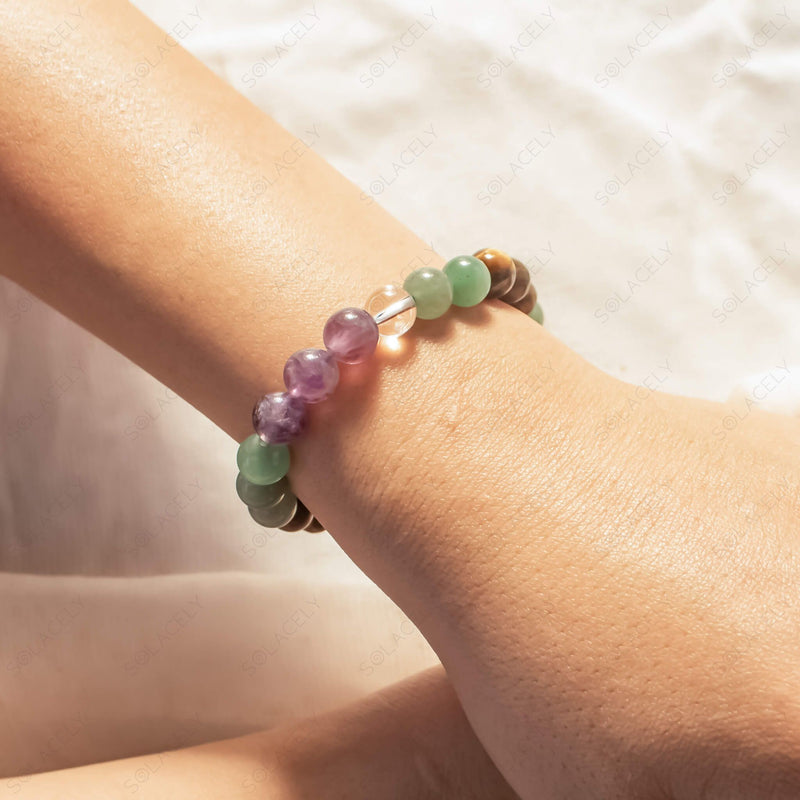
- Bracelet stacking. Best for any pair of quartz-family stones at Mohs 7 (citrine + amethyst, clear quartz, smoky quartz, tiger's eye, rose quartz). Use 6mm or 8mm beads for a refined daily-wear look; 10mm+ for statement stacks.
- Pendant pairing. Either a single pendant containing both stones (like ametrine or a citrine + clear quartz duet) or two separate pendants on the same chain. Pendants protect the stones from the friction of bracelet wear.
- Ring options. Citrine works beautifully as a center stone with clear quartz, amethyst, or smoky quartz accents. For everyday wear, a citrine ring at Mohs 7 holds up well in office or social settings.
- Layered necklaces. The right choice for hardness-mismatched pairings (citrine + lapis, turquoise) where stacking would damage the softer stone. Keep the stones on different chains.
How to Care for Citrine Jewelry
The GIA has clear care recommendations for citrine, and they're simple to follow. Warm soapy water and a soft cloth handle most cleaning needs. Avoid steam cleaning (heat can damage citrine) and harsh chemicals (hydrofluoric acid, ammonium fluoride, and alkaline solutions all cause damage). Sudden temperature changes can cause fractures, so don't move citrine pieces between extreme cold and hot environments.
The most-overlooked care issue is light exposure. Citrine color can fade with prolonged exposure to intense light, according to GIA. Store citrine jewelry in a drawer or box when you're not wearing it. Don't leave a citrine bracelet on a sunny windowsill or in a hot car. Normal daily wear in everyday lighting won't cause noticeable fading; sustained direct sunlight will.
For energetic cleansing, the easiest approach is the selenite plate method described above. Place your citrine combination on selenite plate overnight once a week. Avoid extended sun-charging because of the fade risk; moonlight charging is safer and just as effective for citrine.
Frequently Asked Questions
What crystals pair best with citrine?
The most versatile pairings are amethyst (forms ametrine), clear quartz (amplifies energy), carnelian (warm-spectrum sister stone), green aventurine (for growth), pyrite for (abundance), balck tourmaline (for protection & grounding) and selenite (passive cleansing). All four are easy to wear alongside citrine because they're at the same or very similar Mohs hardness level.
Can citrine be worn every day?
Yes. Citrine has a Mohs hardness of 7 and is rated by GIA as suitable for all jewelry types, including daily-wear bracelets, rings, and pendants. The main precautions are avoiding prolonged intense light (color may fade), abrupt temperature changes, and harsh chemicals. Warm soapy water and a soft cloth handle most cleaning.
What crystal pairs best with citrine for ruling number 9?
Citrine and carnelian is the recommended pairing for those with ruling number 9 in numerology. Both are warm-spectrum quartz-family stones (citrine Mohs 7; carnelian Mohs 6.5 to 7), and the combination is associated with strong, magnetic personal presence — what practitioners call mass energy. The pairing wears well as a stacked bracelet.
What is ametrine and why is citrine + amethyst special?
Ametrine is a naturally bicolor quartz that contains both citrine (yellow) and amethyst (purple) zones in a single crystal, primarily mined in Bolivia. The natural citrine + amethyst pairing balances solar-plexus confidence with crown-chakra calm. They wear beautifully together because both are quartz at Mohs 7.
Does citrine fade over time?
Citrine color can fade with prolonged exposure to intense light, according to GIA care guidance. To preserve color, store citrine jewelry away from direct sunlight when not being worn, and avoid leaving citrine pieces in hot car windows or on sunny windowsills. Normal daily wear under typical lighting won't cause noticeable fading.
How do you cleanse and charge citrine combination jewelry?
For physical cleaning: warm soapy water and a soft cloth (GIA recommended). For energetic cleansing: place the piece on a selenite plate overnight, pass through sage smoke, or use sound. Avoid extended sun-charging because of fade risk; moonlight charging is safer for citrine. Cleanse weekly if worn daily.
Where does citrine come from?
Brazil is the dominant source of citrine globally, particularly the states of Minas Gerais and Bahia. Other significant deposits include Madagascar, Russia (Ural and Altai mountains), and Spain. Each region produces citrine with slightly different color and quality characteristics.