The fifth house in astrology is the house of creativity, romance, children and play. It governs what you make and whom you delight in: art, hobbies, flirtation, and the pleasure of doing something purely because you love it. Traditionally linked to Leo and ruled by the Sun, it sits in the personal lower half of the birth chart.
Key Takeaways
- The fifth house governs creativity, romance, children, play and self-expression. It is the house of joy rather than duty.
- Its natural sign is Leo and its natural ruler is the Sun, which is why warmth, pride and visibility run through its themes.
- In Vedic astrology it is called Putra Bhava, the house of children, and also covers intelligence and learning.
- The sign on your fifth-house cusp describes the style of your creativity; any planets inside describe what animates it.
- An empty fifth house is completely normal and does not mean a life without creativity, love or children.
- Astrology is an interpretive tradition for reflection, not prediction. Nothing here forecasts children, health or outcomes.
What the fifth house governs
The fifth house covers five overlapping territories: creative self-expression, romance and courtship, children and progeny, play and recreation, and speculation or risk-taking. What unites them is that none is obligatory. The sixth house handles duty and routine; the fifth handles what you choose freely because it gives you pleasure.
According to Encyclopaedia Britannica, the twelve-house system of the horoscope descends from Hellenistic astrology, where the sky was divided into segments each carrying a field of life. The fifth segment was tied from early on to offspring and good fortune, and the modern reading of creativity grew naturally out of that older sense of what a person brings into the world.
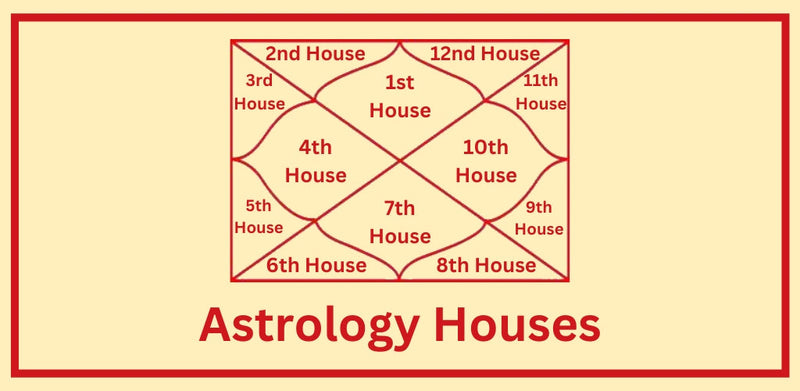
It helps to read the fifth house broadly. Children are one kind of creative offspring; a painting, a business, a garden or a piece of writing are others. Practitioners often describe it as the house of anything you make and then love. If the whole framework is new to you, our guide to the 12 astrological houses sets the context.
Putra Bhava: the fifth house in Vedic astrology
In Indian astrology (Jyotish) the fifth house is called Putra Bhava, literally the house of children. Its remit is wider than that name suggests: it also covers buddhi (intelligence), vidya (learning), mantra practice, and purva punya, the merit understood to be carried forward from past actions. Creativity and intellect sit together here.
The overlap with the Western fifth house is close, which is unusual across the two systems. Both read it as the seat of what you produce and enjoy. The main divergence is calculation rather than meaning: Vedic charts use the sidereal zodiac and often whole-sign houses, so the sign on your fifth cusp may differ between a Western and a Vedic reading of the same birth.
Jyotish also gives the fifth house a devotional dimension absent from most Western readings. Mantra, study of sacred texts and spiritual discipline are traditionally assigned here, on the logic that inner cultivation is its own kind of creative work.
The Sun and Leo: why the fifth house feels warm
The fifth house takes its character from Leo and the Sun. The Sun in astrological tradition represents vitality, identity and the urge to be seen, so the house it naturally governs carries that same quality of shining outward. This is the part of the chart where you stop being useful and start being yourself.
That solar theme explains a few things about how the house is read. Fifth-house matters tend to want an audience, whether that is a stage, a gallery, a reader or one person you are trying to charm. Pride sits here too, in both its generous and its brittle forms. Creativity that goes unwitnessed can feel, to a strong fifth house, like it did not quite happen.
It is worth remembering that the natural ruler is a general rule, not your personal one. In your own chart the fifth house is ruled by whatever planet governs the sign on its cusp. If Scorpio sits there, Mars and Pluto colour your creativity; if Pisces, Neptune and Jupiter do.
Planets in the fifth house
A planet sitting in the fifth house is said to animate your creative and romantic life with its own character. Below is how the traditional readings run. Most people have no planets here at all, which is unremarkable.
| Planet in the 5th | Traditional reading |
|---|---|
| Sun | Creativity tied closely to identity; a desire to be recognised for what you make |
| Moon | Emotion drives the creative and romantic life; nurturing, intuitive expression |
| Mercury | Creativity through words and ideas; writing, teaching, playful conversation |
| Venus | Beauty and harmony in art and love; a natural ease with romance and aesthetics |
| Mars | Energy and appetite in creative and romantic pursuit; passionate, sometimes combative |
| Jupiter | Generous, expansive enjoyment; abundance of interests, appetite for pleasure |
| Saturn | Discipline and seriousness applied to creativity; slow-built craft, guarded romance |
| Uranus | Unconventional creative style; sudden attractions and abrupt changes of direction |
| Neptune | Imagination and idealism; art that dissolves boundaries, romance that risks illusion |
| Pluto | Intensity and transformation through creating and loving; nothing kept casual |
These are interpretive descriptions, not verdicts. A Saturn placement does not mean you cannot enjoy yourself, and a Venus placement does not guarantee an easy love life. Read them as prompts for reflection about how you already behave.
The sign on your fifth-house cusp
If planets describe what animates the fifth house, the sign on its cusp describes the style. This is the layer most people can actually use, because everyone has a sign on the fifth cusp whether or not a planet sits there.
Fire signs on the fifth cusp (Aries, Leo, Sagittarius) are read as bold and expressive: creativity that wants momentum and an audience. Earth signs (Taurus, Virgo, Capricorn) suggest craft, patience and the pleasure of a thing well made. Air signs (Gemini, Libra, Aquarius) point to ideas, conversation and social play. Water signs (Cancer, Scorpio, Pisces) suggest feeling as the raw material, art drawn from emotion and memory.
A quick way in: ask what your fifth-house sign would consider a perfect free afternoon. A Virgo fifth might spend it refining something small until it is right. A Sagittarius fifth would want to go somewhere new. Neither is better; they simply describe different routes to the same joy. For how the colours of each sign are traditionally read, see our zodiac colours guide.
Crystals traditionally paired with the fifth house
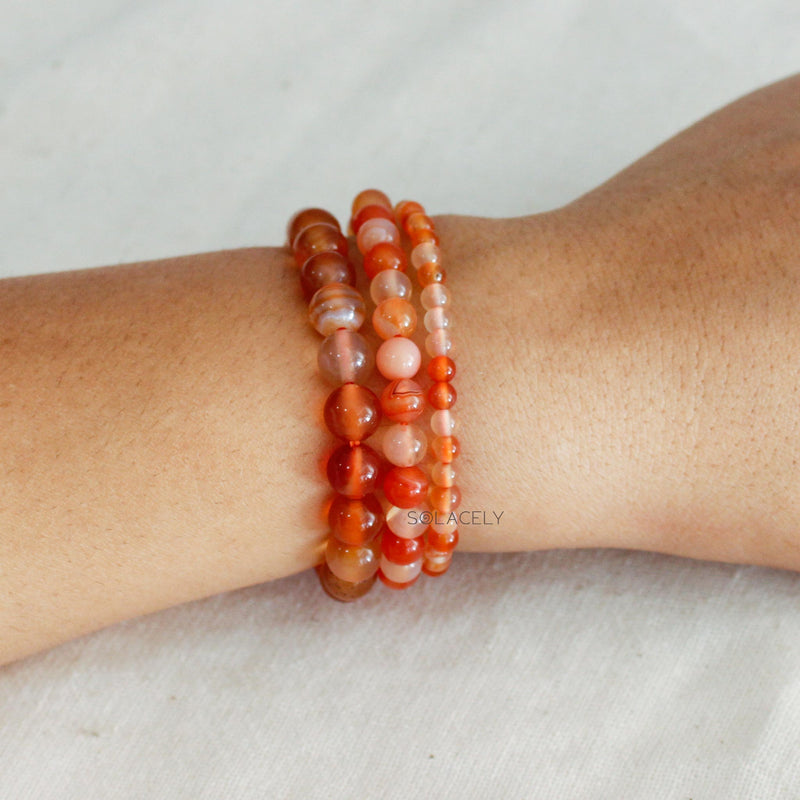
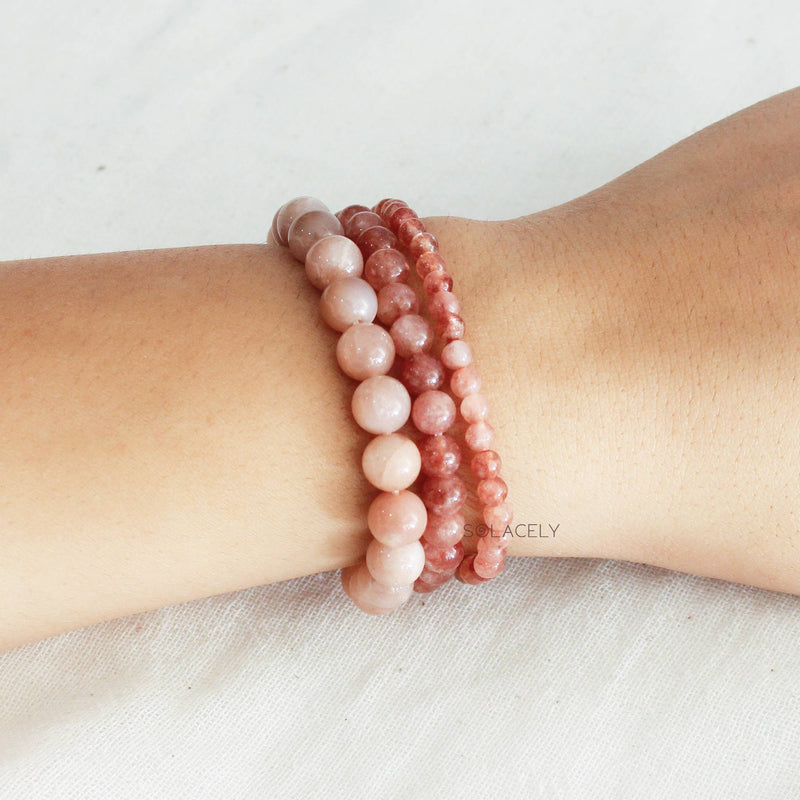
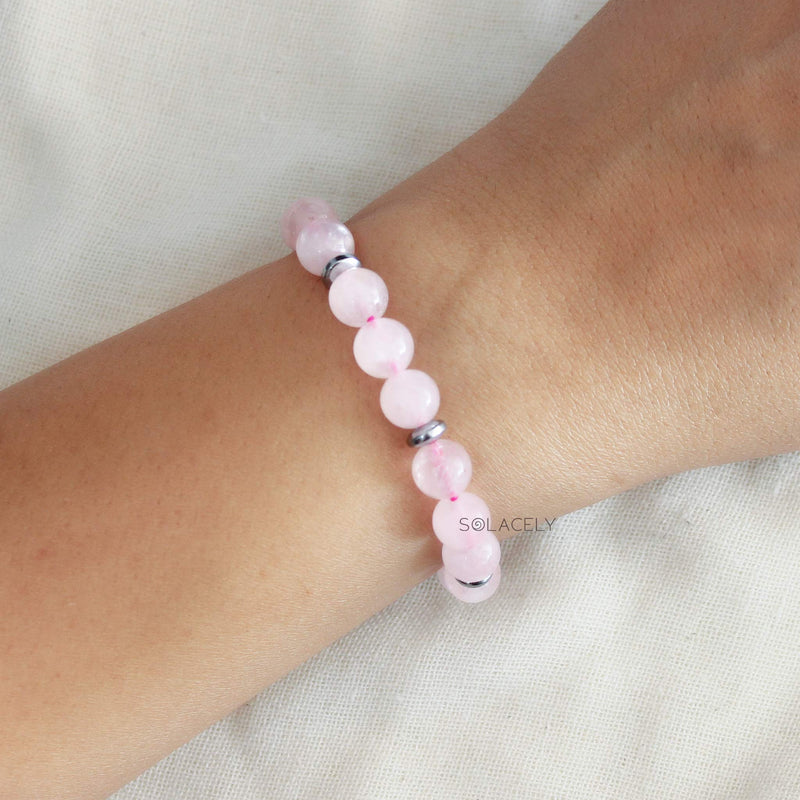
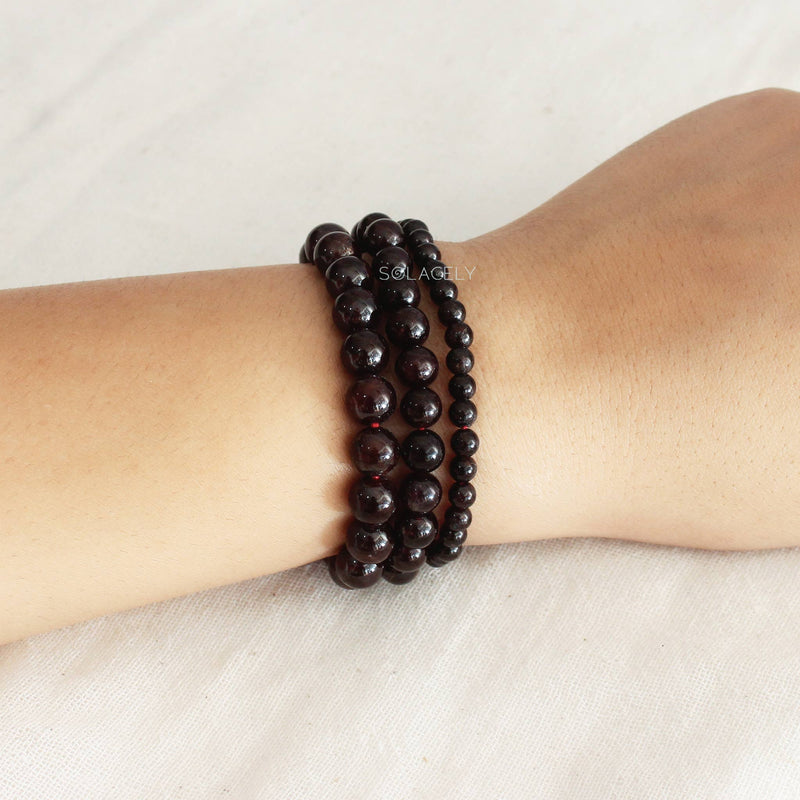
Because the fifth house is Sun-ruled, the stones associated with it are warm and bright: carnelian, citrine, sunstone, garnet and rose quartz. In crystal tradition these are kept as a focus for creative intention, held or placed where you work, not used as any kind of treatment.
Carnelian is the classic creativity stone. It is a translucent orange-to-red variety of chalcedony, and according to the Gemological Institute of America chalcedony is a form of microcrystalline quartz, with carnelian owing its colour to iron oxide. That warm tone is exactly why it became linked with vitality and creative drive.
| Crystal | Traditional fifth-house association |
|---|---|
| Carnelian | Creative drive, motivation, courage to begin |
| Citrine | Optimism and joy; keeping a project pleasurable |
| Sunstone | Self-expression and confidence, matching the Sun's rulership |
| Garnet | Passion and vitality, in both work and romance |
| Rose quartz | Warmth and tenderness in courtship and love |
One stone is plenty. Keep carnelian or citrine where you actually make things, a desk, a studio corner, a kitchen counter, so it works as a small cue to start. If romance is the focus, our guide to crystals for Leo covers the same solar warmth through the sign itself.
Working with your fifth house
The practical value of the fifth house is that it gives you permission. For anyone who defaults to duty, reading this house is a reminder that play, making and delight are not indulgences to be earned but a genuine part of a full life.
A few ways people use it:
- Protect unstructured time. The fifth house needs hours with no outcome attached. Put them in the calendar like anything else.
- Make without publishing. Not every creative act needs an audience, even if the solar fifth house would like one. Let some of it be private.
- Follow the cusp sign's style. If your fifth is in a water sign, forcing yourself into brisk, productive creativity will feel wrong. Work with the grain.
- Notice what you did as a child. Traditional readings treat the fifth house as the part of you that never stopped being seven years old. What absorbed you then often still does.
- Separate play from speculation. The fifth house also covers risk-taking. Enjoying a gamble is one thing; relying on one is another.
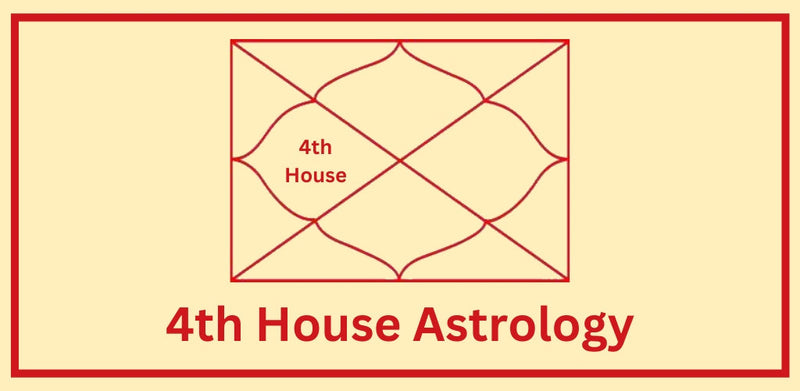
The house directly opposite the fifth is the eleventh, which governs friendships and the wider community. Tradition reads them as a pair: personal creative expression on one side, shared collective hopes on the other. The neighbouring fourth house of home and roots sits just below it, and the sixth house of work and routine just above.
Sources
- Encyclopaedia Britannica, astrology: the horoscope and the house system. britannica.com
- Encyclopaedia Britannica, horoscope, the chart of the heavens and its twelve houses. britannica.com
- Gemological Institute of America, chalcedony and carnelian description. gia.edu
Frequently asked questions
About the author


Written by Chetna Sharma, crystal healing practitioner and co-founder of Solacely. Chetna has worked with healing crystals for over a decade and curates Solacely's protective stone collection.