Amethyst and hematite is the pairing people reach for when they want calm at the top and weight at the base. Hematite is a dense iron oxide with a bright metallic lustre, traditionally kept for grounding. Amethyst is the purple quartz long associated with a settled mind. This guide covers how to wear the two together.
Key takeaways
- Hematite is an iron oxide, roughly twice as dense as quartz, which is why a hematite bracelet feels noticeably heavier on the wrist than an amethyst one of the same bead size.
- That weight is the whole appeal. People describe hematite as grounding they can feel rather than only picture.
- Amethyst is quartz at 7 on the Mohs scale, hematite sits at about 5.5 to 6.5 with no cleavage, so the two wear together happily as beads.
- The traditional reading is root and crown: hematite steadies at the base, amethyst opens at the top.
- Amethyst fades in prolonged sunlight, so keep it out of a sunny windowsill.
- Hematite can pick up surface rust spots if it is left damp, so dry it properly after any contact with water.
Why are amethyst and hematite paired together?
The pairing works on contrast. Hematite is heavy, opaque and metallic, and it is the stone most often kept for steadiness and grounding. Amethyst is translucent, violet and long associated with calm and clear thinking. Worn together, one anchors and the other lifts, which is why the combination is usually described as ground and elevate.
In the chakra layout used in modern crystal practice, hematite is placed at the root and amethyst at the crown, so the two stones sit at opposite ends of the column. That is the reason the pairing turns up so often in bracelet stacks and meditation sets: it covers both ends of the body in a single, simple combination rather than asking you to build a seven stone set.
What separates hematite from the other stones kept for grounding is that you feel it working before you think about it. The stone is physically heavy, so the wrist registers it every time you move. Amethyst does the opposite job quietly. If you like this shape of pairing, our wider notes on crystal pairings for amethyst cover the other stones that sit well alongside it.
What is hematite, and why does it feel so heavy?
Hematite is an iron oxide and one of the most important iron ores on Earth. Its specific gravity runs to about 5.3, against roughly 2.65 for quartz, so the same volume of hematite weighs close to twice as much. That single number explains almost everything people notice about wearing it.
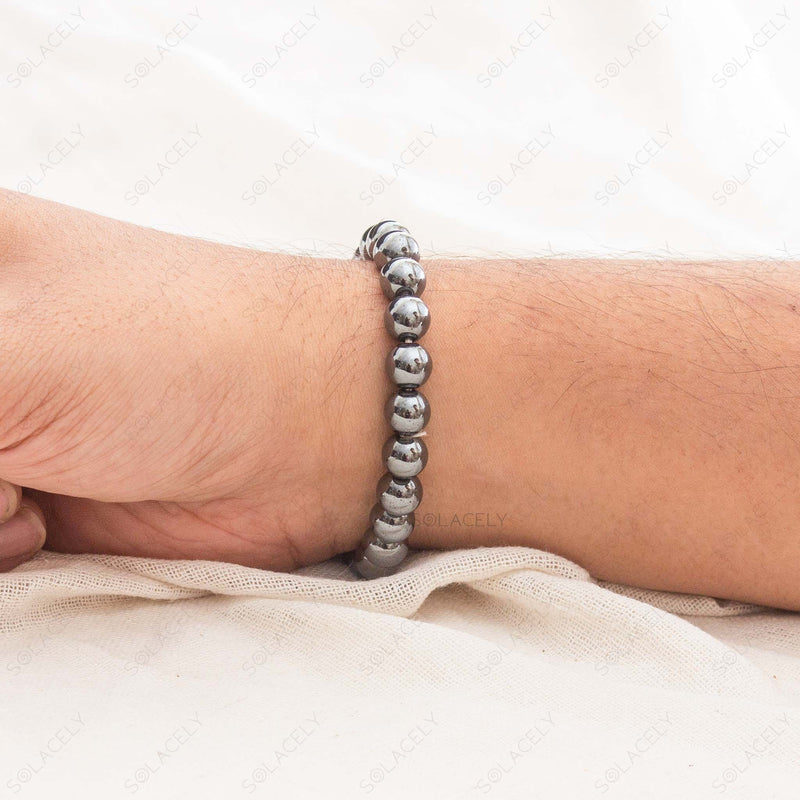
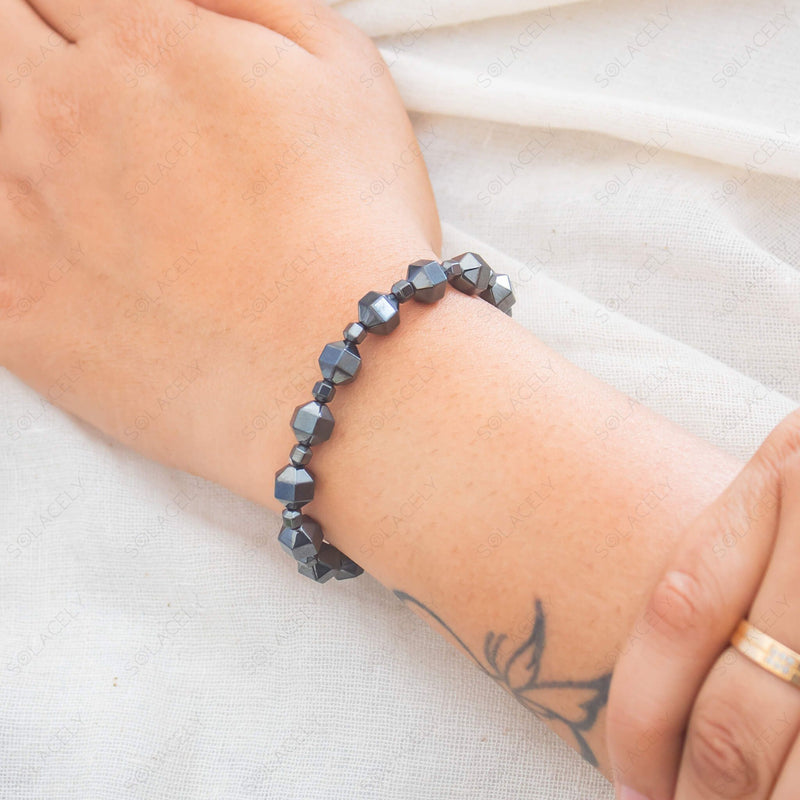
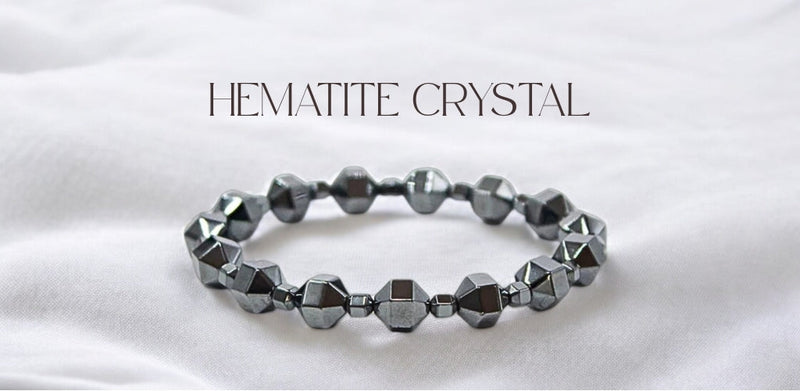
Mineral references put hematite at about 5.5 to 6.5 on the Mohs scale, with a metallic to submetallic lustre and no true cleavage, only parting. The absence of cleavage planes is what makes it tougher in jewellery than the hardness figure alone suggests, because a knock tends to mark the surface rather than split the bead. Polished hematite takes an unusually mirror bright finish, which is why a strand of it reads almost like polished steel.
Shades run from a cool silvery grey through to darker gunmetal and warmer gold finishes, all of them long established in bead work. Pick the tone you actually want to look at against your skin, since all of them carry the same traditional association with grounding. Our fuller hematite meaning and properties guide goes further into the stone's history, and if you are choosing a side to wear it on, the note on which hand to wear a hematite bracelet covers the usual convention.
Amethyst, the calm half of the pair
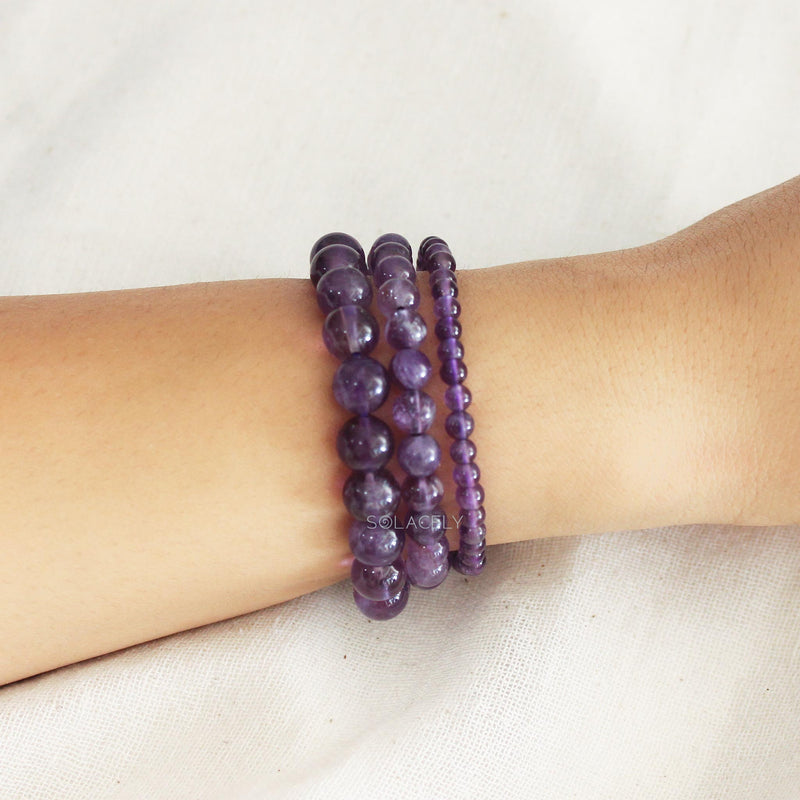
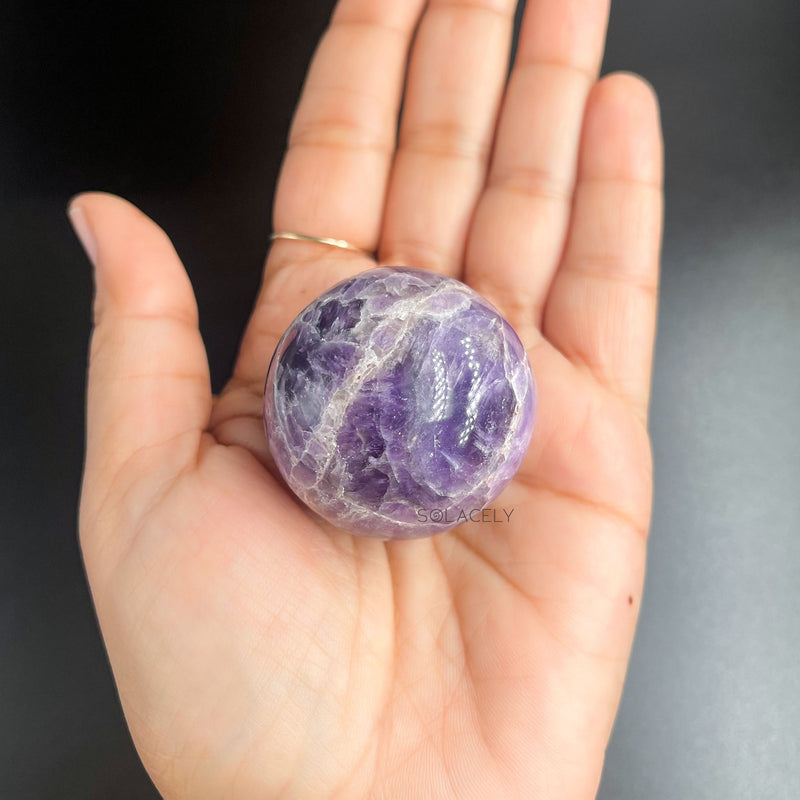
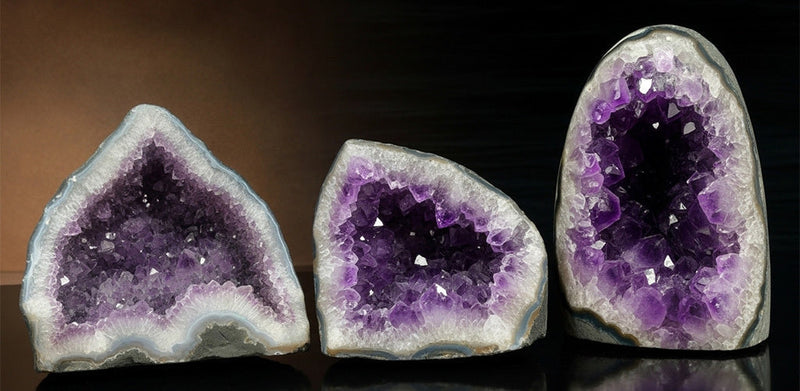
Amethyst is the purple variety of quartz, sitting at 7 on the Mohs scale, hard enough for daily wear as beads, tumbles or a pendant. Gemmological grading runs the colour from pale lilac through to a deep grape purple, often with paler zoning inside the crystal. It is the stone most people meet first in crystal practice.
In this pairing amethyst carries the quieter half of the job. It is traditionally kept for calm at the end of a busy day, for settling a racing head before sleep, and as a reminder to slow down. Against hematite's metallic grey, the violet reads clearly, which is part of why the combination has stayed popular in bracelet form for so long.
Choose the depth of purple you like rather than the deepest one available, because a bedside or everyday stone earns its keep by catching your eye. Our amethyst meaning and properties guide covers the wider traditions attached to it.
| Property | Amethyst | Hematite |
|---|---|---|
| Mineral family | Quartz, silicon dioxide | Iron oxide |
| Mohs hardness | 7 | About 5.5 to 6.5 |
| Specific gravity | About 2.65 | About 5.3 |
| Appearance | Translucent lilac to deep purple | Opaque, metallic grey to gold |
| Traditionally kept for | Calm, clear thinking | Grounding, steadiness |
| Care in short | Keep out of prolonged sun | Keep dry, wipe after wear |
How to wear and use the pairing
The beaded bracelet is the format most people start with, because it puts both stones on the same wrist and the weight difference is obvious from the first minute. After that, the usual routes are a pendant pair, a two stone meditation set, and a pocket pair carried through the working day.
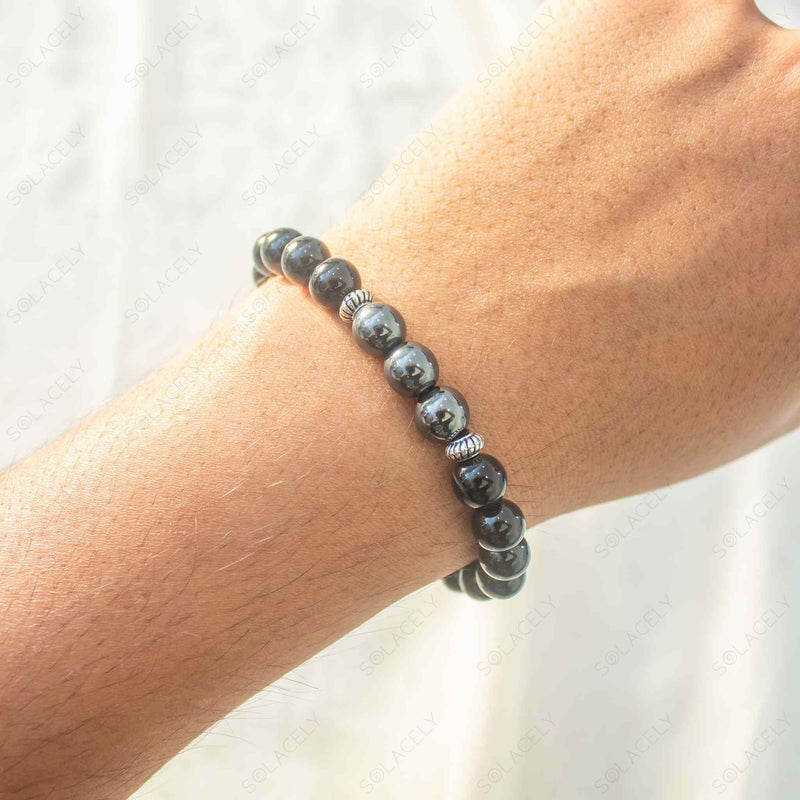
- The alternating bracelet. Amethyst and hematite beads in 6mm or 8mm, alternating or in blocks. The metallic and violet contrast is striking, and the hematite gives the strand a substantial feel that lighter quartz bracelets do not have.
- A pendant pair. An amethyst pendant on one chain with a hematite cabochon on another. Hematite set into a protective bezel handles daily wear well, since the setting takes the knocks before the stone does.
- A meditation set. Hold hematite in your dominant hand and amethyst in the other. The weight in one palm and the lighter stone in the other gives the practice a clear physical anchor, which many people find easier than visualising one.
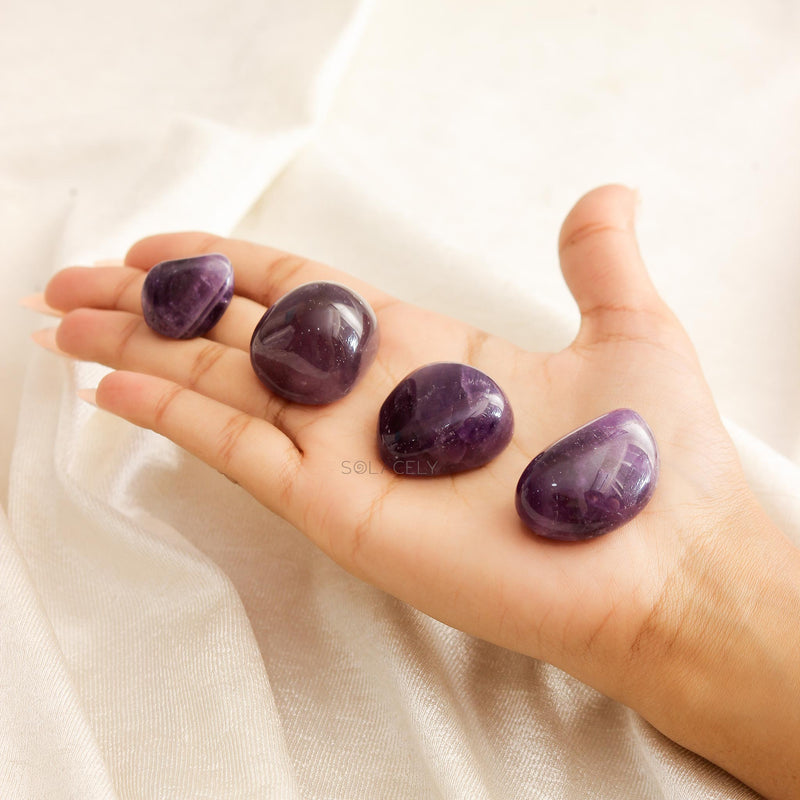
- Pocket stones. A small hematite tumble alongside a small amethyst. The hematite makes itself known through the pocket as you move, and that is the reminder doing the work.
- On the desk. A hematite tumble beside the keyboard and an amethyst within sight is the low effort version, useful if you would rather not wear anything at all.
There is no correct order or count. One bracelet is a complete practice. Most people add the second format only once the first has settled into a habit.
How to care for amethyst and hematite together
Care for this pair comes down to two habits: keep the amethyst out of strong sun, and keep the hematite dry. Amethyst fades over time in prolonged direct sunlight, and hematite's iron content means damp storage can leave rust coloured spots on the surface. Both are easy to avoid with a soft cloth and a shaded shelf.
Wipe both stones with a dry or barely damp cloth after wear. Amethyst is comfortable with a quick rinse in cool water on its own, but when the two are strung together it is simpler to treat the whole bracelet as a dry clean item. If hematite does get wet, dry it thoroughly straight away rather than leaving it on a wet basin edge. Skip ultrasonic and steam cleaners entirely.
For cleansing, the passive methods suit this pair best. Moonlight on a windowsill overnight, a pass through incense smoke, or the sound of a singing bowl all work without introducing water or heat. Sunlight charging is the one to leave out, because of the amethyst fade risk.
- Store the bracelet in a soft pouch rather than loose in a bowl with harder beads.
- Take it off before showering, swimming or washing up.
- Keep both stones out of prolonged direct sun.
- Never put stones in drinking water or a water bottle.
- Small beads, chips and tumbles are a choking and strangulation risk, so keep them away from babies and young children.
Crystals are kept as part of a personal ritual and are not a treatment for any medical condition. If you have a health concern, please speak to your doctor or another qualified health professional, and carry on with any care that has already been arranged for you. Keep stones out of drinking water, and keep small beads, chips and tumbles away from babies and young children, for whom they are a choking and strangulation risk.
Sources
Written by Chetena Sharma. Reviewed by the Solacely editorial team.
Frequently asked questions
About the author


Written by Chetna Sharma, crystal healing practitioner and co-founder of Solacely. Chetna has worked with healing crystals for over a decade and curates Solacely's protective stone collection.