Amethyst and lepidolite is the lilac pairing people reach for at the end of the day. Both stones sit in the violet family, both are traditionally kept for calm, and together they make one of the most popular evening bracelets in the shop. This guide covers wearing them, and the care the softer stone needs.
Key takeaways
- Amethyst is quartz at 7 on the Mohs scale. Lepidolite is a mica at about 2.5 to 3, which is the widest hardness gap in any common two stone pairing.
- That gap is the only thing you really have to plan around. Store the two apart, and keep harder beads away from the lepidolite.
- Lepidolite is soft and flaky, with perfect basal cleavage that lets it split into thin sheets, so do not soak it and do not tumble it against harder stones.
- Both stones read as two shades of the same colour family, amethyst cooler and glassier, lepidolite pinker and pearlier.
- The traditional reading is heart and crown, which is why the pairing turns up most often in evening, bedside and meditation settings.
- Amethyst fades in prolonged sunlight, so charge this pair by moonlight rather than on a sunny sill.
Why are amethyst and lepidolite paired together?
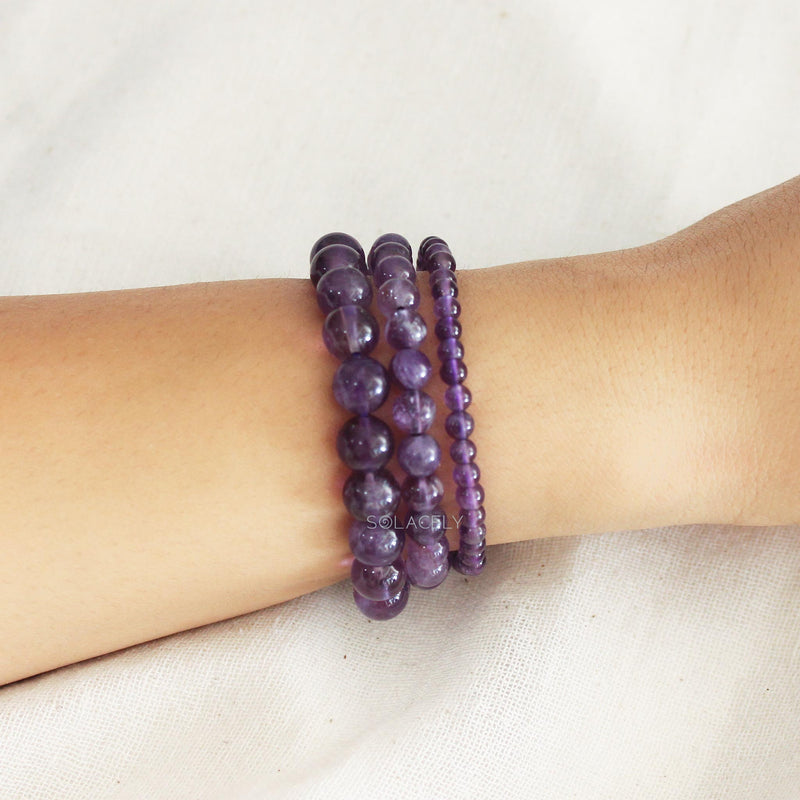
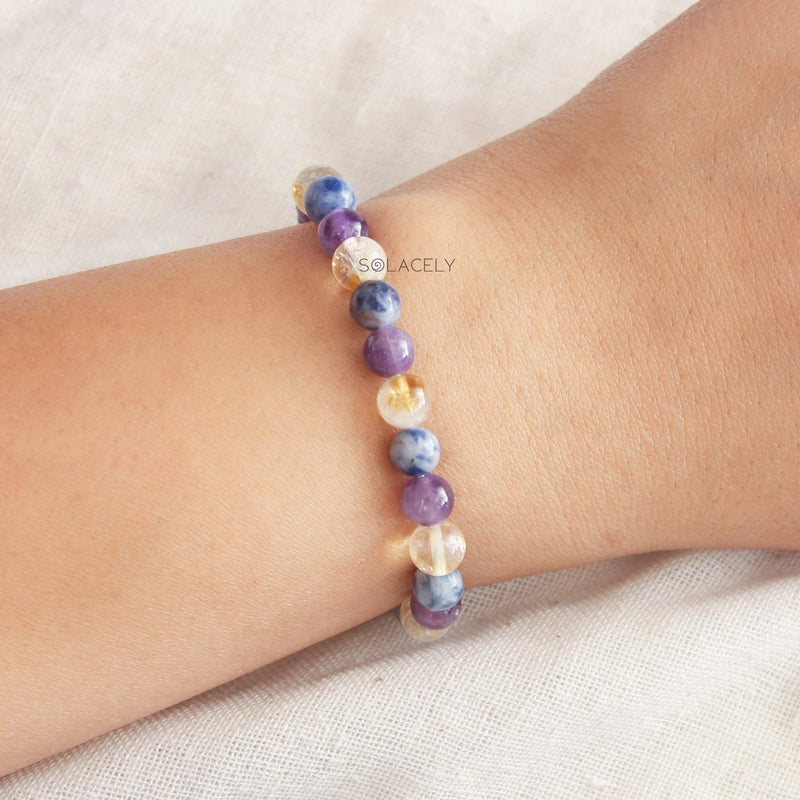
They match on sight and on intention. Both stones land in the lilac to violet range, so a bracelet made from the two reads as one colour story rather than a clash. Both are also long associated with calm and quiet, which is why the pairing is usually kept for evenings, bedside shelves and sitting practice.
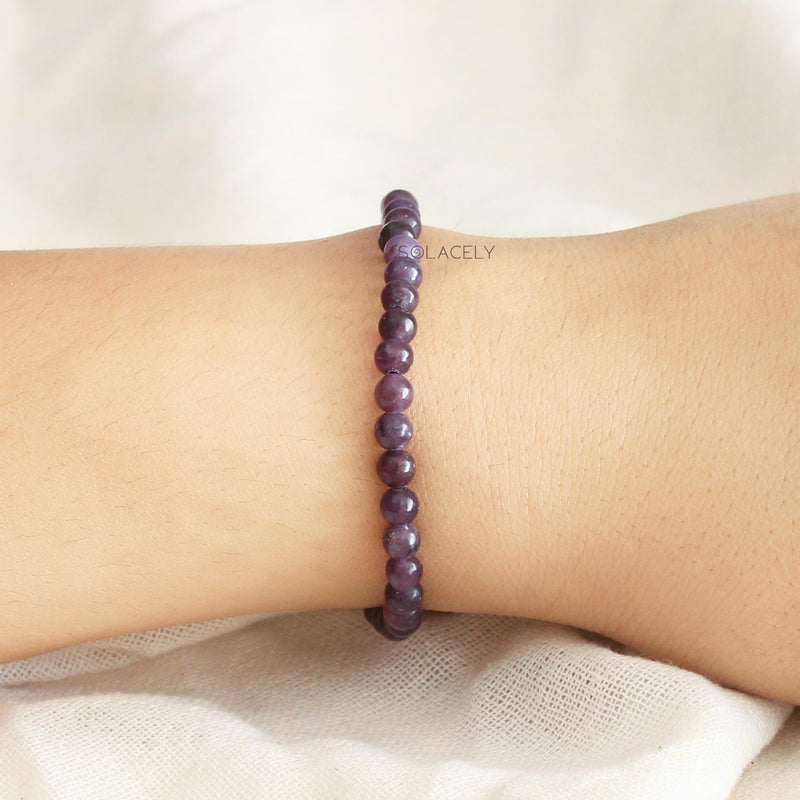
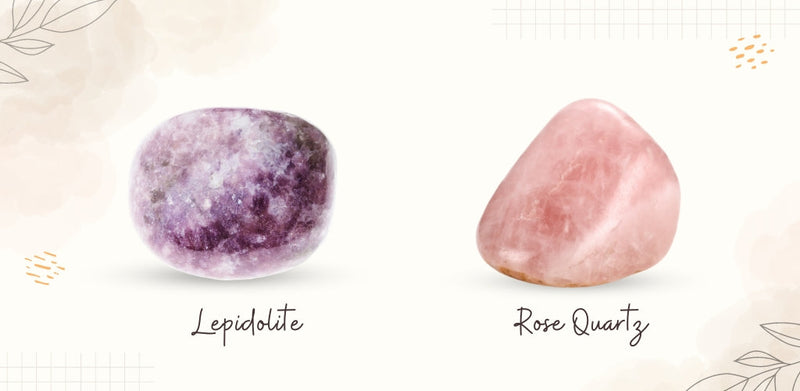
The visual case is the easier one to describe. Amethyst tends cool, glassy and translucent. Lepidolite tends pinker, softer and pearlier, with a faint sheen across the surface where the mineral's sheets catch the light. Set side by side they behave like two registers of the same note, and that is a large part of why the combination has stayed popular in beaded form for so long.
The traditional reading places lepidolite at the heart and amethyst at the crown in the chakra layout used in modern crystal practice. Rather than balancing opposites, the two reinforce each other, both pulling in the direction of settling rather than stirring. If that is the shape you want, our wider notes on crystal pairings for amethyst cover the other stones that sit well alongside it.
What is lepidolite?
Lepidolite is a mica, which means it grows in stacked sheets rather than as a solid block. It carries a lilac to soft violet colour from traces of manganese, and it takes a gentle pearly polish rather than a glassy one. Mineral references put it at roughly 2.5 to 3 on the Mohs scale.
Two things follow from being a mica. The first is softness. At 2.5 to 3, lepidolite sits at the low end of the hardness scale, which means everyday surfaces can mark it and a harder bead sitting against it in a jewellery box will leave its trace over time. The second is cleavage. Lepidolite has perfect basal cleavage, so a firm knock tends to split a thin sheet away rather than chip a corner.
None of that is a reason to avoid the stone. It is a reason to choose the right form and give it the right storage. Tumbled and polished beads are the way most people buy lepidolite, and the rounded shape plus the polish takes most of the everyday wear that would otherwise land on the surface. Cabochons set into a bezel do the same job with a metal rim as protection, and lepidolite grown through a quartz host is sturdier again because the harder mineral carries the load.
The colour range runs from a pale dusty lilac through to a deeper purple with a silvery flash, sometimes with darker flecks from the surrounding rock. Pick the shade you actually want to look at, since all of them carry the same traditional association with calm.
Amethyst, the harder half of the pair
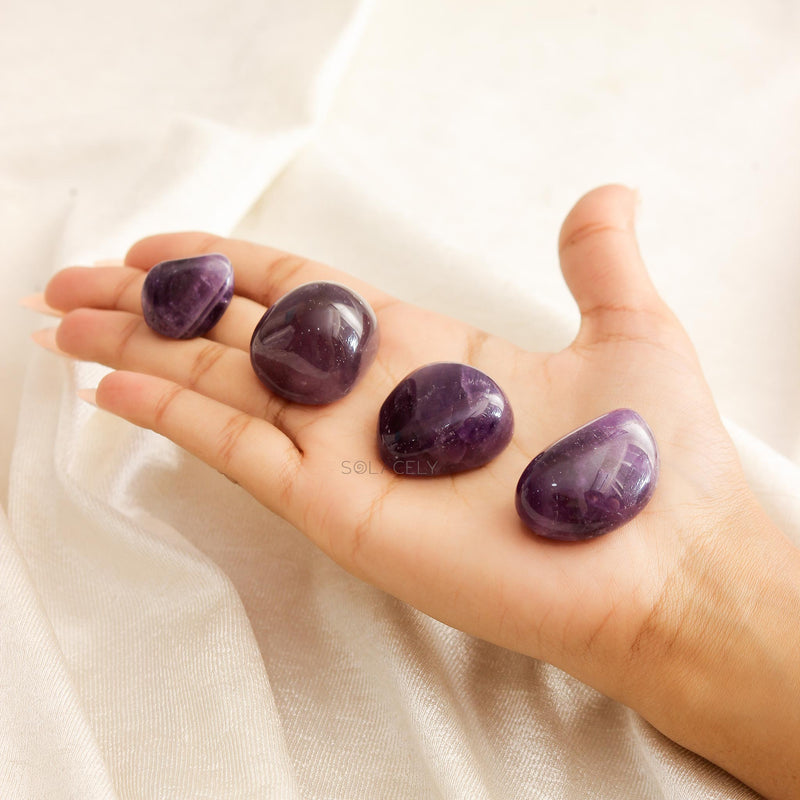
Amethyst is the purple variety of quartz, sitting at 7 on the Mohs scale with no cleavage, so it handles daily wear as beads, tumbles or a pendant without much thought. Its colour comes from iron and natural irradiation, and gemmological grading runs the range from pale lilac through to a deep grape purple.
In this pairing amethyst does the durable work. It is the stone that will look the same in five years, the one you can wear as a stack without worrying, and the one most people already own before they add lepidolite. It is also the stone that gives the pairing its depth of colour, since lepidolite's tone is naturally softer and paler.
Amethyst has one real weakness, and it is light rather than impact. Prolonged direct sunlight will lighten the colour over time, so a sunny windowsill is the one place this bracelet should not live. Our amethyst meaning and properties guide covers the wider traditions attached to the stone.
| Property | Amethyst | Lepidolite |
|---|---|---|
| Mineral family | Quartz, silicon dioxide | Mica |
| Mohs hardness | 7 | About 2.5 to 3 |
| Cleavage | None | Perfect basal, splits into sheets |
| Appearance | Translucent lilac to deep purple, glassy | Lilac to soft violet, pearly sheen |
| Traditionally kept for | Calm, clear thinking | Calm, emotional steadiness |
| Care in short | Keep out of prolonged sun | Keep dry, store on its own |
How to wear and use amethyst and lepidolite
The beaded bracelet is where most people start, and the bedside pairing is the other common route. Both work, and the choice comes down to whether you want the reminder on your wrist through the day or waiting for you in the evening. Neither format asks anything complicated of you.
- The alternating bracelet. Amethyst and lepidolite beads in 6mm or 8mm, alternating or in blocks. Treat it as a piece you put on with intention rather than a bracelet you never take off, and rotate it with other stacks so the lepidolite gets a rest.
- A pendant pair. An amethyst pendant on one chain and a bezel set lepidolite cabochon on another. Pendants take far less impact than bracelets do, so this is the most durable way to wear the combination every day.
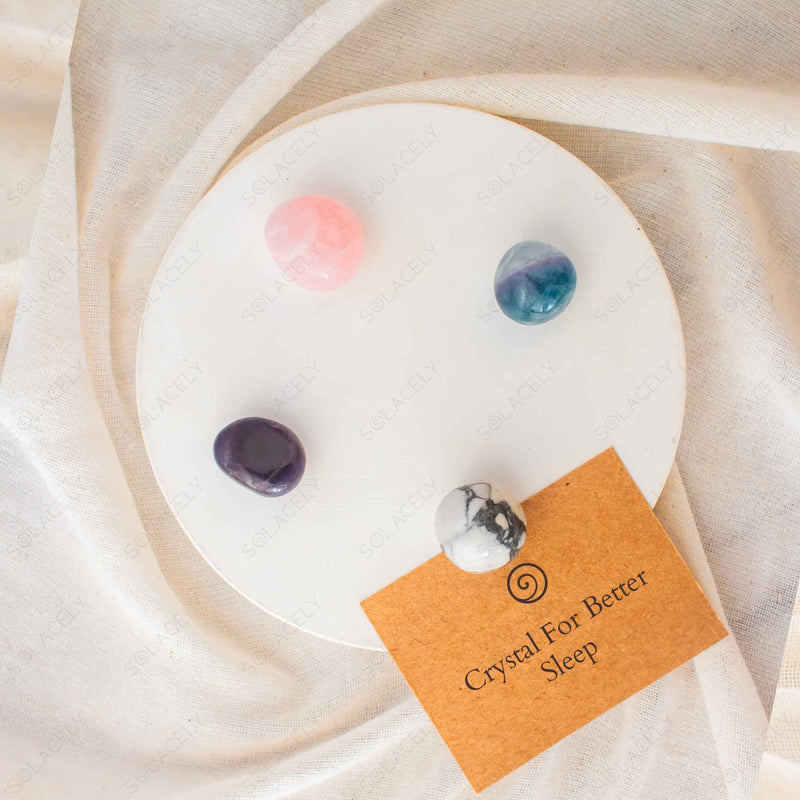
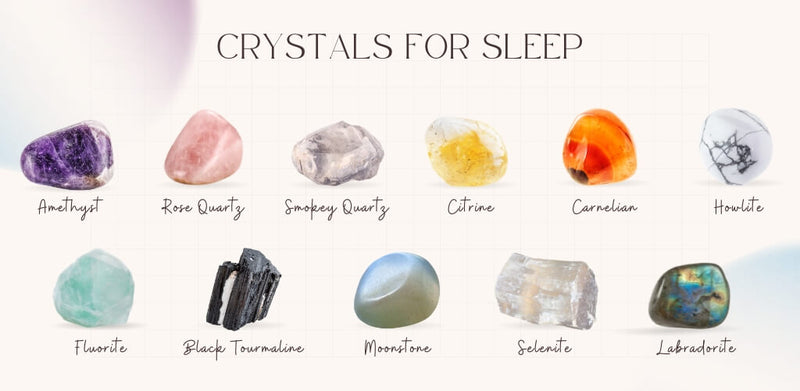
- The bedside pairing. A tumbled amethyst and a piece of lepidolite on the nightstand, where neither stone takes any wear at all. This is the format the pairing suits best, and it sits naturally alongside the other stones in our guide to the best crystals for sleep.
- A meditation set. One stone in each hand during a sitting practice, amethyst in the dominant hand and lepidolite in the other. Five minutes is plenty, and the two stones give the practice something physical to return to.
- An altar or tray grouping. Both stones in a shallow bowl or on a small tray. The lowest effort version, and the one where the lepidolite keeps its surface indefinitely.
What to leave out: ring settings, where a soft stone takes constant knocks, and loose stacking against much harder beads. If you like this direction and want a warmer variation on it, lepidolite and rose quartz covers the same calm register with pink in place of violet.
How to care for amethyst and lepidolite
Care for the pair at the gentler standard, which means treating both stones the way lepidolite needs to be treated. Amethyst could handle more, but a single simple habit is easier to keep than two competing ones, and it protects the softer stone every time.
Wipe both with a dry or barely damp soft cloth after wear. Do not soak lepidolite, and keep the pair away from ultrasonic cleaners, steam and household chemicals. Water sitting in the cleavage planes is what causes a lepidolite bead to lift and flake over time, so if the bracelet does get wet, dry it properly straight away rather than leaving it on a wet basin edge.
Storage matters more here than with almost any other pairing. Keep the bracelet in its own soft pouch, and store lepidolite separately from harder beads such as clear quartz, citrine or tiger's eye. In a shared bowl the harder stones will mark the lepidolite long before anything else goes wrong.
For cleansing, passive methods suit this pair best. Moonlight overnight, a pass through incense smoke, or the sound of a singing bowl all work without introducing water or heat. Leave sunlight charging out entirely because of the amethyst fade risk. If you want a broader calm set to cleanse alongside it, our guide to crystals for calming covers the usual companions.
- Take the bracelet off before showering, swimming, washing up or any hands on work.
- Store the lepidolite on its own, away from harder beads.
- Keep both stones out of prolonged direct sun.
- Never put stones in drinking water or a water bottle.
- Small beads, chips and tumbles are a choking and strangulation risk, so keep them away from babies and young children.
Lepidolite is a lithium-bearing mica, which is a fact of its mineral chemistry and nothing more: it is never an alternative to lithium medication or to any prescribed treatment, and wearing or holding the stone has no effect on mood or on any medicine you take. Crystals are kept as part of a personal ritual and are not a treatment for any medical condition. If you have a health concern, please speak to your doctor or another qualified health professional, and carry on with any care that has already been arranged for you. Keep stones out of drinking water, and keep small beads, chips and tumbles away from babies and young children, for whom they are a choking and strangulation risk.
Sources
Written by Chetena Sharma. Reviewed by the Solacely editorial team.
Frequently asked questions
About the author


Written by Chetna Sharma, crystal healing practitioner and co-founder of Solacely. Chetna has worked with healing crystals for over a decade and curates Solacely's protective stone collection.