Blue Apatite and Citrine: A Complete Pairing Guide for Vision and Manifestation


Blue apatite and citrine is a "vision and drive" pairing — one stone for picturing the outcome clearly, the other for the energy to act on it. The two are unrelated mineralogically: citrine is silica (SiO₂) — quartz coloured by trace iron, per Britannica. Blue apatite is something far more unusual: a calcium phosphate (Ca₅(PO₄)₃(F,Cl,OH)) that belongs to the same mineral family as the inorganic component of human bone and tooth enamel, per standard mineralogical references. Apatite is also the defining reference mineral for Mohs hardness 5 — historically the very stone gemmologists used to calibrate the middle of the hardness scale. This guide covers the mineralogy of both stones, the apatite-bone connection, the chakra logic of the pairing, and how to wear and care for the combination.
- Blue apatite is a calcium phosphate (Ca₅(PO₄)₃(F,Cl,OH)) — the same mineral family as bone and tooth enamel. Mohs 5; the reference stone for hardness 5 on the Mohs scale.
- Citrine is Mohs 7, quartz, much harder than apatite. The hardness gap means apatite needs gentler handling than citrine.
- The pairing's logic is third-eye vision (apatite, clarity of intention) + solar-plexus drive (citrine, confidence and motivation).
- Major sources for gem blue apatite are Brazil, Madagascar, and Myanmar, per the Gemological Institute of America.
- Care: skip ultrasonic and steam cleaners. Apatite is softer than most other crystal jewellery stones, so rotate bracelets if you wear it daily.

Why Pair Blue Apatite and Citrine?
The pairing's logic is a two-chakra "vision and drive" combination. Citrine sits at the solar plexus chakra (manipura), the energy centre associated with personal power, confidence, and goal-setting. Blue apatite is most often associated with the third eye chakra (ajna) in modern crystal practice — the centre for vision, clarity of intention, and seeing what you want clearly. Some traditions also place apatite at the throat chakra for self-expression. Together the two stones support the manifestation cycle: see clearly, then act with energy. Practitioners often choose this pair for project planning, study sessions, creative work that needs both clear vision and follow-through, and goal-setting around career or learning.
From what we've seen with Solacely customers, this pairing is the one chosen most often by people in active learning or planning phases — students, founders, anyone working on a focused multi-month goal. The visual contrast is also striking: cool sky-blue against warm gold is one of the cleanest complementary palettes in crystal beadwork.
Blue Apatite and Citrine Mineralogy
Citrine is a transparent, coarse-grained variety of quartz — silicon dioxide (SiO₂) coloured by colloidally suspended hydrous iron oxide. Its colour ranges from pale yellow to deep golden brown, per Britannica. It is Mohs 7, with no cleavage and a specific gravity of 2.65.
Blue apatite is a calcium phosphate mineral. The chemical formula is Ca₅(PO₄)₃(F,Cl,OH) — the bracketed group means apatite comes in three principal varieties depending on which anion (fluorine, chlorine, or hydroxide) sits in that crystallographic position: fluorapatite, chlorapatite, and hydroxyapatite. The name "apatite" comes from the Greek apate ("deceit") because apatite was historically mistaken for many other gem species. Blue apatite gets its colour from rare-earth element impurities in the crystal lattice. Mohs 5; specific gravity around 3.2.
The Bone Connection
Here's the unusual part. The mineral phase of human bone and tooth enamel is hydroxyapatite — a member of the same apatite family as gem blue apatite. The crystalline structure and chemistry are essentially identical, although biological apatite is deposited as nanocrystals during bone formation while gem apatite forms in slow geological processes. This means apatite is one of very few minerals that bridges geology and biology — when you wear blue apatite, you're wearing a crystalline relative of the mineral that holds your skeleton together.
Wearability: How the Pairing Holds Up
The hardness gap between citrine (Mohs 7) and blue apatite (Mohs 5) is meaningful — apatite is the second-softest stone in any pairing in this guide series, after turquoise. Apatite has no cleavage but it is brittle, which means it can chip on hard impacts. The bracelet still works for daily wear, but you'll want to avoid wearing it during physical work, sport, or anything involving rough surfaces. The colour saturation in apatite can also fade slightly with very prolonged sun exposure — keep both stones out of direct sunlight when not being worn.
| Property | Citrine | Blue Apatite |
|---|---|---|
| Mineral group | Quartz (silicate) | Phosphate |
| Chemistry | SiO₂ + trace Fe | Ca₅(PO₄)₃(F,Cl,OH) |
| Mohs hardness | 7 | 5 (reference stone for the scale) |
| Specific gravity | 2.65 | 3.16–3.22 |
| Cleavage | None | Indistinct; brittle |
| Cleaning | Warm soapy water | Warm soapy water (no ultrasonic) |
| Etymology | Greek citrina, "yellow" | Greek apate, "deceit" |
| Main sources | Brazil, Uruguay | Brazil, Madagascar, Myanmar |
| Traditional chakra | Solar plexus (Manipura) | Third eye (Ajna) |
How to Use the Pairing
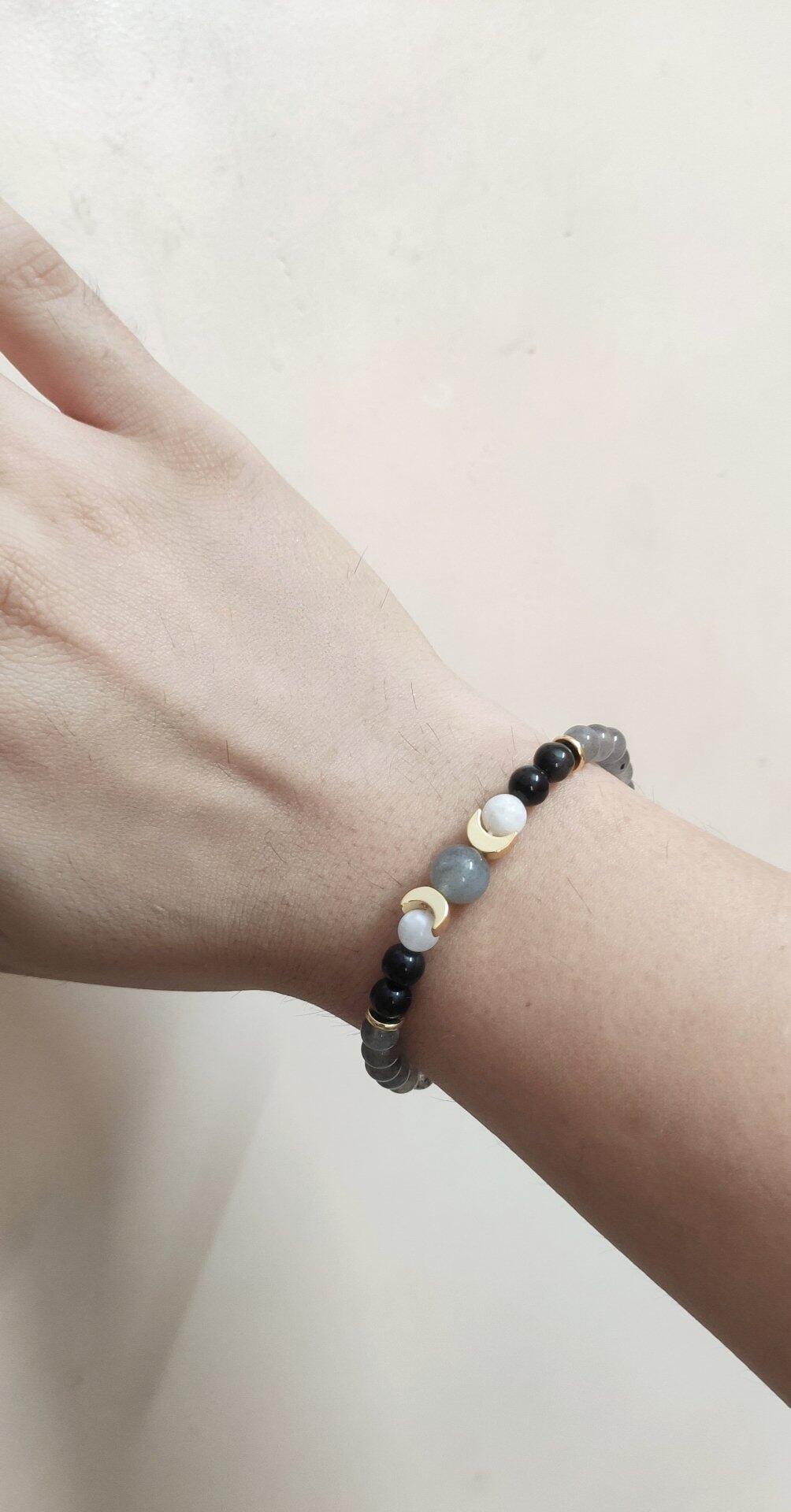
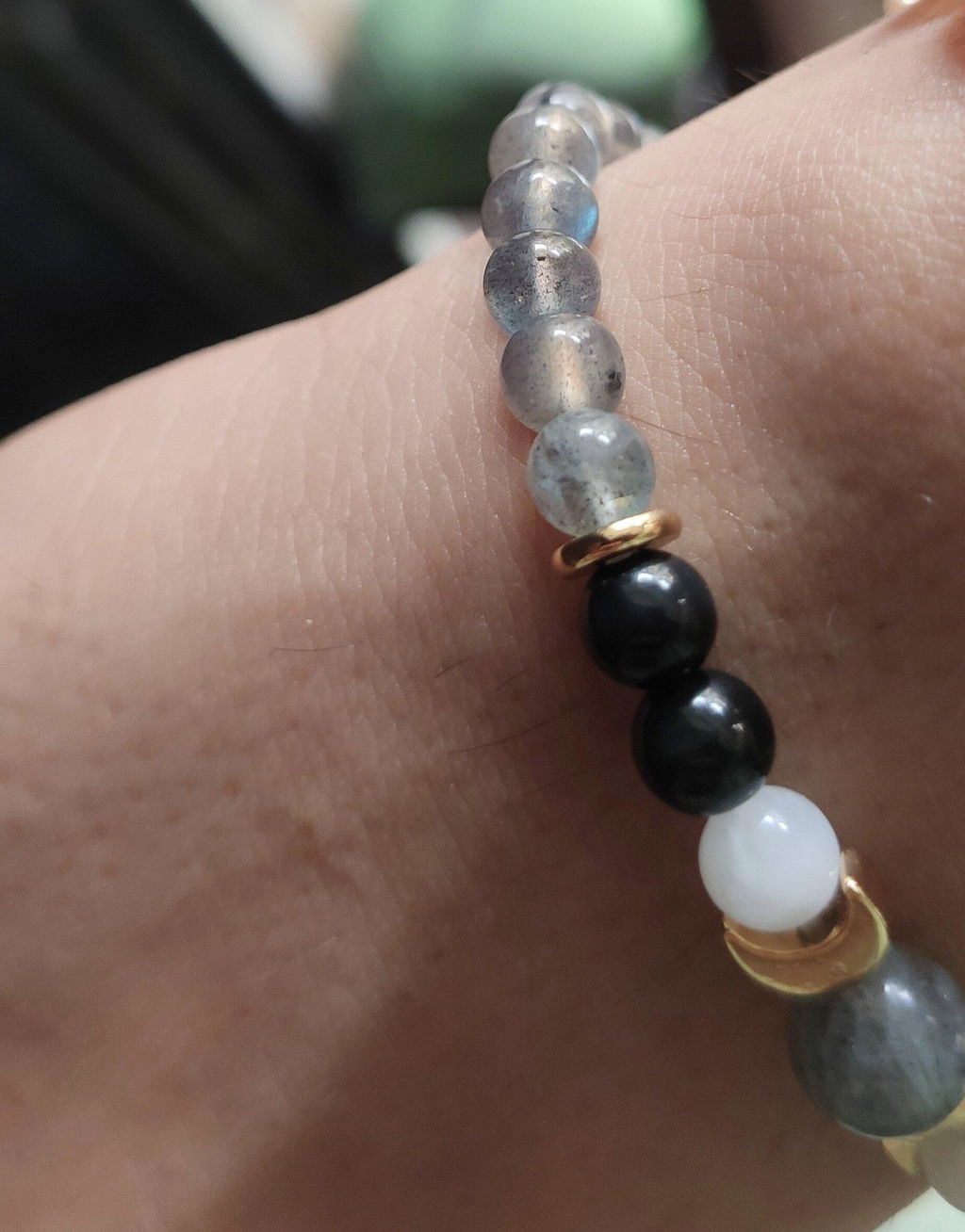
Beaded bracelet stack. The most popular format. Alternating citrine and blue apatite beads in 6 mm or 8 mm sizing creates a striking gold-and-blue palette. In our Solacely studio we string most combination bracelets with a 5/5 bead split. Because of apatite's softer hardness, we recommend rotating between this bracelet and a harder-stone alternative if you wear crystal jewellery every day.
Pendant pair. A citrine point alongside a blue apatite cabochon on a single chain, or two pendants on separate chains. Bezel mounts are preferable to prong settings for apatite because they protect the softer stone's edges. Apatite pairs especially well with sterling silver — the cool metal makes the blue read brighter.
Meditation set. Hold one stone in each hand. Blue apatite at the third eye position or in the receptive (non-dominant) hand for clarity-of-vision focus, citrine in the dominant hand for action-oriented intention. A 10-to-15-minute breath session with a single one-sentence goal is the most common modern format. The pairing has a "planning" energy that suits goal-setting, study sessions, and creative outlining.
Desk stones. Place a tumbled blue apatite and a tumbled citrine on your work desk in a small dish. The pairing's goal-and-clarity associations make it especially common as a study or workspace combination — within line-of-sight while you work rather than worn.
How to Care for the Combination
Cleaning. Warm soapy water and a soft cloth is the safe baseline for both stones, per GIA. Skip ultrasonic and steam cleaners — both can damage stones with internal fractures, which apatite sometimes has. A cotton swab works well to clean between beads on a stretch bracelet without dislodging the cord.
Storage. Keep the bracelet in a soft pouch when you take it off. Store it separately from harder gems (sapphire, topaz, diamond) that could scratch the apatite. Avoid extended direct sunlight; both stones can fade with prolonged UV exposure — apatite's blue saturation slowly diminishes, and citrine's gold can shift.
Energetic cleansing. Moonlight overnight or a selenite plate is the safest energetic cleansing for this pair. Smoke (sage, palo santo) and sound (singing bowls, bells) work without damaging the surface. Skip salt water entirely — long soaks dull polish on both stones and apatite is particularly sensitive to chemical exposure.
Frequently Asked Questions
What does the blue apatite and citrine combination do?
Blue apatite (third eye chakra in modern crystal practice, vision and clarity of intention) and citrine (solar plexus chakra, confidence and motivation) form a "vision and drive" pairing. The combination supports goal-setting work where you need to picture an outcome clearly and have the energy to act on it. Practitioners often pair the two stones for focused projects, study, and creative planning.
What is blue apatite made of?
Apatite is a calcium phosphate mineral with the chemical formula Ca₅(PO₄)₃(F,Cl,OH). The "blue" in blue apatite comes from rare-earth element impurities in the crystal lattice. Apatite is the defining reference mineral for Mohs hardness 5, per Britannica — it is what mineralogists historically used to calibrate the middle of the hardness scale.
Is apatite really the same mineral as bone?
Mineralogically, yes. The inorganic component of human bone and tooth enamel is hydroxyapatite — a member of the apatite mineral family. The crystalline structure and chemistry are the same, although the apatite in bone is biologically deposited as nanocrystals while gem apatite forms in geological settings. This is one of the few mineral families that bridges geology and biology.
Can you wear blue apatite and citrine as a bracelet?
Yes, with care. Citrine is Mohs 7 and blue apatite is Mohs 5 — a meaningful hardness gap. The bracelet works for daily wear, but the apatite beads will accumulate scratches faster than the citrine if the bracelet is worn through hard physical work. Rotate between bracelets if you wear it daily, and keep both stones away from ultrasonic and steam cleaners.
Where does blue apatite come from?
The major commercial sources for gem-quality blue apatite are Brazil, Madagascar, and Myanmar, with additional deposits in Mexico, Russia, India, and the United States. Madagascar produces some of the most saturated "neon" or "Paraiba-like" blue apatite. Citrine is mined principally in Brazil, Uruguay, and Russia.
How do you care for blue apatite and citrine jewelry?
Wipe with a soft cloth dampened with warm water. Skip ultrasonic and steam cleaners — both stones can have internal fractures. Avoid extended direct sunlight on citrine. Avoid hard impacts on apatite, which is softer than quartz. For energetic cleansing, a selenite plate overnight or moonlight is the safest method for both.
About the author