The crystals most kept for grounding are hematite for weight, black tourmaline for boundaries, smoky quartz for the days that feel unreal, red jasper for steady stamina, and black obsidian for seeing a situation plainly. Choose by which version of ungrounded actually describes you.
Key takeaways
- Hematite, black tourmaline, smoky quartz, red jasper and black obsidian are the five stones most kept for grounding.
- Hematite is iron oxide and noticeably heavy for its size. That weight is most of why it reads as steadying.
- Grounding is not the same as calm, which is why these stones differ from the soothing ones.
- Two stones is a good working set: one for weight, one for boundaries.
- Keep hematite dry and smoky quartz out of long strong sun.
What grounding actually means
Grounding describes the feeling of being in your body and in the present rather than three steps ahead of it. It is the sensation people are reaching for when a day has been scattered, rushed, or slightly unreal, and it is a genuinely different need from wanting to feel calm.
That distinction matters when choosing. Anxiety wants softening, and the stones for it are gentle ones like amethyst and blue lace agate. Being ungrounded wants weight, and the stones for it are dense, dark and deliberate. Buying a soothing stone for a grounding problem is the most common mismatch in crystal practice.
In chakra terms the whole group belongs to the root, the centre at the base of the spine associated with safety and belonging. For the fuller treatment of that centre, see crystals for the root chakra.
Hematite, the weight stone
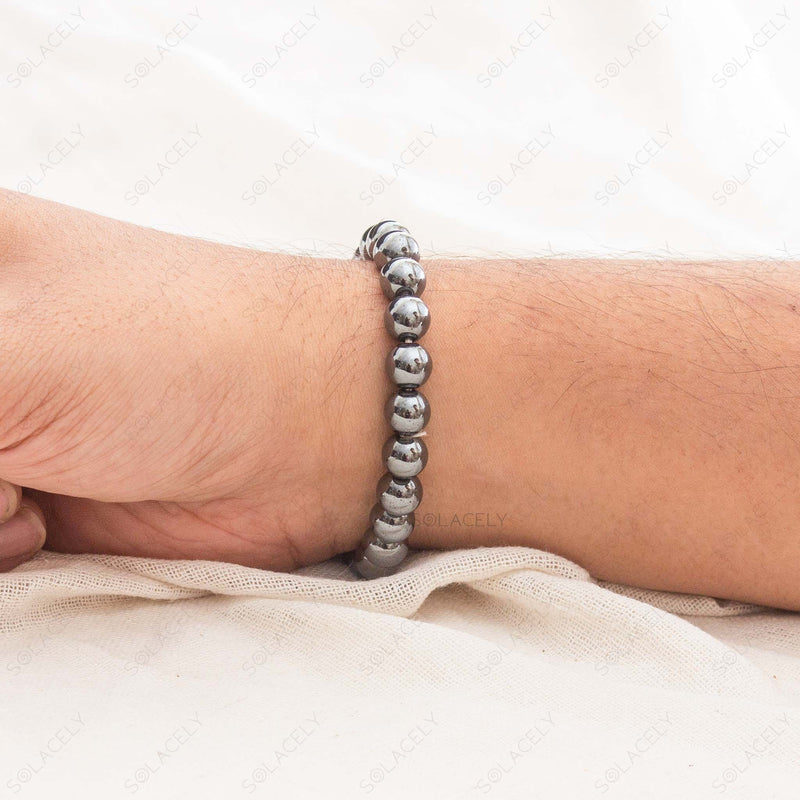
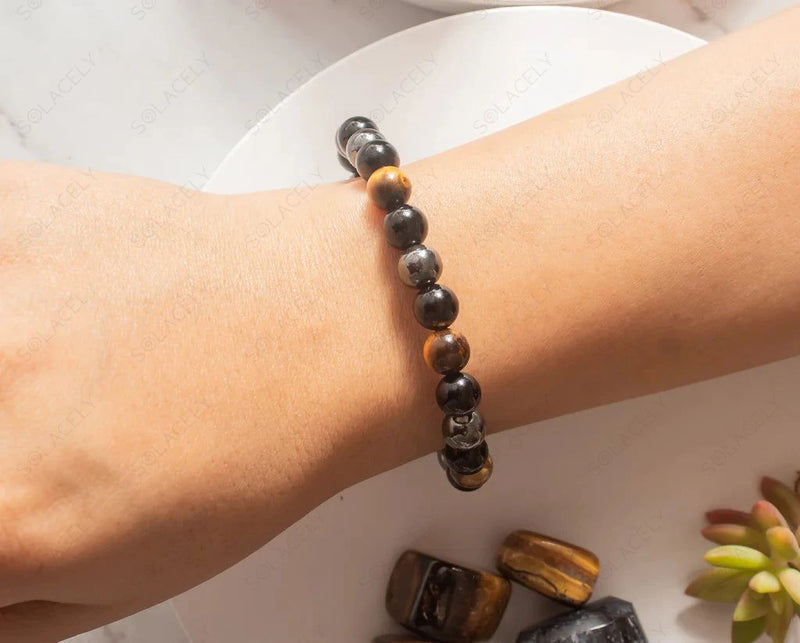
Hematite is the one to start with, and the reason is physical before it is metaphysical. It is iron oxide, and a hematite bracelet is noticeably heavier than a quartz one of the same size. That heaviness in the hand is what people respond to, and it does half the work of the practice.
Geology.com describes hematite as an iron oxide that occurs in forms ranging from metallic grey crystals to the earthy red material colouring a great deal of rock and soil. That red is also the simplest identifier: drag a piece across an unglazed tile and it leaves a rust red streak, however gunmetal the polish looks.
It suits being carried rather than displayed. A pocket stone or a bracelet travels into the meetings and commutes where the intention usually gets abandoned. The hematite guide covers the tradition in more depth.
Black tourmaline and smoky quartz
Black tourmaline is the boundary half of a grounding set, and its placement is the most specific of any stone here. Kept between you and whatever intrudes, whether that is a door, a walkway or a shared floor, it doubles as a physical reminder to guard your own attention. A black tourmaline bracelet is the most worn of the grounding stones.
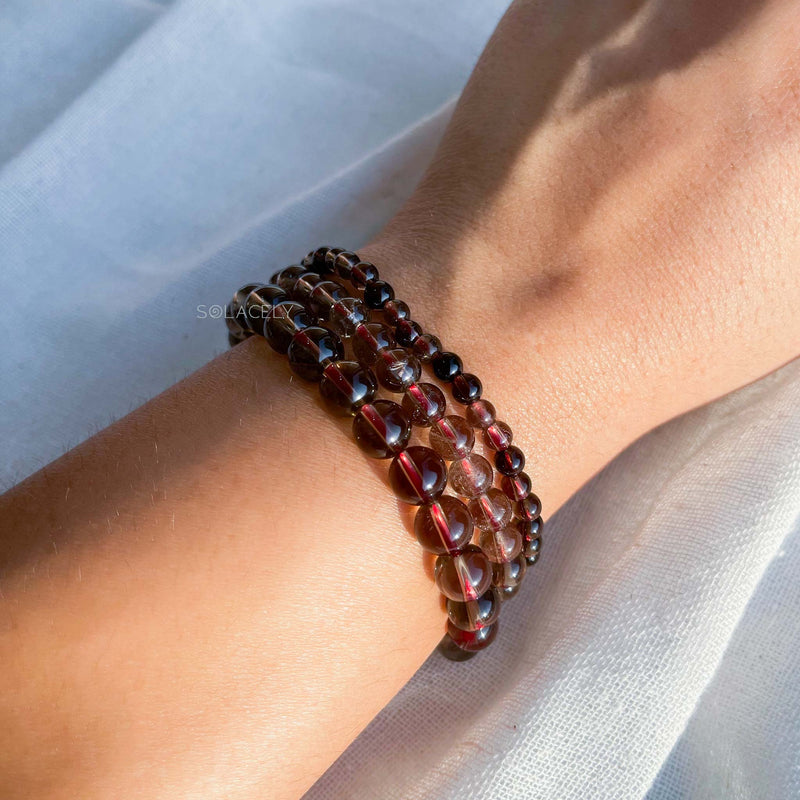
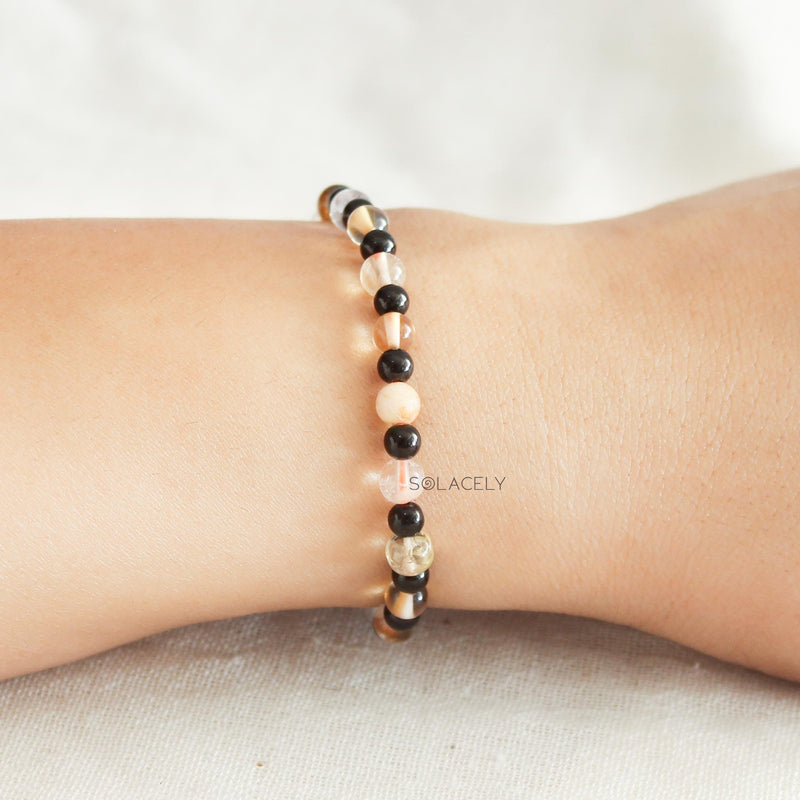
Smoky quartz covers a different case entirely. It is the stone for days that feel slightly unreal, where nothing is wrong exactly but nothing feels solid either. A soft brown to grey quartz at 7 on the Mohs scale, it is durable, inexpensive and one of the easiest stones to keep in a pocket indefinitely.
The two are often worn together, and the combination reads as serious rather than decorative. If protection rather than grounding is the dominant reason you are here, crystals for protection covers the wider set.
Red jasper and black obsidian
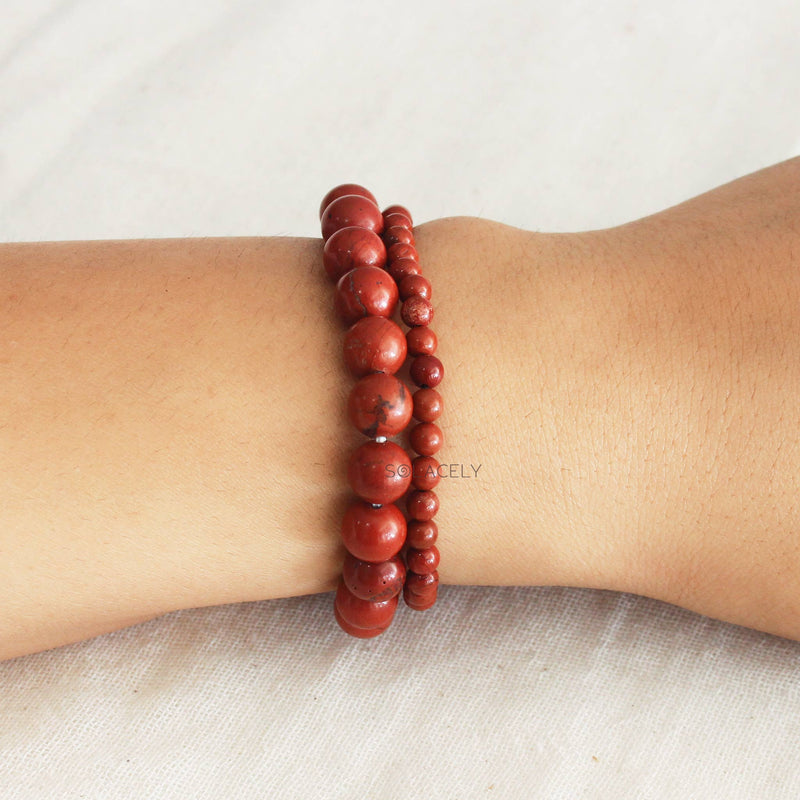
Red jasper is the quiet one and the most underrated of the five. An opaque brick red chalcedony, it is traditionally kept for endurance rather than for weight, which makes it the choice when the difficulty is sustaining something over weeks rather than steadying a single hard afternoon.
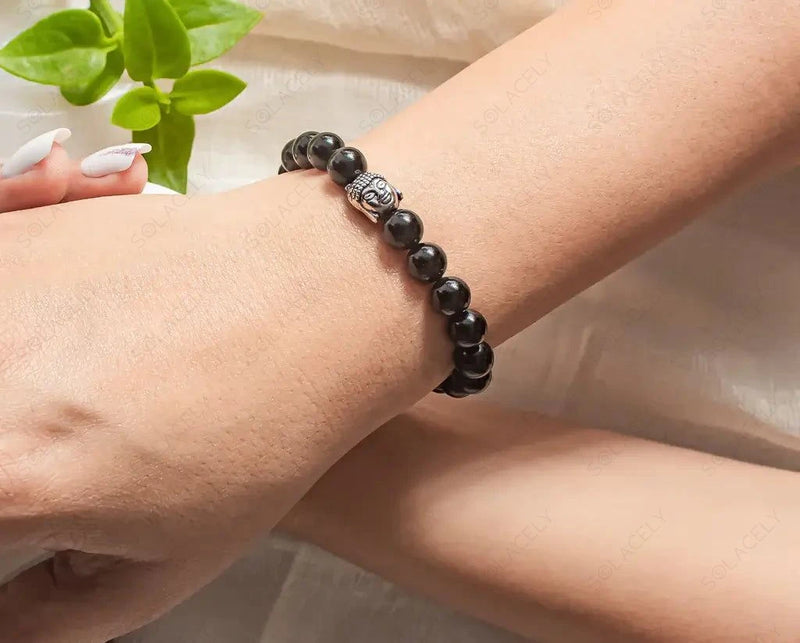
Black obsidian is the sharpest in character. It is volcanic glass rather than a mineral, formed when lava cools too fast for a crystal lattice to develop, and it breaks with a conchoidal fracture that produces famously keen edges. In practice it is kept for seeing a situation plainly and deciding about it.
Obsidian is also the most fragile here, at 5 to 5.5 on the Mohs scale, so tumbled beads and polished pendants suit it far better than rings. Check polished pieces occasionally for chips, since a fresh break is genuinely sharp.
Choosing between the five
| How the day actually feels | Stone | Hardness | How it is kept |
|---|---|---|---|
| Light headed, rushing, not present | Hematite | 5 to 6.5 | Pocket stone or bracelet, carried |
| Constantly interrupted or drained | Black tourmaline | 7 to 7.5 | Between you and the door |
| Nothing feels quite real | Smoky quartz | 7 | Pocket stone, carried out of the house |
| Running out of stamina | Red jasper | 7 | Palm stone, held in the morning |
| Cannot see a situation clearly | Black obsidian | 5 to 5.5 | Polished piece, kept where you think |
Two is a good working set and three is the ceiling. Pick one for weight and one for boundaries, since those are genuinely different jobs, and let each keep its own.
How grounding stones are used
The practices are simple, and the useful ones are small enough to survive a bad week.
- Carried. A pocket stone reached for on a difficult commute or a hard afternoon.
- Held before something demanding. A few slow breaths with the stone in the palm, feeling the weight.
- Worn. A bracelet on the wrist you gesture with, so the reminder travels with you.
- Underfoot. A tumbled stone placed by the bed, touched with a bare foot on waking.
What ties these together is contact. Grounding stones are the one group where the physical sensation of holding the object is the practice rather than an accompaniment to it, which is why a stone in a drawer does nothing at all here.
Caring for the set
Hematite needs drying above all. It is iron based, so a wet bracelet left on a basin edge will eventually spot with rust around the drill holes and along the cord. Wipe it, dry it fully, and the mirror polish holds for years. Skip salt water entirely.
Smoky quartz, red jasper and black tourmaline are all straightforward: warm water, mild soap, a soft brush and a full dry. Black obsidian takes the same treatment but should not sit in salt, which dulls the glassy surface, and it wants storing away from harder stones.
The shared habit worth keeping is about light. Smoky quartz softens in colour after long hours of strong direct sun, so a bright windowsill is not the kindest long-term home for it. For energetic cleansing, moonlight or sound suit all five, and none of them need salt.
What a grounding practice can offer
The honest answer is a repeatable physical cue, and that is worth more than it sounds. Reaching for a heavy object and taking three slow breaths is a small deliberate act that interrupts a scattered stretch, and attaching it to a stone makes it far easier to remember than an intention held only in your head.
There is a second benefit worth naming. These stones are pleasant objects, and a smooth cool weight in a pocket is a genuinely nice thing to have on a difficult day. That is a fair reason on its own and needs no dressing up.
What a stone will not carry is an unsustainable schedule. If the real problem is too little sleep, too many commitments, or a stretch that would leave anyone feeling unmoored, that is where the change belongs. Let the stones do their small honest job alongside it.
The properties described here reflect traditional and cultural belief around crystals. They are offered for reflection and wellbeing and are not medical advice, a diagnosis, or a treatment for any condition. If feelings of detachment or unreality are persistent or distressing, please speak with a GP or a qualified practitioner. Keep small stones away from young children, and never place crystals in drinking water.
Sources
Written by Chetena Sharma. Reviewed by the Solacely editorial team.
Frequently asked questions
About the author


Written by Chetna Sharma, crystal healing practitioner and co-founder of Solacely. Chetna has worked with healing crystals for over a decade and curates Solacely's protective stone collection.