The crystals most kept after a breakup are rose quartz for self-kindness, rhodonite for the repair, smoky quartz for grounding, and green aventurine for what comes next. They are kept as company through a difficult stretch rather than as anything that shortens it.
Key takeaways
- Rose quartz, rhodonite, smoky quartz and green aventurine map onto the four stages of moving on.
- Rose quartz is kept for self-compassion, which is usually the first thing to go after a breakup.
- Rhodonite is the repair stone, traditionally kept for forgiveness of yourself as much as anyone else.
- Grief has no schedule. A stone is company alongside real support, never a substitute for it.
- All four are affordable and easy to care for, which matters when nothing else feels manageable.
Stone by stage, rather than all at once
Moving on is not one feeling and it does not arrive in a straight line. The stones traditionally kept for it map onto different stages, and choosing the one that fits where you actually are tends to be more useful than keeping all four at once.
Rose quartz is for the early stretch, when the hardest thing is being kind to yourself about any of it. Rhodonite is for the middle, once anger and blame have shown up and need somewhere to go. Smoky quartz is for the days that feel unmoored. Green aventurine is for the point where something new becomes possible again.
Most people start with one and add another when the season changes. That is a gentler approach than buying a set on day one, and it means each stone marks something real rather than sitting in a bowl.
Rose quartz for the first stretch
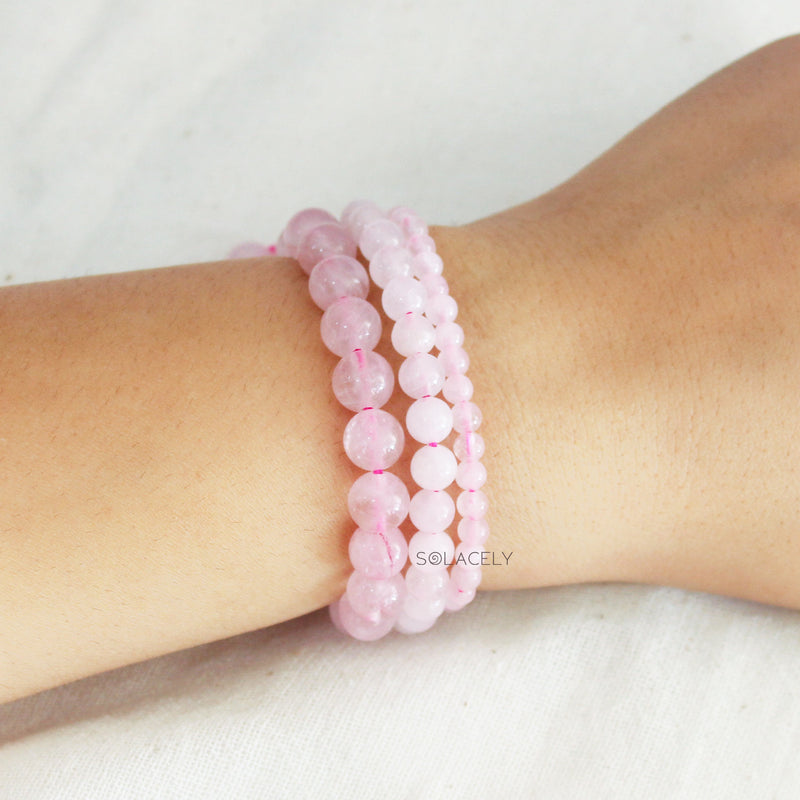
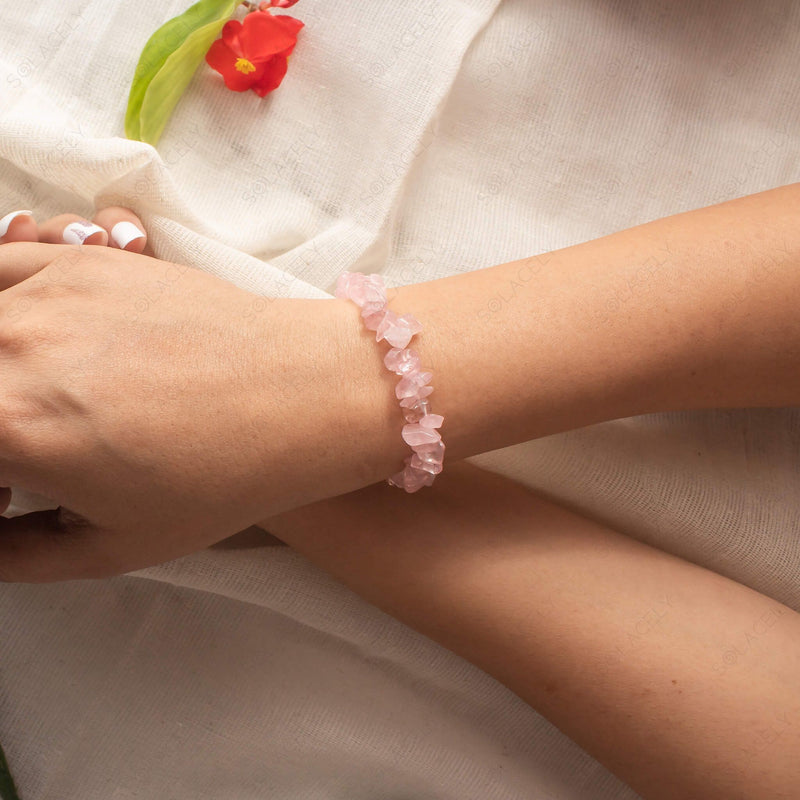
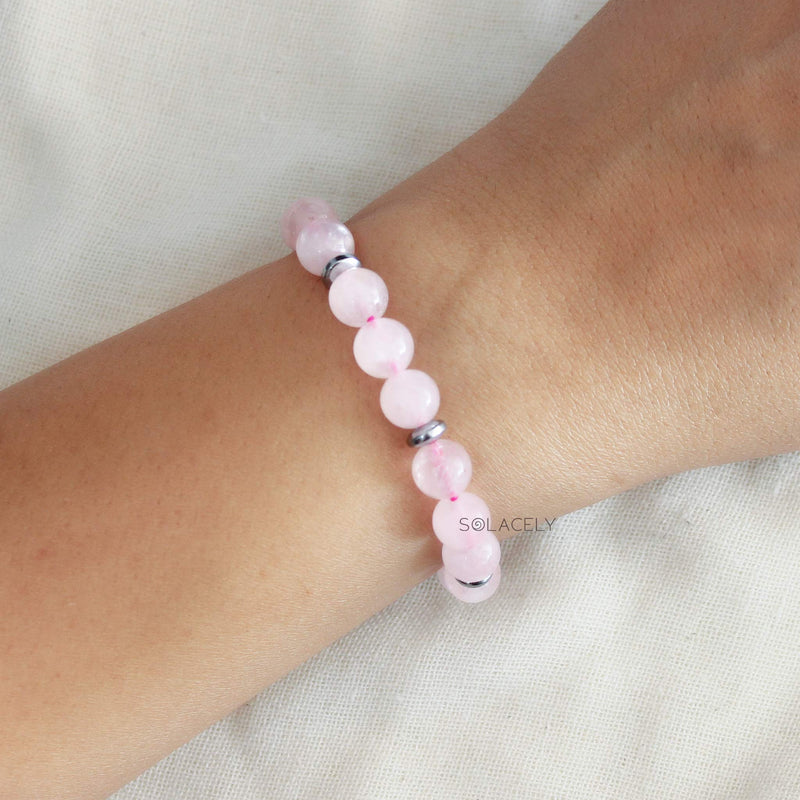
Rose quartz is the stone people reach for first, and its traditional association is exactly right for it. It is kept for self-compassion far more than for romance, which matters because the first casualty of a breakup is usually how kindly you speak to yourself about it.
Its milky pink comes from fine inclusions distributed through the quartz, and that soft glow is a large part of why it reads as comforting. At 7 on the Mohs scale it takes daily wear easily, so a bracelet or a palm stone can simply stay with you.
The most common practice is the simplest one: a tumbled piece kept where you get ready in the morning, held for a few slow breaths on the days that start badly. The rose quartz for healing heartache guide covers that use directly.
Rhodonite, smoky quartz and green aventurine
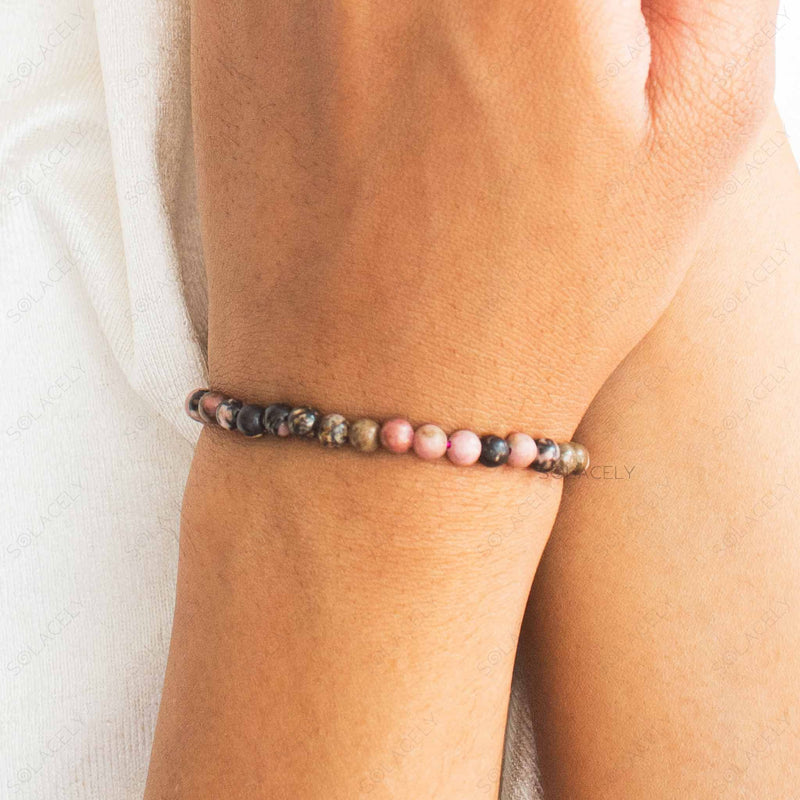
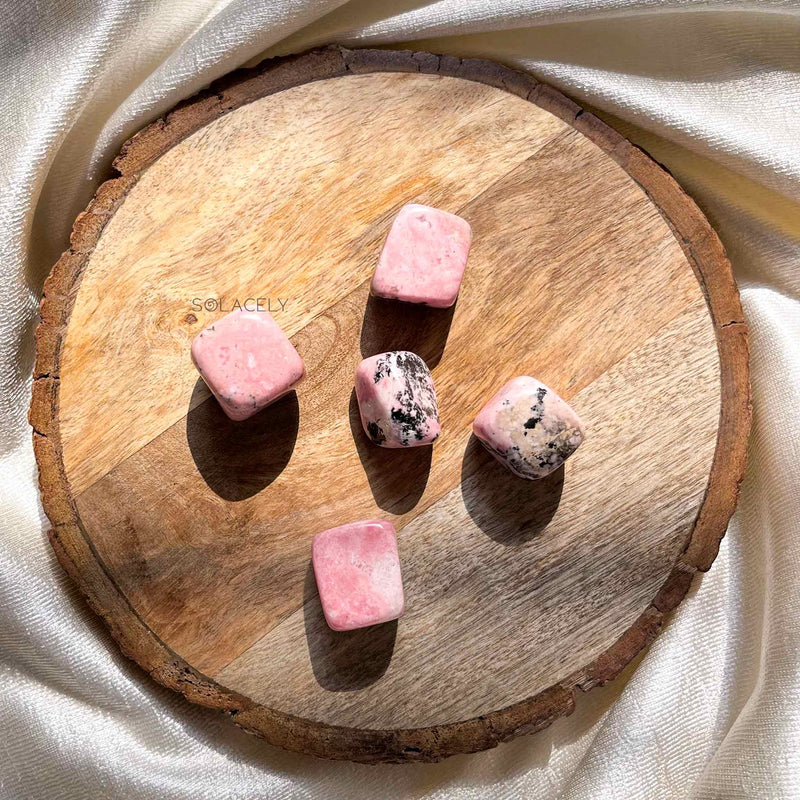
Rhodonite is the repair stone, rose pink veined with black, and it is traditionally kept for forgiveness and reconciliation. It suits the middle stage, once the shock has passed and what is left is a mix of anger, replaying and self-blame that needs somewhere to settle.
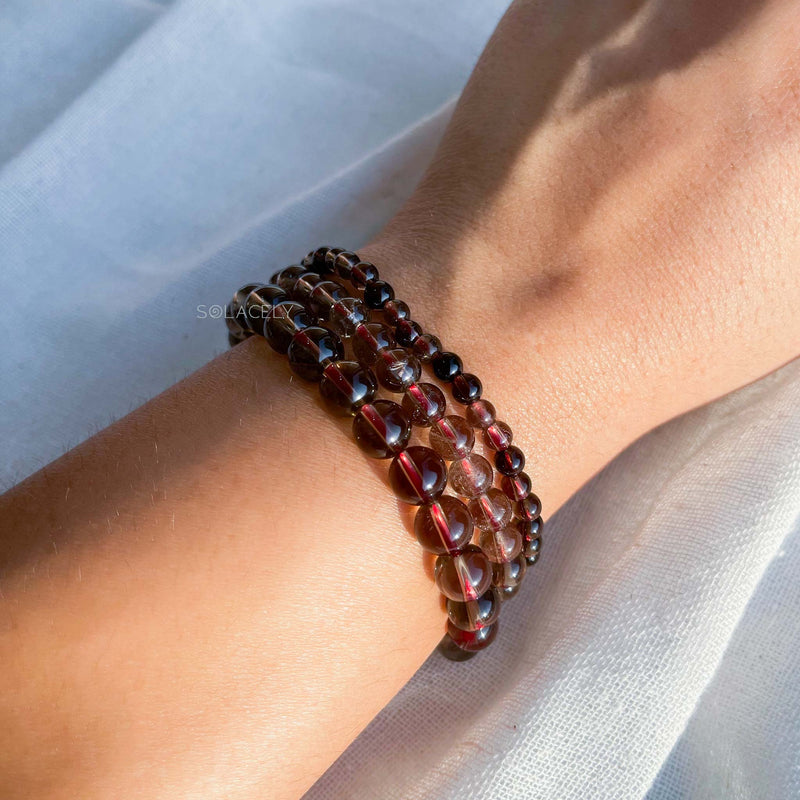
Smoky quartz is the grounding half. A soft brown to grey quartz kept for feeling steady and present, it suits the specific days where nothing feels quite real. It is durable at 7 and one of the easiest stones to keep in a pocket.
Green aventurine is the last of the four and the most forward looking. Traditionally the stone of chance and opportunity, it is kept for the point where a person is ready to try something again, whether that is dating, moving, or simply making plans that are only theirs.
A stage-by-stage set
| Where you are | Stone | How it is kept |
|---|---|---|
| The first weeks | Rose quartz | Palm stone where you get ready, held in the morning |
| Anger and replaying | Rhodonite | Kept privately, picked up during that kind of thinking |
| Days that feel unmoored | Smoky quartz | Pocket stone, carried out of the house |
| Ready to try again | Green aventurine | Worn on the day something new is attempted |
| Sleep has gone | Amethyst | Bedside, marking the end of the day |
There is no correct order and no schedule. People move back and forth between these stages for months, and picking up an earlier stone again is not a step backwards.
What actually helps alongside
This is worth saying warmly and plainly. Grief after a relationship ends is real grief, and the things that genuinely help are people and time: talking to friends, keeping some structure to the days, eating and sleeping as well as you can manage, and getting outside.
If the low mood is persistent, if it is affecting your sleep, appetite or ability to work, or if it has lasted well beyond what feels manageable, speaking to a GP or a counsellor is the right step. Talking therapies help, and asking for them is not an overreaction.
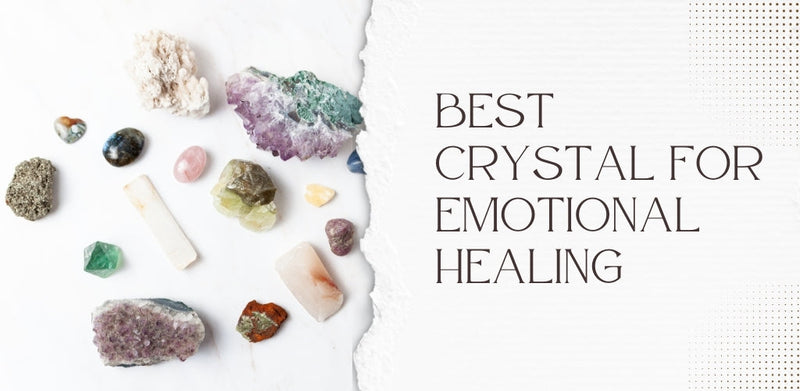
A stone belongs alongside all of that as something small and steady to hold. Plenty of people keep a rose quartz in a pocket while they are also going to therapy and leaning on friends, and there is nothing contradictory about that. For the wider set kept the same way, crystals for emotional healing covers more options.
Practices people actually keep
The useful ones are small enough to survive a bad week, which is when they are needed.
- Morning hold. One stone, a few slow breaths, before the phone.
- Pocket carry. Something to reach for on a difficult commute or a hard afternoon.
- Write and set down. A note of what is unresolved, then the stone placed on top of it.
- Change the stone when the stage changes. A small way of marking that something has shifted.
That last one is quietly the most valuable. Swapping rose quartz for green aventurine on the week you decide to make a plan is a real acknowledgement, and people tend to remember it. If moving on means starting again properly, crystals for new beginnings covers that end of it.
Caring for the set
All four are easy, which matters when very little else feels manageable. Rose quartz, smoky quartz and green aventurine all take warm water, mild soap, a soft cloth and a full dry.
Rhodonite is slightly softer at 5.5 to 6.5, so keep it away from the quartz family in storage and avoid harsh chemicals. Keep rose quartz and smoky quartz out of long strong sunlight, since both can soften in colour over months on a bright windowsill.
For energetic cleansing, moonlight or sound suit all four. Many people find the act of cleansing a stone after a hard week is itself the useful part, which is a fair reason to do it. For the pink stone that pairs most naturally alongside, see rose quartz for forgiveness.
The properties described here reflect traditional and cultural belief around crystals. They are offered for reflection and wellbeing and are not medical advice, a diagnosis, or a treatment for any condition. Grief and low mood after a relationship ends are real and treatable: if they persist, or affect your sleep, appetite or daily functioning, please speak with a GP or a qualified counsellor. If you are in crisis or having thoughts of harming yourself, contact your local emergency services or a crisis helpline straight away.
Sources
Written by Chetena Sharma. Reviewed by the Solacely editorial team.
Frequently asked questions
About the author


Written by Chetna Sharma, crystal healing practitioner and co-founder of Solacely. Chetna has worked with healing crystals for over a decade and curates Solacely's protective stone collection.