The stones people living with PCOS keep closest are moonstone, carnelian, amethyst, rose quartz and labradorite. They sit alongside your doctor's care rather than in place of it, and that is exactly how they are meant to be held. What they offer is gentler than a treatment plan: a small, familiar object for the harder days in a long month.
Key takeaways
- Moonstone is the stone kept most often through the month, amethyst for rest, rose quartz for self-compassion, carnelian for warmth on a flat day and labradorite for steadiness through change.
- PCOS is one of the most common endocrine conditions in women of reproductive age. The US National Institute of Child Health and Human Development describes it as involving irregular or absent ovulation, raised androgen levels and often polycystic ovaries on ultrasound.
- Your medical team leads on this. A GP is the entry point, an endocrinologist covers the hormonal and metabolic side, and a gynaecologist covers the reproductive and fertility side.
- Crystals are kept here as a comfort practice: held through a quiet five minutes, tucked in a coat pocket on an appointment day, or left on a bedside table as a wind-down cue.
- Everything described here reflects traditional and cultural belief rather than medical fact. Please read the note at the end of this article before you begin.
What is PCOS, and why can it feel so relentless?
Polycystic ovary syndrome is a hormonal and metabolic condition affecting how the ovaries work. The US National Institute of Child Health and Human Development describes it as involving irregular or absent ovulation, higher than typical levels of androgens, and in many cases multiple small follicles visible on the ovaries during an ultrasound scan.
Symptoms vary a great deal between people. Common ones include irregular, infrequent or absent periods, difficulty conceiving, excess hair growth, acne, thinning scalp hair and weight changes. Many people with PCOS also have insulin resistance, which is why the condition is linked with a raised long-term risk of type 2 diabetes.
The NHS notes that the exact cause is not fully understood, though it often runs in families and is closely associated with abnormal insulin activity. Day to day, that adds up to a condition with no tidy beginning and no tidy end, which is precisely why so many people build small comforts around the harder stretches of it.
Which stones do people living with PCOS keep close?
Five come up again and again, and each is kept for a different kind of day. These are traditional associations carried through generations of crystal practice, and they describe how a stone is used rather than what it acts upon. One or two pieces is plenty, and most people settle there rather than collecting all five.
| Stone | Traditionally kept for | When people reach for it |
|---|---|---|
| Moonstone | Cycles, phases, new beginnings | The quieter, waiting part of the month |
| Amethyst | Calm, rest, winding down | Evenings when sleep will not come |
| Rose quartz | Self-compassion and gentleness | Days when your own body feels unfamiliar |
| Carnelian | Warmth, vitality, motivation | Flat afternoons with nothing left in the tank |
| Labradorite | Steadiness through change | Waiting on results, or starting something new |
A bedside stone and a pocket stone is the usual arrangement, and amethyst with moonstone is the usual pairing. Our guides to crystals for emotional healing and crystals during menopause cover neighbouring ground in the same gentle way.
Why does moonstone come up first?
Because it has been tied to cycles and phases for longer than almost any other stone in the tradition. Moonstone is a feldspar, and the soft blue-white light that seems to float inside it, an effect gemmologists call adularescence, is the reason it was named after the moon in the first place. The symbolism followed the way it looks.
From there the meaning grew in the direction you would expect. Moonstone became the stone of phases, of waiting, and of things that arrive on their own timing rather than yours. For anyone whose month refuses to keep to a schedule, that idea tends to land, which is part of why moonstone is so often given as a gift rather than bought for oneself.
Practically, it is a softer stone at roughly 6 to 6.5 on the Mohs scale and it can cleave if dropped, so a pendant or a bedside piece suits it better than a keyring. Rinse it briefly, dry it gently, and store it away from harder stones rather than loose in a shared bowl.
Who leads on your PCOS care?
Your medical team does, and that is worth saying warmly rather than sternly. A GP is the entry point. They will usually take a history, look at cycle patterns and signs of raised androgens, run blood tests and often arrange a pelvic ultrasound. Diagnosis generally rests on a combination of features rather than on a single symptom.
From there, referrals follow whatever is affecting you most. An endocrinologist handles the hormonal and metabolic side. A gynaecologist handles the reproductive side, including fertility. Dermatology, dietetics and mental health support are all common and reasonable routes, and asking for one of them is not making a fuss.
PCOS is a long-term condition, so the review appointments matter as much as the first one. If your symptoms change, if something stops working, or if a new problem appears, that is a reason to go back. Let your clinicians carry the treatment, and keep the stones for the waiting rooms and the evenings. Our crystals and hormonal balance guide takes exactly the same line.
How do you use a comfort stone through the month?
Keep it simple, and keep it to the moments that are genuinely hard. A comfort object works because it is familiar and always in the same place, so a stone you have to go hunting for stops earning its keep within about a week. One or two pieces, used consistently, is the entire practice.
Five quiet minutes
Sit down, hold the stone in one palm and breathe slowly until the timer goes. Practitioners use the weight and the cool surface as something to bring attention back to whenever it wanders. Our guide to crystals for anxiety and stress sets out longer versions of the same routine.
On appointment days
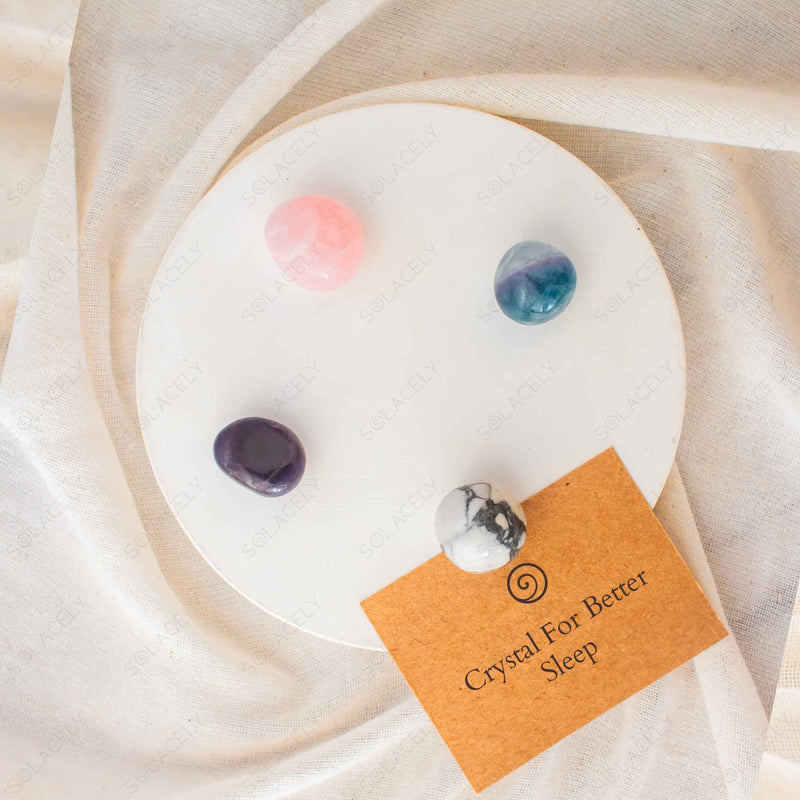
A small tumbled stone in a coat pocket is the traditional choice for a scan, a blood test or a consultation you have been dreading. Something smooth enough to turn over in your fingers while you wait is what most people end up reaching for.
On the bedside table
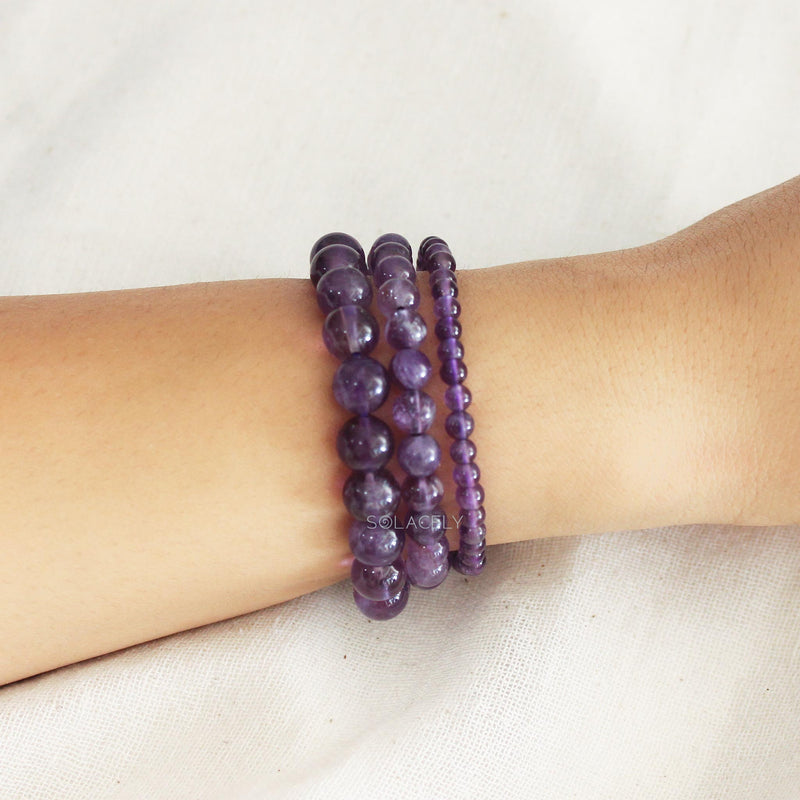
Amethyst is the usual piece here, kept as a wind-down cue at the end of a difficult day. Put it where your hand lands when you reach for the lamp, not in a drawer where you will forget it.
How do you choose and care for a comfort stone?
Pick by feel rather than by list. Weight, colour, texture and the way a piece sits in your palm are the qualities that make a comfort object work, and there is no single right choice. A smooth tumbled stone is usually more satisfying to hold for five minutes than a raw or pointed one.
Care is straightforward once you sort by hardness. Rinse quartz-family stones such as amethyst, rose quartz and carnelian briefly, then dry them fully. Keep selenite entirely away from water, since gypsum dissolves. Store softer pieces separately so harder stones do not scratch the polish, and keep amethyst out of long direct sun, which fades the colour permanently.
For cleansing, moonlight and sound are the gentlest methods and carry no risk to any of these stones. Never put a stone in drinking water. If you would like the wider picture of how comfort practices sit beside medical care, our body system guide for the hopeful sceptic covers it across other conditions.
This article is for general information only and is not medical advice. Polycystic ovary syndrome is a medical condition requiring diagnosis and treatment from a qualified healthcare professional. Crystals do not treat, cure, manage or influence PCOS or any other health condition, they do not affect hormones, ovulation or fertility, and any properties described here reflect traditional and cultural belief rather than clinical evidence. Never delay seeking medical care, and never stop or change prescribed treatment, on the basis of anything in this article. If you have irregular periods, difficulty conceiving, or any symptom that concerns you, speak to your GP, endocrinologist or gynaecologist.
Sources
- National Institute of Child Health and Human Development, Polycystic Ovary Syndrome
- NHS, Polycystic ovary syndrome
Written by Chetena Sharma. Reviewed by the Solacely editorial team.
Frequently asked questions
About the author


Written by Chetna Sharma, crystal healing practitioner and co-founder of Solacely. Chetna has worked with healing crystals for over a decade and curates Solacely's protective stone collection.