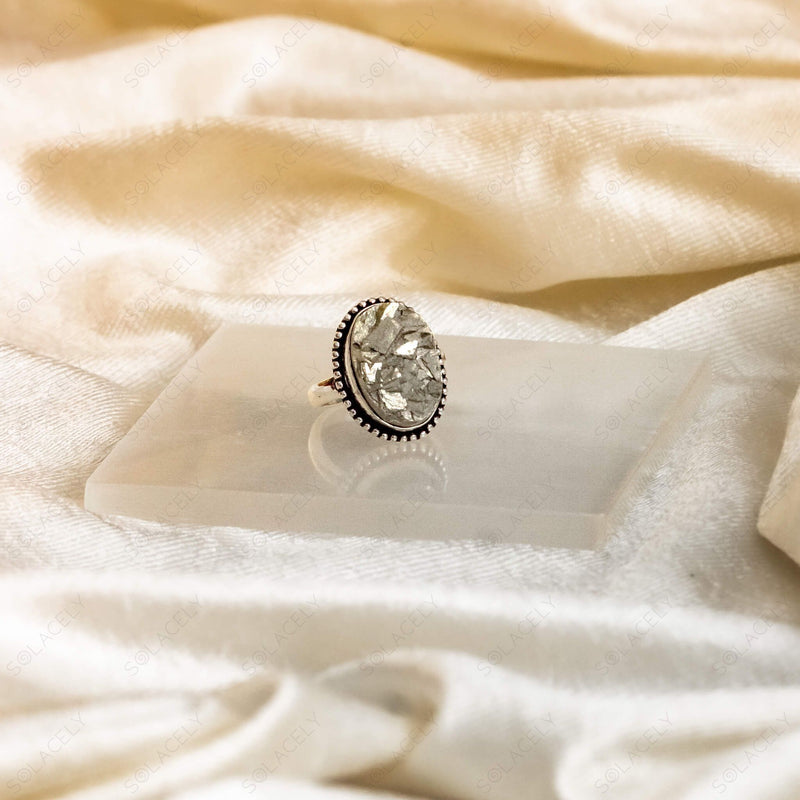
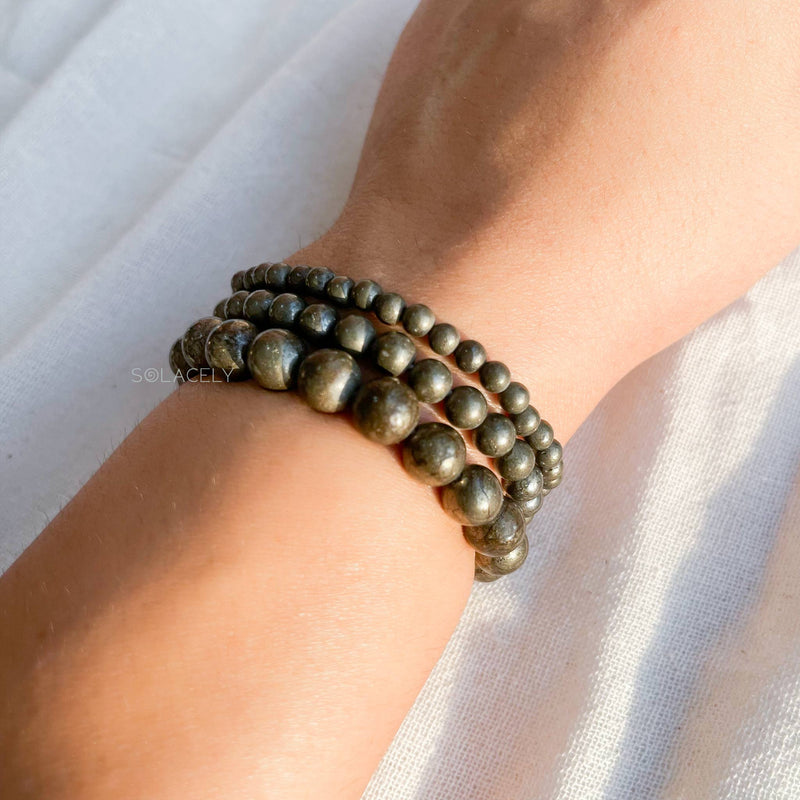
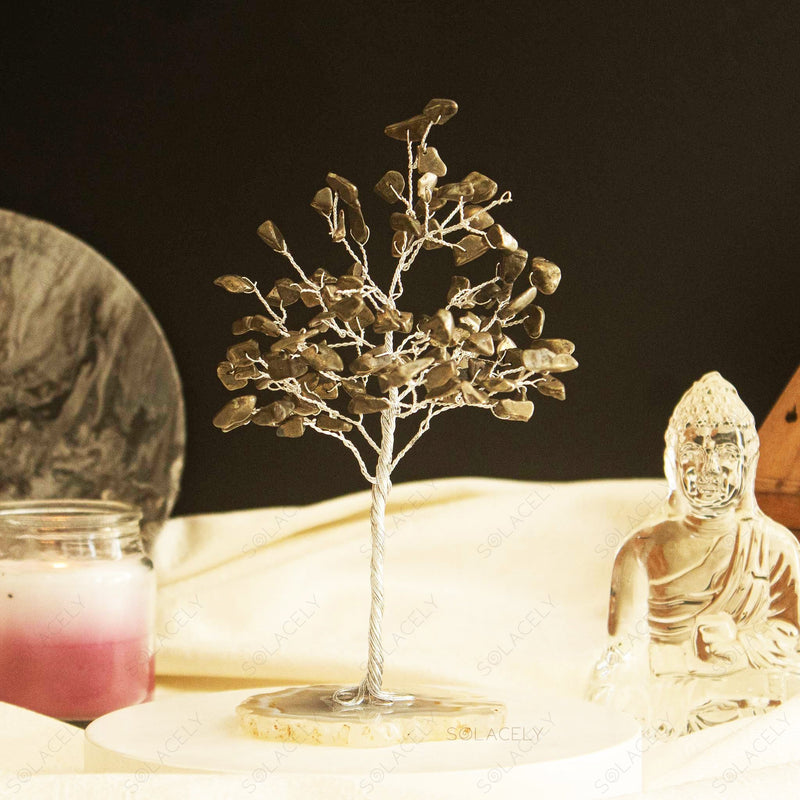
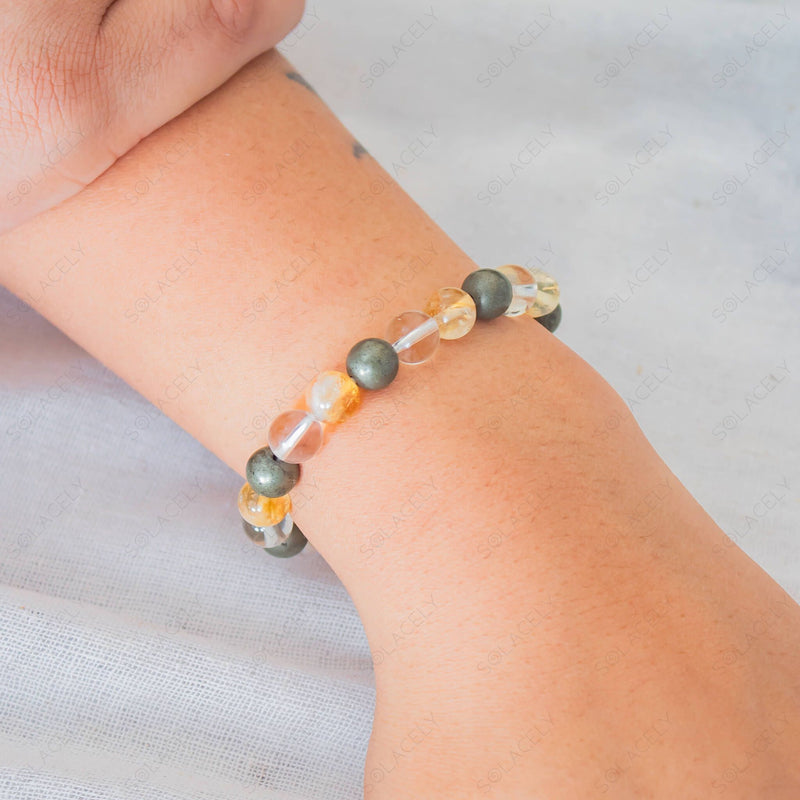
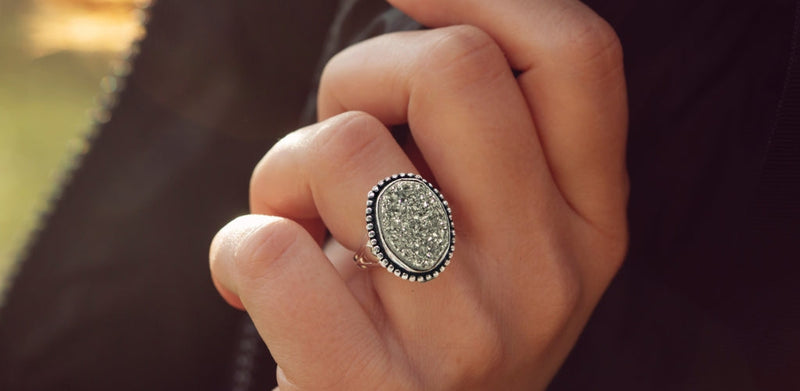
A natural pyrite ring is worn in crystal practice for confidence, drive and money focus. Pyrite is iron sulfide, 6 to 6.5 on the Mohs scale, brittle, and it oxidises in damp air. That last fact matters more than any other, because it decides whether your ring still looks like gold in two years.
Key takeaways
- Traditional benefits: confidence, willpower, money focus. Pyrite is a solar plexus stone, not a calming one.
- Pyrite is iron sulfide, Mohs 6 to 6.5, brittle rather than tough.
- Water is the enemy. Take the ring off before washing, showering or swimming.
- Never cleanse pyrite with water or salt. Both accelerate oxidation.
- Distinguish from gold by streak, hardness and weight. Gold is soft, heavy, and streaks gold.
- A ring keeps the stone in your eyeline all day, which is the practical reason the format works.
What a pyrite ring is used for
Crystal tradition puts pyrite at the solar plexus, the chakra associated with will, self worth and personal power. That placement explains the recommendations that follow it: pyrite is suggested for people who undercharge for their work, who go quiet in negotiations, or who have a goal they keep deferring. It is not offered for calm, sleep or emotional repair, and it is one of the few stones with no tradition of being soothing.
The ring format is doing real work here. A pocket stone gets forgotten. A ring sits in your line of sight every time you use your hands, which for most of us is constantly. Whatever you make of the mechanism, a visible daily reminder of a specific goal is a mechanism that behaves predictably. The deeper symbolism is covered in our piece on the spiritual meaning of pyrite rings.
What pyrite actually is
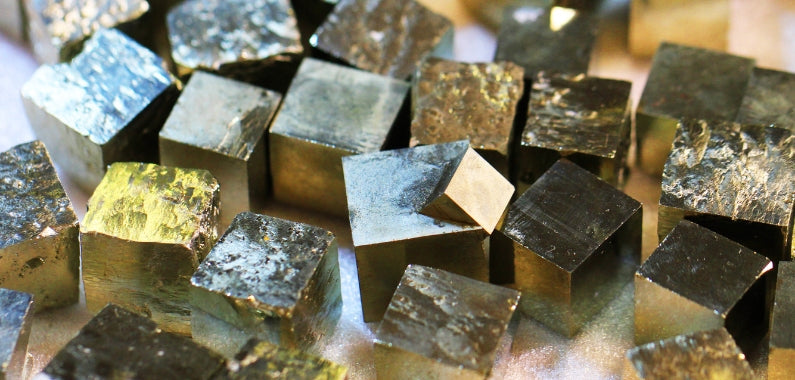
Pyrite is iron sulfide, the most common sulfide mineral on Earth, and it forms remarkable natural cubes with faces flat enough that people assume they were cut. It is also a significant source of sulfur for industry, and its resemblance to gold earned it the fool's gold nickname from prospectors who genuinely made the mistake.
| Composition | Iron sulfide |
|---|---|
| Mohs hardness | 6 to 6.5 |
| Toughness | Poor, brittle, chips rather than scratches |
| Streak | Greenish black to brownish black |
| Crystal habit | Cubes, pyritohedra, massive |
| Main weakness | Oxidises in humid air |
Telling pyrite from gold
Three tests, none of which need equipment:
- Hardness. Gold is soft and dents under a pin point. Pyrite is hard and brittle, and will chip instead.
- Streak. Drag it across unglazed porcelain. Gold leaves a golden line. Pyrite leaves greenish black.
- Weight. Gold is roughly four times as dense. Two identical pieces will feel completely different in the hand.
This matters less for a crystal shop ring than it did for a prospector, but it is the thing everybody asks about, and the tests are genuinely definitive.
Durability: what a pyrite ring will and will not survive
Hardness and toughness pull in different directions with pyrite. At Mohs 6 to 6.5 it is harder than a steel knife blade and will not be scratched by ordinary handling. But it is brittle, so a sharp knock against a door frame or a countertop can take a corner off.
The practical advice is to treat a pyrite ring like a dress watch rather than a wedding band. It is fine for a desk, a meeting or a dinner. It comes off for the gym, the garden, and anything involving lifting. Choosing the hand you use less makes a measurable difference over a year.
The care rule that actually matters
Pyrite is iron sulfide, and in the presence of moisture and oxygen it slowly oxidises. In mild cases the ring simply dulls from bright brass to brown. In persistent humidity, specimens can degrade further, a well documented problem that collectors call pyrite decay. Museums manage it by controlling humidity, and you can manage it far more simply.
- Take it off before water. Washing up, showering, swimming. Chlorine and salt water are considerably worse than tap water.
- Wipe it dry after wear. A soft dry cloth. Skin oils and sweat are damp too.
- Store it dry. A small pouch with a silica gel sachet, and not in a bathroom cabinet.
- Never salt cleanse it. This is the most common way people ruin a pyrite piece, and the damage is not reversible.
If you follow a cleansing practice, use dry methods: sound, incense smoke, or a night resting beside selenite. Our dedicated guide on how to care for your pyrite ring goes step by step.
Wearing it well
Traditional practice suggests the index finger of the dominant hand, the finger associated with authority and direction. As with most placement rules there is no mechanism behind it, and the practical consideration should probably win: put it on the hand that meets fewer hard edges.
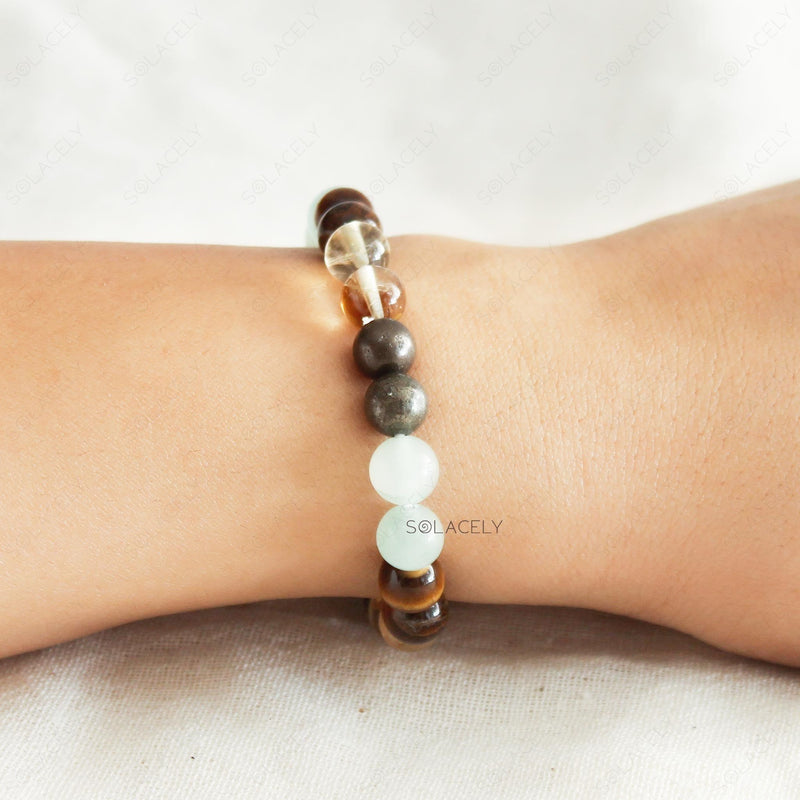
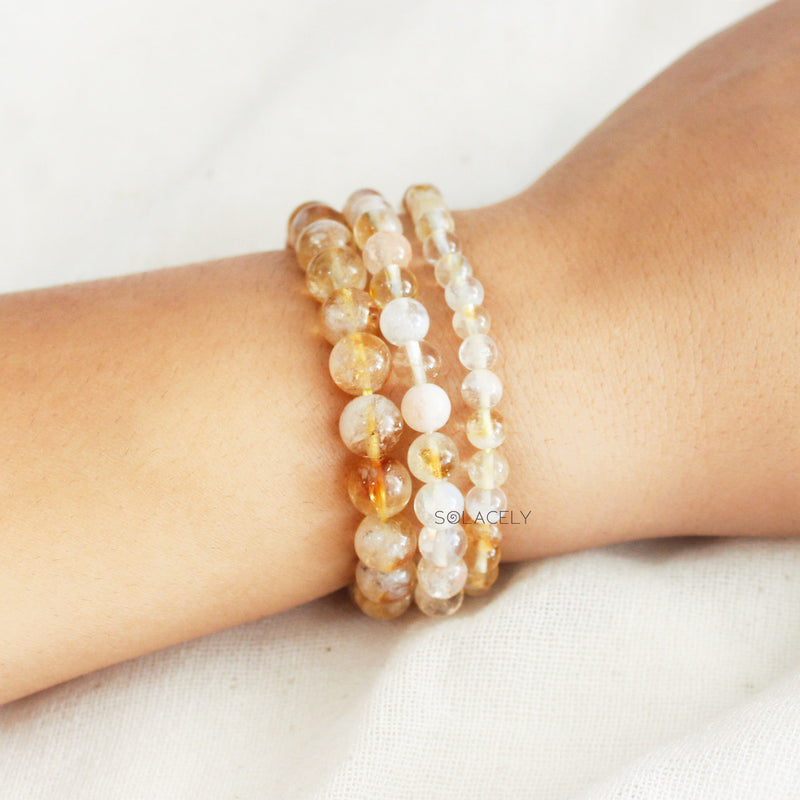
Pyrite pairs conventionally with citrine for money work and with black tourmaline for grounding, which stops the drive turning into agitation. We cover the second of those in black tourmaline and pyrite, and the broader stone by stone picture is in pyrite meaning, benefits and properties and crystals for money.
Who a pyrite ring suits
It suits someone with a concrete goal who needs to be reminded of it rather than persuaded of it. It suits people building something, negotiating, or trying to hold their nerve on a price. It is a working stone with a working stone's aesthetic, and it looks better with wear than most.
It suits less well anyone who wants something they never have to think about. Pyrite asks for a small amount of attention: off before water, dry after wear, stored somewhere sensible. If that sounds tedious, a citrine or tiger's eye ring carries a similar traditional meaning with none of the maintenance.
The uses described here reflect traditional and cultural crystal practice. They are not medical claims and are not a substitute for professional healthcare, financial or legal advice.
Sources
Written by Chetena Sharma. Reviewed by the Solacely editorial team.
Frequently asked questions
About the author


Written by Chetna Sharma, crystal healing practitioner and co-founder of Solacely. Chetna has worked with healing crystals for over a decade and curates Solacely's protective stone collection.