Smoky quartz and rhodonite are paired for grounded emotional healing: smoky quartz keeps you steady and safe while rhodonite, the pink stone of emotional repair, helps you work through old hurt, betrayal, and grief with compassion. Together they are used to sit with painful feelings without being overwhelmed, healing the heart from a stable, grounded base. It is a gentle, supportive ritual for tender emotional work, not a cure, and it suits anyone processing an old wound.
Key Takeaways
- Smoky quartz is a grey-brown quartz linked with grounding, protection, and releasing stress, tied to the root chakra.
- Rhodonite is a pink, black-veined stone linked with emotional healing, forgiveness, and compassion, tied to the heart.
- Together they pair a grounded, steady base with tender emotional repair, which suits working through old hurt, betrayal, or grief.
- The honest benefit is a supportive ritual that anchors you while you process painful feelings, not a literal cure.
- These are traditional, belief-based associations, not medical facts. Treat the pair as gentle self-care and seek a counsellor for deep wounds.
What are smoky quartz and rhodonite?
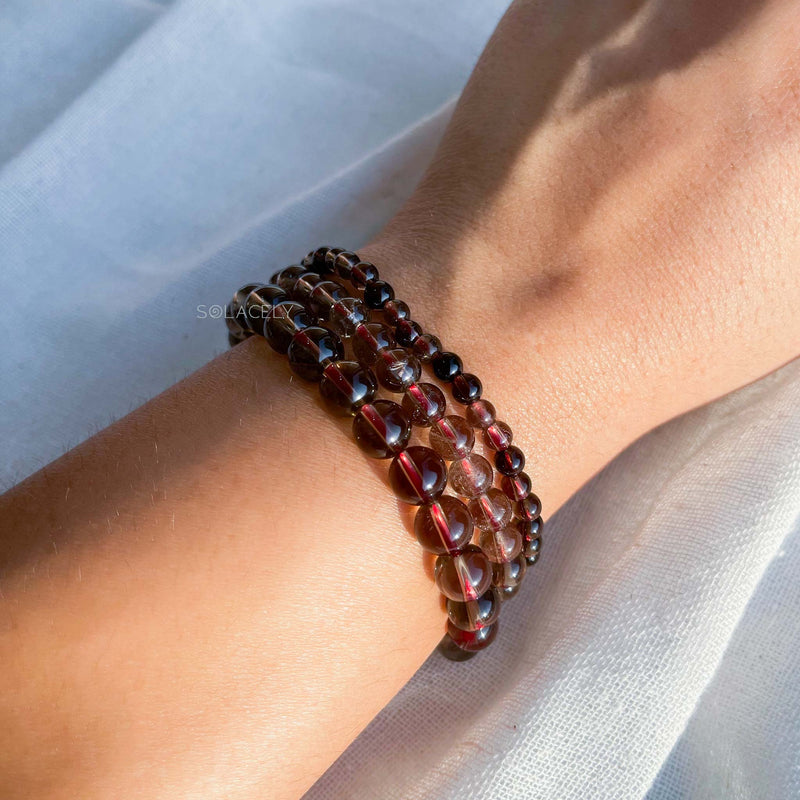
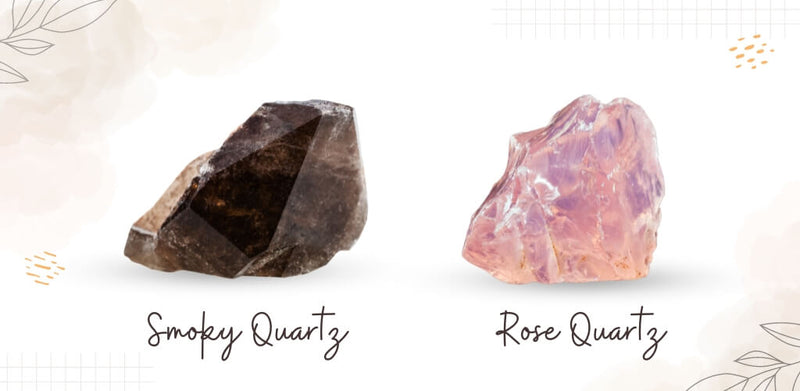
Smoky quartz is a grey-to-brown member of the quartz family. According to the Gemological Institute of America, quartz occurs in many colours, and smoky quartz owes its tint to natural radiation acting on the crystal over long periods. Tradition reads its dark, earthy tone as grounding and protective, tying it to the root chakra and to feeling safe, settled, and present.
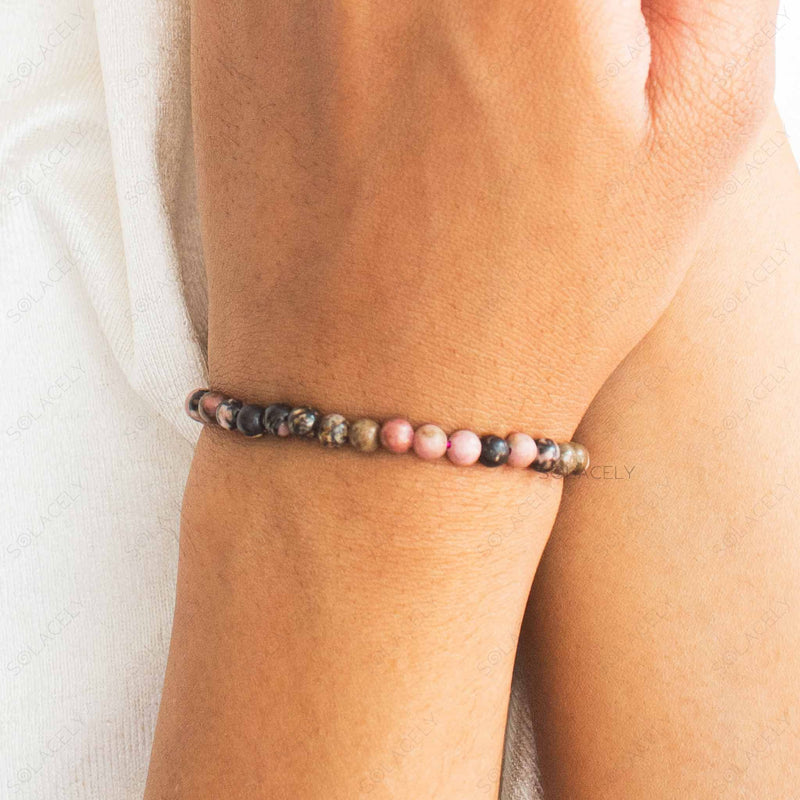
Rhodonite is a rose-pink stone, usually marbled with black veins of manganese oxide. As Encyclopaedia Britannica notes, rhodonite is a manganese silicate mineral, valued as an ornamental stone for its pink colour. In crystal tradition that pink, with its dark veining, ties it to the heart and to emotional healing, forgiveness, and compassion, which is why it is often called a rescue stone for emotional wounds.
So one stone is dark and grounding, the other pink and healing. That contrast is the point of the pairing: smoky quartz keeps you anchored while rhodonite tends the heart. If you want the wider map of heart stones, our guide to crystals for the heart chakra gathers them in one place.
Why pair smoky quartz with rhodonite?
The pairing works because healing an old emotional wound can stir up a lot, and grounding makes it bearable. Rhodonite is traditionally used to bring up and heal buried hurt with compassion, which is powerful but can feel raw, while smoky quartz provides the steady, secure anchor that keeps you from being overwhelmed. Emotional repair plus a stable base is the whole idea.
Think of when this suits you: processing a betrayal or heartbreak, working through grief, healing an old wound that still stings, or forgiving something that hurt deeply. Rhodonite helps you meet the feeling with compassion; smoky quartz keeps your feet on the ground so you can feel it without drowning in it. That balance is exactly what tender emotional work needs.
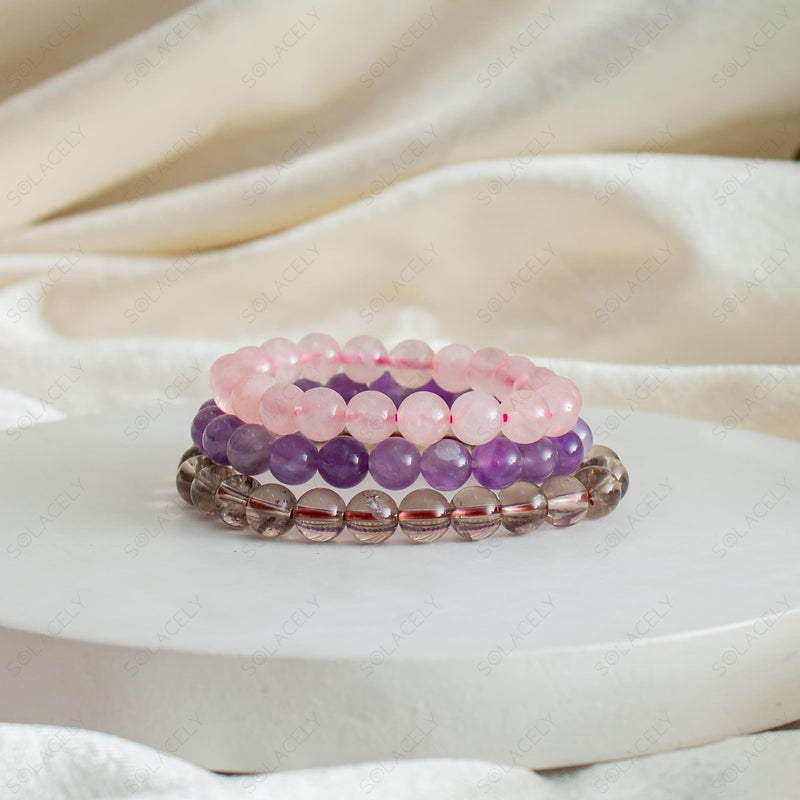
This gives it a distinctly healing, emotionally supportive flavour among the smoky-quartz pairings. Where smoky quartz with rose quartz opens the heart to love, and with howlite quiets the mind, smoky quartz with rhodonite heals old wounds. We cover those siblings in smoky quartz and rose quartz and smoky quartz and howlite.
Smoky quartz: grounding and safety
Smoky quartz is the great grounding stone, traditionally used to feel settled, safe, and present, and to release stress. Its dark, earthy colour reads as the ground itself, warm and stable, which is why people reach for it when they feel scattered or unmoored. When you are processing a painful feeling, that grounding is the anchor that keeps you steady enough to stay with it.
The honest mechanism is weight and attention. Holding a smooth, cool, slightly heavy stone and letting your breath slow is a simple, tactile way to anchor yourself in the moment, which is what grounding means in practice. As an old hurt surfaces, that anchor gives your feet somewhere solid to stand while the wave of feeling passes.
Tradition also frames smoky quartz as protective and stress-releasing, which matters during emotional work, when raw feelings often come up. That steady, secure quality is the safe base the pairing rests on, because it is far easier to heal a wound when you feel held and grounded rather than exposed and adrift.
Rhodonite: emotional healing and compassion
Rhodonite is the stone of emotional healing, traditionally used to heal old wounds, forgive deep hurt, and meet painful feelings with compassion. Its pink softness with dark veins is read as the heart's capacity to hold both love and pain, which is why tradition treats it as a supportive stone for betrayal, grief, and long-held emotional scars. It is also linked to reconciliation and forgiveness.
The honest version of this is reflection and self-compassion. Holding rhodonite while you gently turn toward an old hurt, breathing slowly, is a small mindfulness practice, and the U.S. National Center for Complementary and Integrative Health notes that mindfulness can help many people manage stress and difficult emotions. Meeting a painful feeling with kindness, rather than pushing it away, is often what allows it to soften.
Because rhodonite is so tied to forgiveness and repair, it also appears in relationship healing, a theme we cover in our guide to crystals for reconciliation. Paired with grounding smoky quartz, its tender, sometimes intense emotional work feels steadier and more manageable, which is exactly why the two suit each other so well.
How to use smoky quartz and rhodonite together
The pair is simple to use, and the aim is to feel grounded while you gently heal. Keep both stones where they remind you to stay anchored and compassionate, and pair them with slow breathing and a kind intention. Here are the common ways people combine them.
- Healing pause. Rest smoky quartz in one hand and rhodonite in the other, breathe slowly, and let yourself feel grounded and held.
- Sit with an old hurt. Hold the pair while you gently reflect on a wound, meeting it with compassion rather than pushing it away.
- Forgiveness work. Use rhodonite to focus on forgiving a deep hurt, with smoky quartz keeping you steady through it.
- Carry the pair. Keep both through an emotionally heavy stretch as a grounding, healing reminder.
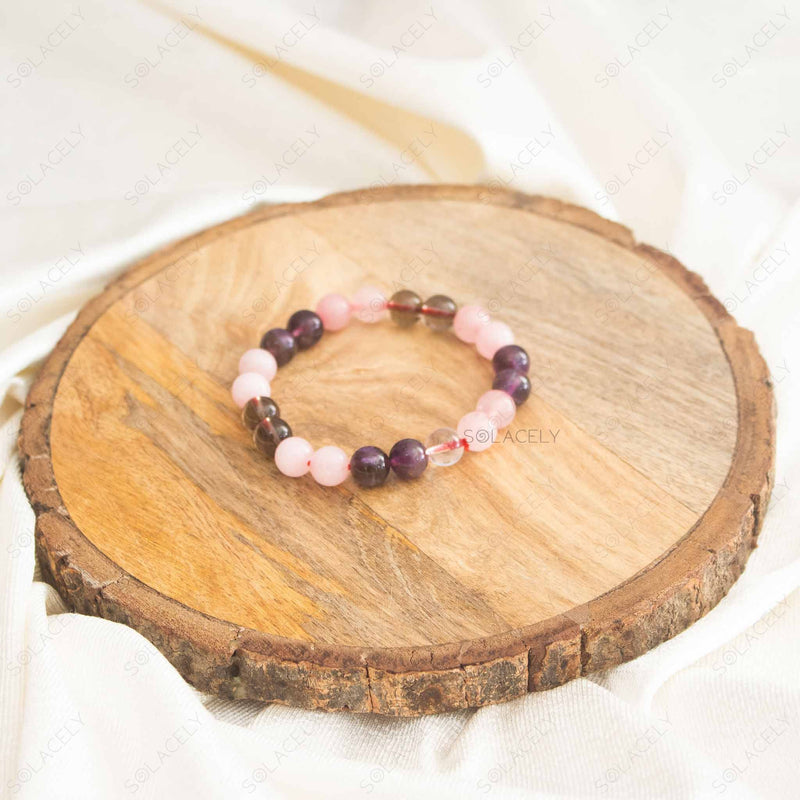
- Wear them. A smoky quartz and rhodonite bracelet or pendant keeps the grounded-healing theme close.
Whichever you choose, go gently and do not force anything, since emotional healing cannot be rushed. Let smoky quartz keep you grounded and rhodonite keep you compassionate, and treat each small softening as enough for one sitting, returning to the practice whenever the old feeling resurfaces. For releasing held resentment specifically, our guide to rose quartz for forgiveness is a gentle companion to this work.
Choosing and caring for your stones
Both stones make lovely pieces, so choose ones whose colour and feel you are drawn to, since you will keep them close during tender times. Smoky quartz ranges from pale grey to warm brown; good rhodonite shows a rich rose-pink with striking black veining. Tumbled stones, palm stones, and jewellery all work well for this emotional-support practice.
Care differs between the two. Smoky quartz is hard and durable at 7 on the Mohs scale, so it handles daily wear and a wipe with a soft cloth. Rhodonite is softer, at about 5.5 to 6.5, so it scratches more easily and should be handled with a little more care and kept from knocks. Keep both out of prolonged strong sunlight, and store rhodonite apart from harder stones.
If you like to cleanse the stones to refresh your intention, both tolerate the gentle methods well: a night in indirect moonlight, sound from a singing bowl, or a brief cool rinse, drying rhodonite promptly since it is softer. Our step-by-step on how to cleanse and charge crystals covers each method. Pair the cleanse with a moment to restate your intention for grounded, compassionate healing.
Common mistakes with this pairing
This healing duo works best when you treat it, and yourself, gently. Keep these few slips in mind and the pair stays a soft, supportive companion.
- Forcing the healing. Emotional repair cannot be rushed. The stones support the process; let it unfold slowly rather than pushing.
- Skipping the grounding. Rhodonite can stir up a lot, so let smoky quartz keep you steady. Do not do the heart work ungrounded.
- Expecting a cure. Deep grief, trauma, or betrayal often needs real support. Treat the pair as a gentle ritual alongside a counsellor, not instead of one.
- Handling rhodonite roughly. It is softer and scratches, so keep it from knocks and store it apart from harder stones.
- Skipping the breath. The softening comes from calm, compassionate reflection, not the stones alone. Let the breath lead.
Sources
- Gemological Institute of America - Quartz description and colour varieties (smoky quartz): https://www.gia.edu/quartz
- Encyclopaedia Britannica - Rhodonite, manganese silicate mineral: https://www.britannica.com/science/rhodonite
- National Center for Complementary and Integrative Health (NIH) - Meditation and Mindfulness: What You Need To Know: https://www.nccih.nih.gov/health/meditation-and-mindfulness-what-you-need-to-know
Frequently asked questions
About the author


Written by Chetna Sharma, crystal healing practitioner and co-founder of Solacely. Chetna has worked with healing crystals for over a decade and curates Solacely's protective stone collection.