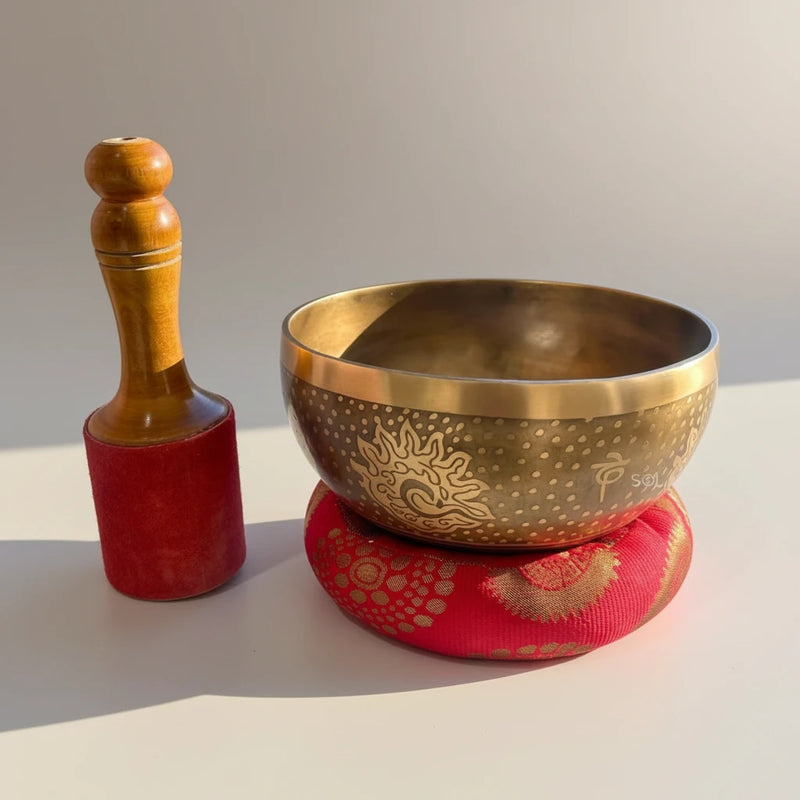
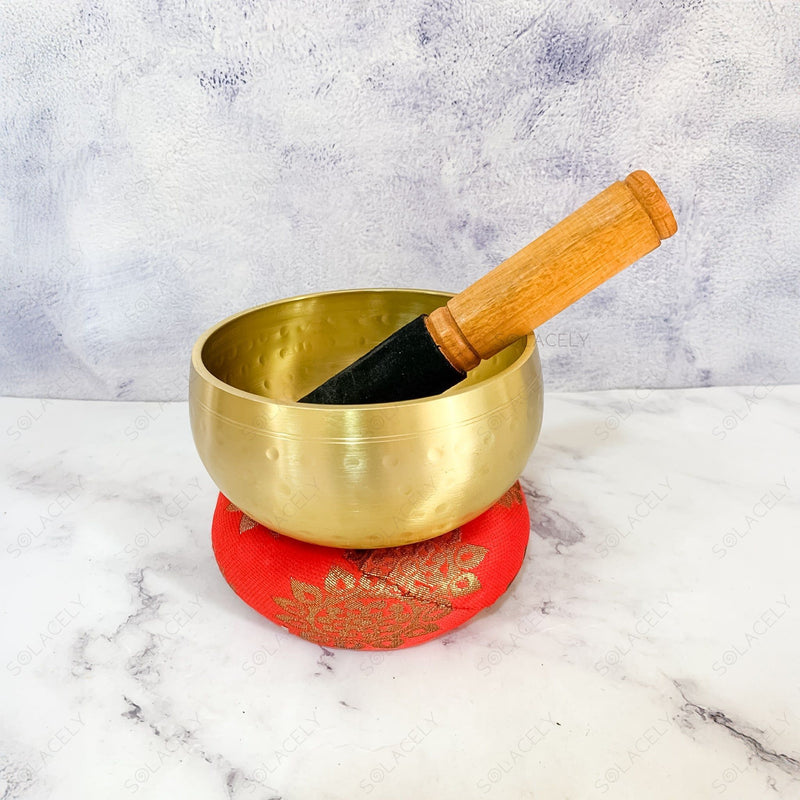
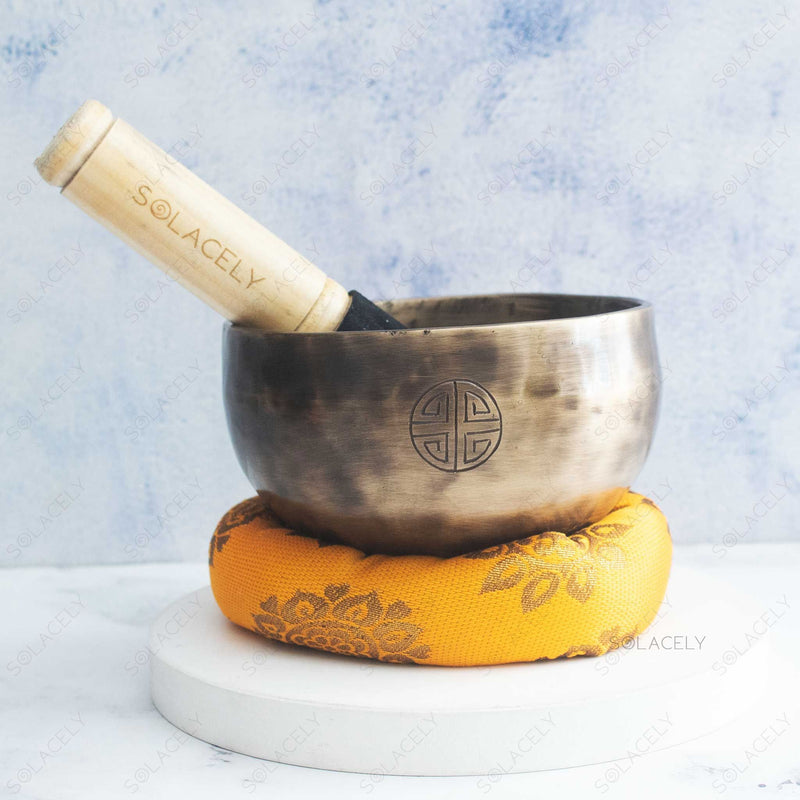
'Sound bowls' is a common everyday name for singing bowls, the round instruments that ring or hum when you strike or rub the rim. The term is an umbrella that covers both the metal Himalayan bowls and the crystal quartz bowls people use in sound baths and sound healing. So a sound bowl and a singing bowl are the same object, just with a slightly more casual name.
Key Takeaways
- 'Sound bowls' is an informal umbrella term for singing bowls. There is no separate instrument called a sound bowl; the two names point to the same thing.
- The term covers two main families: metal Himalayan bowls (a bronze alloy, warm layered overtones) and crystal bowls (quartz, one pure sustained note).
- You play a bowl by striking the rim with a mallet or circling the rim to build a continuous hum through friction.
- People use them for sound baths, meditation, yoga, breathwork, and winding down before sleep. The evidence for relaxation is early and based on small studies.
- Metal bowls start at the budget end and run up through the mid range, while crystal quartz bowls sit in premium to collector territory.
What are sound bowls?
Sound bowls are metal or crystal bowls that produce a resonant tone when struck or rubbed, and the phrase is just a plain-language version of 'singing bowls.' The word 'sound' tends to get attached because the bowls turn up so often in 'sound baths' and 'sound healing.' Whether someone says sound bowl, singing bowl, or Tibetan bowl, they usually mean the same round instrument.
The confusion is understandable. Marketplaces, yoga studios, and social posts use all these labels loosely, so a beginner reasonably wonders if a 'sound bowl' is a different product. It is not. Think of 'sound bowls' as the search-friendly nickname and 'singing bowls' as the more traditional name.
Sound bowls vs singing bowls: is there a difference?
There is no real difference; they are two names for one instrument. 'Singing bowl' is the older, more traditional term, while 'sound bowl' is a newer, casual name that grew alongside the popularity of sound baths. Both describe a bowl that rings or hums when played. The only thing that actually changes the sound is the material and size, not the name on the label.
You will also hear 'Tibetan singing bowl,' 'Himalayan bowl,' 'meditation bowl,' and 'chakra bowl.' These are mostly marketing or regional labels for the same family. A 'Tibetan' or 'Himalayan' bowl usually means the metal kind, and a 'chakra bowl' usually means a bowl sold as tuned to a particular chakra note. None of them is a distinct new instrument.
So when you shop, ignore the label and look at three things: what the bowl is made of, how big it is, and how it sounds. Those decide the tone, the price, and whether it suits you. The rest is vocabulary.
The two main types of sound bowls
Sound bowls split into two big families by material: metal (Himalayan) bowls and crystal (quartz) bowls. Metal bowls are an ancient-style bronze alloy that rings with warm, layered overtones. Crystal bowls are a modern quartz instrument that sings one pure, loud, sustained note. Everything else, size, tuning, and price, follows from that split.
Metal Himalayan bowls
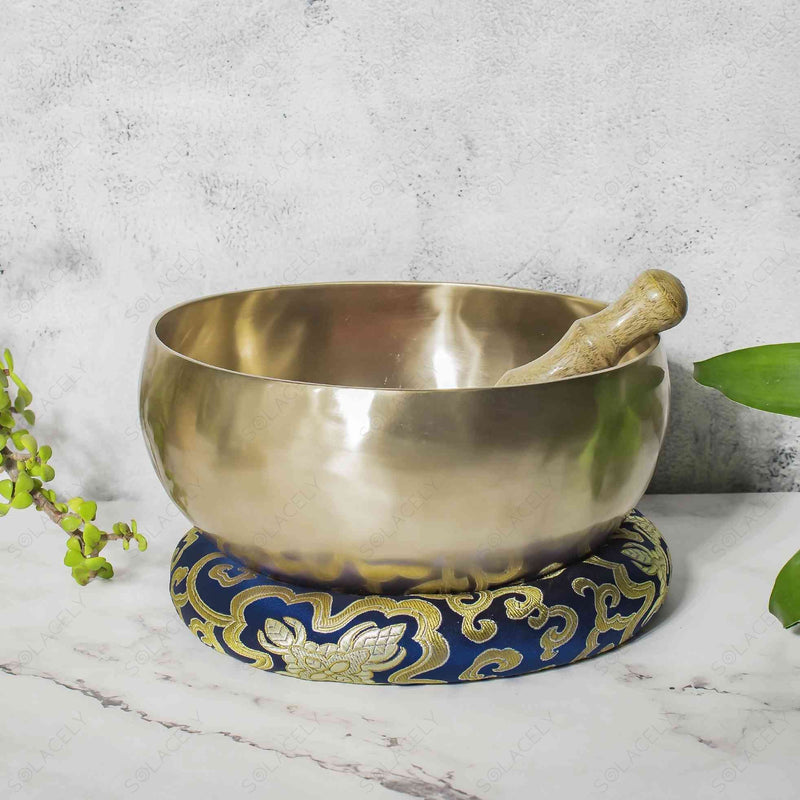
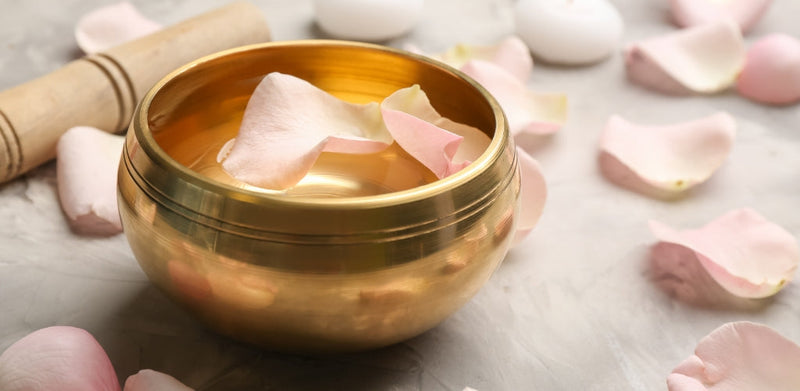
Metal sound bowls are made from a bronze alloy, often marketed as a blend of 'seven metals.' They are hammered or cast into shape and give a warm, complex tone that blends several overtones at once. They are durable, hard to break, compact enough to travel with, and usually the most affordable way in. If you want to understand how the traditional kind is forged and why each one sounds slightly different, our guide to the handmade singing bowl walks through the hammering process.
Crystal quartz bowls
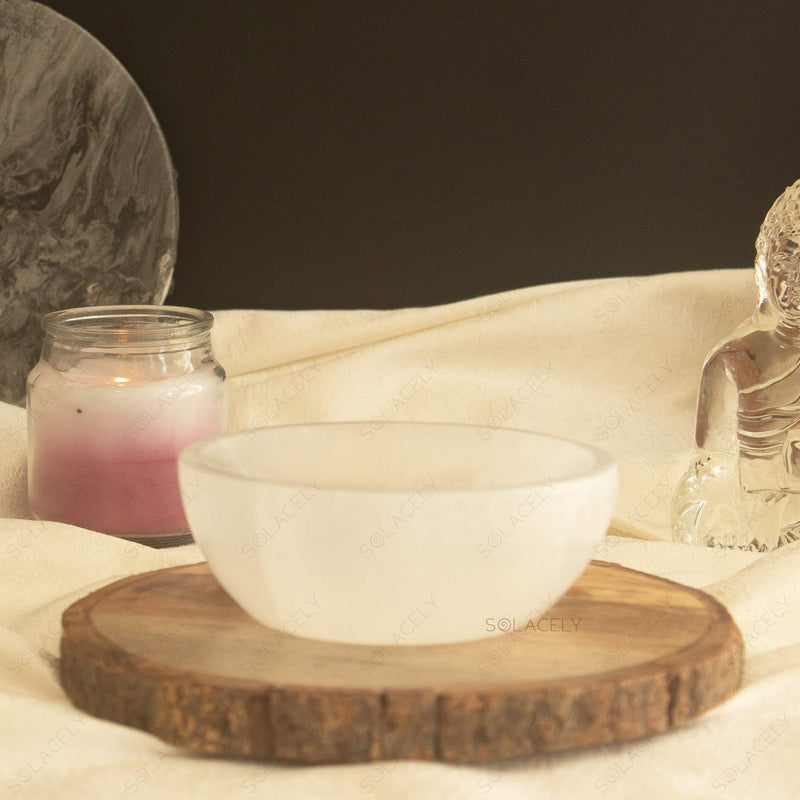
Crystal sound bowls are made from quartz, the same silica mineral as clear crystal, spun in a mould and fused at very high heat. They ring one clean, focused note that plays louder and sustains far longer than a metal bowl. They are usually tuned to a set musical note and chakra, which is why sound practitioners build matched sets from them. They are also fragile and cost more. Our dedicated crystal singing bowl guide covers frosted versus clear alchemy types and care.
How sound bowls make their sound
A sound bowl makes sound through vibration: striking or rubbing the rim sets the metal or quartz vibrating, and that vibration pushes the surrounding air into the tone you hear. There are two ways to play it. You can strike the outside of the rim with a padded mallet for a single bell-like note, or you can circle the rim steadily with the mallet so friction builds a continuous, rising hum.
That continuous hum works the same way a wet finger sings around a wine glass. As the mallet drags around the rim, it grips and releases the surface hundreds of times a second, and each tiny catch feeds energy into the bowl. Keep an even, steady pressure and speed, and the note swells and holds. Rush it and the tone breaks up.
The pitch depends mostly on size and material. A bigger, thicker bowl vibrates more slowly and gives a deeper note; a smaller bowl gives a higher one. Crystal bowls are ground and tuned to land on a precise musical note, while metal bowls carry a looser blend of tones rather than one exact pitch. If you want to see how notes line up with frequencies in hertz, our singing bowl frequencies chart lays out the numbers.
What people use sound bowls for
Sound bowls are used mainly for relaxation practices: sound baths, meditation, yoga, breathwork, and winding down before sleep. The steady, sustained tone gives the mind something simple to rest on, which many people find calming. It is worth being honest that the science here is early and based on small studies, so treat the benefits as supportive rather than medical.
Sound baths
A sound bath is a session where you lie down and listen while a practitioner plays bowls and other instruments for a stretch of time. Crystal bowls are popular here because they are loud and their long sustain fills a room. The goal is not to 'do' anything but to relax and let the tones wash over you. The broader background is covered in our sound healing guide.
Meditation and breathwork
A single bowl is a handy focus for meditation. Many people strike the bowl once at the start and end of a sit, using the fading tone as a gentle timer, or they play a slow continuous hum and breathe along with it. The tone gives a wandering mind a soft anchor to return to, which can make sitting still feel easier.
Yoga
In a yoga class, a teacher often strikes a bowl to open and close the session or to mark the shift into savasana, the final rest. The single clear tone signals a change of pace and helps the room settle. If you practise at home, a bowl can do the same job for you. Our singing bowl for yoga piece has more, though the core idea is simple: one clear tone to bookend the practice.
Sleep and winding down
Some people play a soft bowl in the evening as part of a wind-down routine, the way others use warm light or slow breathing. The point is the ritual and the calm, steady sound, not a cure for insomnia. If sleep is your main reason for buying, our singing bowl for sleep guide is a better place to start, and it keeps the claims honest.
Sound bowls also show up in reiki, in chakra work where each note is matched to a chakra, and simply as a calming object on a desk or altar. For the chakra side, see our singing bowl and chakra guide.
Metal vs crystal: how to choose your first sound bowl
Choose by purpose, budget, and where you will use it. Metal bowls are the sensible first buy for solo practice at home: they are affordable, durable, portable, and their warm overtones feel intimate up close. Crystal bowls suit louder, room-filling sessions and precise chakra tuning, but they cost more and break more easily. The table below lays out the honest trade-offs.
| Feature | Metal (Himalayan) bowl | Crystal (quartz) bowl |
|---|---|---|
| Material | Bronze alloy ('seven metals') | Quartz, near-pure silica |
| Tone | Warm, layered overtones | One pure, single note |
| Volume | Softer, intimate | Loud, carries across a room |
| Sustain | Shorter, fades sooner | Very long, keeps ringing |
| Tuning | A blend, rarely one exact note | Tuned to a set note and chakra |
| Durability | Very durable, near unbreakable | Fragile, can crack or shatter |
| Portability | Compact, easy to travel with | Bulky and delicate to carry |
| Price tier | Budget to mid range | Premium to collector |
| Best for | Home practice, travel, budget | Sound baths, chakra sets, volume |
A quick way to decide: if you are new, practising alone, or on a budget, start with one metal bowl about 4 to 6 inches across and learn to play it. If you run group sessions, want a specific chakra note, or love that pure ringing sustain, a crystal bowl earns its price. Many practitioners end up owning both because they do different jobs.
Whichever you pick, listen before you buy if you can. Strike the rim and let it ring; the tone should be clean and steady with no rattle or warble. Run a finger around the rim to make sure it is smooth and chip-free, since a damaged rim ruins both the sound and, for crystal, the safety.
What sound bowls cost
Sound bowl prices vary widely by material and size. Metal Himalayan bowls are the affordable end, starting at the budget tier for a small bowl and rising through the mid range for larger, finely hammered pieces. Crystal quartz bowls cost several times more because they are heavier, more fragile to ship, and often imported. The tiers below are a rough guide, not fixed prices.
| Type and size | Typical price tier | Good for |
|---|---|---|
| Small metal bowl (3-5 in) | Budget | First bowl, meditation, travel |
| Medium/large metal bowl (6-9 in) | Mid range | Deeper tone, home practice |
| Frosted crystal bowl (6-10 in) | Premium | Sound baths, single chakra note |
| Clear/alchemy crystal bowl | Collector | Premium tone, portability |
| Seven-bowl set | Premium to collector | Chakra work, practitioners |
Prices swing with craftsmanship, size, tuning quality, and whether the bowl is hand-hammered or machine-finished. A hand-hammered metal bowl costs more than a plain machine-pressed one because of the labour and the individual tone. A full seven-note set is a bigger commitment; our singing bowl set guide covers what to expect before you buy the whole rainbow.
A sensible path for most buyers: start with one well-made metal bowl in a size you like, learn to play it properly, and only expand to crystal bowls or a full set once you know which tones you actually reach for. It is easy to overspend on a matched collection before you have the habit. Buy from a seller who tests tone and packs fragile bowls carefully, since a cracked crystal bowl in transit is a total loss.
Common mistakes when buying a sound bowl
The most common mistake is buying on looks or price alone without hearing the tone. A bowl is an instrument, so the sound is the whole point. A cheap bowl with a dull or buzzing note will sit unused, while a modest bowl with a clean, pleasing ring gets played every day.
A few other things to watch:
- Skipping the listen. If you cannot hear it in person, buy from a seller who describes the note and posts audio or video.
- Going too big too soon. Large bowls look impressive but are harder to store and play. A 4 to 6 inch metal bowl is a friendly first size.
- Overpaying for a 'healing frequency' claim. Precise Hz tuning matters for a chakra set, but no single frequency is a proven cure. Do not pay a premium for miracle claims.
- Ignoring the mallet. A good mallet is half the sound. Make sure the bowl comes with one that fits, plus a cushion or O-ring to rest it on.
- Forgetting fragility with crystal. If you travel or have pets and children about, a durable metal bowl may simply suit your life better.
Sources
- Encyclopaedia Britannica, 'Quartz'
- Goldsby TL, et al., 'Effects of Singing Bowl Sound Meditation on Mood, Tension, and Well-being,' Journal of Evidence-Based Complementary & Alternative Medicine (2017), via NIH PubMed
- National Center for Complementary and Integrative Health (NIH), 'Meditation and Mindfulness: What You Need To Know'
Frequently asked questions
About the author


Written by Chetna Sharma, crystal healing practitioner and co-founder of Solacely. Chetna has worked with healing crystals for over a decade and curates Solacely's protective stone collection.