The ninth house in astrology is the house of belief, meaning and the wider world. It governs philosophy, higher education, long-distance travel, faith and the search for truth. Where the third house collects facts, the ninth asks what they add up to. Traditionally linked to Sagittarius and ruled by Jupiter.
Key Takeaways
- The ninth house covers philosophy, faith, higher study, long journeys, publishing, law and the search for meaning.
- Its natural sign is Sagittarius and its natural ruler is Jupiter, which brings expansion, optimism and appetite for the unfamiliar.
- In Vedic astrology it is Dharma Bhava and Bhagya Bhava, the house of purpose and of fortune, and is considered highly auspicious.
- It sits opposite the third house: the everyday mind below, the big-picture mind above.
- Nothing here predicts travel or events. It describes your appetite for the unfamiliar, which can be satisfied by study as easily as by a plane ticket.
- Astrology is an interpretive tradition for reflection, not a forecast.
What the ninth house governs
The ninth house handles everything that stretches you beyond what you already knew. That covers philosophy and religion, university and advanced study, foreign travel and foreign cultures, publishing and teaching, and the law, in the sense of principles rather than paperwork.
What links them is a single move: going somewhere you have not been, whether physically or intellectually, and coming back with a changed sense of how things are. A pilgrimage and a doctorate are the same gesture in the ninth-house reading.
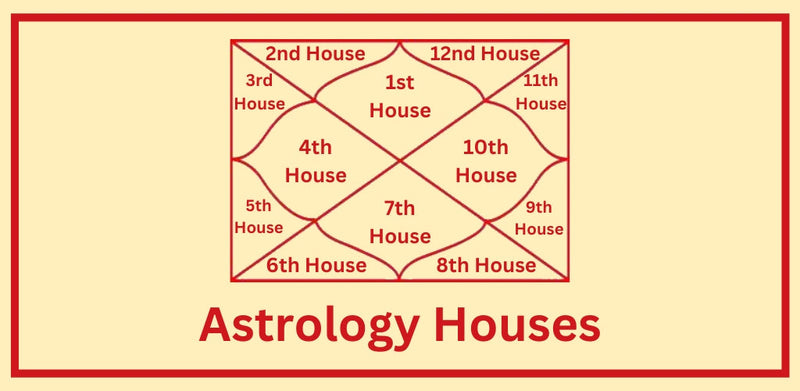
According to Encyclopaedia Britannica, the twelve-house horoscope descends from Hellenistic astrology, where each segment carried a sphere of life. The ninth was associated early with religion, foreign journeys and divination, an unusually stable meaning across two thousand years. For the full map, see our guide to the 12 astrological houses.
The third and ninth houses as a pair
The ninth house makes most sense read against its opposite. The third house governs the everyday mind: local information, short trips, siblings, neighbours, the practical business of gathering facts and passing them on. The ninth governs the interpretive mind: what those facts mean, and what framework you fit them into.
Put simply, the third house reads the news and the ninth house forms a worldview. The third learns the language; the ninth lives in the country. The third is a skill, the ninth is a belief.
Traditional readings hold that a strong third and a weak ninth produces someone well informed but without a settled view, while the reverse gives strong convictions loosely attached to detail. Neither is a flaw exactly. Both describe a tilt worth knowing about in yourself. Our guide to the third house covers the other end of the axis.
Dharma Bhava: the ninth house in Vedic astrology
In Indian astrology the ninth house carries unusual weight. It is Dharma Bhava, the house of righteous purpose and duty, and also Bhagya Bhava, the house of fortune or destiny. It governs religion and religious practice, the guru or teacher, pilgrimage, higher learning, and traditionally the father.
It is a trikona, one of the trine houses, and is generally counted among the most auspicious placements in a chart. Classical texts treat a well-placed ninth as a marker of good fortune, guidance and moral grounding. Jupiter, the natural significator, is itself the most benefic planet in the Vedic system.
The inclusion of the father is the sharpest divergence from Western practice, which usually assigns a parent to the fourth or tenth. It reflects a reading where the father transmits dharma, the values and duties a person inherits and then has to make their own.
Planets in the ninth house
A planet in the ninth house is read as shaping how you form beliefs and pursue meaning. Most charts have no planets here.
| Planet in the 9th | Traditional reading |
|---|---|
| Sun | Identity built around belief or learning; a person defined by what they stand for |
| Moon | Emotional need for meaning; comfort found in faith, study or being somewhere new |
| Mercury | A studying, questioning mind; drawn to teaching, writing and formal learning |
| Venus | Attraction to foreign cultures and ideas; beauty found in philosophy or distant places |
| Mars | Conviction pursued forcefully; a campaigner's energy, sometimes dogmatic |
| Jupiter | At home here; natural optimism, wide horizons, an instinct for the bigger picture |
| Saturn | Belief built slowly and tested hard; scepticism, or faith arrived at the long way round |
| Uranus | Unorthodox worldview; drawn to ideas that overturn the accepted framework |
| Neptune | Mystical or devotional leaning; deep faith, with a risk of vagueness or credulity |
| Pluto | Belief held with intensity and repeatedly overhauled; convictions that transform |
Read these as tendencies rather than verdicts. A Saturn placement does not mean a life without faith; it describes belief that has to be earned rather than inherited.
The sign on your ninth-house cusp
Everyone has a sign on the ninth cusp, and it describes the flavour of your search for meaning, whether or not a planet sits there.
Fire signs on the cusp (Aries, Leo, Sagittarius) suggest belief pursued with enthusiasm and a taste for adventure; the worldview arrives through direct experience. Earth signs (Taurus, Virgo, Capricorn) want philosophy that is useful and tested, and are sceptical of the abstract. Air signs (Gemini, Libra, Aquarius) treat belief as a subject for debate and revision, holding ideas provisionally. Water signs (Cancer, Scorpio, Pisces) come to meaning through feeling and intuition rather than argument.
A useful question: when something shakes your sense of how the world works, what restores it? Travel, study, conversation, faith, solitude? The ninth-house cusp usually points at the answer.
Crystals traditionally paired with the ninth house
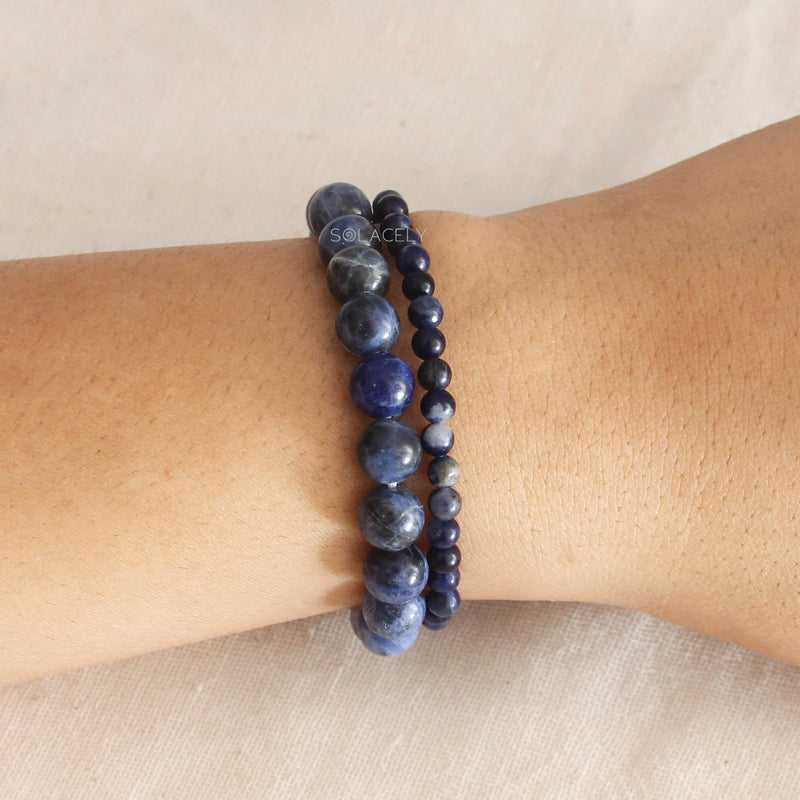
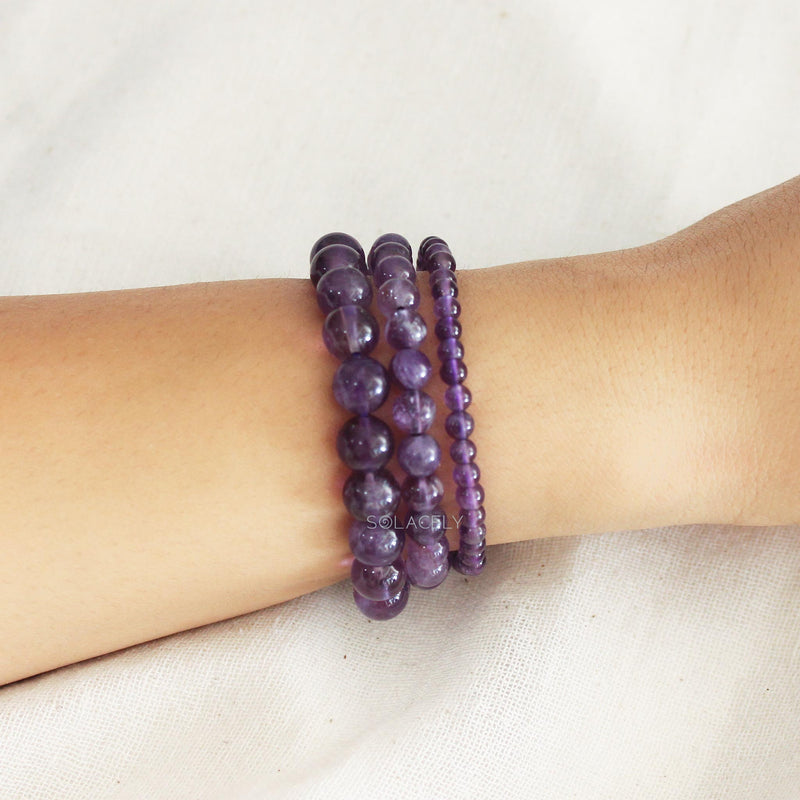
Because the ninth house concerns wisdom and perspective, the stones associated with it are those linked to study, truth and contemplation: lapis lazuli, sodalite, amethyst, citrine and labradorite. In crystal tradition they are kept as a focus while you read, study or reflect.
| Crystal | Traditional ninth-house association |
|---|---|
| Lapis lazuli | Truth, scholarship, the pursuit of knowledge |
| Sodalite | Clear reasoning and honest thinking |
| Amethyst | Contemplation, faith and quiet reflection |
| Citrine | Optimism, the Jupiter quality of expansive good humour |
| Labradorite | Journeys, thresholds and unfamiliar ground |
Lapis lazuli has a genuinely long association with learning: it was ground into ultramarine pigment for illuminated manuscripts, so the stone was literally present in the books scholars studied. One piece on a desk is plenty. For the sign that shares this house's appetite, see our guide to healing crystals for Sagittarius.
Working with your ninth house
The ninth house is the part of the chart that asks whether your life makes sense to you. That sounds grand, but the practical version is modest: are you still learning anything, and does what you believe still fit what you have seen?
- Keep learning something formally. The ninth house is fed by structured study, not just curiosity. A course, a language, a discipline with a syllabus.
- Go somewhere genuinely unfamiliar. The point is not distance but difference. A place where your assumptions do not automatically work.
- Notice inherited belief. Vedic tradition ties this house to the father and to received dharma. Some of what you hold was handed to you unexamined.
- Watch for dogma. Jupiter's shadow is certainty. A ninth house that stops updating becomes preaching.
- Teach what you know. Passing knowledge on is a ninth-house act, and usually the point at which you find out whether you actually understood it.
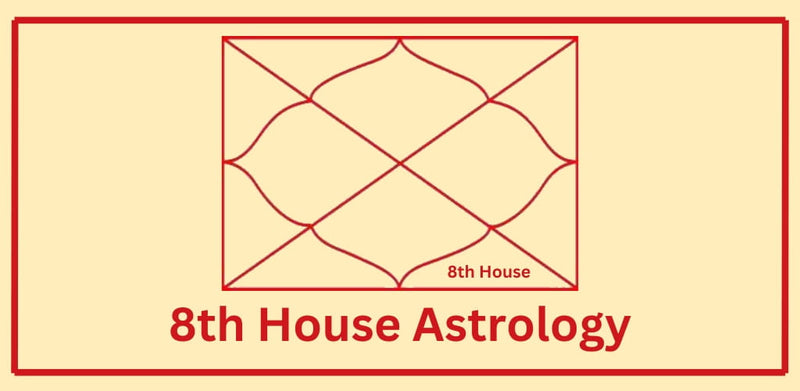
The house directly opposite is the third, the everyday mind. Tradition reads the axis as the movement between information and meaning. The eighth house of transformation sits just below, and the tenth house of career and public standing follows immediately above.
Sources
- Encyclopaedia Britannica, astrology: the horoscope and the house system. britannica.com
- Encyclopaedia Britannica, horoscope, the chart of the heavens and its twelve houses. britannica.com
- Encyclopaedia Britannica, lapis lazuli and its use as ultramarine pigment. britannica.com
Frequently asked questions
About the author


Written by Chetna Sharma, crystal healing practitioner and co-founder of Solacely. Chetna has worked with healing crystals for over a decade and curates Solacely's protective stone collection.