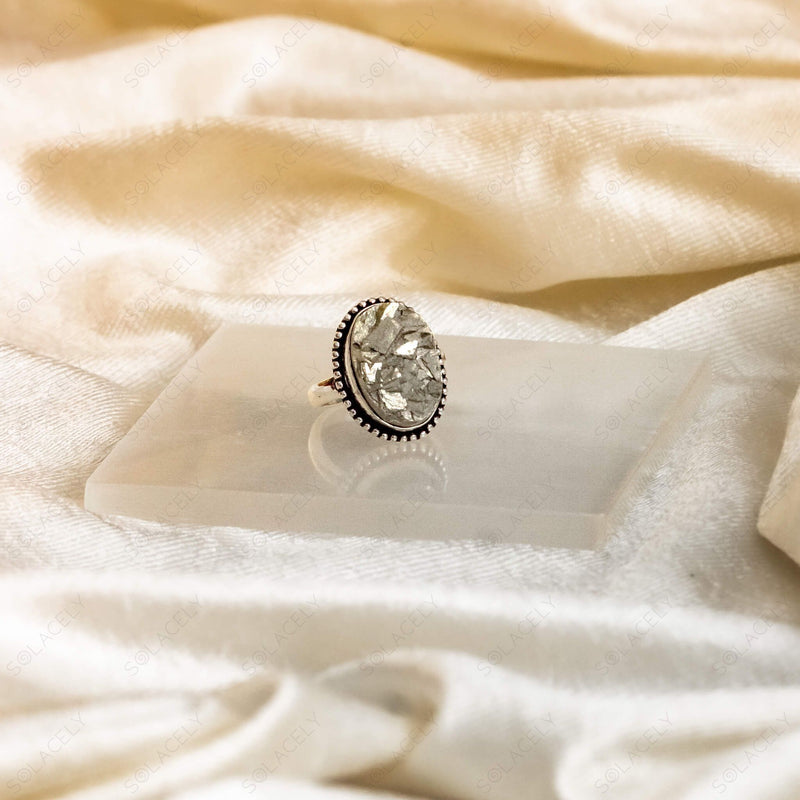
To care for a pyrite ring, keep it dry. Pyrite is iron sulfide, and its one real weakness is moisture, which slowly tarnishes and corrodes it. So take the ring off before washing your hands, showering, swimming, or exercising, wipe it with a dry soft cloth after wear, and store it somewhere dry and airtight. Do it consistently and a pyrite ring keeps its bright, gold-like shine for years. Treat it casually around water, and it dulls fast.
Key Takeaways
- Pyrite is iron sulfide (fool's gold), rating about 6 to 6.5 on the Mohs hardness scale, so it is reasonably hard but chemically reactive to moisture.
- Water is the enemy: humidity, sweat, and washing cause pyrite to tarnish and, over time, corrode. Never soak a pyrite ring or clean it with water.
- Remove the ring before washing, showering, swimming, cleaning, or working out, and wipe it with a dry, soft cloth after each wear.
- Store it dry and airtight, ideally with a silica gel packet or anti-tarnish strip, away from humidity and other jewellery.
- Cleanse pyrite with dry methods only, such as sound, moonlight, or smoke, never the water or salt used for hardier stones like quartz.
Why pyrite needs special care
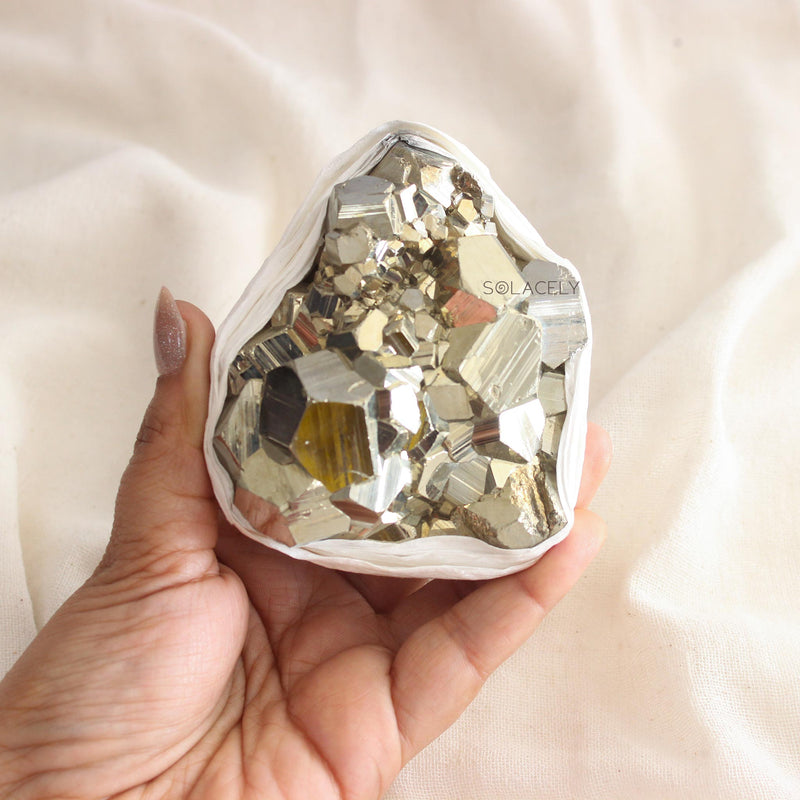
Pyrite is a shiny, brass-yellow mineral made of iron and sulfur, iron disulfide, which earned it the nickname fool's gold for its gleaming, metallic look. According to Encyclopaedia Britannica, pyrite is the most common of the sulfide minerals and rates about 6 to 6.5 on the Mohs hardness scale. That makes it harder than many stones, but hardness is not the issue with pyrite. Its chemistry is.
Because pyrite contains iron and sulfur, it reacts with moisture and oxygen in a slow process mineralogists call pyrite oxidation, or informally pyrite decay. Mindat, the mineralogical reference database, notes that pyrite can tarnish and alter when exposed to humid conditions. In plain terms: water and damp air make a pyrite ring lose its shine, develop a dull or rusty film, and, if neglected for a long time, degrade at the surface.
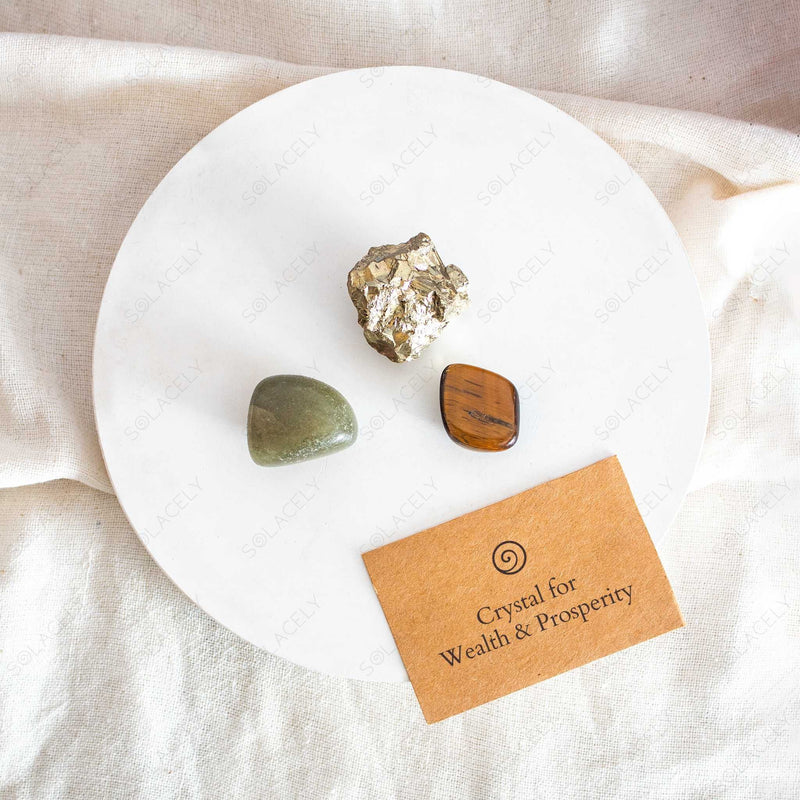
This is why a pyrite ring asks for a little more attention than a quartz or a metal band. The good news is that the care is simple and mostly about one habit, keeping it dry. Get that right and everything else is easy. If you want a refresher on what pyrite is traditionally used for, our guide to crystals for different purposes covers its links to confidence and abundance.
The golden rule: keep it away from water
Everything about pyrite care comes back to moisture, so build your habits around avoiding it. Take the ring off before any activity that gets your hands wet or sweaty. That means washing up, showering, bathing, swimming, doing dishes, cleaning the house, and working out. Even the humidity of a steamy bathroom or a hot, sweaty day is enough to start dulling the surface over time.
Sweat matters more than people expect, because it is both salty and acidic. Wearing a pyrite ring through a workout or a long, hot day exposes it to exactly the conditions it likes least. If your hands tend to get damp, take the ring off sooner rather than later, and never leave it on a wet basin edge or windowsill.
Water is not the only liquid to watch. Hand creams, lotions, perfumes, sunscreen, and household cleaning sprays all leave moisture and chemicals on the surface that dull and react with pyrite. The simple rule is last on, first off: put your ring on after moisturiser, make-up, and perfume have dried, and take it off first when you start any wet or chemical task. It is also wise to remove it before sleep, since hours of skin contact and night sweat give moisture a long, quiet window to work.
Get into a simple rhythm: ring off before water, ring back on when your hands are dry. Keeping a small dish by the sink and the bathroom gives the ring a safe home so it is not left somewhere damp. This one habit does more to protect a pyrite ring than anything else you can do.
How to clean a pyrite ring
Cleaning pyrite is about dry maintenance, not washing. After each wear, wipe the ring gently with a dry, soft cloth, a microfibre or jewellery cloth is ideal, to remove skin oils, dust, and any trace of moisture before you put it away. That quick wipe is the single most useful cleaning step, and doing it regularly prevents most dullness before it starts.
If the ring has picked up a light film or grime, use a barely damp cloth on the metal band only, keeping the pyrite itself dry, then dry everything immediately and thoroughly. Never soak a pyrite ring, never hold it under a tap, and never use ultrasonic cleaners, steam, or chemical jewellery dips. Harsh cleaners and acids will damage the surface quickly.
For stubborn tarnish on the pyrite, a soft, dry toothbrush can lift dust from crevices without scratching. Keep expectations realistic: some darkening is natural ageing for pyrite, and chasing a mirror finish with moisture or chemicals does more harm than good. Gentle and dry always wins. This is the opposite of how you would treat a hardy stone, so our general guide to how to cleanse and charge crystals should be read with pyrite's water rule in mind.
Storing your pyrite ring
How you store a pyrite ring between wears matters almost as much as how you wear it, because most of its life is spent in storage. The goal is dry, still, and separate. Keep it in a dry spot away from bathrooms, windowsills, and anywhere humid, and ideally in a small airtight box or a zip pouch that keeps damp air out.
The single best upgrade is a moisture absorber. Tuck a silica gel packet, the kind that comes with new shoes or supplements, or an anti-tarnish strip into the box with the ring. It quietly soaks up humidity and dramatically slows tarnishing. Replace it every few months, or when it feels spent.
Store the ring on its own, not jumbled with other jewellery. Pyrite at 6 to 6.5 on the Mohs scale can be scratched by harder stones, and it can mark softer metals in return. A lined ring slot or an individual pouch keeps it from knocking against anything. The table below sums up the everyday do's and don'ts.
| Do | Don't |
|---|---|
| Remove before washing, swimming, or exercise | Wear it in the shower, pool, or gym |
| Wipe with a dry, soft cloth after wear | Soak, rinse, or use ultrasonic cleaners |
| Store dry and airtight with silica gel | Leave it in a humid bathroom or by a sink |
| Keep it separate from other jewellery | Toss it in a shared box with harder stones |
| Cleanse with sound, moonlight, or smoke | Cleanse with water or salt |
How to cleanse pyrite energetically (safely)
In crystal tradition, pyrite is linked with confidence, drive, and a wealth mindset, and many people like to cleanse it now and then to reset that intention. The important thing is to use dry methods only, because the popular water and salt techniques that suit quartz would damage pyrite. Never put a pyrite ring in water, salt water, or a salt bed.
The safe options are all moisture-free. Sound works well: a singing bowl or a bell rung near the ring is a gentle, dry way to clear it. Moonlight is another favourite, simply leave the ring on a dry sill overnight, out of morning dew. Smoke from incense or dried herbs is a traditional dry cleanse too. Each takes only a few minutes and carries no risk to the stone.
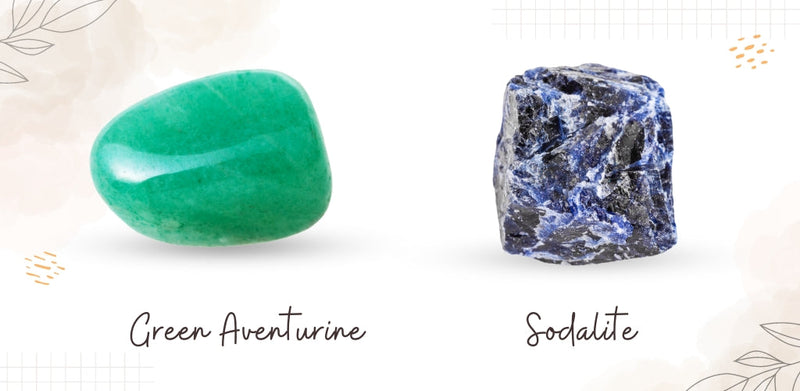
Pair the cleanse with a short intention if that suits you, naming the confidence or focus you want the ring to hold. Because pyrite is a solar-plexus, confidence stone rather than a heart stone, it pairs interestingly with heart or grounding stones for balance, as we explore in green aventurine and sodalite and in smoky quartz and rose quartz. Keep the ritual dry, short, and regular.
Signs of wear and when to worry
A little change over time is normal for pyrite, so it helps to know what is harmless ageing and what needs attention. A slight softening of the shine, or a gentle darkening, is natural and nothing to fret about. Pyrite is a living mineral in the sense that its surface responds to its environment, and a mellow patina is part of its character.
What you want to catch early is active corrosion: a powdery, rusty, or greenish film, a sulfur-like smell, or crumbling at the surface. These are signs of pyrite oxidation that has gone too far, usually from ongoing damp. If you see them, move the ring somewhere dry immediately, add a silica gel packet, and wipe away loose residue with a dry cloth. Catching it early usually halts the process.
If a ring is badly degraded, a jeweller who works with mineral settings can sometimes clean or reseal the piece, though heavily corroded pyrite may not fully recover. Prevention really is everything here. Wear it mindfully, keep it dry, store it well, and a pyrite ring stays a bright, confident piece for a long time. To understand where pyrite sits among other intention stones, our primer on the seven chakras explained gives the wider map.
Sources
Frequently asked questions
About the author


Written by Chetna Sharma, crystal healing practitioner and co-founder of Solacely. Chetna has worked with healing crystals for over a decade and curates Solacely's protective stone collection.