Choosing a crystal for a purpose is simple: decide what you want to work on, calm, love, confidence, protection, or focus, and pick the stone whose traditional meaning matches. Amethyst is used for calm, rose quartz for love, citrine for confidence, black tourmaline for protection, and clear quartz for focus. The stones are reflective tools that anchor an intention and a small daily ritual, not magic and not medicine, and that honest framing is where their real value sits.
Key Takeaways
- Match the stone to the intention: calm (amethyst, lepidolite), love (rose quartz, rhodonite), success and confidence (citrine, pyrite, tiger's eye), protection and grounding (black tourmaline, smoky quartz, hematite), and clarity (clear quartz, fluorite, sodalite).
- The realistic benefit is focus and ritual: a stone gives a wandering mind something to rest on and turns a good intention into a repeatable habit.
- You do not need many crystals. One or two chosen for a clear purpose work better than a drawer full of stones with none.
- Use them by wearing them, holding them in meditation, or placing them where you will see them, and cleanse them now and then to reset your intention.
- Crystal meanings are cultural tradition, not proven science. Treat them as a reflective practice and see a professional for any real health or emotional concern.
How to choose a crystal for your purpose
Start with the question the stone is meant to answer, not the stone itself. Name the one thing you want more of right now, more calm, more self-worth, a steadier focus, a sense of protection, and let that lead you to a crystal whose traditional theme lines up. This is why the same person might keep a calming stone by the bed and a confidence stone on the desk: different corners of life, different intentions.
The second filter is simply what you are drawn to. Colour, shape, and weight matter because you are more likely to actually use a piece you find beautiful. Crystals are affordable at the tumbled-stone end and rise in price with size, clarity, and rarity, so you can begin with an inexpensive stone and never need to spend more to get the benefit. The ritual does the work, not the price tag.
Below, the crystals are grouped by the purposes people reach for most. Read it as a menu rather than a rulebook. If a stone speaks to you for a reason that is not listed, that instinct is a perfectly good guide, and it is a large part of how crystal practice has always worked.
Crystals for calm and stress relief
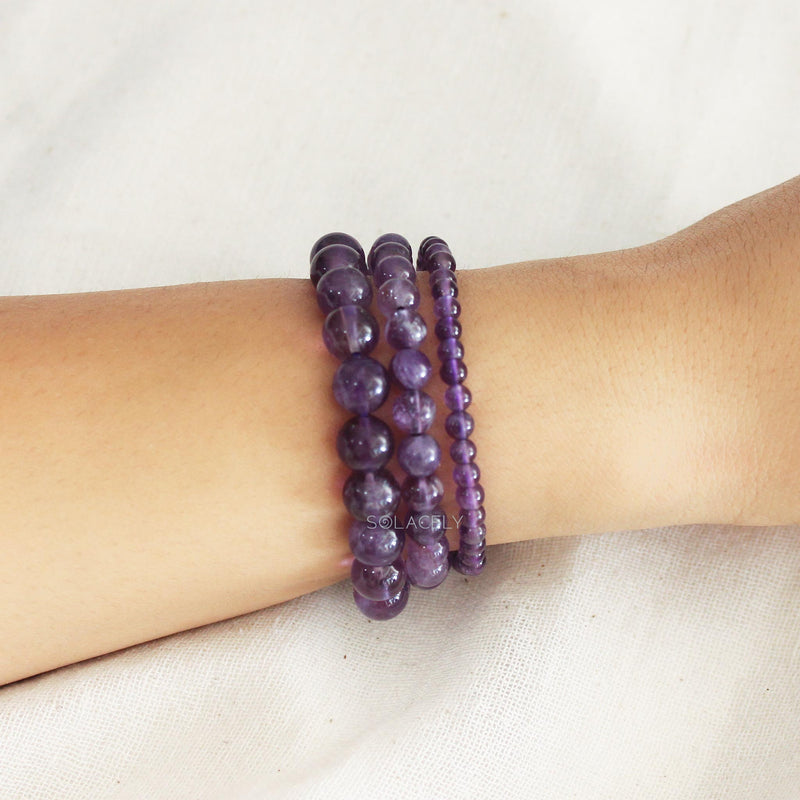
For calm, the classic choices are amethyst and lepidolite, both prized in tradition for easing a busy, anxious mind. Amethyst, a purple quartz, is the most popular calming stone and is often kept by the bed or held during meditation. Lepidolite, a soft lilac-grey stone, naturally contains traces of lithium and is associated with emotional balance and restful sleep.
The honest reason these help is the practice around them. Sitting quietly, breathing slowly, and holding a smooth, cool stone is a form of focused attention, and the U.S. National Center for Complementary and Integrative Health notes that meditation and mindfulness can genuinely help many people manage stress. The crystal is the anchor that makes it easier to pause; the calm comes from the pause.
Blue lace agate and amazonite round out the calming group, both gentle blue-green stones tied to soothing communication and a quieter mind. Keep the practice small and regular: a minute with the stone and a few slow breaths, most days, does more than a rare long session. For a deeper self-love angle, our guide to rose quartz for emotional healing covers the tender, heart-centred side of calm.
Crystals for love and relationships
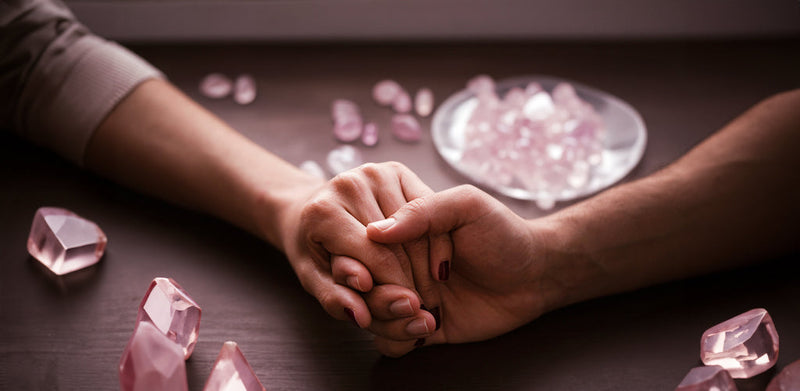
Rose quartz is the undisputed stone of love, used for self-love, compassion, and warmth in relationships, and it is the natural first choice for this purpose. Its soft pink hue is the reason: we instinctively read pink as tenderness, so the stone became a symbol for the heart. Rhodonite, pink with black veining, is its companion for forgiveness and healing old emotional wounds.
These stones are not about summoning romance out of thin air. In practice they work as reminders, held during a kind affirmation or kept where you will see them, to bring a little more patience and openness to the people you love, yourself included. Green aventurine is often paired with rose quartz here, adding gentle optimism and emotional balance to the mix.
If you want to work specifically with the heart, our overview of crystals for the heart chakra gathers the full set, and our note on green aventurine and sodalite explains how green aventurine balances emotion and insight. A love-themed stone also makes a warm, meaningful gift for an anniversary, a wedding, or any occasion where you want to say you were thinking of someone.
Crystals for confidence, success, and abundance
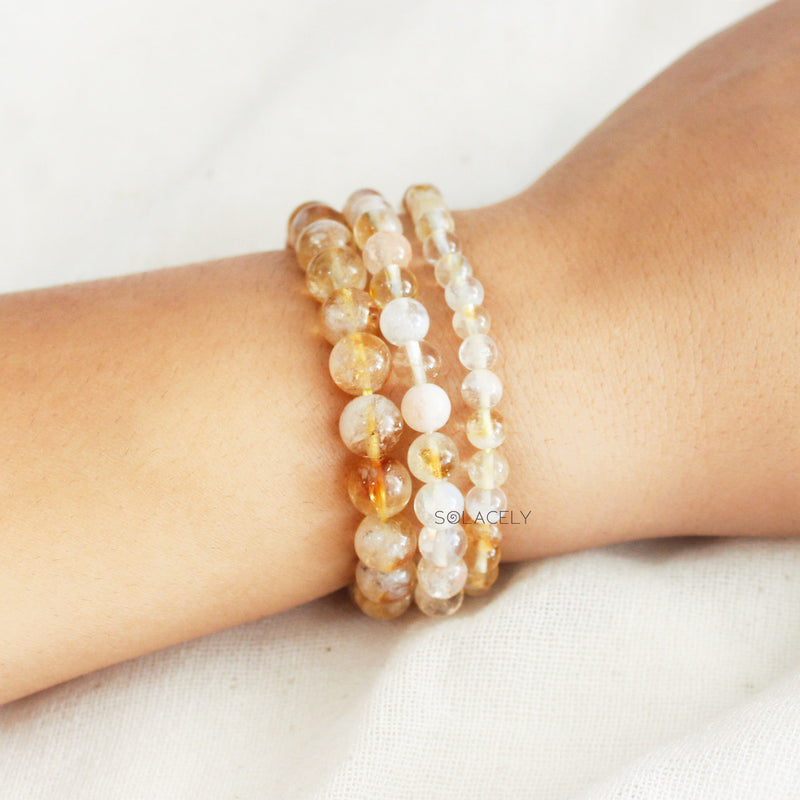
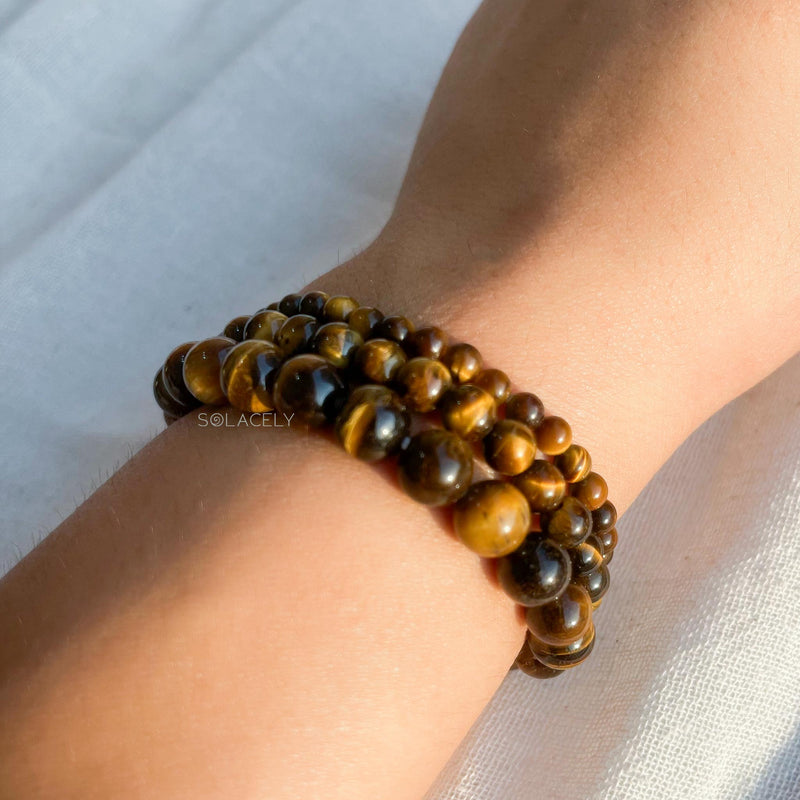
For confidence and success, the golden stones lead: citrine for optimism and abundance, pyrite for drive and a wealth mindset, and tiger's eye for courage and focus. Citrine, a warm yellow quartz, is nicknamed the merchant's stone for its long association with prosperity and fresh starts. Pyrite, with its metallic gold shimmer, became a folk symbol of wealth and is kept as a confidence talisman on a desk.
The realistic mechanism is mindset, not money magic. A stone chosen for confidence is a physical cue to stand a little taller before a meeting, to start the thing you have been putting off, or to keep a goal in view through a busy week. That steady, repeated focus is what quietly moves the needle, and it is a genuinely useful thing for a stone to do.
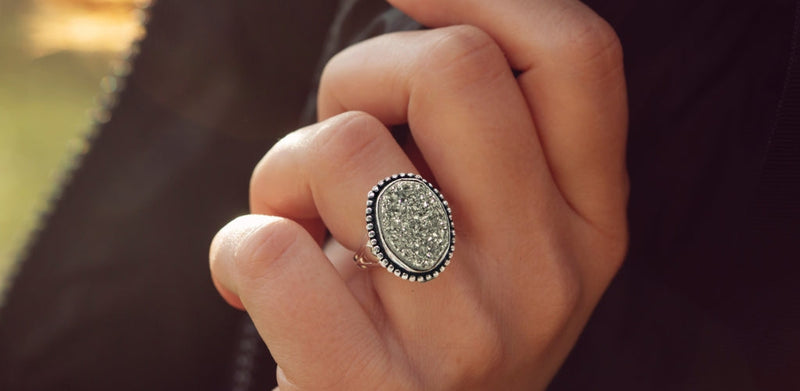
Tiger's eye and sunstone add courage and warmth to this group, both suited to anyone chasing a goal or navigating a bold new chapter. These stones pair well with a short morning intention. If you keep a pyrite piece or ring, our guide to caring for your pyrite ring covers how to keep it bright, since pyrite needs a little more protection from water than quartz does.
Crystals for protection and grounding
When people want to feel shielded and steady, they reach for the dark, heavy stones: black tourmaline, smoky quartz, and hematite. Black tourmaline is the classic protection stone, traditionally kept by a doorway or carried to feel less exposed. Smoky quartz, a soft grey-brown quartz, is used for grounding and for releasing stress. Hematite, silvery and dense, is prized for its weighty, anchoring feel.
Grounding is the felt shift from scattered and up-in-your-head to settled and present, and these stones support it mostly through their weight and their symbolism. Holding a heavy, cool stone and letting your breath slow is a simple, tactile way to come back into your body, which is exactly what people mean when they say a stone helps them feel grounded.
Smoky quartz pairs especially well with rose quartz, grounding balanced with heart-opening, a combination we explore in our guide to smoky quartz and rose quartz. For a broader grounding routine, black tourmaline and hematite are the stones most often kept in a pocket or worn as a bracelet through a demanding day.
Crystals for clarity, focus, and communication
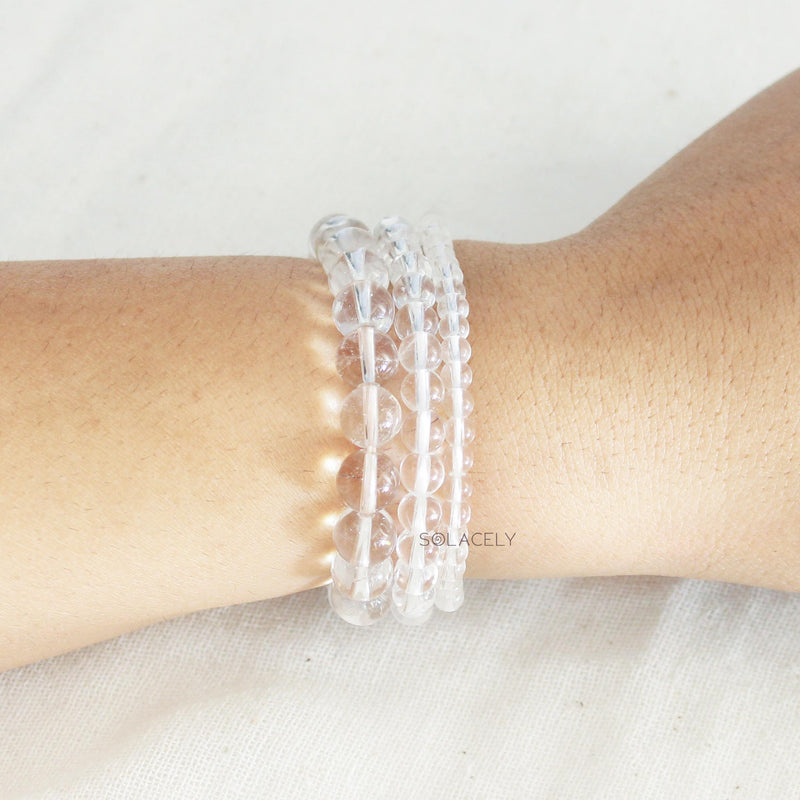
For a clearer head, the go-to stones are clear quartz, fluorite, and sodalite. Clear quartz is called the master healer and is used to sharpen focus and hold an intention, which is why it is often paired with another stone to amplify a purpose. Fluorite, banded in greens and purples, is the classic study stone for cutting through mental clutter. Sodalite, deep blue, is tied to logic, honest thinking, and calm communication.
The useful version of this is a desk ritual: a stone by your laptop that you touch at the start of a focused block, using it as a clear signal to begin. It will not do the work for you, but as a small boundary between rest and concentration, many people find it genuinely helps them settle in. Lapis lazuli and aquamarine extend this group toward wisdom and clear, calm speech.
Sodalite in particular bridges clarity and communication, which is why it is often paired with green aventurine for balanced insight, covered in our note on green aventurine and sodalite. If you want to understand which body centre each theme traditionally maps to, our primer on the seven chakras explained sets out the wider system.
Quick reference: crystals by purpose
Here is the whole menu in one place. Use it to pick a starting stone, then let your own instinct fine-tune the choice. Treat every association as tradition and a focus for intention rather than a guaranteed effect.
| Purpose | Go-to stones | How people use them |
|---|---|---|
| Calm and stress relief | Amethyst, lepidolite, blue lace agate | By the bed, or held in meditation |
| Love and relationships | Rose quartz, rhodonite, green aventurine | Worn, or kept in a shared space |
| Confidence and success | Citrine, pyrite, tiger's eye, sunstone | On a desk, with a morning intention |
| Protection and grounding | Black tourmaline, smoky quartz, hematite | Carried, worn, or kept by a door |
| Clarity and focus | Clear quartz, fluorite, sodalite | At a workspace, before focused work |
| Communication | Sodalite, aquamarine, lapis lazuli | Worn near the throat, or carried |
How to actually use your crystals
Whatever purpose you choose, the methods are the same three: wear the stone, hold it during a quiet moment, or place it where you will see it often. The point of each is contact and reminder, keeping the intention in your day rather than filing it away. Pair the stone with a short, present-tense phrase that names what you are working on, and you turn an object into a practice.
Cleansing is the one bit of upkeep worth knowing. Because a stone is used to hold an intention, people like to reset it now and then, especially a stone that has been through a stressful stretch. Cool running water, a night in indirect moonlight, or sound from a singing bowl are the common, stone-safe methods. Our step-by-step on how to cleanse and charge crystals walks through each option, and if sound appeals to you, our overview of the singing bowl explains how its tone is used to clear a space.
Keep the whole thing light and consistent. One stone, one clear purpose, a minute a day, is a better practice than a shelf of crystals you rarely touch. The habit is the medicine, and the crystal is simply the beautiful thing that reminds you to keep it.
Sources
- Gemological Institute of America, quartz and gemstone varieties. gia.edu
- Encyclopaedia Britannica, quartz, mineral properties and varieties. britannica.com
- National Center for Complementary and Integrative Health (NIH), meditation and mindfulness. nccih.nih.gov
Frequently asked questions
About the author


Written by Chetna Sharma, crystal healing practitioner and co-founder of Solacely. Chetna has worked with healing crystals for over a decade and curates Solacely's protective stone collection.