Smoky Quartz and Malachite


Smoky quartz and malachite are paired for grounded transformation: smoky quartz keeps you steady and settled while malachite, the green stone of change, supports releasing old patterns and moving through transition. Together they are used to make deep change feel less destabilising, staying anchored while you let go of what no longer serves you. It is a grounding, transformative ritual for periods of change, not a magic fix, and malachite needs careful, dry handling because it is soft and contains copper.
Key Takeaways
- Smoky quartz is a grey-brown quartz linked with grounding, protection, and releasing stress, tied to the root chakra.
- Malachite is a banded green copper mineral linked with transformation, protection, and releasing old, stuck patterns, tied to the heart.
- Together they pair a grounded, steady base with transformative release, which suits periods of deep change and letting go.
- The honest benefit is a steadying cue to feel anchored while you change, not a literal effect on events.
- Malachite is soft and contains copper, so keep it dry, never make elixirs, and wash your hands after handling raw pieces.
What are smoky quartz and malachite?
Smoky quartz is a grey-to-brown member of the quartz family. According to the Gemological Institute of America, quartz occurs in many colours, and smoky quartz owes its tint to natural radiation acting on the crystal over long periods. Tradition reads its dark, earthy tone as grounding and protective, tying it to the root chakra and to feeling safe, settled, and present.
Malachite is a vivid green copper carbonate mineral, famous for its swirling light-and-dark banding. As Encyclopaedia Britannica notes, malachite is a copper carbonate hydroxide, a soft mineral long used as an ornamental stone and a green pigment. In crystal tradition that deep, changeable green ties it to the heart and to transformation, protection, and releasing old, stuck patterns.
So one stone is dark and grounding, the other green and transformative. That contrast is the point of the pairing: smoky quartz keeps you anchored while malachite supports change. If you want the wider map of stones by intention, our guide to crystals for different purposes lays them out.
Why pair smoky quartz with malachite?
The pairing works because real change can feel destabilising, and grounding makes it bearable. Malachite is traditionally used to break up old patterns and support transformation, which is powerful but can feel unsettling, while smoky quartz provides the steady, secure anchor that keeps you from feeling swept away. Transformation plus a stable base is the whole idea.
Think of when this suits you: a major life change, breaking a stubborn habit, moving on from an old chapter, or any transition that feels both necessary and overwhelming. Malachite supports the letting go and the shift; smoky quartz keeps your feet on the ground so the change feels like growth rather than chaos. That balance is exactly what deep transition needs.
This gives it a distinctly transformative, change-focused flavour among the smoky-quartz pairings. Where smoky quartz with rose quartz opens the heart, and with howlite quiets the mind, smoky quartz with malachite grounds you through change. We cover those siblings in smoky quartz and rose quartz and smoky quartz and howlite.
Smoky quartz: grounding through change
Smoky quartz is the great grounding stone, traditionally used to feel settled, safe, and present, and to release stress. Its dark, earthy colour reads as the ground itself, warm and stable, which is why people reach for it when they feel scattered or unmoored. During a big change, that grounding is the anchor that keeps you steady when everything else feels in flux.
The honest mechanism is weight and attention. Holding a smooth, cool, slightly heavy stone and letting your breath slow is a simple, tactile way to anchor yourself in the moment, which is what grounding means in practice. When change stirs up anxiety, that anchor gives your feet somewhere solid to stand.
Tradition also frames smoky quartz as protective and stress-releasing, which matters during transition, when old feelings often surface. That steady, secure quality is the base the pairing rests on, because it is far easier to move through change well when you feel anchored rather than adrift.
Malachite: transformation and release
Malachite is the stone of transformation, traditionally used to break up stagnant patterns, support change, and release what no longer serves you. Its swirling, ever-changing bands are read as the flow of transformation itself, which is why tradition treats it as a powerful, sometimes intense, stone for periods of growth and letting go. It is also tied to the heart and to protection.
The honest version of this is reflection and intention. Sitting with malachite while you name an old pattern you want to release, and breathing slowly, is a small mindfulness practice, and the U.S. National Center for Complementary and Integrative Health notes that mindfulness can help many people manage stress and difficult emotions. Naming what you are ready to change is often the real first step.
Because change can leave you feeling exposed, malachite's protective, heart-centred quality pairs well with a grounding stone. Tradition also links it, and other dark stones, to feeling shielded during vulnerable times, a theme we explore in our guide to green aventurine and black tourmaline. Held with smoky quartz, malachite's intensity feels steadier and more manageable.
How to use smoky quartz and malachite together
The pair is simple to use, and the aim is to stay grounded while you change. Keep both stones where they remind you to feel anchored and open to transformation, and pair them with slow breathing and a clear intention. Here are the common ways people combine them, keeping malachite dry and handling polished pieces.
- Transition ritual. Hold both at the start of a change, naming what you release with malachite and feeling grounded with smoky quartz.
- Two-hand hold. Rest smoky quartz in one hand and a polished malachite in the other, breathing slowly as you sit with the change.
- Carry the pair. Keep both in a pouch through a transitional stretch as a grounding, transformative reminder.
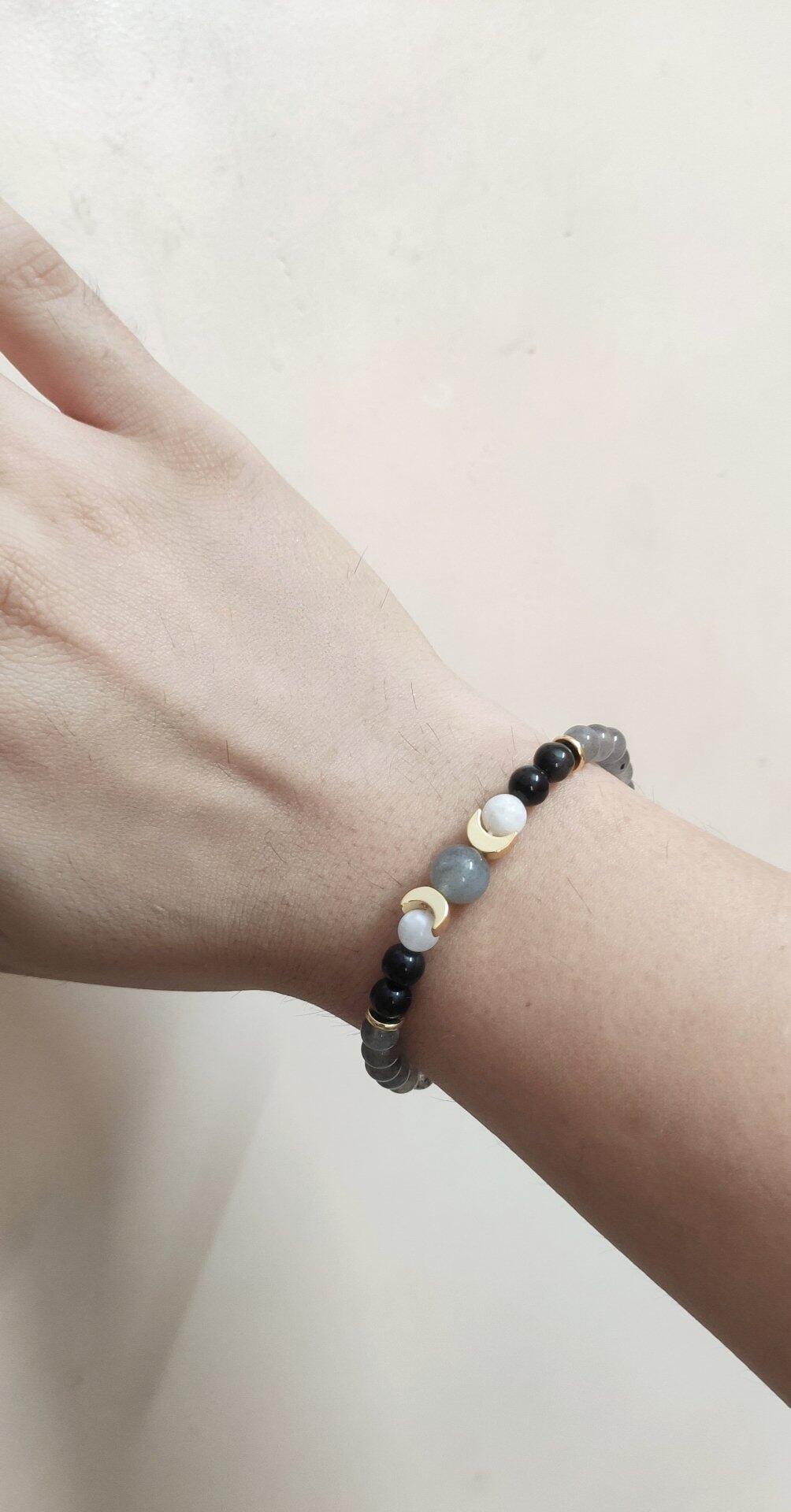
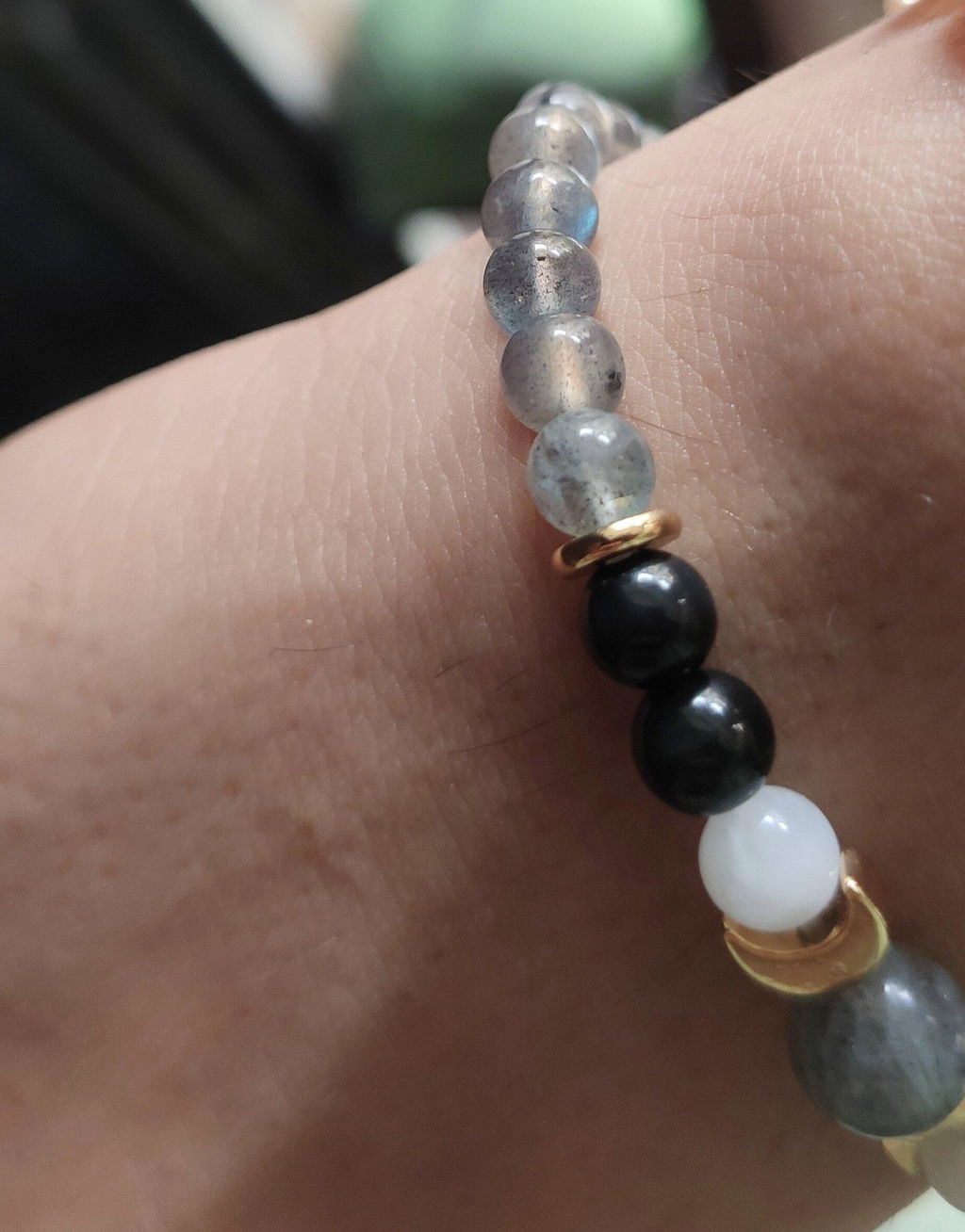
- Wear them. Sealed, polished malachite jewellery with smoky quartz keeps the theme close, worn rather than handled raw.
- Reflection. Sit with the stones while you journal about a pattern you are ready to change.
Whichever you choose, use polished, sealed malachite and keep it away from water, and wash your hands after handling any raw or unpolished piece. To reset the stones, our step-by-step on how to cleanse and charge crystals covers the gentle, dry methods malachite needs, since it must never be cleansed in water.
Choosing and caring for your stones (malachite safety)
This section matters more than usual, because malachite needs careful handling. Smoky quartz is easy: it is quartz, hard at 7 on the Mohs scale, and handles daily wear and a wipe with a soft cloth. Malachite is very different. It is soft, at about 3.5 to 4 on the Mohs scale, so it scratches and chips easily, and it is a copper mineral, which makes it toxic if ingested or inhaled as dust.
Because of that, follow a few firm rules. Never put malachite in water, and never make crystal elixirs or drinks with it, since water can leach toxic copper and also damage the stone. Handle raw or unpolished malachite as little as possible, keep the dust away from your mouth and eyes, and wash your hands after touching it. Polished, sealed pieces are safest for everyday use, and jewellery keeps it off bare, damp skin.
Keep malachite dry, out of strong sunlight, and away from acids, heat, and chemicals, and store it apart from harder stones that could scratch it. Wipe it only with a dry, soft cloth. To cleanse it, use dry methods, sound from a singing bowl or a brief moment in indirect light, never water or salt. Treated with this care, malachite is a safe, beautiful stone to keep, and its striking green banding makes it one of the most eye-catching stones you can own.
Common mistakes with this pairing
Most mistakes here are about safety and handling, since malachite is delicate and toxic if misused. Keep these few in mind and the pair stays a safe, grounding companion for change.
- Putting malachite in water. Never do this. It damages the soft stone and can leach toxic copper. Use dry cleansing only.
- Making an elixir. Never make crystal water or drinks with malachite. Copper minerals are not safe to ingest.
- Handling raw pieces carelessly. Keep raw or powdered malachite away from your mouth and eyes, and wash your hands after touching it.
- Forcing change too fast. Malachite's transformation is intense. Let smoky quartz keep it grounded, and take change at a sustainable pace.
- Storing it with hard stones. At 3.5 to 4 on the Mohs scale, malachite scratches easily. Store it separately and padded.
Frequently Asked Questions
What are smoky quartz and malachite good for together?
Traditionally the pair brings grounded transformation: smoky quartz keeps you steady and anchored, while malachite supports releasing old patterns and moving through change. Together they suit periods of deep transition and letting go, making change feel less destabilising. Realistically, they work as a steadying cue to feel grounded while you change, not as a literal effect on events.
What is malachite used for?
Malachite is the stone of transformation, used to break up stagnant patterns, support change, and release what no longer serves you, and it is tied to the heart and protection. The honest benefit is reflection: sitting with it while you name an old pattern to release is a small mindfulness practice. Because it contains copper, handle it dry and carefully, never in water.
Is malachite toxic or safe to handle?
Malachite is a copper mineral and is toxic if ingested or inhaled as dust, so it must be handled with care. Never make crystal elixirs or put it in water, keep raw or powdered malachite away from your mouth, eyes, children, and pets, and wash your hands after handling raw pieces. Polished, sealed stones and jewellery are safe for everyday use.
Can malachite go in water?
No. Malachite must never go in water. It is soft and reacts with water, which can damage the stone and leach toxic copper, so avoid water cleansing, elixirs, and damp skin. Cleanse it only with dry methods like sound from a singing bowl or a brief moment in indirect light, and wipe it with a dry, soft cloth.
How do I use smoky quartz and malachite together?
Hold both at the start of a change, naming what you release with malachite and feeling grounded with smoky quartz, or hold one in each hand during a slow-breathing pause. You can also carry the pair, wear sealed malachite jewellery, or journal with them. Use polished pieces, keep malachite dry, and wash your hands after handling any raw stone.
Do these crystals really help you change?
There is no scientific evidence that crystals cause change through their own energy. What genuinely helps is the practice: naming an old pattern, grounding, and reflecting calmly, a form of mindfulness that supports letting go. Understood that way, smoky quartz and malachite are a steadying tool for transition. Real change comes from your own choices and, when needed, professional support.
Sources
- Gemological Institute of America - Quartz description and colour varieties (smoky quartz): https://www.gia.edu/quartz
- Encyclopaedia Britannica - Malachite, copper carbonate mineral: https://www.britannica.com/science/malachite
- National Center for Complementary and Integrative Health (NIH) - Meditation and Mindfulness: What You Need To Know: https://www.nccih.nih.gov/health/meditation-and-mindfulness-what-you-need-to-know
About the author