Quartz is silicon dioxide, one of the most abundant minerals on Earth, and it comes in two broad families. The coarse-crystalled varieties include clear quartz, amethyst, citrine, rose quartz and smoky quartz. The fine-grained ones include agate, jasper, carnelian and onyx. All of them sit at 7 on the Mohs scale.
Key takeaways
- Every quartz variety is silicon dioxide. The differences are colour, trace elements and crystal size.
- Macrocrystalline quartz has visible crystals: clear, amethyst, citrine, rose, smoky, ametrine and rutilated.
- Cryptocrystalline quartz has crystals too small to see: chalcedony, agate, jasper, carnelian and onyx.
- All quartz sits at 7 on the Mohs hardness scale, which is why it wears so well as jewellery.
- Amethyst, rose quartz and citrine fade with long hours of hard sun, so charge them in moonlight.
What is quartz?
Quartz is silicon dioxide, a simple compound of silicon and oxygen, and it makes up a large share of the Earth's continental crust. That abundance is why quartz is both everywhere and affordable, and why so many of the stones on a crystal shelf turn out to be members of the same family.
What separates one variety from another is usually a trace element or a small structural quirk. Iron makes amethyst purple and citrine golden. Titanium or manganese gives rose quartz its blush. Natural radiation darkens smoky quartz. The base material never changes, which is why they all share the same hardness and the same durability.
The family splits in two by crystal size. Macrocrystalline quartz grows crystals you can see, the points and clusters people picture when they hear the word crystal. Cryptocrystalline quartz is made of crystals far too small to see individually, giving a smooth, waxy, opaque stone instead.
The macrocrystalline quartz varieties
These are the ones with visible crystals, the points, clusters and polished spheres. Seven cover almost everything you will meet, and they differ mainly in colour and in what they are traditionally kept for.
| Variety | Colour | Traditionally kept for |
|---|---|---|
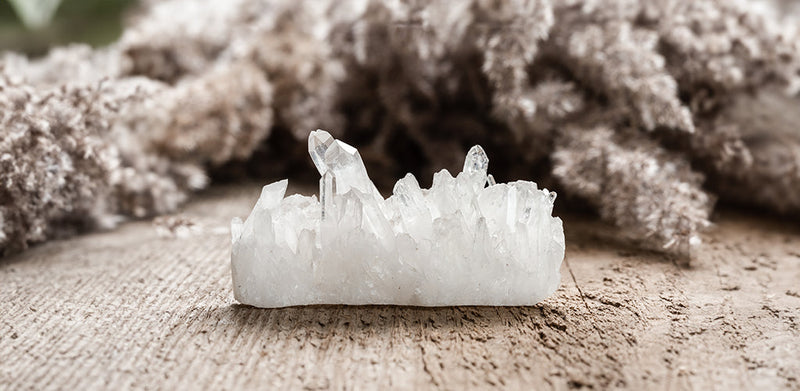
| Clear quartz | Colourless to milky white | Clarity and amplifying intention |
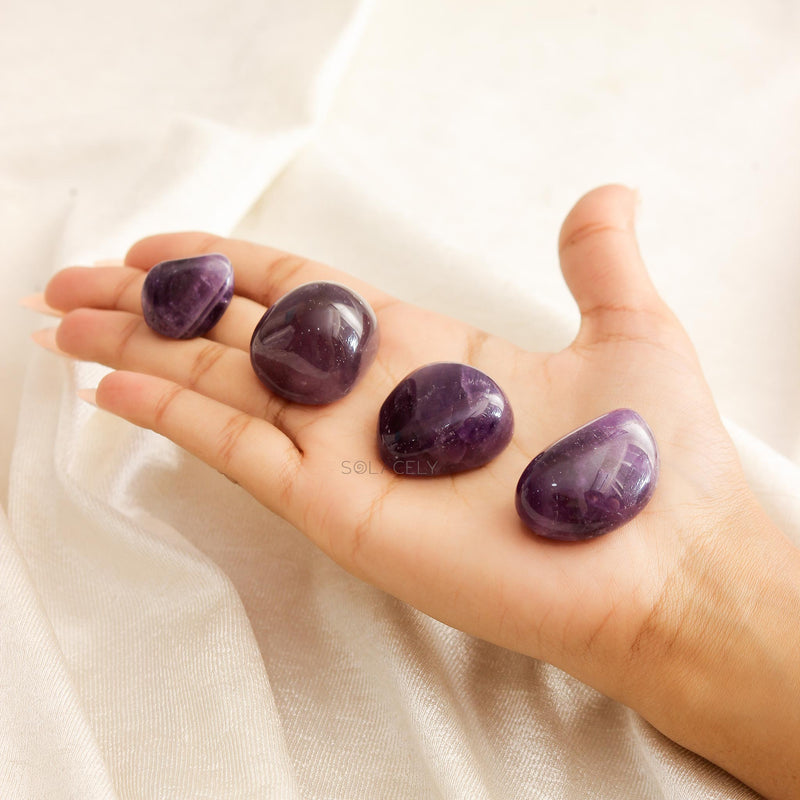
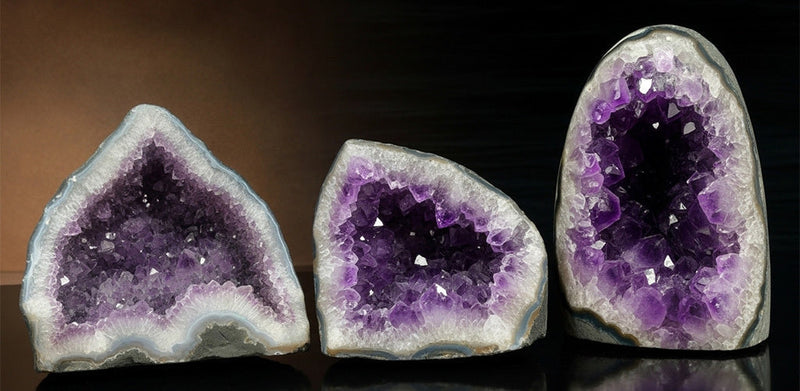
| Amethyst | Lilac to deep purple | Calm, rest, steady judgement |
| Citrine | Lemon to golden amber | Confidence, abundance, optimism |
| Rose quartz | Pale to deep pink | Self-love, gentleness, open-heartedness |
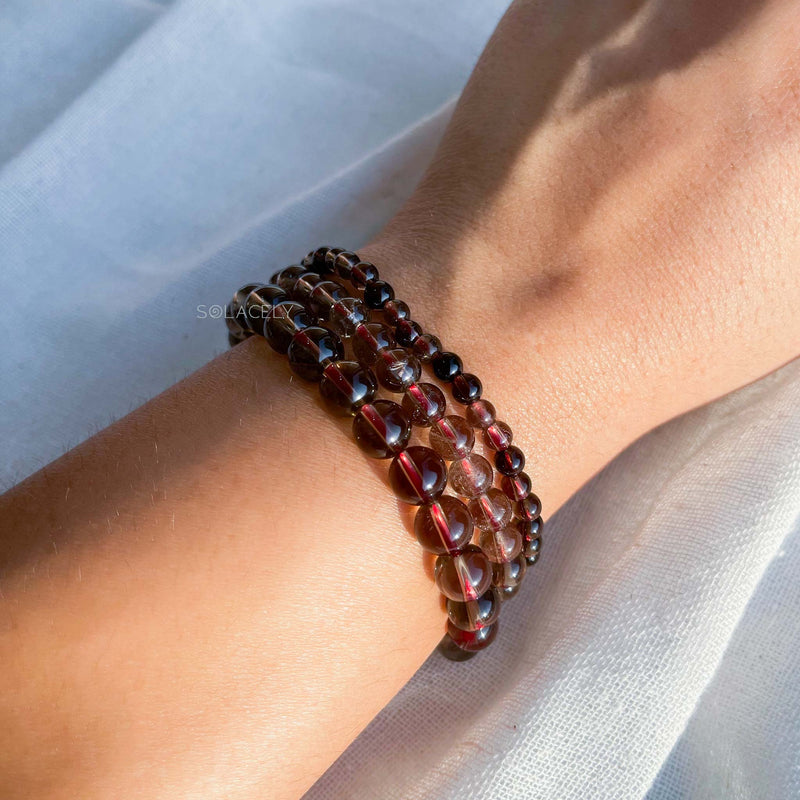
| Smoky quartz | Pale grey to deep brown | Grounding and releasing what is held |
| Ametrine | Purple and gold in one crystal | Calm together with warmth |
| Rutilated quartz | Clear with golden needles | Direction and momentum |
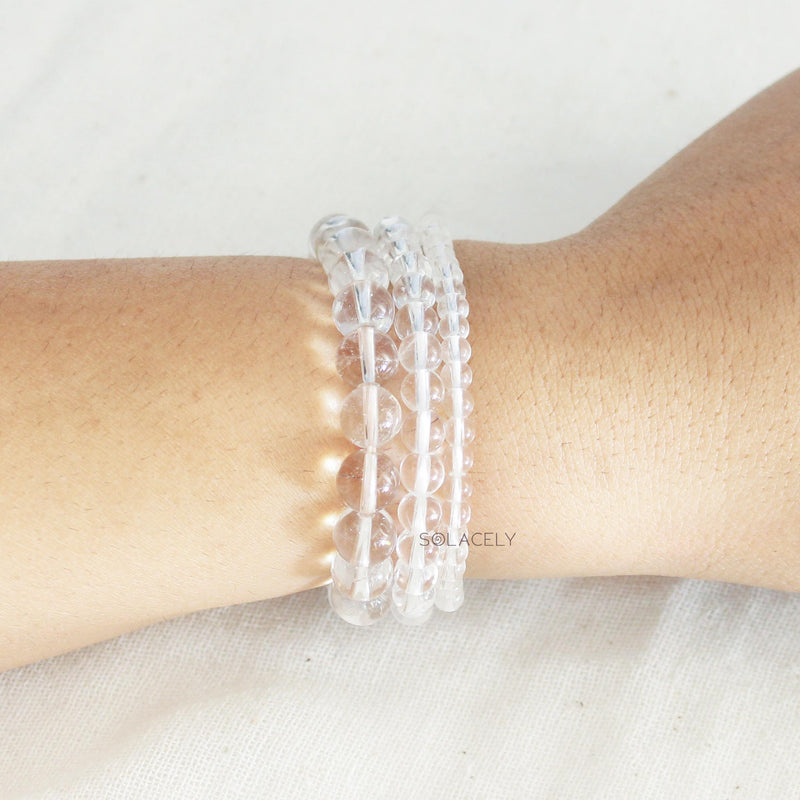
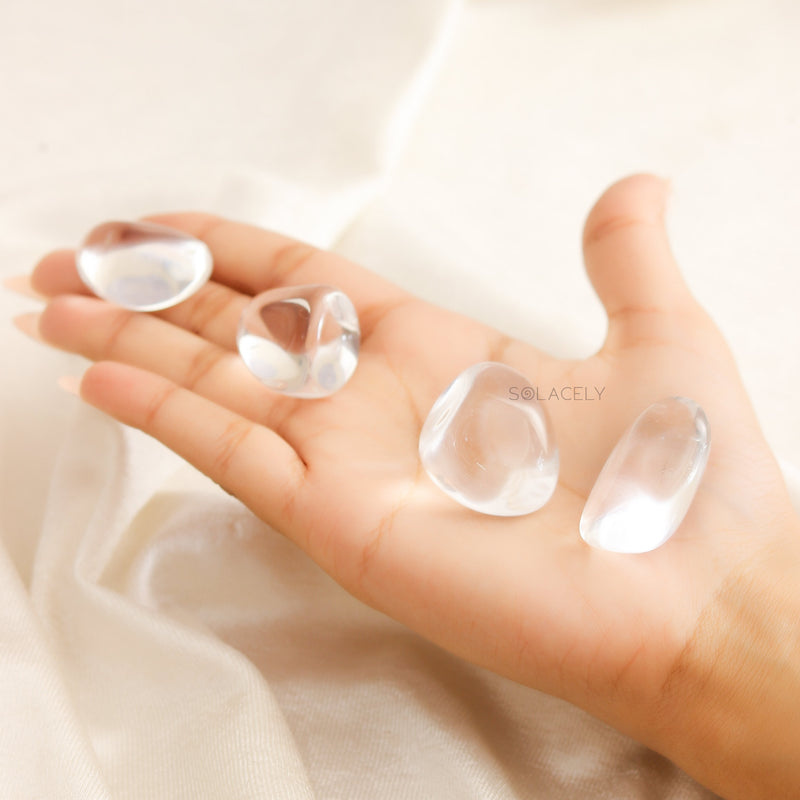
Clear quartz is the one most people start with, kept in tradition as the amplifier that strengthens whatever intention sits beside it. Our guide to clear quartz meaning and properties covers it in full.
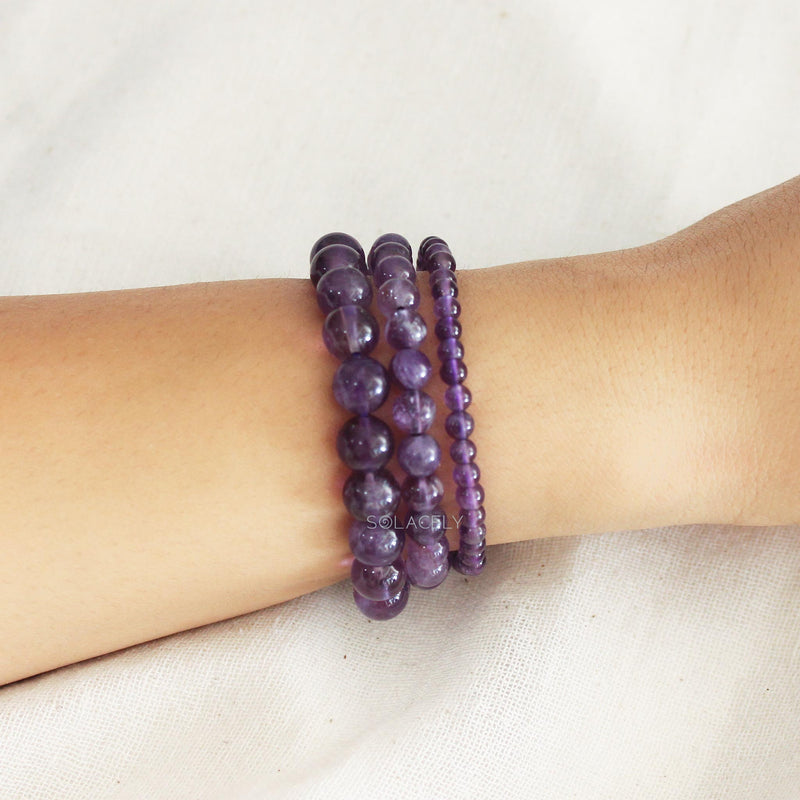
Amethyst is the calm one and the February birthstone, treated in depth in our guide to amethyst meaning and properties. Citrine is the warm golden variety and the merchant's stone. Warming quartz to bring out its golden tones is a long established and entirely stable practice across the coloured stone trade, so choose the shade you actually want to look at.
Smoky quartz is the grounding member of the family, browned by natural radiation, and our note on smoky quartz covers it. Rutilated quartz carries fine golden needles of the mineral rutile, and ametrine grows purple and gold in a single crystal.
The cryptocrystalline quartz varieties
These are the fine-grained members, made of crystals too small for the eye to separate. The result is a smooth, waxy, usually opaque stone that takes a beautiful polish and suits carving, beads and cabochons rather than points.
Chalcedony is the family name. Agate is the banded form, its concentric rings laid down layer by layer, and it is traditionally the steadying stone. Carnelian is the warm orange-red variety, kept for courage and creative momentum. Onyx is the black form with straight banding, long associated with resolve.
Jasper is the opaque, heavily included group, coming in reds, greens, browns and patterned varieties such as picture jasper and ocean jasper. Chrysoprase is the apple-green one and bloodstone the dark green speckled with red. All of them are as hard as their showier cousins.
The practical difference is what each family suits. Points and clusters come from the macrocrystalline side, which is why amethyst geodes and clear quartz towers look the way they do. Beads, cabochons, coasters and carved pieces mostly come from the cryptocrystalline side, because a stone with no visible crystal boundaries polishes to an even, unbroken surface. Neither is better, and a shelf usually ends up holding both.
What each variety is kept for
The traditional associations follow colour closely, which is a useful shortcut. Purple quartz settles, gold quartz warms and encourages, pink quartz softens, brown and black quartz ground, and colourless quartz clarifies and amplifies whatever it is paired with.
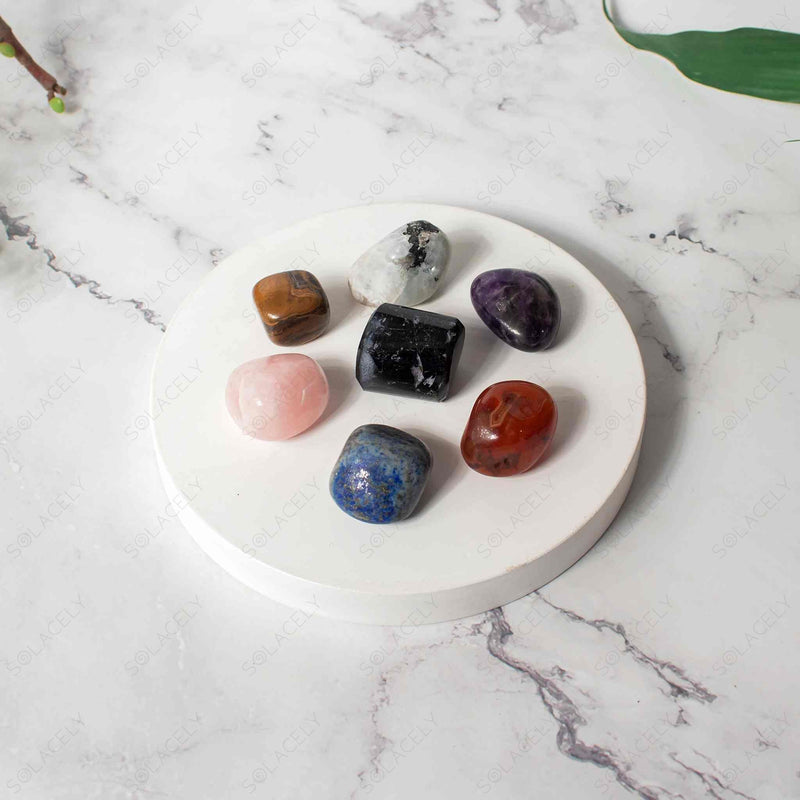
That means a small set covers most of what people come looking for. Amethyst for a mind that will not quiet, citrine for confidence, rose quartz for self-kindness, smoky quartz for a heavy week, clear quartz alongside any of them to sharpen the intention. Four or five stones is a complete working collection, and most people never need more than that.
Because everything in the family shares the same chemistry, quartz varieties combine easily in tradition. Clear quartz with anything is the standard pairing. Amethyst with citrine gives calm with warmth. Rose quartz with amethyst is the gentlest combination there is. Our guide to rose quartz benefits and properties covers the pink one in detail.
Choosing and caring for quartz
Choose by colour and by intention rather than by size. A small tumble you actually carry does more than a large cluster you forget about. For jewellery, quartz at 7 on the Mohs scale is genuinely practical, hard enough for rings and bracelets worn every day.
Care is easy with one exception. Warm soapy water and a soft cloth clean any quartz, and the family shrugs off ordinary handling. The exception is light: amethyst, rose quartz and citrine all fade with long hours of hard direct sun, and that fading does not come back. Keep them off south-facing sills.
For cleansing in the spiritual sense, sound, moonlight, incense smoke and dry salt all suit quartz. Moonlight is the traditional choice for the colour-sensitive varieties, since it charges without risking the tone. Our step-by-step on how to cleanse and charge crystals sets out each method in order.
Quartz crystals are worn and kept as part of a long-standing spiritual and cultural tradition. They are not a medical device or treatment, and they do not diagnose, treat, cure or prevent any condition. Nothing here replaces advice from a doctor or other qualified professional, and you should never delay or stop medical care because of a crystal. Small tumbles and beads are a choking risk for babies and young children, and stones should never be placed in drinking water.
Sources
- Geology.com, Quartz: composition, varieties and physical properties
- Gemological Institute of America, Gem Encyclopedia
Written by Chetena Sharma. Reviewed by the Solacely editorial team.
Frequently asked questions
About the author


Written by Chetna Sharma, crystal healing practitioner and co-founder of Solacely. Chetna has worked with healing crystals for over a decade and curates Solacely's protective stone collection.