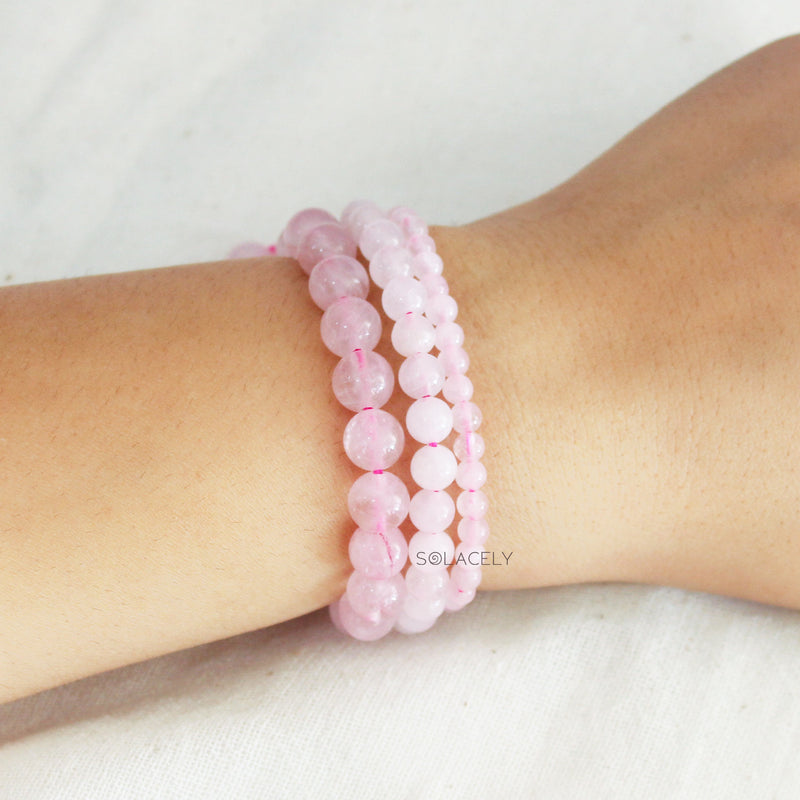
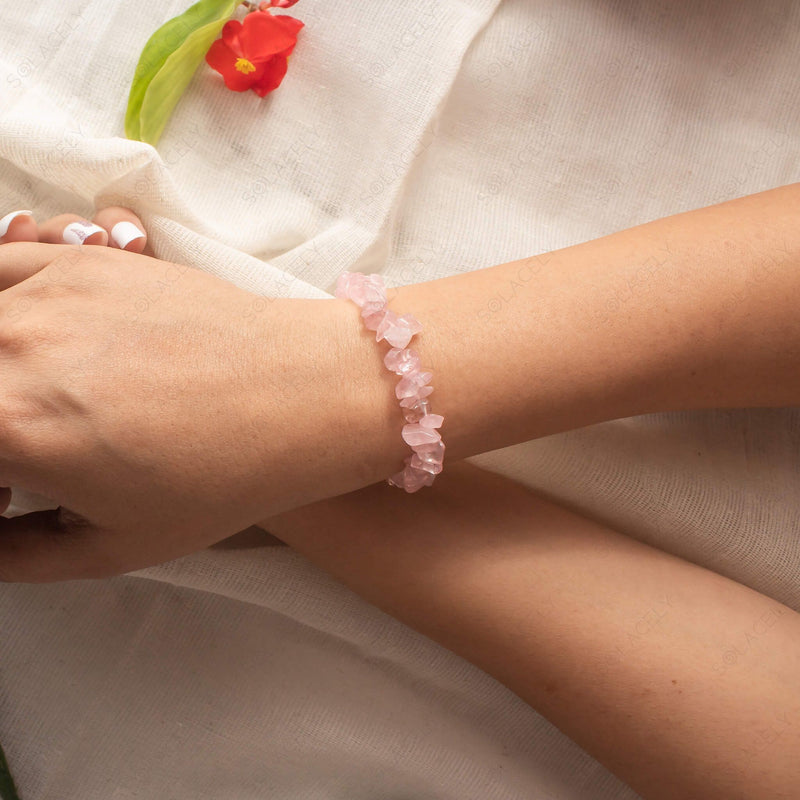
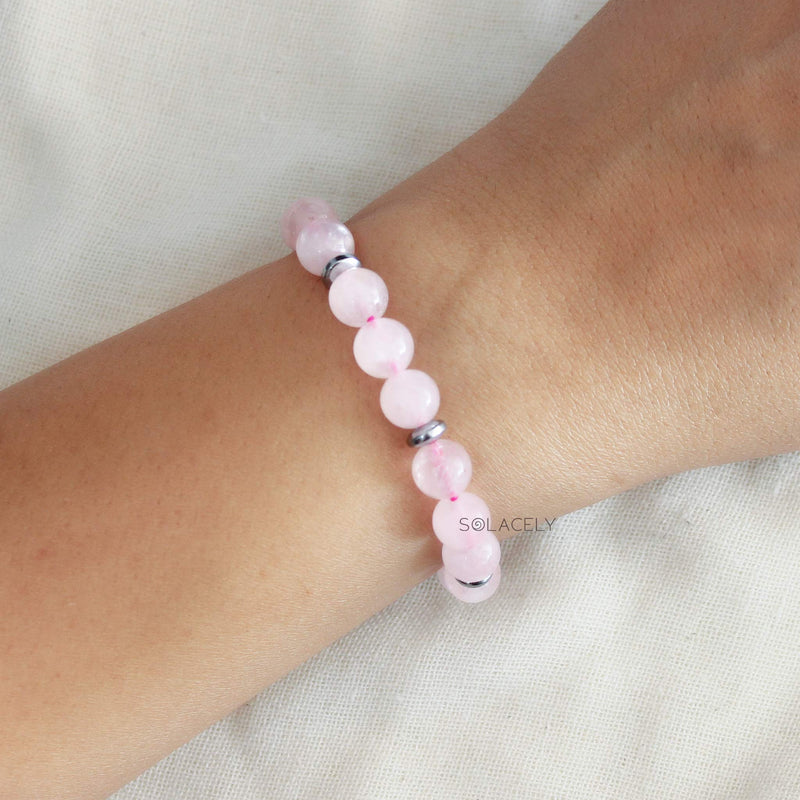
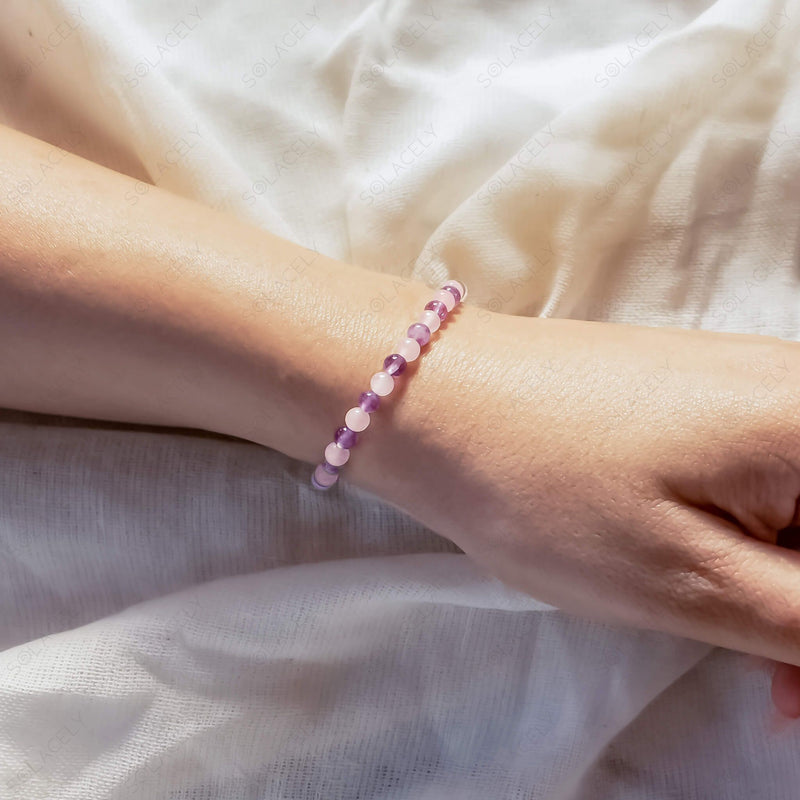
Rose quartz is the pink variety of quartz, coloured by microscopic inclusions that give it a soft cloudy glow. Its traditional association is self-compassion far more than romance, which is a smaller claim than most writing makes and a considerably more useful one.
Key takeaways
- Rose quartz is quartz coloured by microscopic inclusions, which is why the pink is cloudy rather than clear.
- Traditionally kept for self-compassion rather than for attracting someone.
- Durable at 7 on the Mohs scale with no cleavage, so it takes any format including daily rings.
- In chakra practice it belongs to the heart, alongside green aventurine.
- Keep it out of long strong sun, which softens the pink over months.
What rose quartz actually is
Rose quartz is quartz with a pink cast, and the Gemological Institute of America attributes that colour to microscopic inclusions distributed through the stone rather than to a trace element in solution.
That detail explains the thing people most often ask about. Rose quartz is almost always cloudy or translucent rather than transparent, because those same inclusions scatter light. Cloudiness is normal, expected, and not a sign of poor material.
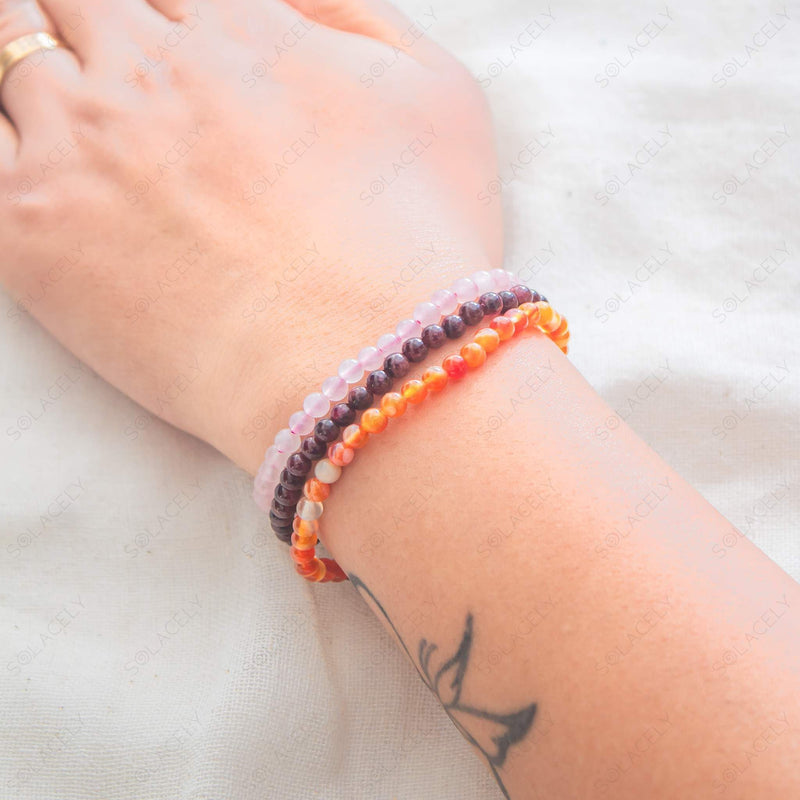
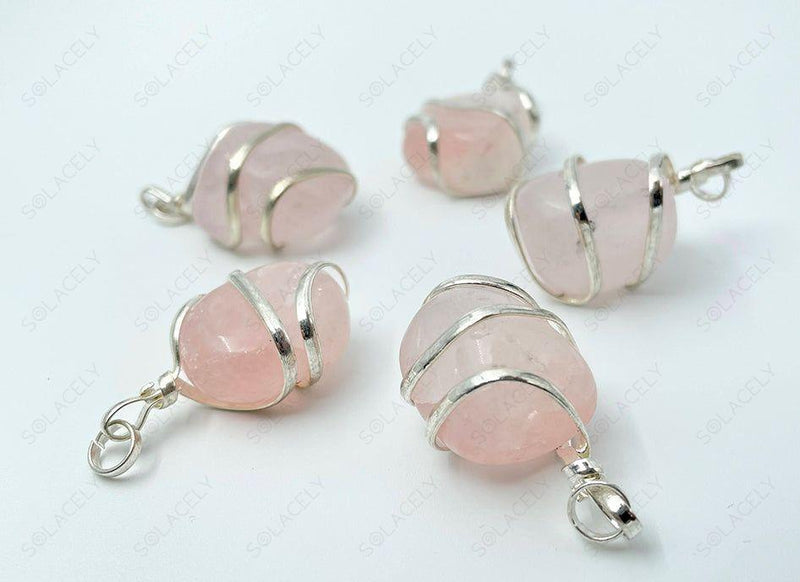
Practically it is one of the easiest stones to live with. At 7 on the Mohs scale with no cleavage, it survives bracelets, pendants, rings and being dropped, which matters for a stone people tend to carry rather than display.
What rose quartz is kept for
Most people arrive at rose quartz expecting a romance stone, and the traditional association is quieter and more inward than that. It is kept for compassion turned toward yourself: how kindly you speak about your own difficulties.
That reframing is what makes it useful. Wanting to be treated well by someone else is a hope you cannot act on directly. Being less harsh with yourself is something a daily reminder can genuinely support, and it happens to be what most people actually need when they reach for this stone.
It is the stone people keep through a difficult stretch rather than one they buy for a specific occasion. For that use in detail, see rose quartz for healing heartache.
The heart chakra placement
In chakra practice rose quartz belongs to the heart, the centre associated with openness, connection and the capacity to want things. It shares that placement with green aventurine, and the two are often recommended together.
They are not duplicates. Aventurine is turned outward, toward opportunity and the willingness to attempt something. Rose quartz is turned inward, toward how you treat yourself while attempting it. A set with both covers the whole centre rather than doubling up on half of it.
That pairing is the most common recommendation for anyone building a heart-focused set, and both stones are inexpensive enough that starting with the two of them is a reasonable first purchase. Crystals for emotional healing covers the wider group.
Daily practices people actually keep
| The practice | Where the stone lives | Why it survives busy weeks |
|---|---|---|
| Morning hold | Where you get ready | Attached to something already happening |
| Pocket carry | In a coat or bag | Reachable on a difficult commute |
| Worn daily | Bracelet or pendant | Needs no remembering at all |
| Bedside | Nightstand, not bedding | Marks the end of a hard day |
| Face tool | Fridge, then the bathroom | Ritual plus a few unhurried minutes |
What all of these have in common is smallness. A practice that takes thirty seconds gets kept through the weeks when it is most needed, and one that takes twenty minutes does not.
Rose quartz as a face tool
Rose quartz is one of the better materials for rollers and gua sha tools, and the reasons are practical. It is hard, non porous when properly polished, and it holds cold well, which is the whole point of chilling one.
Use it sensibly. Chill the tool in the fridge rather than the freezer, apply a facial oil or serum first so it glides rather than drags, work from the centre outward with light pressure, and wash and dry it afterwards. Three to five minutes is plenty.
The one firm rule is to skip it entirely over active acne, broken skin, sunburn or an eczema flare, since rolling over inflamed skin makes things worse. Any depuffing comes from the cold and the massage rather than from the mineral, and that is a fair claim that needs no dressing up.
Care and cleansing
Warm water, mild soap, a soft brush and a full dry is the entire method. At 7 on the Mohs scale rose quartz shares storage with most of a collection without picking up scratches, which makes it unusually low maintenance.
Its one real vulnerability is light. Long hours of strong direct sunlight soften the pink over months, so a bright windowsill is the least kind long-term home despite being the most obvious one. A shelf a little back from the window does the same job for you.
For energetic cleansing, moonlight, sound or a rest on selenite all suit it, and none of them cost the stone anything. Salt water is unnecessary here and slightly hard on the polish over time.
Choosing a piece
Rose quartz ranges from a barely-there blush to a strong dusky pink, and price tracks depth and evenness of colour more than size. All of that range is genuine rose quartz, so this is a question of taste rather than quality.
What is worth checking is the polish and the drill holes on beaded pieces, where chipping shows first. Look at a bracelet under a light and turn it: evenly finished beads with clean holes cost very little more and last considerably longer.
Be a little cautious of anything sold as an unusually vivid pink at a premium, and simply ask whether the colour is natural. Reputable sellers answer that question plainly, and the ordinary cloudy pink is what the tradition describes anyway.
Who this stone suits
It suits people who are harder on themselves than they would be on a friend in the same situation. That is the most accurate description of what rose quartz is traditionally kept for, and it is a far more common difficulty than the romance framing suggests.
It suits less well anyone looking for drive or grounding weight. Rose quartz is gentle by character, and somebody who needs to feel steady or to get moving will find it beside the point. For that, a dark grounding stone or a warm golden one does considerably more.
If self-worth specifically rather than general kindness is the aim, crystals for self-esteem narrows the field usefully.
The properties described here reflect traditional and cultural belief around crystals. They are offered for reflection and wellbeing and are not medical advice, a diagnosis, or a treatment for any condition. Do not use face tools over broken, inflamed or infected skin, and see a GP or dermatologist for any persistent skin concern. Keep small stones away from young children, and never place crystals in drinking water.
Sources
Written by Chetena Sharma. Reviewed by the Solacely editorial team.
Frequently asked questions
About the author


Written by Chetna Sharma, crystal healing practitioner and co-founder of Solacely. Chetna has worked with healing crystals for over a decade and curates Solacely's protective stone collection.