Black tourmaline is used in meditation as an anchor. You hold it or place it at your feet, and its weight gives scattered attention somewhere concrete to return to. Traditional practice assigns it to the root, which is why it is chosen for settling rather than for expansive or visionary sitting.
Key takeaways
- Black tourmaline, or schorl, is the most common member of the tourmaline group, hardness 7 to 7.5 on the Mohs scale.
- The name comes from the Sinhalese toramalli, meaning mixed gems.
- Its meditation role is grounding: an anchor for wandering attention.
- Hold polished pieces; place raw specimens rather than gripping them.
- Ten to fifteen minutes daily beats an occasional long session.
Where the name comes from
Tourmaline takes its name from the Sinhalese word toramalli, meaning mixed or assorted gems. Dutch merchants carried the term into European use in the eighteenth century, applying it to parcels of assorted coloured stones traded from Sri Lanka.
It is a fitting name for the family. Tourmaline spans a wider colour range than almost any other gem group, from black schorl through pink, green, blue, and the famous watermelon crystals that carry two colours in one piece. A merchant's word for a mixed shipment turned out to describe the group perfectly.
What black tourmaline actually is
Black tourmaline is properly called schorl, and it accounts for the overwhelming majority of tourmaline found in nature. Tourmaline is a complex borosilicate group whose members vary widely in composition, which is why the family spans such a range of colour.
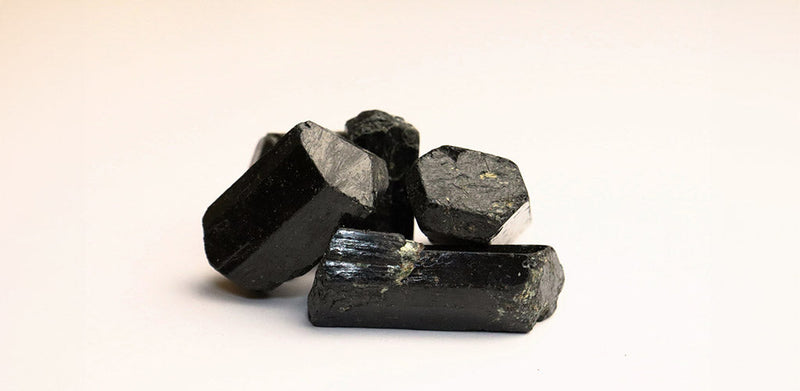
Two physical facts shape how it is used. It grows in long striated columns with parallel grooves running the length of the crystal, giving raw pieces an almost machined look. And tourmaline is pyroelectric and piezoelectric: it develops an electrical charge when heated or put under pressure. That property is real, documented physics, and it is part of why the stone gathered its energetic reputation centuries before anyone had the vocabulary to describe it.
For the wider profile, see our black tourmaline meaning and properties guide.
Why it is used for grounding rather than insight
Crystal practice divides meditation stones roughly into two camps. Amethyst, clear quartz and selenite are kept for expansive sitting: opening, receiving, going up and out. Black tourmaline, hematite and smoky quartz are kept for the opposite: settling, coming back into the body, going down.
The choice depends on what is actually difficult. If your sitting practice keeps failing because your mind sprints, an opening stone works against you. Black tourmaline is the conventional answer for agitation, restlessness, and the specific feeling of being unable to land. It is also the usual recommendation for people who find meditation leaves them unmoored rather than calm.
How to meditate with black tourmaline, step by step
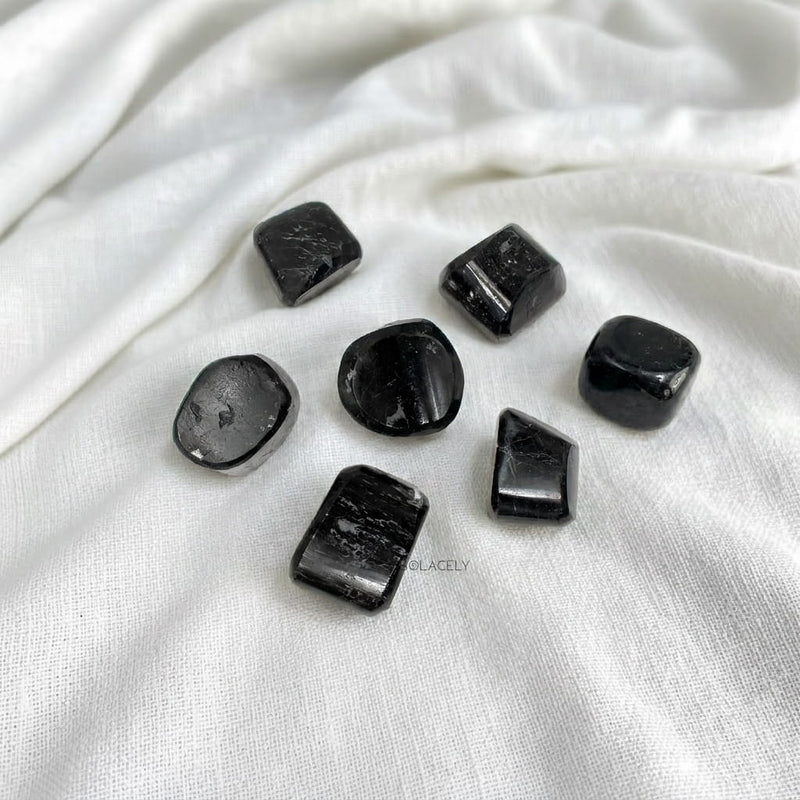
- Choose the form. A tumbled palm stone for holding, or a raw specimen for placing.
- Sit or lie down. Feet flat if seated. The point is contact with the ground.
- Place the stone. One in each palm, or a single piece on the floor between your feet, or at the base of the spine if lying down.
- Breathe out longer than you breathe in. Four in, six out is a common count.
- Use the stone when you drift. Put your attention on its weight and temperature, then return to the breath.
- Ten to fifteen minutes. Set a timer so you are not clock-watching.
What you are training is the returning rather than the arriving, and the stone gives the return somewhere to land. Our broader crystals for meditation guide covers which stones suit which difficulty.
Placement options
| Placement | Traditional use | Best form |
|---|---|---|
| Held in both palms | General settling | Tumbled or polished |
| Between the feet | Root grounding | Raw or tower |
| Base of the spine, lying down | Deep grounding, body scan | Tumbled |
| Four corners of the mat | Defining a practice space | Small raw pieces |
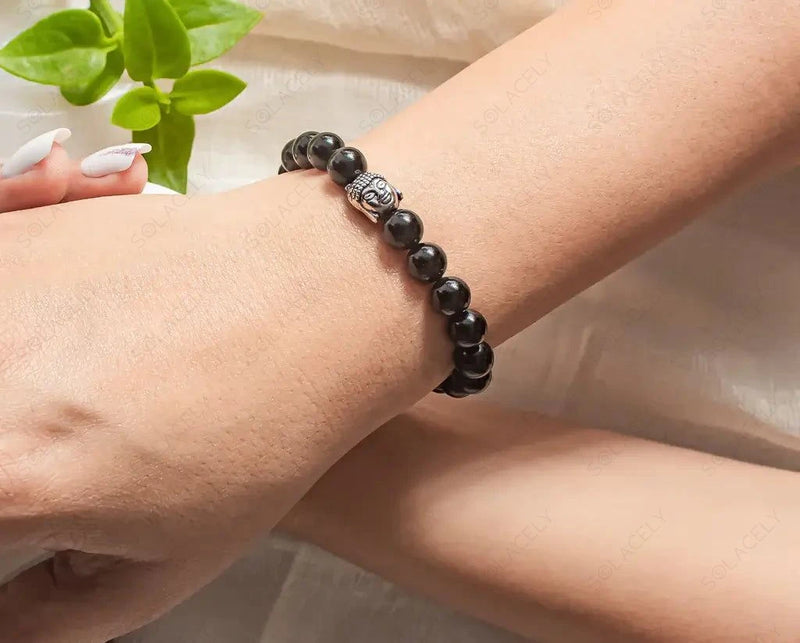
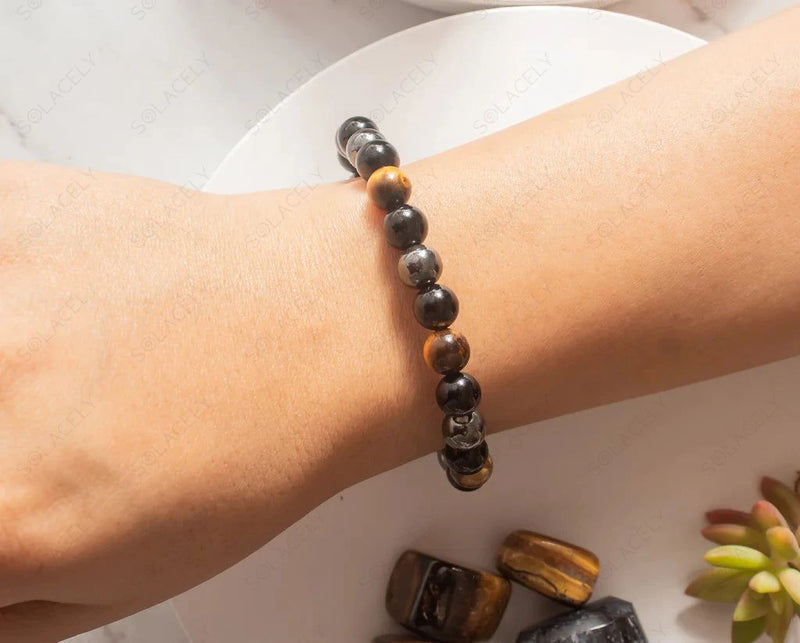
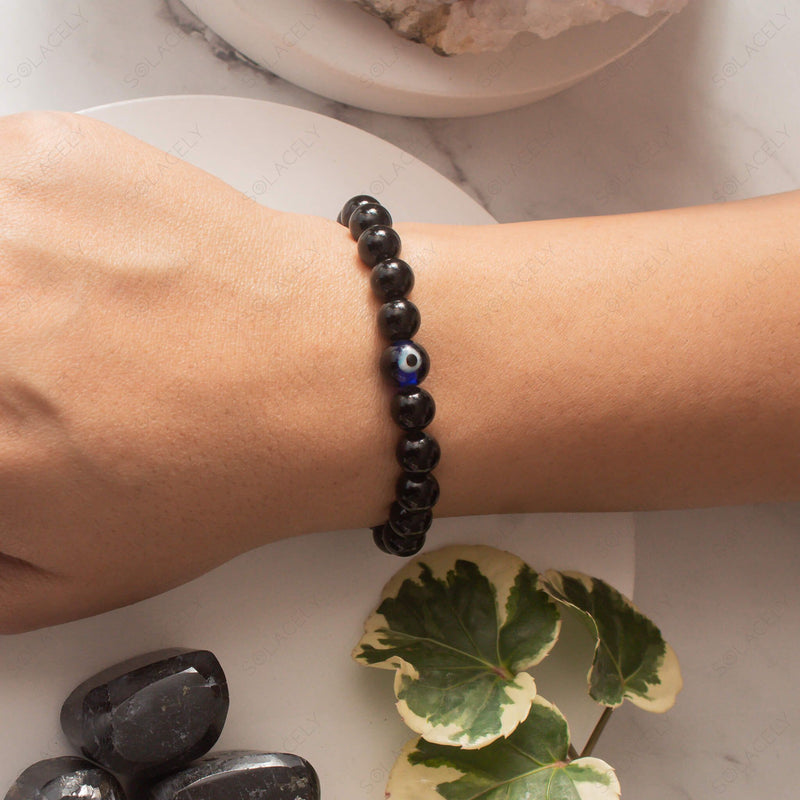
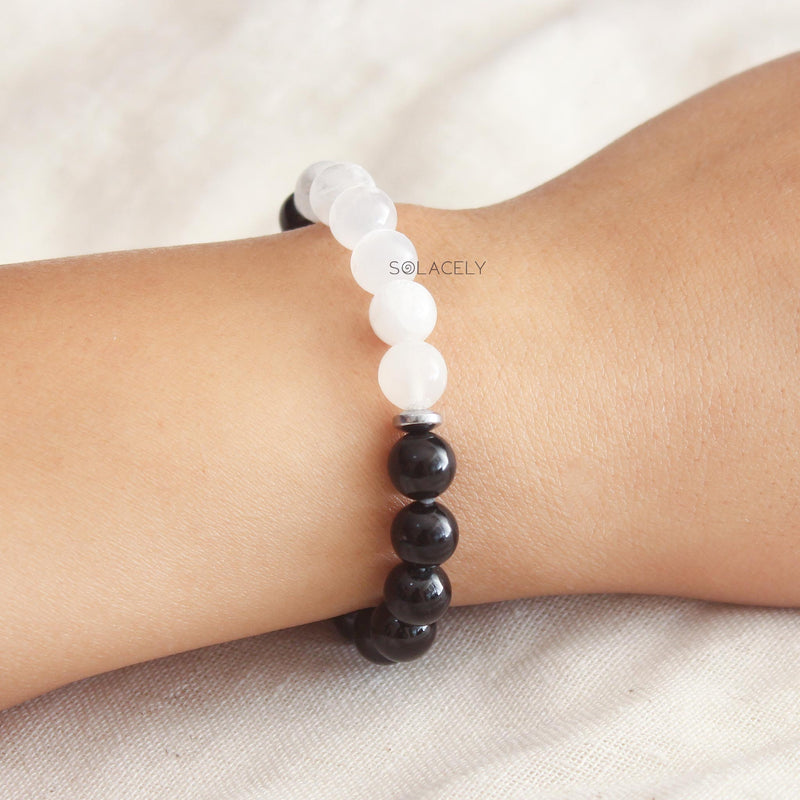
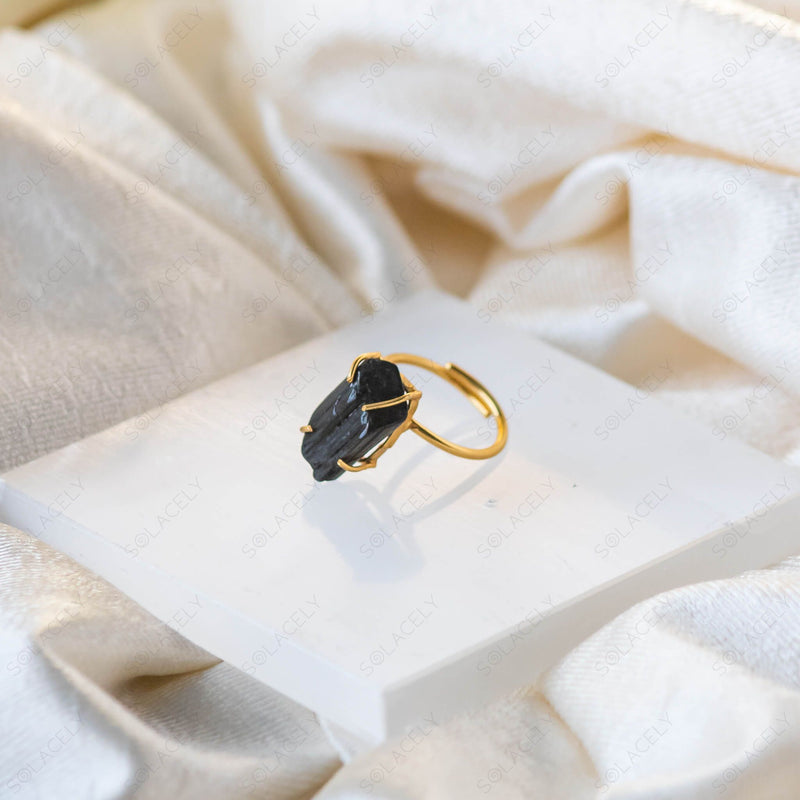
| Worn as a bracelet | Carrying the settling into the day | Beaded |
The root chakra association is why floor placement is the convention. Our root chakra crystal guide covers the mapping in more detail.
Handling and care
Schorl is hard, at 7 to 7.5 on the Mohs scale, and polished pieces are excellent for daily handling. Raw specimens are brittle along their striations and can shed sharp fragments, so the practical rule is simple: buy polished if you intend to hold it, raw if you intend to place it.
Clean polished pieces with warm water and a soft cloth, and dry fully. Keep raw specimens out of long water soaks. For energetic cleansing, sound, smoke, moonlight, or a rest on selenite are all conventional, and weekly is the usual rhythm for a piece in daily use. Our black tourmaline for negativity article covers cleansing in more depth.
Who this practice suits
People whose meditation difficulty is agitation rather than boredom. Anyone who has tried sitting and come away more wound up than they started. It is also a common choice for people meditating in busy or shared spaces, where the traditional protective framing gives the practice a boundary, a use covered further in crystals for protection.
It suits less well someone seeking expansive or visionary states, where amethyst and selenite are the traditional companions instead.
The properties described here reflect traditional and cultural belief around crystals. They are not medical claims, they are not claims about physical shielding, and they are not a substitute for professional healthcare. If you are managing a health concern, speak to a qualified practitioner. Meditation is generally safe but can be difficult for people with certain mental health conditions. If you have concerns, speak to a qualified healthcare professional before starting a practice.
Sources
Written by Chetena Sharma. Reviewed by the Solacely editorial team.
Frequently asked questions
About the author


Written by Chetna Sharma, crystal healing practitioner and co-founder of Solacely. Chetna has worked with healing crystals for over a decade and curates Solacely's protective stone collection.