Black tourmaline is kept against negativity as a boundary. Traditional practice puts it between you and the source: at a threshold, on a desk, or worn during a draining commitment. The framing is always about what does not get through, which makes this a practice about your own limits.
Key takeaways
- The practice is positional: place the stone between yourself and the source, not just anywhere.
- The front door is the oldest and most consistent placement across traditions.
- Tourmaline is traditionally said to hold what it takes in, and is cleared periodically.
- It is easy to clear because it tolerates water, sound, smoke and moonlight equally well.
- Selenite is the classic partner, traditionally used to clear what tourmaline holds.
- Rose quartz is the usual third stone, so the practice stays open rather than only closed.
What people mean by negativity
The word covers three quite different situations, and separating them makes the practice more useful. There is a person: a colleague, a relative, someone whose mood fills a room. There is a place: an office, a house, a route home that leaves you flat. And there is an internal pattern: rumination, self criticism, the loop that starts at two in the morning.
Black tourmaline's tradition speaks to the first two most directly. It is a boundary stone, and a boundary needs an outside. For internal patterns the tradition points elsewhere, and our guide to crystals for negative thinking covers that set.
Placement, which is the whole practice
Most crystal advice tells you to have a stone. This tradition tells you where to put it, and the where is the substance of it.
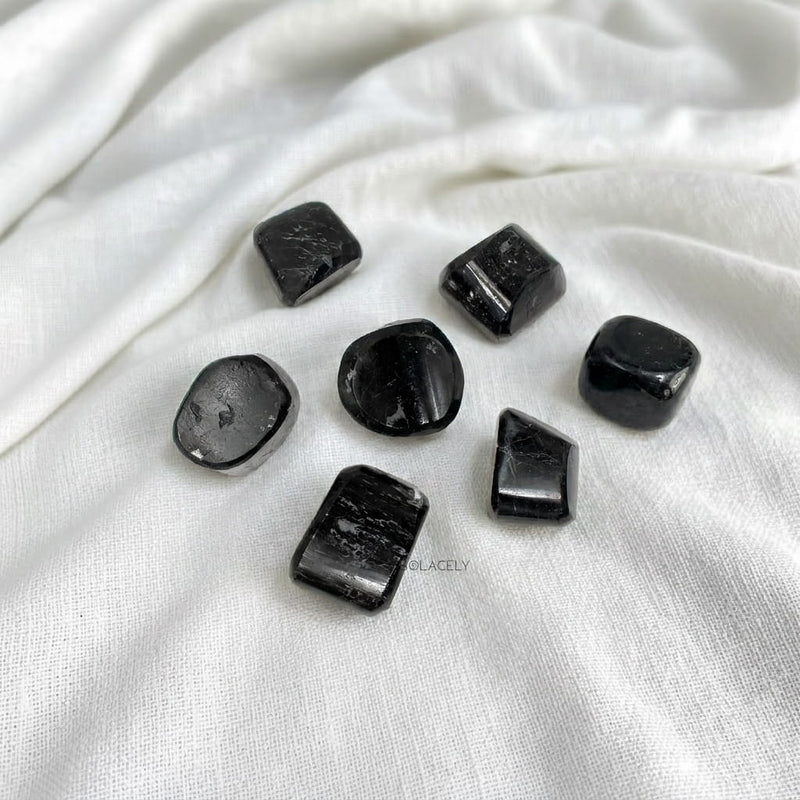
- The front door. The oldest placement and the one nearly everyone starts with. A raw piece or tumble on a shelf near the entrance, as a threshold marker.
- The four corners. One piece in each corner of a room that feels unsettled. More involved, and the version most often used after an argument or a difficult visit.
- On the desk, facing out. Positioned between you and the direction the difficulty comes from. In shared offices this is the most common arrangement, and it doubles as a visible marker of your own space.
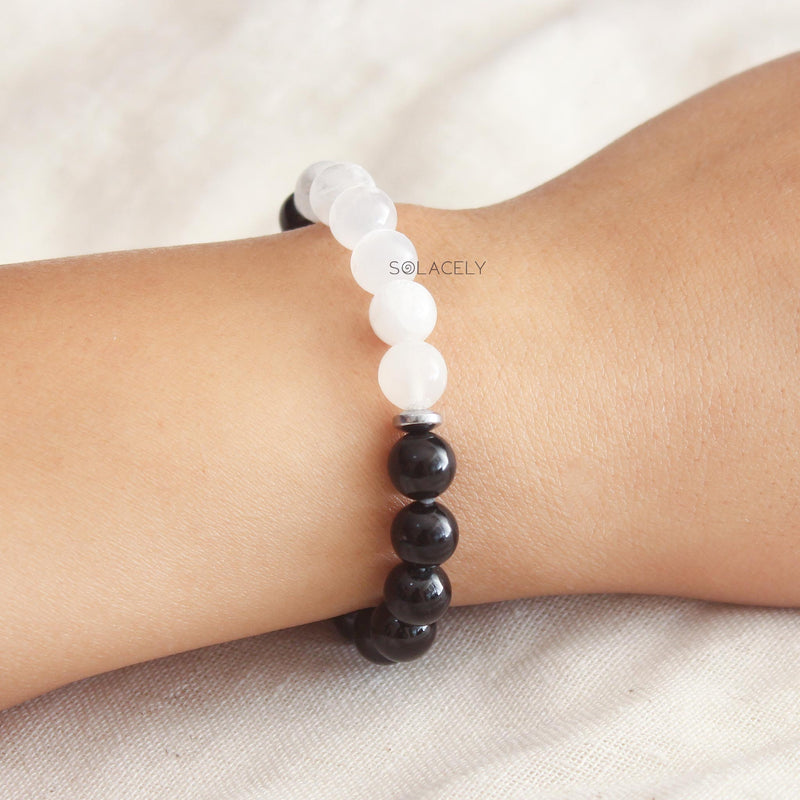
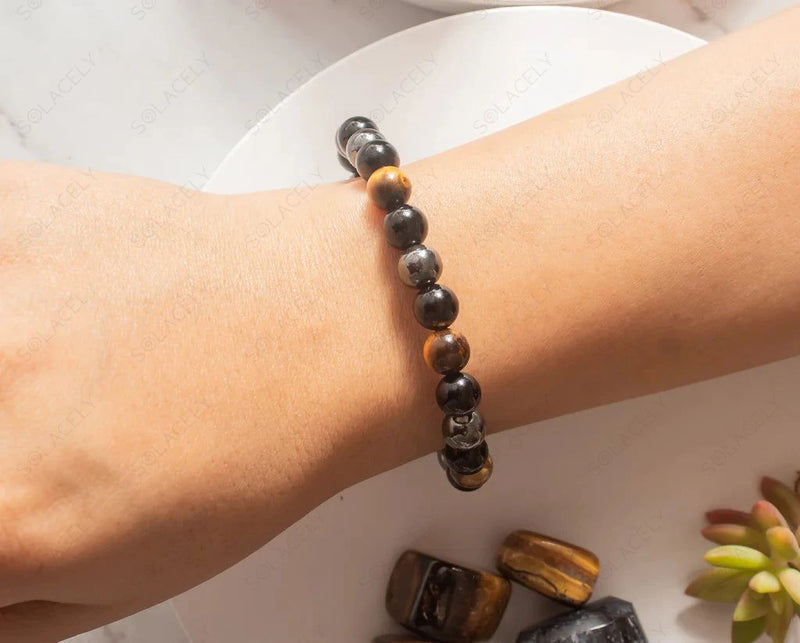
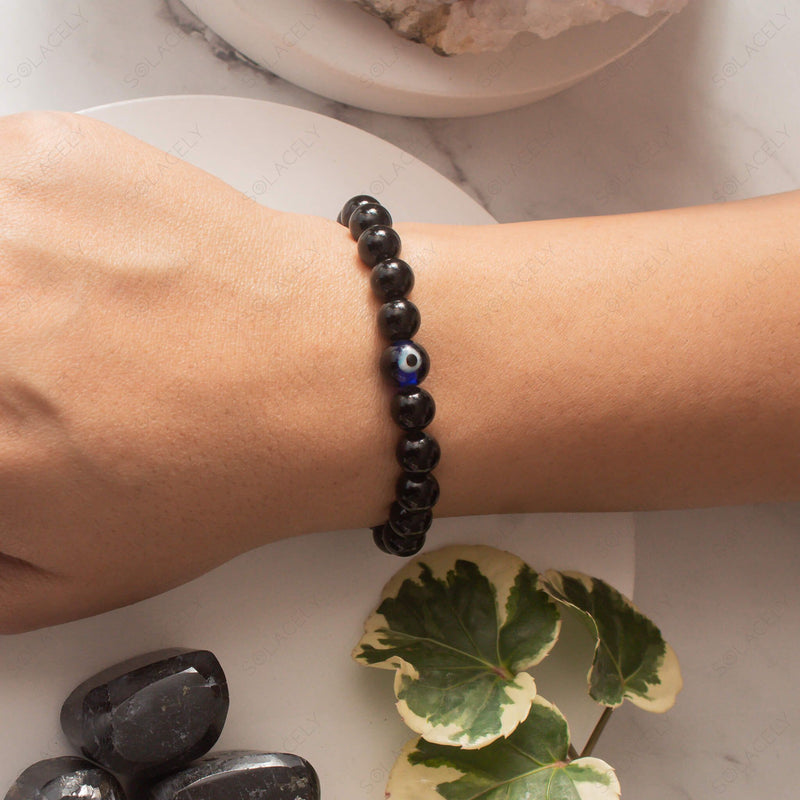
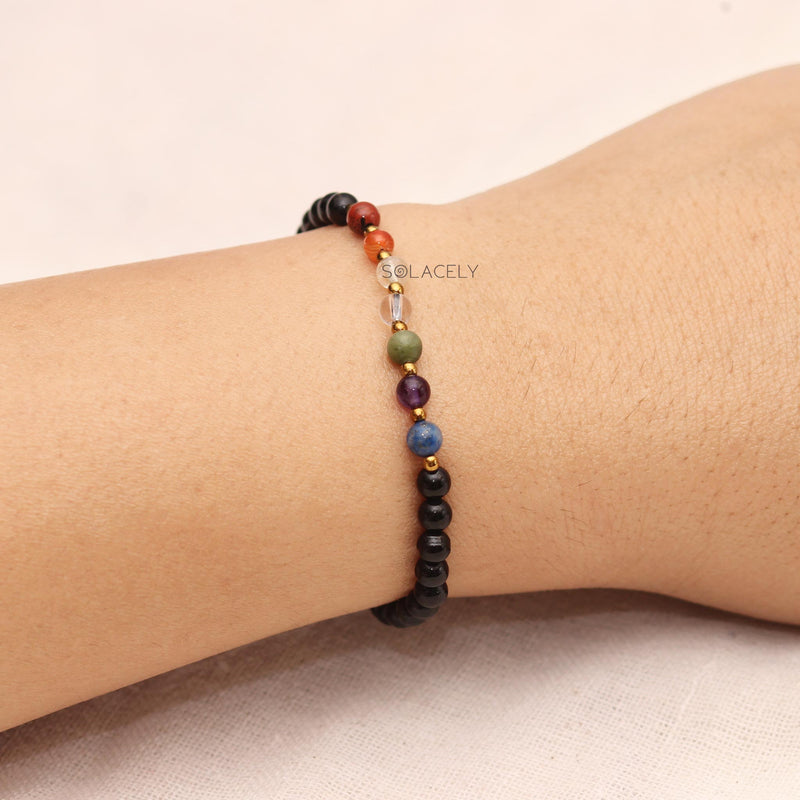
- Worn, during a specific commitment. A bracelet put on for a family weekend or a difficult meeting and taken off afterwards. The taking off matters as much as the putting on.
One practical note. Tourmaline is brittle across its striations, so keep pieces where they will not be knocked off a shelf. Hardness 7 to 7.5 protects it from scratches, not from falls.
Clearing the stone
Crystal practice holds that black tourmaline takes in what it deflects and benefits from periodic clearing. It is one of the easiest stones to look after in this respect, because it tolerates every common method.
Running water is safe. Sound from a bowl or bell is safe. Incense or sage smoke is safe. A night in moonlight is safe. Being hard and non porous, tourmaline is not damaged by any of them, unlike selenite, which dissolves, or pyrite, which oxidises.
Most people settle on monthly, or after any event that felt heavy. The interval matters less than the fact that it gives you a moment of deliberate closure after a difficult stretch, which is a good part of why the practice endures.
Using it around a difficult person
The tradition here is about your side of the exchange. A stone placed where the difficulty comes from becomes a marker for a boundary you have already decided on, and the sight of it is the cue to pause before you respond.
That pause is where a steadier reply gets built. Used this way, alongside actually saying the boundary out loud, the practice earns its place. Many people find that having something to look at makes the decision easier to hold onto in the moment. If the difficult person is someone you see daily, a black tourmaline bracelet travels with you where a placed stone cannot.
What to pair it with
Selenite is the traditional partner, used to clear what tourmaline is thought to hold, and the two are often sold together for that reason. Smoky quartz reinforces the grounding side and is the better second stone if you also feel wired rather than only exposed.
Rose quartz is the interesting third option. It is added specifically when someone worries that all this boundary work is leaving them closed off, which is a real consideration in a practice built on deflection. More pairings are in black tourmaline crystal combinations, and the comparison with obsidian is in black obsidian versus black tourmaline.
Who this suits
It suits someone dealing with an external, identifiable source they cannot simply leave: a workplace, a shared home, a family obligation. The positional nature of the practice matches that situation well, because there is somewhere to put the stone.
It suits less well someone whose difficulty is internal. For the wider protection practice, see crystals for psychic protection and crystals for home protection.
The properties described here reflect traditional and cultural belief around crystals. They are not medical claims, they are not claims about physical shielding, and they are not a substitute for professional healthcare. If you are managing a health concern, speak to a qualified practitioner. If you are dealing with harassment, abuse or a situation that feels unsafe, seek appropriate professional or legal support.
Sources
Written by Chetena Sharma. Reviewed by the Solacely editorial team.
Frequently asked questions
About the author


Written by Chetna Sharma, crystal healing practitioner and co-founder of Solacely. Chetna has worked with healing crystals for over a decade and curates Solacely's protective stone collection.