Three stones carry almost all of psychic protection practice: black tourmaline to absorb, labradorite to reflect, and amethyst as the spiritual buffer. Matching the mechanism to the situation is most of the work. Empaths in particular do better with a reflecting stone than an absorbing one.
Key takeaways
- Three stones do the bulk of the work. Black tourmaline absorbs, labradorite reflects, amethyst buffers.
- Match the mechanism to the situation. A heavy room calls for tourmaline. An empath at work calls for labradorite. Anxious dreams call for amethyst.
- Labradorite is the empath's stone, because the tradition treats it as reflective rather than absorbent, so it does not add to a load you already carry.
- Around 15 to 20 per cent of people score in the highly sensitive range on the scale introduced by Aron and Aron in 1997, so this is a common thing to be looking for.
- Cleanse these stones daily rather than weekly. They are doing more work than the pieces sitting on a shelf.
- Everything described here is traditional belief and cultural practice, kept alongside your doctor's care.
What does psychic protection actually mean?
The phrase sounds dramatic and the lived experience rarely is. Most people who reach for it are dealing with one of four ordinary situations, and naming yours makes the rest of the practice much easier to choose.
- Empath overwhelm. Coming home from work or a gathering feeling drained and muddled, unable to tell which feelings are yours.
- One particular person. A colleague, a relative or a friend who consistently leaves you depleted, even when nothing visibly went wrong.
- Anxious or intrusive dreams. Recurring figures, dread on waking, dream content that colours the whole morning.
- Diffuse mood pulling. A sense of your emotional state being tugged from outside without an obvious source.
The tradition treats all four as versions of the same thing, a boundary between yourself and other people that has gone porous. The practice gives that boundary something physical to anchor to, which is why it tends to be built around one small object and one repeated moment rather than an elaborate setup.
Absorb, reflect, transmute
This is the most useful distinction in the whole category, and it is where most beginners go wrong. The three core stones do three different jobs.
| Stone | Traditional mechanism | Best suited to |
|---|---|---|
| Black tourmaline | Absorbs and grounds heavy energy | Rooms and environments you cannot avoid |
| Labradorite | Reflects rather than takes in | Empaths, and long days of contact with people |
| Amethyst | Buffers and settles | Sleep, dreams, and sitting with strong feeling |
The common mistake is reaching for an absorbent stone for an empath's problem. If you already take on other people's states too readily, a stone whose whole tradition is absorption adds to the pile rather than easing it. Empaths are generally better served by reflecting or buffering, which is why labradorite has become the signature stone of this category.
The three core stones
Each has a format that suits it and a moment it belongs to.
Black tourmaline, the anchor
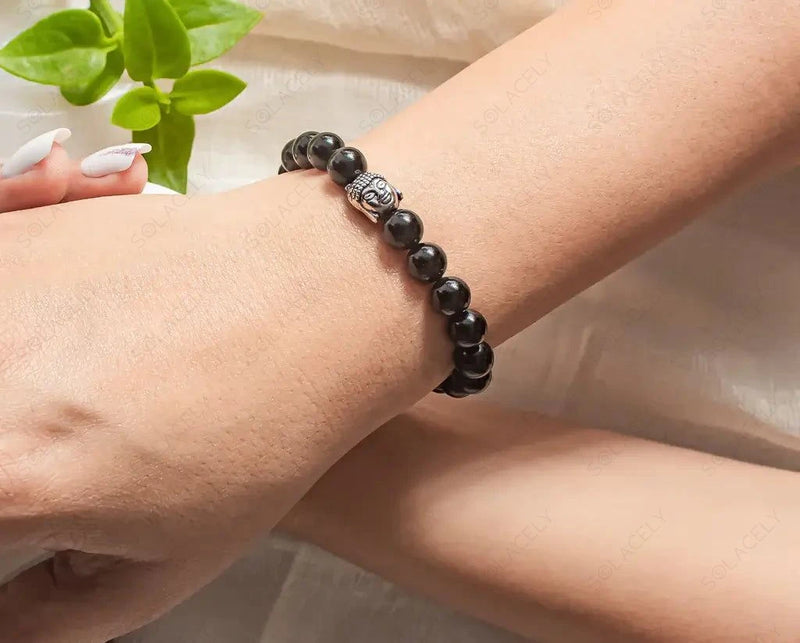
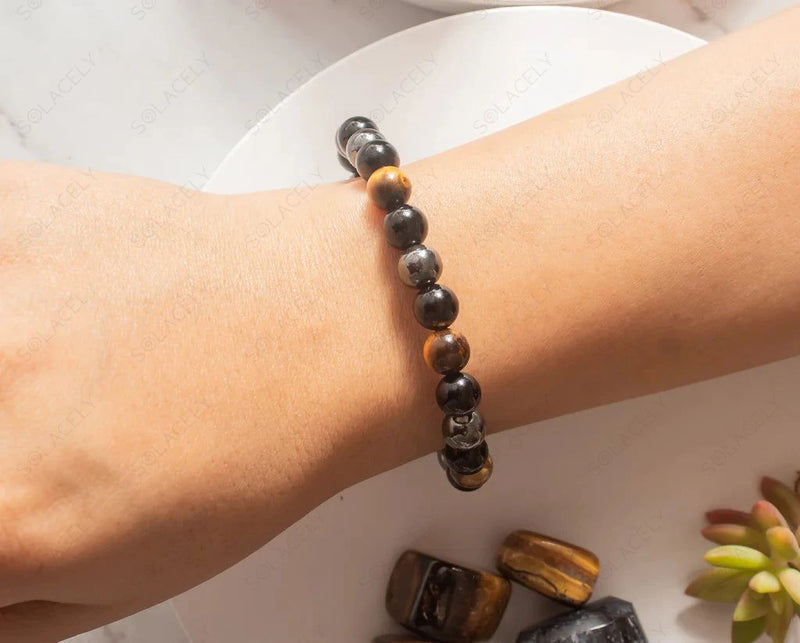
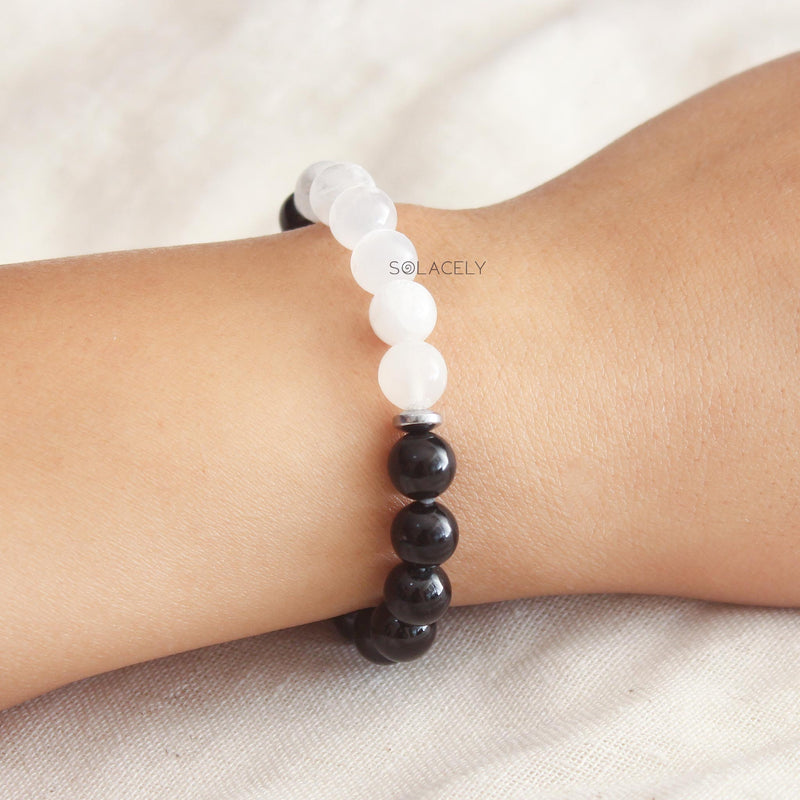
The default protective stone in modern practice, kept for grounding whatever a room is carrying. It works best as a pocket piece for environments you have no choice about: a tense office, a packed train, an obligatory family gathering. Pair it with a small repeated cue, touching it whenever the room intensifies, and the habit does the rest. Our black tourmaline guide covers the mineral in full. Our black tourmaline bracelet carries the same stone in a form you can wear.
Labradorite, the empath's stone
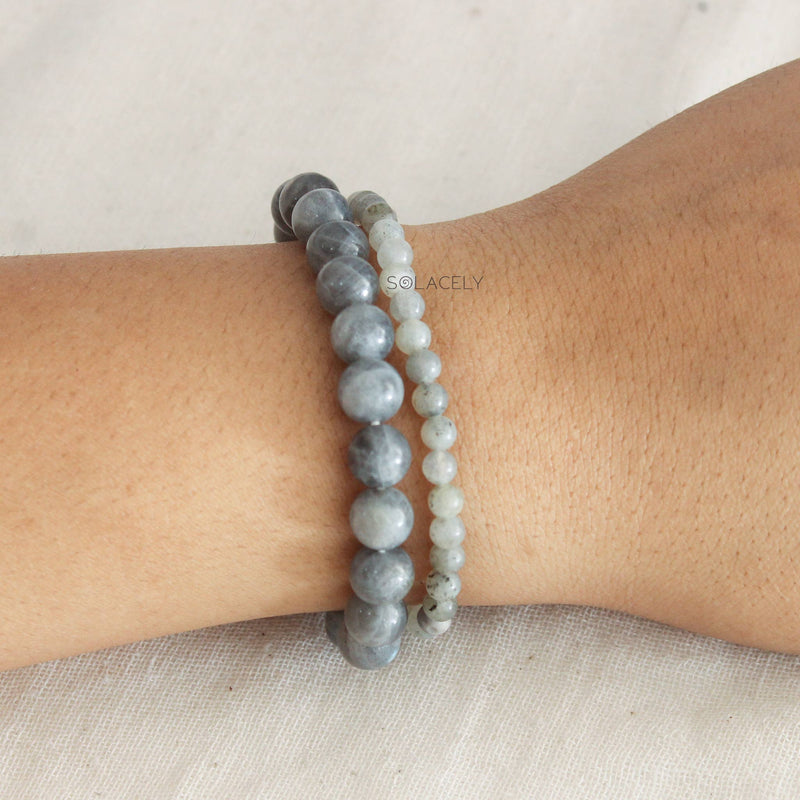
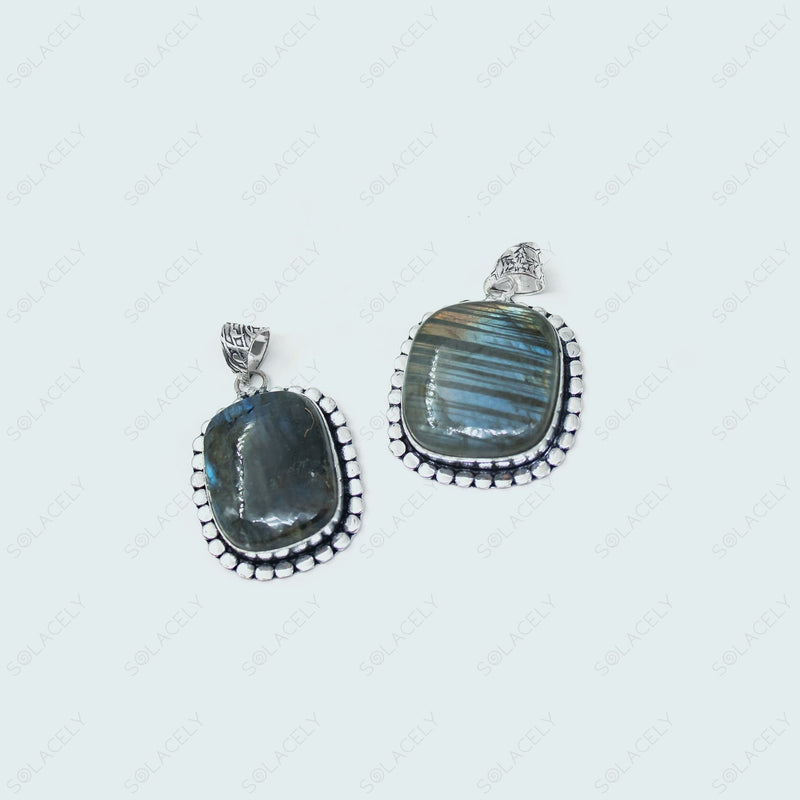
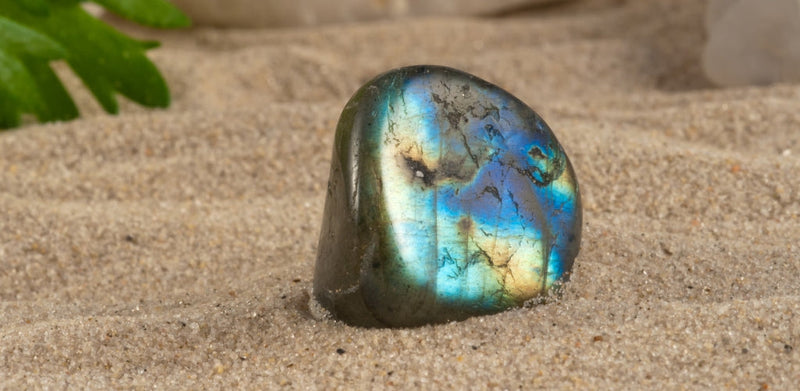
The one that matters most for the empath case. Tradition describes labradorite as reflective, and the flash that moves across its surface as you tilt it is treated as the visible sign of that. It is most often worn as a pendant so it sits over the chest through a working day, and a pocket pebble is the fallback rather than the first choice. Our labradorite guide covers the flash and how to choose for it.
Amethyst, the buffer
The one stone in the trio that is not dark, and the one associated with spiritual steadiness rather than environmental shielding. It is the bedside piece for anxious dreams and the companion for any practice that involves sitting with something difficult. Keep it out of strong light, since the purple pales with long exposure and does not come back.
The empath at work
This is the single most asked about scenario, and the protocol is short enough to actually keep.
- Wear labradorite through the working day. Pendant or pocket. Put it on while you are getting dressed and treat it as part of the uniform.
- Keep black tourmaline in a pocket as backup. For the specific high intensity moments, a difficult patient or an unhappy customer, touch it during or straight after.
- Take both off at your own front door. Into a dish on a selenite plate just inside. The act of removing them is the boundary, and it means the day does not follow you in.
- Cleanse both in the evening. Cool water for the tourmaline, sound or selenite for the labradorite.
The crystal half works best alongside a transition that involves no crystals at all: a short walk before you get home, changing out of work clothes straight away, five minutes of quiet. The stones anchor that bigger shift rather than standing in for it.
Dreamwork and the draining person
Two more protocols cover most of what people come looking for.
For anxious or intrusive dreams, amethyst goes on the nightstand, and a black tourmaline at the foot of the bed is the traditional addition when a specific recurring figure is involved. Keep the stimulating stones out of the bedroom entirely, so carnelian, citrine and tiger's eye stay in the living areas. Cleanse the bedside amethyst in the morning if the night was intense. Our best crystals for sleep guide covers the wider set.
For one specific draining person, the boundary is directed rather than general, so the protocol tightens. A tourmaline held for ten seconds before the meeting or the call, labradorite worn throughout, and the tourmaline cleansed under cool water immediately afterwards. Practitioners treat that last step as the important one.
Worth saying plainly on that second case: a pattern of consistent depletion around one person is telling you something about the relationship. The practice can support you while you work out what to do with that, and the conversation, the boundary or sometimes the distance is still yours to decide on.
How often should these stones be cleansed?
More often than anything else you own. The tradition treats protective stones as actively working, so the rhythm is daily for anything carried on the body, weekly for fixed placements, and immediately after any contact that felt heavy.
Cool running water suits black tourmaline and amethyst, thirty seconds is plenty, and dry them properly afterwards. Labradorite is a feldspar with cleavage, so it prefers sound, smoke or a rest on selenite to a soak. Selenite plates are the low effort option for all three, since they need nothing from you overnight.
If a stone starts to feel like an obligation rather than a steadying thing, shorten the routine rather than abandoning it. One stone, one moment, done daily, outlasts a four stone protocol every time. For the broader protective set across home, body and travel, see our crystals for protection guide.
The properties described here reflect traditional and cultural belief around crystals. They are offered for reflection and wellbeing and are not medical advice, a diagnosis, or a treatment for any condition. Keep this practice alongside your doctor's care. If distress, anxiety or disturbed sleep is persistent, severe, or interfering with daily life, please speak with a GP or a qualified mental health professional. Keep small stones away from young children, and never place crystals in drinking water.
Sources
- Aron and Aron, Sensory-Processing Sensitivity, Journal of Personality and Social Psychology, 1997
- Geology.com, Tourmaline mineral overview
Written by Chetena Sharma. Reviewed by the Solacely editorial team.
Frequently asked questions
About the author


Written by Chetna Sharma, crystal healing practitioner and co-founder of Solacely. Chetna has worked with healing crystals for over a decade and curates Solacely's protective stone collection.