Crystals chosen for a newborn belong in the room, never in the cot. Set them on a high shelf, a dresser or a windowsill, well away from the sleep space and out of small hands. Kept that way, the tradition does what parents want it to do: it makes the nursery feel settled and cared for.
Key takeaways
- Crystals for a newborn go in the room. Never in the cot, never under the mattress, never on the baby.
- Small beads and chips are a choking hazard, and any cord, string or elastic near an infant is a strangulation hazard, so no crystal bracelet, necklace, anklet or amulet worn by a baby or tied near one.
- Larger, smooth, single pieces on a high shelf are the safest and most traditional way to keep stones in a nursery.
- Rose quartz, amethyst, clear quartz, selenite and moonstone are the ones people reach for most often when setting up a baby's room.
- A crystal makes a lovely new baby gift for the parents to keep now and pass on to the child years later.
- Whatever sits on the shelf, the cot itself stays completely clear.
Where crystals go in a newborn's room
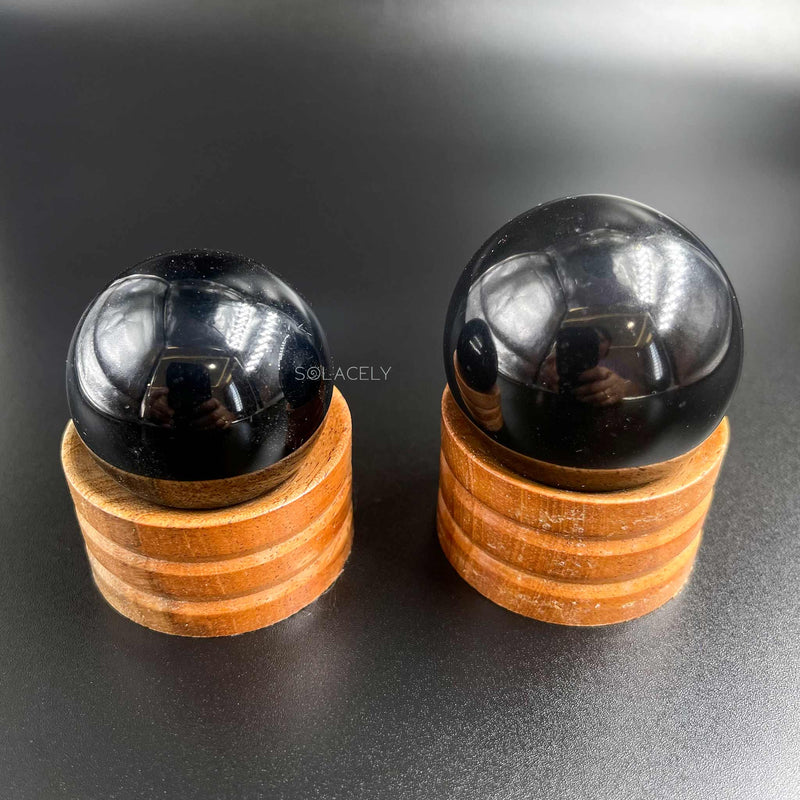
Keep them high and keep them whole: a bookcase, the top of a chest of drawers, a windowsill or a picture ledge, all well out of reach. Choose larger, smooth, single pieces rather than small tumbles or chip strands. The cot, the mattress, the space under the mattress and the baby stay clear.
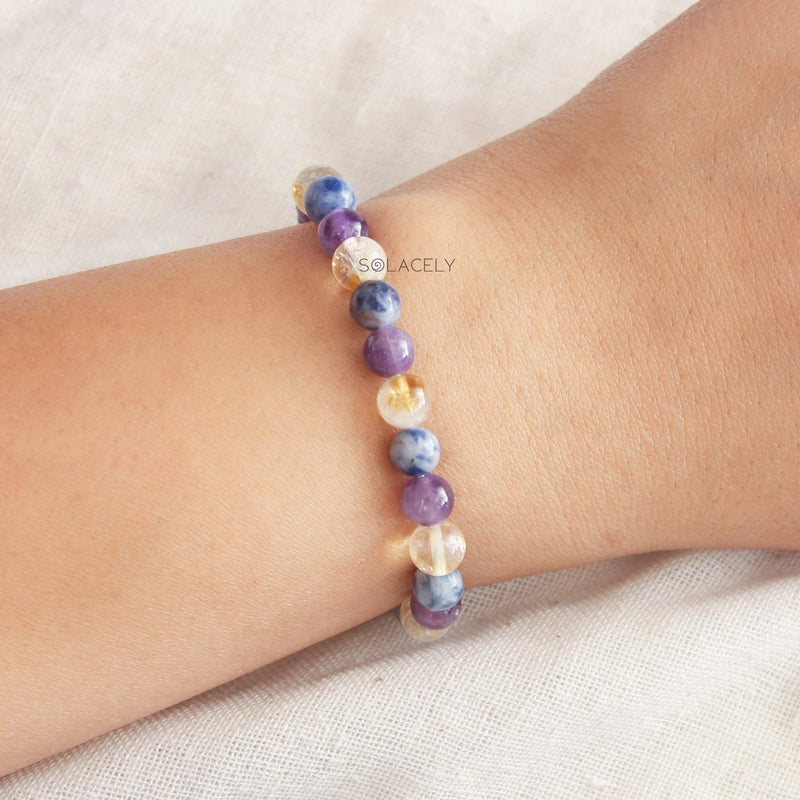
This is the one point worth being firm about, and it is a warm rule rather than a stern one. Crystals go in the room, and only in the room. Nothing goes in the cot, nothing goes under or beside the mattress, nothing is tucked into a swaddle or a sleeping bag, and nothing is placed on or attached to the baby. That means no crystal bracelet, necklace, anklet or amulet worn by an infant, and none tied to a cot, a pram or a car seat: small beads and chips can be swallowed or inhaled, and cords, strings and elastic are a strangulation risk. Keep the sleep space completely empty and put the beautiful things on the shelf, where everyone can see them and nobody small can reach them.
Babies become mobile faster than most parents expect, so choose the shelf with the rolling, crawling and pulling-up stages already in mind. Anything within arm's reach of a cot rail, a changing table or a low unit is worth moving higher now rather than later. A piece that sits flat and heavy on a solid surface is a better choice than anything perched, hung or balanced, and a closed lidded dish is useful if you want to keep a smaller stone in the room at all.
Five stones traditionally kept in a baby's room
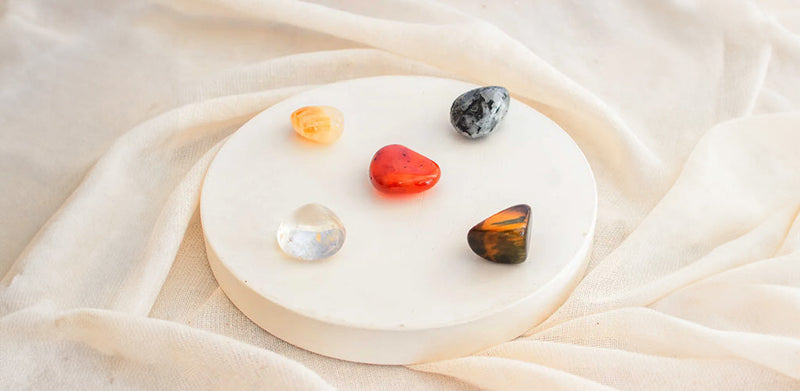
Rose quartz, amethyst, clear quartz, selenite and moonstone come up again and again when people set up a nursery. Each one has a long association with warmth, calm and welcome, and each is easy to find as a larger piece that sits safely on a shelf instead of as a small chip or bead.
| Stone | Long associated with | Best form for a nursery |
|---|---|---|
| Rose quartz | Love, warmth, welcome | A palm-sized raw chunk or a sphere on a shelf |
| Amethyst | Calm and quiet | A cluster or sphere, kept out of strong direct sun |
| Clear quartz | Clarity and a fresh feeling in a room | A single point or a sphere |
| Selenite | Settled, cleared space | A plate or tower, kept dry |
| Moonstone | New beginnings | One tumbled piece in a lidded dish, high up |
Rose quartz is the classic new baby stone. Its soft pink is easy to live with in a nursery, and it has been kept for generations as a token of tender, unhurried love. A raw chunk on a shelf reads as a keepsake rather than an ornament, which is part of why it is such a common gift.
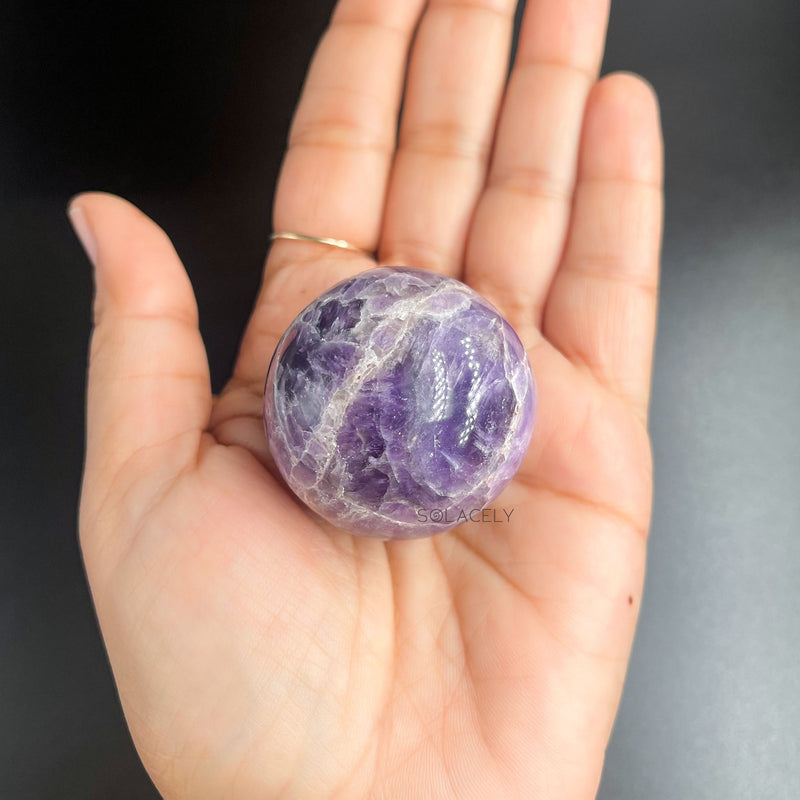
Amethyst is the stone people reach for when they want a room to feel quiet. A small cluster on a high shelf catches the lamplight beautifully in the evening. Keep it away from a sunny south-facing windowsill, because prolonged strong sun will fade the purple over time.
Clear quartz suits a nursery that is already busy with colour. A single point or sphere is quietly decorative, sits well beside books and photographs, and is traditionally kept as a stone of clarity and fresh starts.
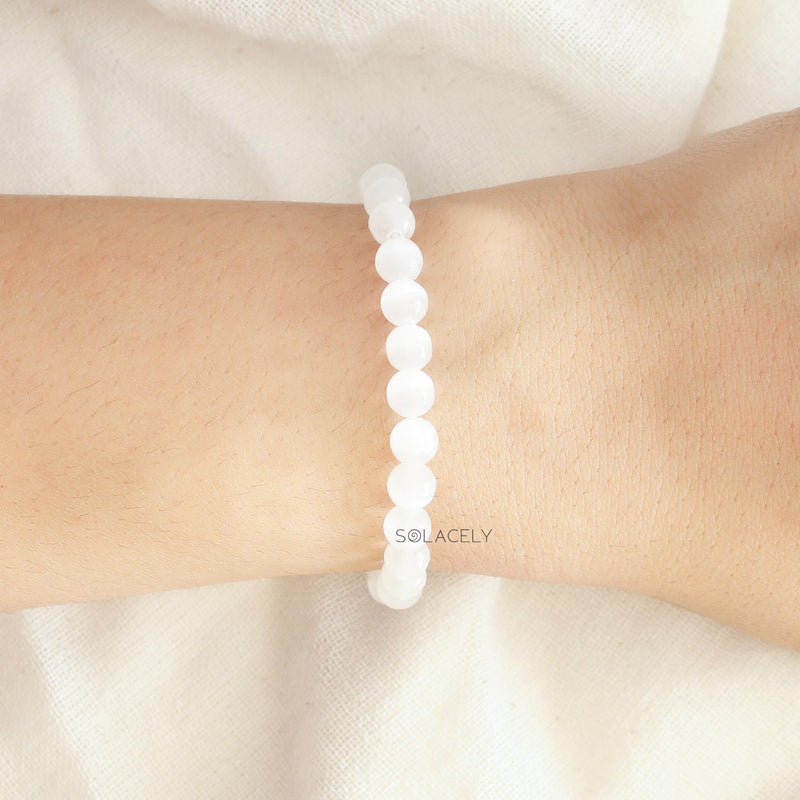
Selenite is a favourite for the top of a shelf because of its soft, almost lit-from-within look. One practical note: selenite is a form of gypsum and will dissolve or go cloudy if it gets wet, so never rinse it or leave it anywhere damp. Dust it with a dry cloth and nothing else.
Moonstone is the traditional stone of new beginnings, which makes it a natural choice for a room that has just been made for someone brand new. Because moonstone is usually sold as smaller tumbles and beads, it is the one to keep in a lidded dish on a high shelf rather than loose.
A shelf for the parents, not a charm for the baby
The most comfortable way to think about nursery crystals is that they are for the grown-ups in the room. Parents are the ones sitting in the feeding chair at three in the morning, folding tiny clothes and looking at the same four walls for weeks. A stone on the shelf is a small anchor for them.
Plenty of parents keep one piece for the nursery and one for themselves, in a pocket or on a bedside table in their own room. A stone kept for calm is a familiar habit long before a baby arrives, and the early weeks are exactly when a small steadying ritual earns its place. Hold it for a minute before you go in, or leave it where you will see it as you sit down.
Framing it this way also settles the safety question on its own. If the stone lives with you and on the shelf, it is never near the cot, and there is no temptation to tuck something under a mattress or slip a bracelet onto a tiny wrist.
Choosing a crystal as a new baby gift
A crystal is a warm and unusual gift for new parents, and it lasts long after the babygrows have been outgrown. Choose one solid, smooth piece rather than a set of small stones, give it with a note explaining what it is traditionally kept for, and let the parents decide where in the house it lives.
The gifts that land best are the ones with a shelf life. A rose quartz chunk, an amethyst cluster or a clear quartz sphere can sit in the nursery now, move to a living room later and be handed to the child when they are well past the age of putting everything in their mouth. Many families treat that hand-over as the point of the gift in the first place.
Skip anything wearable for the baby. Skip anything small enough to fit in a mouth. If you want to give something that can be worn, give it to the mother or the father, sized for an adult wrist. It is the same gesture without the hazard, and it is genuinely the piece that gets used.
If you are buying for a family who have moved house as well as grown, the stones people choose for a new home overlap almost entirely with the nursery list, so one good piece can cover both occasions.
Looking after crystals in a nursery
Nursery crystals need very little. Dust them with a soft dry cloth when you dust the shelf, check once in a while that nothing has crept forward towards an edge, and move everything higher as the baby starts to stand. That is the whole routine, and the checking matters more than the cleaning.
Two care notes are worth keeping. Selenite should never be soaked, rinsed or left in a humid spot, because it will degrade. Amethyst will fade if it sits in strong sun for months, so keep it off a bright windowsill. And nothing here should ever go into drinking water, a bottle or a beaker, for a baby or for anyone else.
If you like to cleanse your stones, do it away from the nursery, using dry methods such as a cloth, sound or a night on a shelf under the moon. There is no need to bring water, salt, incense or smoke anywhere near a baby's room.
Crystals are decorative keepsakes kept for comfort and tradition. They are not a medical device or a treatment, they do not diagnose, treat, cure or prevent any condition, and nothing on this page is medical advice or a reason to delay care. For safe infant sleep, follow the guidance you are given by your midwife, health visitor or paediatrician: always place your baby on their back to sleep, on a firm, flat, separate sleep surface with a fitted sheet, and keep the cot clear of pillows, duvets, bumpers, soft toys, loose bedding and any other object, crystals included. Small beads, chips and cords are a choking and strangulation risk and must be kept away from infants and young children. If you have any concern at all about your baby's health, sleep or feeding, speak to a health professional straight away.
Sources
- Eunice Kennedy Shriver National Institute of Child Health and Human Development: Sudden Infant Death Syndrome (SIDS)
- Eunice Kennedy Shriver National Institute of Child Health and Human Development: Sleep
Written by Chetena Sharma. Reviewed by the Solacely editorial team.
Frequently asked questions
About the author


Written by Chetna Sharma, crystal healing practitioner and co-founder of Solacely. Chetna has worked with healing crystals for over a decade and curates Solacely's protective stone collection.