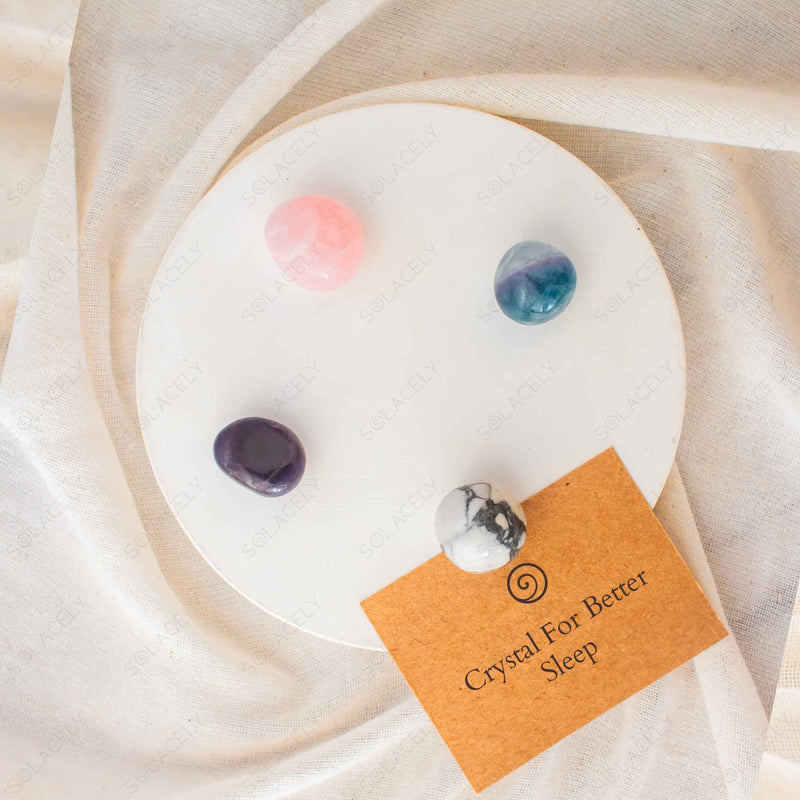
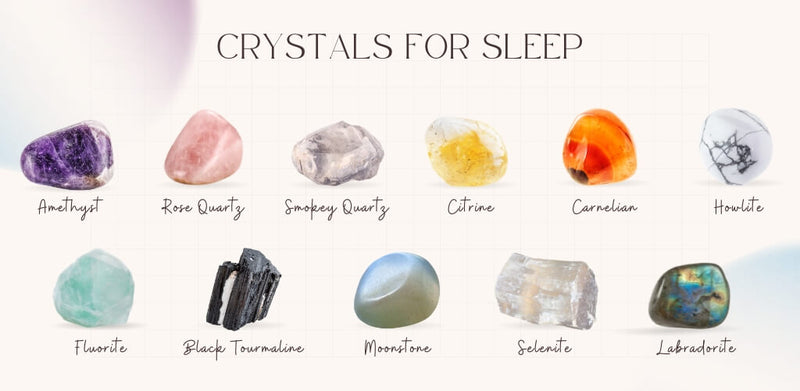
The crystals most used for insomnia are amethyst, howlite, lepidolite and moonstone, kept on a bedside table as part of a wind-down routine. They do not cause sleep. What helps is the consistent bedtime ritual they anchor, and the NIH notes relaxation techniques can improve sleep quality.
Key takeaways
- Amethyst, howlite, lepidolite and moonstone are the four stones most often kept for sleep.
- The benefit comes from the routine the stone marks, which is exactly how the practice is meant to work.
- The NIH reports relaxation techniques such as breathing exercises can improve sleep quality in some studies.
- Keep stones on the nightstand, not under the pillow. A hard object in bedding is a genuine hazard.
- Persistent insomnia is a clinical issue. See a GP rather than treating it with a crystal practice.
What crystals can honestly do for sleep
Nothing directly, and it is worth saying that clearly before the rest. A stone on a nightstand does not alter melatonin, slow a heart rate, or shorten the time it takes to fall asleep. Any article promising that is selling something it cannot deliver.
What it can do is mark the end of the day. Sleep hygiene research consistently points to consistency as the useful variable: a repeated sequence that tells your body the day is finished. A crystal is a pleasant, physical marker for that sequence, and unlike a phone it does not pull you back out of it.
The evidenced part is the practice itself. The National Center for Complementary and Integrative Health reports that relaxation techniques including breathing exercises and progressive muscle relaxation can help with stress and, in some studies, sleep quality. Use the stone to start that, not instead of it.
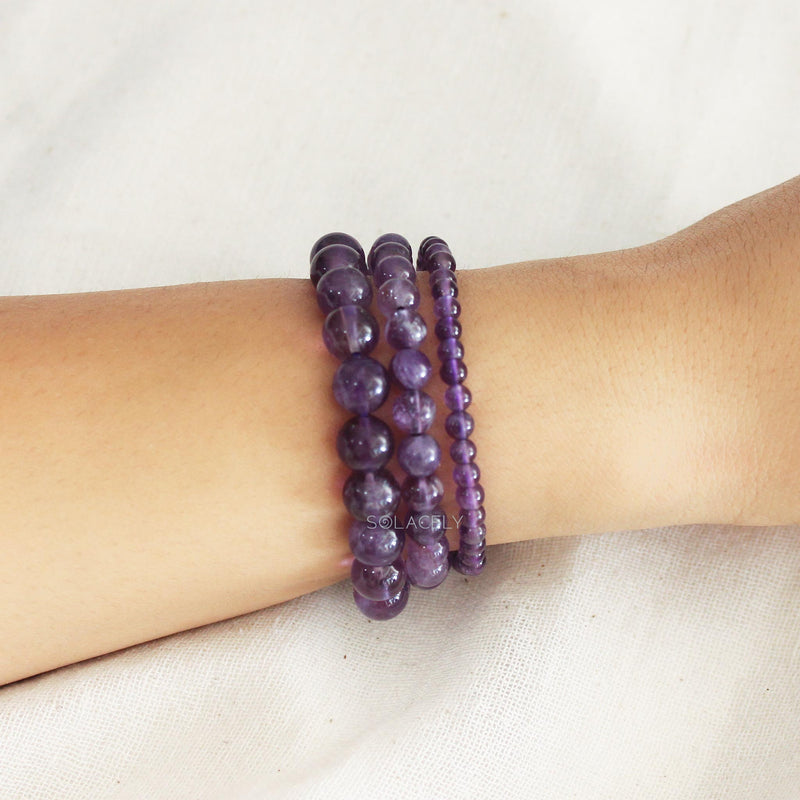
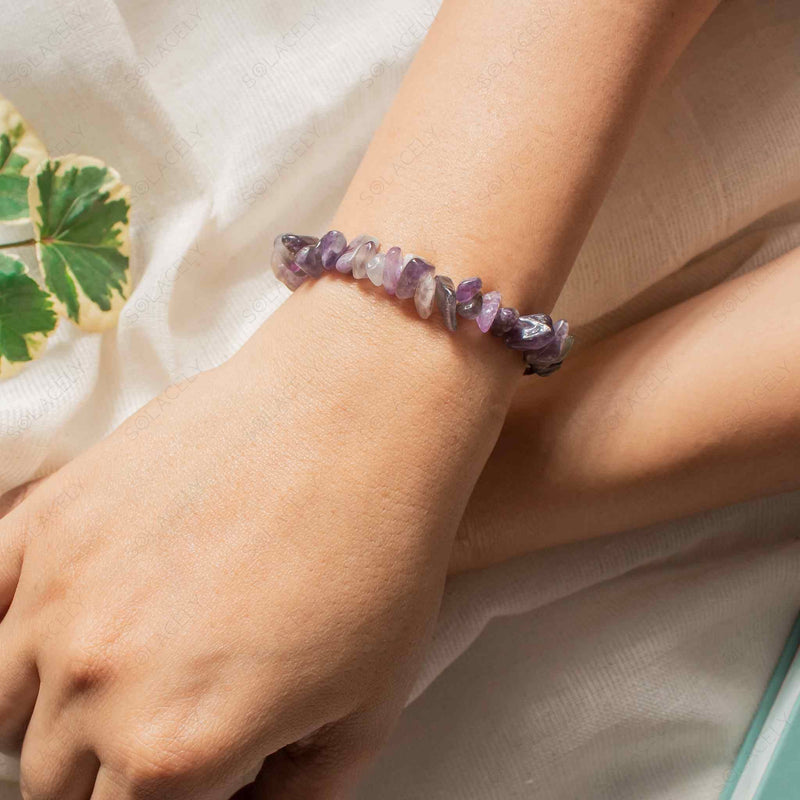
Amethyst, the standard bedside stone
Amethyst is the default sleep crystal across almost every modern tradition, associated with calm, settling and the quieter end of the day. It is also simply pleasant to have on a nightstand, which matters more than it sounds for something you are meant to see every night.
The Gemological Institute of America describes amethyst as the purple variety of quartz, coloured by iron and natural irradiation within the crystal structure. At 7 on the Mohs scale it is hard enough to survive being knocked off a table in the dark, which is a real consideration.
The one care note is light. Prolonged direct sunlight fades the purple over months, so a bedside table is ideal and a sunny sill is not. For a wider bedroom arrangement, see crystals for the bedroom.
Howlite and lepidolite for a busy mind
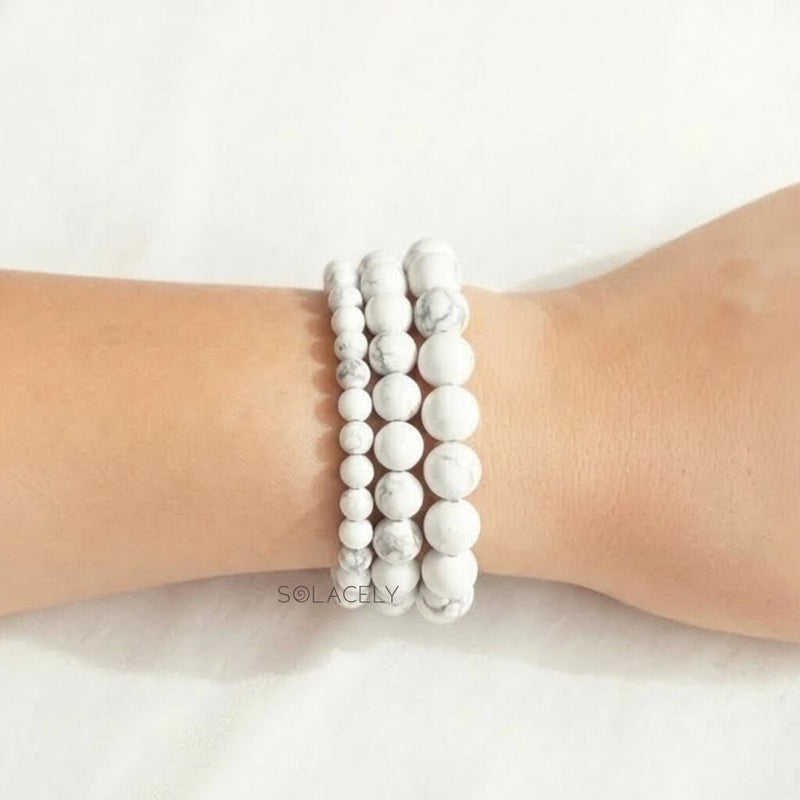
Howlite is the stone for the specific version of insomnia where the body is tired and the mind will not stop rehearsing the day. It is traditionally used for quieting mental chatter, and its white, grey-veined appearance is the reason it is often dyed blue and sold as turquoise.
It is soft, around 3.5 on the Mohs scale, so a howlite piece will scratch and scuff with handling. That is fine for a stone that lives on a nightstand and gets held rather than worn. The howlite guide covers the mineral and the dyeing question.
Lepidolite is the other common choice, a lilac mica that naturally contains lithium. That fact gets badly misused in crystal marketing: the lithium is locked in the mineral structure, it is not bioavailable, and holding lepidolite has nothing in common with taking a medication. The traditional association with calm is real; the pharmacological implication is not.
Building a bedtime routine around a stone
| Step | What to do | Why it helps |
|---|---|---|
| Same time nightly | Start the sequence at a fixed hour | Consistency is the strongest sleep hygiene variable |
| Screens off first | Phone out of the room, or face down and charging elsewhere | Removes the single most common disruptor |
| Hold the stone | Three to five slow breaths, stone in hand | A physical marker for the transition |
| Stone goes back | Return it to the same spot each night | The repetition is what builds the cue |
| Lights down | Low, warm light for the last stretch | Supports the natural wind-down |
| Not under the pillow | Keep stones off the bed entirely | Hard objects in bedding cause bruises and broken stones |
That last row deserves emphasis, because putting crystals under a pillow is advice that circulates widely and is genuinely a bad idea. A tumbled stone under a pillow gets rolled onto, wakes you, and occasionally chips. The nightstand does the same job with none of the risk.
Moonstone and the rest of the shortlist
Moonstone rounds out the group, associated with cycles, intuition and rest. The GIA attributes its floating blue sheen, called adularescence, to light scattering between microscopic layers within the feldspar. It is softer than quartz, around 6 to 6.5, so handle it gently.
Beyond those four, selenite and blue lace agate appear on most lists. Selenite comes with a hard rule: it is gypsum, it dissolves in water, and it should never be rinsed or kept anywhere humid. Check where any new stone sits on the Mohs hardness scale before deciding how to store it.
One stone is enough. A bedside crowded with crystals becomes another thing to look at rather than a signal to stop looking at things. For the broader comparison, see the best crystals for sleep.
When the problem is overthinking rather than sleep
A large share of people who describe themselves as insomniac are not struggling to sleep so much as struggling to stop thinking. Those are different problems and the second one responds better to a written outlet than to any object.
The practice that helps most is unglamorous: a notebook beside the bed, and everything unresolved written down before the light goes off. It works because it gives the loop somewhere to land. A stone held afterwards then marks the actual end rather than competing with the thinking.
If rumination is the dominant pattern, crystals for overthinking addresses it directly, and the stones recommended there differ somewhat from the pure sleep list.
When to stop and see a doctor
This is the part that matters most. Insomnia lasting more than three nights a week for three months or more meets the clinical threshold for chronic insomnia, and it is treatable. Cognitive behavioural therapy for insomnia is the first line treatment recommended in most clinical guidelines, and it outperforms sleeping tablets over the long term.
Sleep problems can also signal something else: sleep apnoea, thyroid issues, depression, anxiety, or a medication side effect. None of those improve because there is amethyst on the nightstand, and delaying a GP appointment because a crystal practice is being given a chance is the one genuine harm in this topic.
Use crystals as the pleasant edge of a sensible routine. Alongside a fixed bedtime, a dark cool room, no screens and no late caffeine, they are a nice addition. In place of medical care for a persistent problem, they are not.
The properties described here reflect traditional and cultural belief around crystals. They are offered for reflection and wellbeing and are not medical advice, a diagnosis, or a treatment for any condition. Do not place crystals under a pillow or in bedding. If sleep problems persist for more than a few weeks or affect daily functioning, please speak to a GP.
Sources
- National Center for Complementary and Integrative Health, Relaxation Techniques
- Gemological Institute of America, Amethyst Description
Written by Chetena Sharma. Reviewed by the Solacely editorial team.
Frequently asked questions
About the author


Written by Chetna Sharma, crystal healing practitioner and co-founder of Solacely. Chetna has worked with healing crystals for over a decade and curates Solacely's protective stone collection.