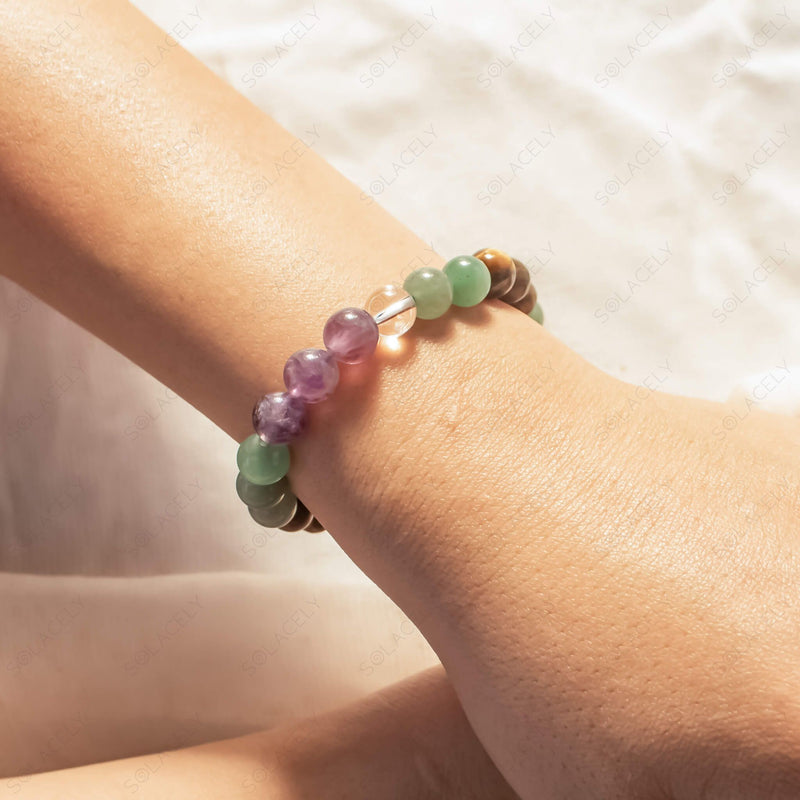
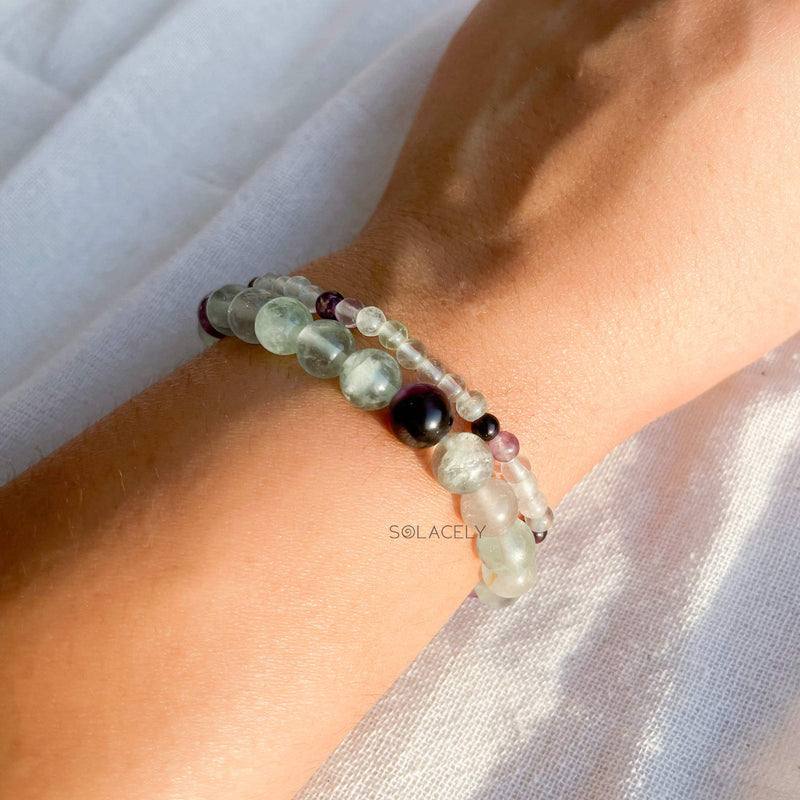
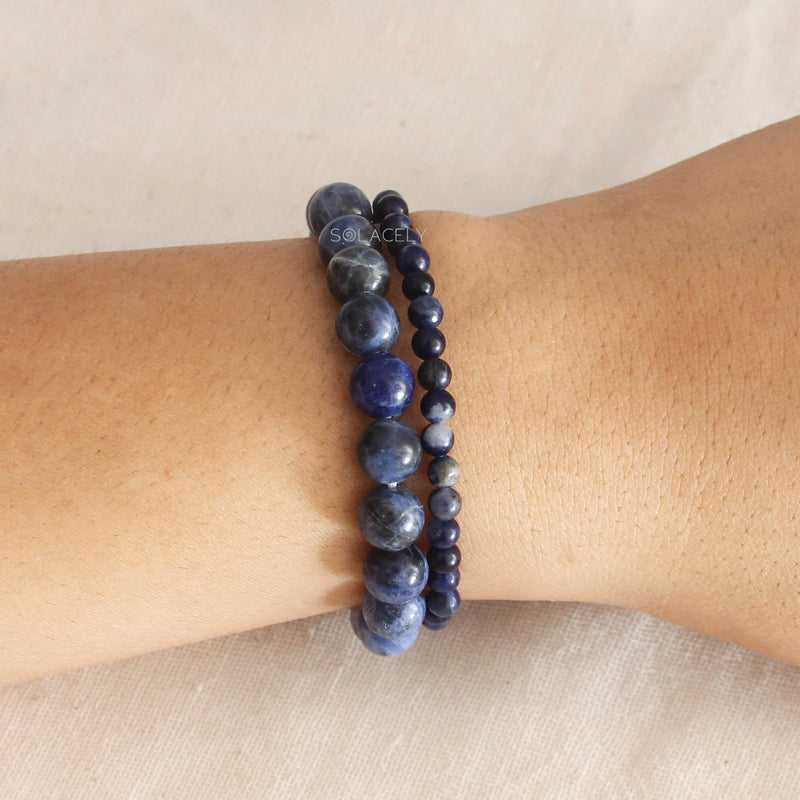
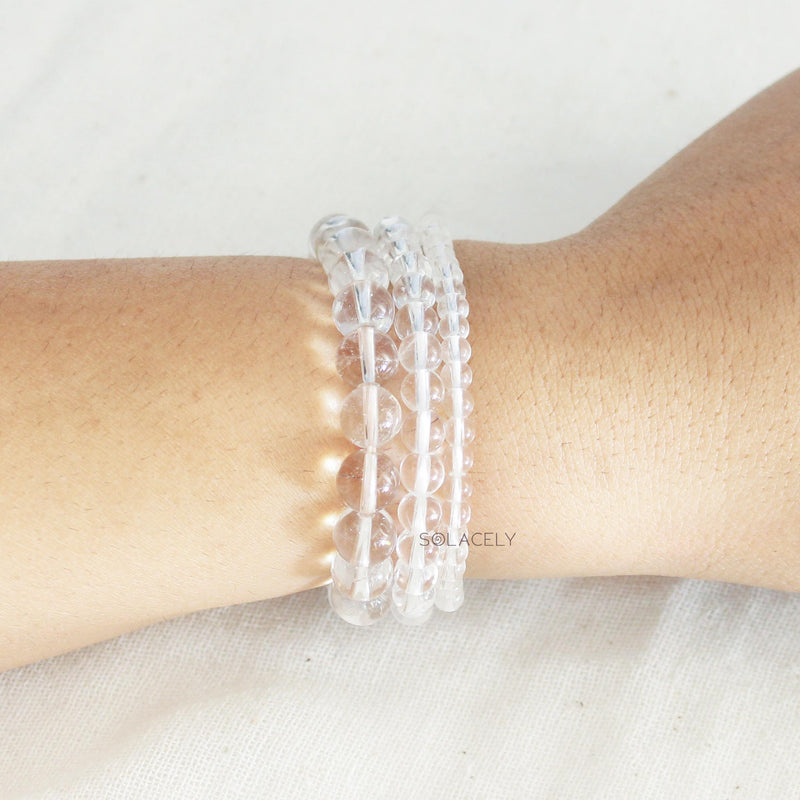
Fluorite is the traditional study stone, kept for mental order. Sodalite is kept for logical work, clear quartz for clarity, and lapis lazuli for retention and recall. Tiger's eye joins them for exam nerves. Match the stone to the part of studying that is actually hard.
Key takeaways
- The traditional study set: fluorite, sodalite, clear quartz, lapis lazuli, with tiger's eye for exam nerves.
- Fluorite is soft, 4 on the Mohs scale. Keep it on a desk rather than loose in a bag.
- Place it in your eye line, not your hands.
- Lapis lazuli has been associated with scholarship for thousands of years.
- Pair the stone with self-testing and spaced review for both halves of the work.
Why fluorite became the study stone
Fluorite's traditional association is mental order rather than mental energy: sorting, structuring, and taking the overwhelm out of a large body of material. It is a specific and modest claim, which is probably why it stuck so firmly.
It is calcium fluoride, and it occurs in a wider range of colours than almost any other common mineral. Rainbow fluorite, banded in purple, green and clear, is the variety most often sold for study use, and fluorite is also the source of the word fluorescence, since it was the first material in which that effect was described.
The practical thing to know is its softness. At 4 on the Mohs scale it marks more easily than quartz, so a fluorite piece belongs on a desk rather than loose in a bag with keys.
The rest of the set
| Stone | Traditionally kept for | Best suited to |
|---|---|---|
| Fluorite | Mental order, structuring information | Large syllabus, revision planning |
| Sodalite | Logic and precision | Editing, proofs, technical work |
| Clear quartz | Clarity; amplifies whatever it sits with | General use, paired with another stone |
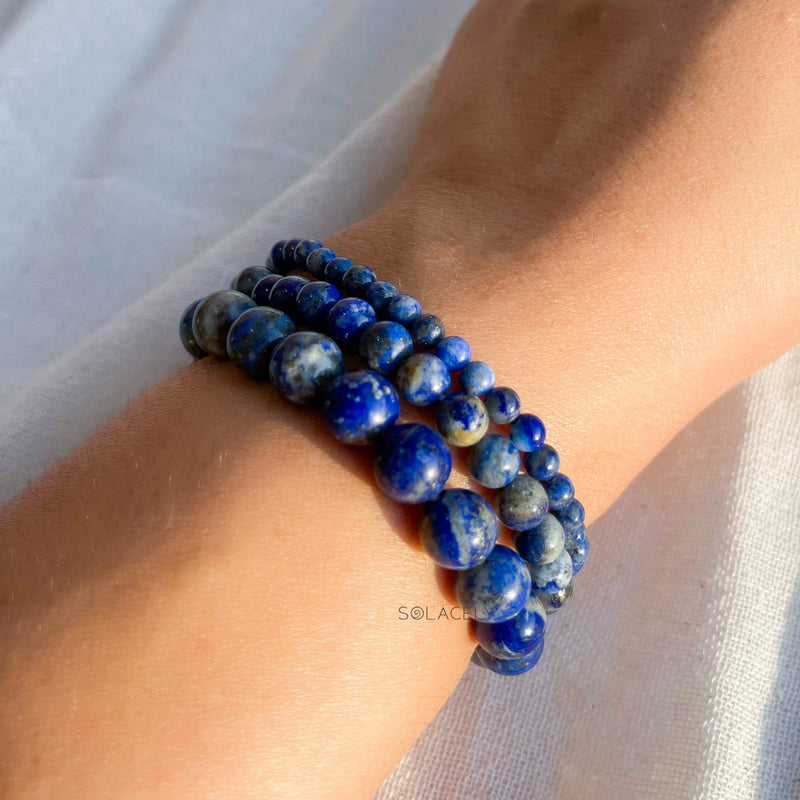
| Lapis lazuli | Retention and recall | Memorisation-heavy subjects |
| Tiger's eye | Nerve under pressure | Exam days rather than study days |
| Amethyst | Calm | When focus breaks from worry, not boredom |
Lapis lazuli has the longest history of the group. Mined in Afghanistan for thousands of years and ground into ultramarine for Renaissance painting, its association with scholarship follows from where it ended up: in the hands of people who could afford books.
How to set up a desk
- One stone, placed deliberately. Put it down when you sit, move it away when you stop. The placement is the signal.
- Eye line, not hands. Beside the screen or on the corner of the desk.
- Phone in another room. The stone is the cue that reminds you to do it.
- Pair only if the difficulty is genuinely two-part. Carnelian to start plus fluorite to continue is reasonable.
- Swap for exam day. Tiger's eye rather than fluorite, since the problem changes from organising to holding your nerve.
Our crystals for focus guide covers attention specifically, and crystals for energy and focus covers the distinction between not starting and not continuing.
The study habits that pair best with it
A stone on the desk works best alongside the methods that carry the load, and the two reinforce each other.
Self-testing beats re-reading. Retrieving information from memory strengthens it far more than reviewing does. Flashcards, past papers, and closing the book to write what you remember all work.
Spacing beats cramming. The same total hours spread over weeks produces much better retention than the same hours the night before.
Sleep consolidates. Memory settles overnight, so a late night before an exam usually costs more than the extra hours gain. Our crystals for sleep guide is worth reading during exam season.
Attention is trainable. Ten minutes of sitting practice pairs naturally with a crystal habit and builds the same muscle studying needs.
Handling and care
Fluorite is the delicate one. At 4 on the Mohs scale it marks against almost everything, including quartz. Store it alone, keep it out of long water soaks, and do not sand or grind raw specimens. Polished pieces are perfectly safe to handle and keep on a desk.
Sodalite and lapis lazuli sit around 5 to 5.5, also on the softer side, and lapis in particular should be kept away from acids and harsh cleaners since it is a rock rather than a single mineral. Clear quartz at 7 is the durable one and takes warm water and a cloth without concern.
Who this set suits
Students facing a long term of revision, anyone returning to study after time away, and people who work better with a visible routine than with willpower alone. It also makes a thoughtful gift for someone in exam season, since it says the work matters without adding pressure. Our crystals for confidence guide covers the nerve side, and crystals for positive energy at work covers the same setup for an office.
The uses described here are traditional and cultural, and nothing here is medical or educational advice. Persistent concentration difficulties are worth discussing with a doctor or a study support service.
Sources
Written by Chetena Sharma. Reviewed by the Solacely editorial team.
Frequently asked questions
About the author


Written by Chetna Sharma, crystal healing practitioner and co-founder of Solacely. Chetna has worked with healing crystals for over a decade and curates Solacely's protective stone collection.