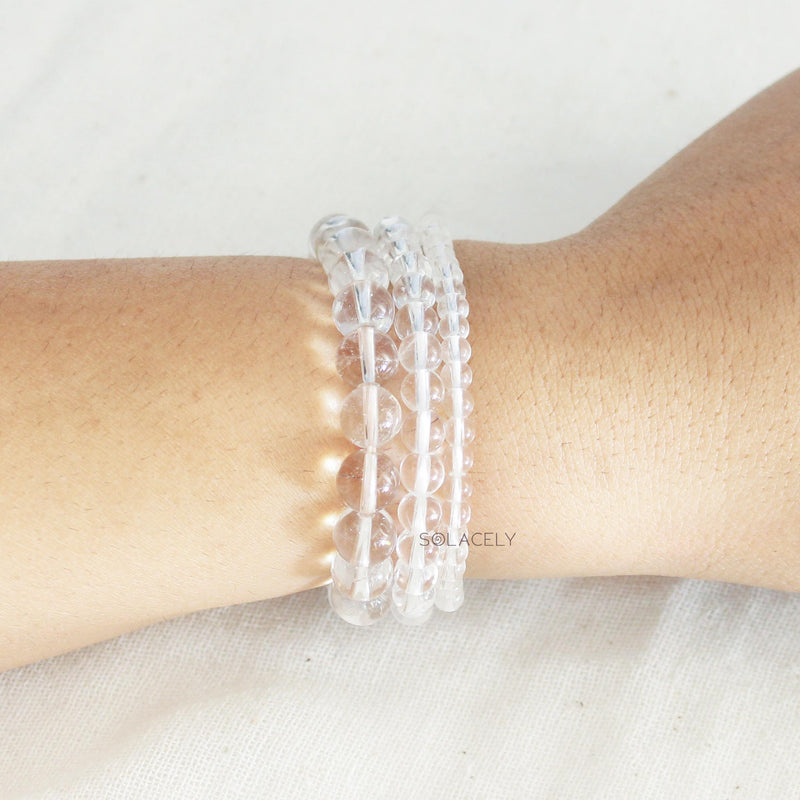
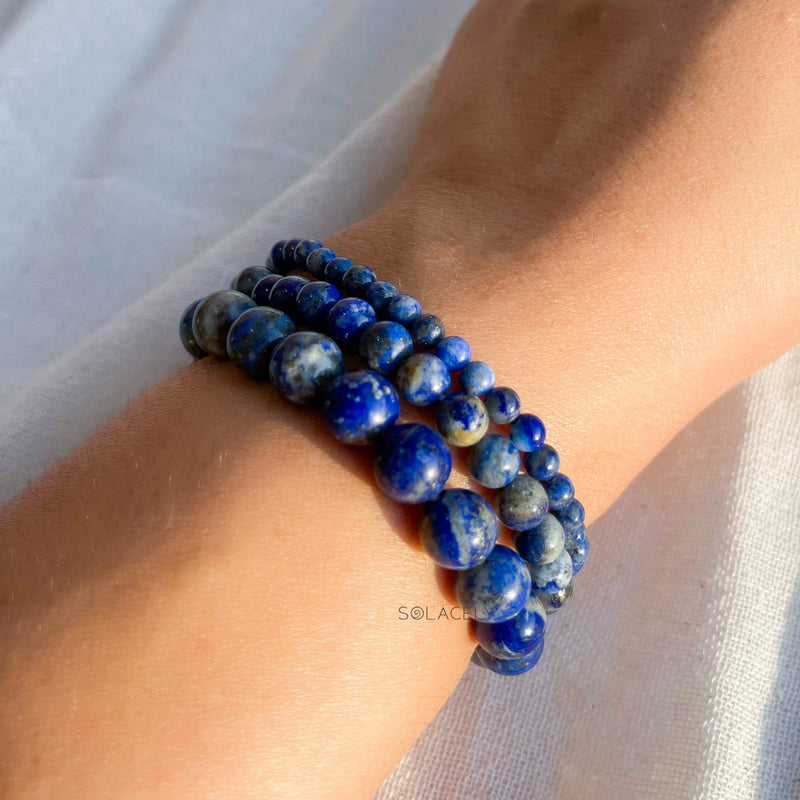
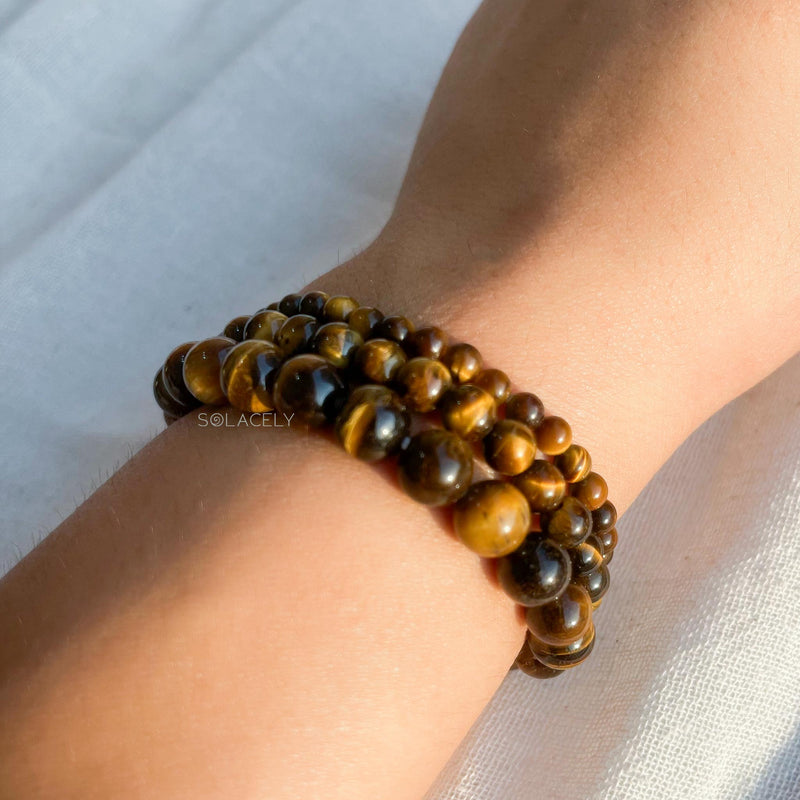
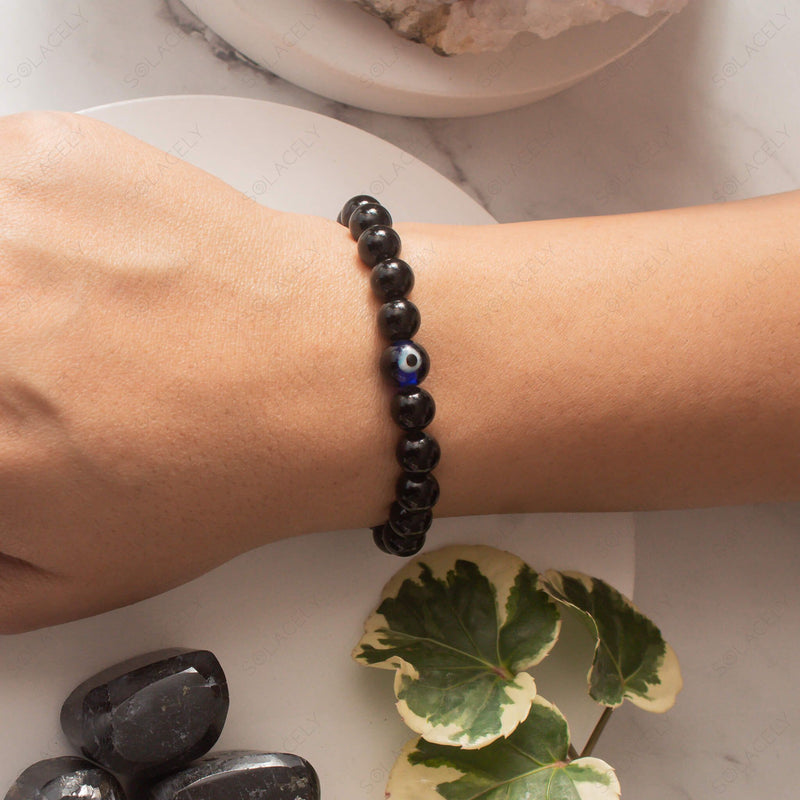
Clear quartz, black tourmaline, selenite, lapis lazuli, tiger's eye, carnelian and amethyst are the stones most often kept at a desk. This guide is about the workplace specifically: what survives a bag, what suits an open-plan office, and where to put a stone so it actually gets noticed during the day.
Key takeaways
- Black tourmaline and selenite are the two office workhorses, used for shielding and for clearing. Clear quartz, lapis lazuli and tiger's eye cover focus, communication and nerve.
- Selenite is a variety of gypsum and sits at only 2 on the Mohs scale. It scratches with a fingernail and degrades in water, so it is a shelf stone, not a bag stone.
- Black tourmaline is usually schorl, the iron-rich black variety. Tourmaline is genuinely pyroelectric, developing a charge as its temperature shifts, and that unusual property is part of why it picked up its protective reputation.
- Placement depends more on the type of office than on the stone. A private room allows anything, an open-plan desk wants discretion, and a hot desk means everything has to be wearable or pocketable.
- All metaphysical properties described here are traditional belief, not medical or scientific fact.
Which crystals suit a desk or office?
Seven cover almost every workplace request. Clear quartz is used for focus, black tourmaline for shielding, selenite for clearing a heavy room, lapis lazuli for honest communication, tiger's eye for nerve before a meeting, carnelian for drive on a flat afternoon and amethyst for winding down after an unpleasant one.
| Stone | Traditionally used for | Best workplace format |
|---|---|---|
| Clear quartz | Focus and clarity | Small point beside the monitor |
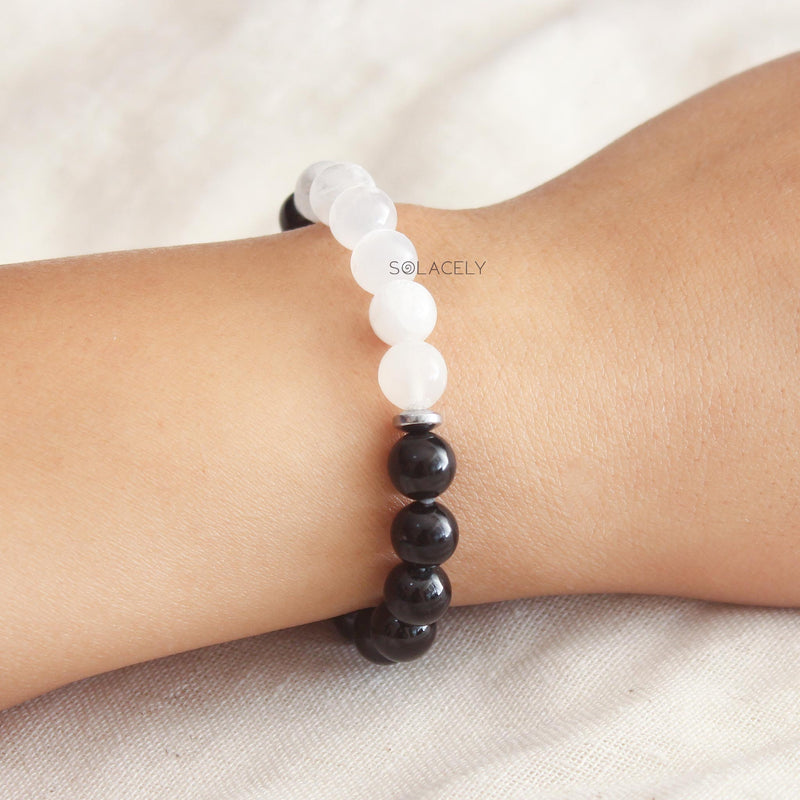
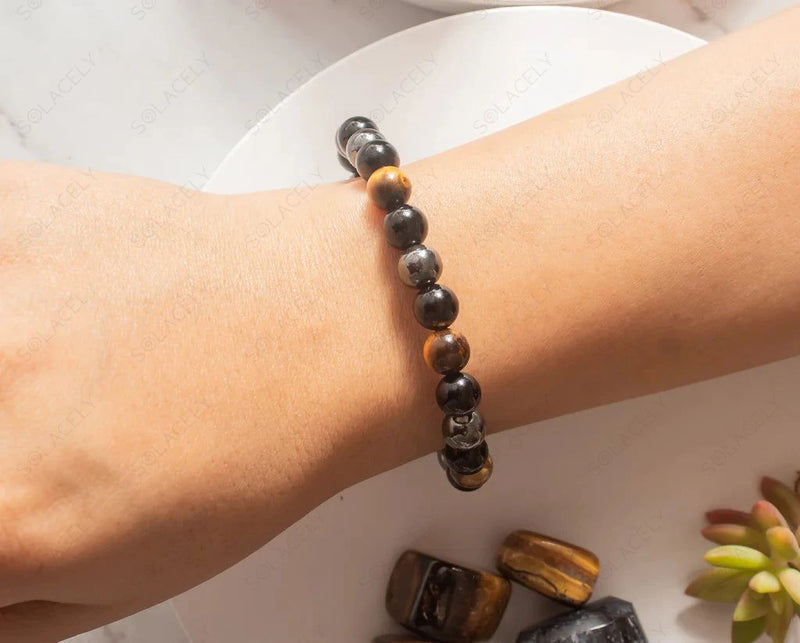
| Black tourmaline | Shielding from office friction | Tumble in a drawer or bracelet |
| Selenite | Clearing a heavy atmosphere | Small wand on a shelf, kept dry |
| Lapis lazuli | Honest, clear communication | Bracelet or pendant |
| Tiger's eye | Nerve and steadiness | Pocket stone for meetings |
| Carnelian | Drive and creative push | Desk tumble |
| Amethyst | Decompression after a hard day | Kept in a bag or at home |
Two stones is the realistic number for a working desk. One that stays put and one that travels with you covers most situations without turning your workstation into a display. Our guide to crystals for the office desk goes into arrangement in more detail.
What does a desk crystal actually do for your day?
It marks a pause. That is the thing practitioners describe most often, and across a long working day it is worth more than it sounds. A stone sitting in your line of sight is the prompt to stop for thirty seconds, take a few slow breaths and come back to the task rather than push straight on through the afternoon.
The stones are then chosen for the specific friction of a workplace rather than for a general wish. Black tourmaline sits between you and a difficult room. Lapis lazuli is worn for the conversation you have been putting off. Tiger's eye goes in a pocket before you stand up to present. Each has a job, and naming that job is what keeps the habit alive past the first fortnight.
One thing is worth saying plainly. If your workplace is genuinely making you unwell, that is a conversation for your manager, HR or your doctor. Keep the stones for the ordinary friction of a working week, and use the proper channels for anything heavier than that.
Black tourmaline and selenite: the two office workhorses
These two show up on more desks than any other pair, and they are used as opposites. Black tourmaline is the shield, kept between you and whatever is going on in the room. Selenite is the reset, used to clear a space that feels stale after a long or difficult stretch.
Geology.com describes tourmaline as a complex boron silicate with an exceptionally wide colour range, and notes that the black iron-rich variety, schorl, is by far the most common. Tourmaline is also pyroelectric and piezoelectric, meaning it develops a small electrical charge as its temperature or the pressure on it shifts. That is real physics, and it is a large part of why tourmaline picked up its protective reputation in the first place.
Selenite comes with one piece of care advice. It is a variety of gypsum, which Geology.com lists at 2 on the Mohs scale, soft enough to scratch with a fingernail. It also degrades in water. Never rinse it, never keep it near a water bottle, and never carry it loose in a bag with keys.
Where do you put crystals in different kinds of workplace?
Placement depends far more on your office type than on the stone. A private room allows anything. A hot desk allows almost nothing. Choosing a format that fits the situation is the difference between a practice you keep for a year and one that lasts three days before it feels awkward.
Open-plan offices
Discretion wins here. A bracelet, a pocket tumble or a small stone tucked behind a monitor stand attracts no attention and needs no explanation. Large raw pieces invite comment you may not want, and comment is the fastest way to abandon a habit.
Home offices
This is the one setting where a proper arrangement makes sense. A cluster on a shelf in your sightline, a selenite wand where afternoon light reaches it, a clear quartz point by the screen. Our guide to crystals for productivity covers how to build that without cluttering the desk.
Hot desks and shared spaces
Everything has to be wearable or pocketable, since nothing can be left behind. One bracelet and one small tumble is the entire kit. Keep the tumble in a small pouch rather than loose, because coins and keys will scratch anything softer than quartz.
Meeting rooms and presentations
A stone in a jacket pocket is the traditional choice, usually tiger's eye or black tourmaline, held for a few seconds before you speak. If you prefer a fixed piece for the room itself, a crystal pyramid for the office desk is the format people use for a shared space.
Which stone for which work problem?
Match the stone to the specific irritation rather than to a general wish for good vibes. Work problems are usually quite concrete: a colleague who drains you, a report you cannot start, a meeting you dread, an afternoon slump. Traditional practice has a different pick for each, and choosing precisely makes the habit stick.
| The problem | Traditional pick |
|---|---|
| Cannot focus, too many tabs open | Clear quartz or fluorite |
| Office politics and draining colleagues | Black tourmaline |
| Struggling to say the difficult thing | Lapis lazuli |
| Nerves before presenting | Tiger's eye |
| Flat, unmotivated afternoon | Carnelian |
| Cannot switch off after work | Amethyst |
If your aim is broader than day-to-day friction, our guide to the best crystals for work success deals with promotions, reviews and longer-term career goals rather than the weekly grind.
How do you keep work crystals clean and appropriate?
Two kinds of upkeep matter, and one of them is social. Physically, desk stones collect dust, hand cream and coffee splashes, so a wipe every couple of weeks is sensible. Socially, a workplace is not your home, and a discreet practice avoids conversations you would rather not have with a manager.
Cleaning is simple if you sort by hardness. Quartz-family stones such as clear quartz, amethyst, carnelian and tiger's eye take a quick rinse and a full dry. Lapis lazuli is porous and should only be wiped with a soft dry cloth. Selenite must stay completely away from water. Black tourmaline is fine with a brief rinse but dislikes prolonged soaking.
For energetic cleansing at work, sound and moonlight are the practical options, since burning anything is rarely allowed in an office. Leaving a stone on a windowsill overnight is usually enough, and it avoids the awkwardness of smudging near a fire alarm.
Is workplace luck different from general good fortune?
Yes, in practice. Workplace stones are chosen for specific, dated events: a review on Thursday, a pitch next month, a difficult conversation you keep postponing. General luck practices are broader and slower, aimed at atmosphere and long-term fortune rather than at a particular calendar entry.
That changes what you buy. Work pieces need to be durable, portable and unremarkable, which favours quartz-family stones and simple bracelets. Home luck pieces can be large, soft or striking, because nothing is going to knock them about in a laptop bag.
If you want the broader version, our companion guide to crystals for positive energy and luck covers everyday fortune, home placement and the history of carrying a lucky object. Read this one for the desk and that one for the rest of life.
The properties described here reflect traditional and cultural belief around crystals. They are not medical claims and no stone treats stress, burnout, anxiety or any other health condition. If your work is affecting your physical or mental health, speak to your GP or another qualified professional, and raise the issue through your workplace's proper channels.
Sources
Written by Chetena Sharma. Reviewed by the Solacely editorial team.
Frequently asked questions
About the author


Written by Chetna Sharma, crystal healing practitioner and co-founder of Solacely. Chetna has worked with healing crystals for over a decade and curates Solacely's protective stone collection.