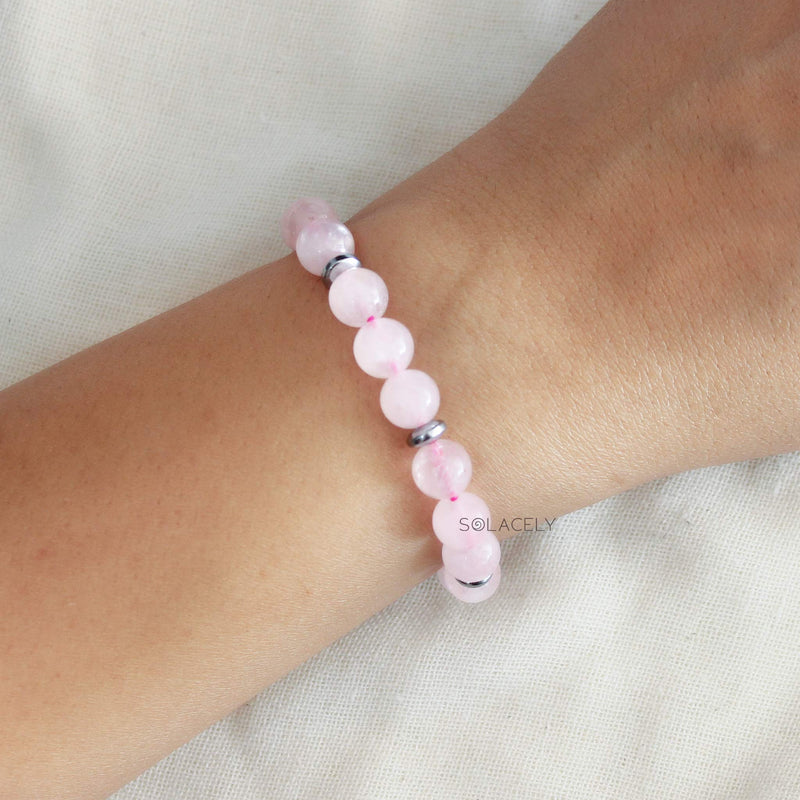
Six stones cover a living room: rose quartz on the coffee table, black tourmaline beside the screen, clear quartz at the centre, citrine in the southeast corner, amethyst in the reading nook and selenite on a high shelf. Three is enough for most rooms. The two things that decide placement here are sunlight and pets.
Key takeaways
- Rose quartz for shared seating, black tourmaline for the screen wall and threshold, clear quartz for the centre, citrine for the wealth corner, amethyst for a quiet corner and selenite for a high shelf.
- Sun fade is the living room problem. Amethyst and citrine both pale in direct afternoon light, so keep them a few feet back from south and west windows.
- Black tourmaline is the piece people keep beside a television or a router, and the placement doubles as a cue to balance screen time with rest.
- Pet safe shortlist: the quartz family is inert. Keep pyrite and malachite out of any pet accessible spot.
- Selenite is gypsum at about 2 on the Mohs scale, so it stays high, dry and away from drinks and plant misters.
- Everything described here is traditional belief and cultural practice.
Why does the living room need its own logic?
Because it is the busiest room in the house and the one with the most competing demands. It has the largest windows, the most electronics, the most visitors and usually the pets. Every one of those changes what belongs where.
It is also the room where a practice most easily becomes clutter. A bedroom has one surface that matters and a dining room has a table. A living room has a coffee table, a mantel, two side tables, a shelf and a windowsill, and the temptation is to put something on all of them. Three stones placed deliberately will do more than nine spread thin.
The other difference is that the living room is shared with people who have not opted into the practice. Placements that read as decoration work here. Anything that needs explaining tends to get quietly moved. For the rest of the house, our crystals for home guide maps it room by room.
The sun fade problem
This is the most skipped issue in living room crystal guides and the one most likely to cost you a stone you like.
Amethyst takes its purple from iron sitting in the quartz structure, and sustained ultraviolet light gradually pales it. The change is slow, anywhere from months to a few years depending on how strong the light is, and it does not reverse. The stone keeps its hardness and loses its colour, drifting towards a washed out lilac or a faint yellow.
Citrine behaves the same way for the same reason. Rose quartz softens too, more slowly. So the rule for a living room is simple: work out which windows face south or west, and keep the coloured quartz a few feet back from them. Clear quartz and black tourmaline are untroubled by light and can take the bright spots, which is convenient because they are also the two that look best catching the sun.
Where do the six stones go?
Each has a spot that suits it. Start with the first three.
- Rose quartz, coffee table or sofa side. The heart stone of the tradition and the natural choice for shared seating. A tumble people can pick up, or a polished heart on the console.
- Black tourmaline, either side of the screen. Two small tumbles on the television console, or one by the front door as a threshold marker. Tumbled forms only, since raw schorl has edges.
- Clear quartz, centre of the coffee table. The steadiest stone here, with no fade and no moisture worry. Use a rounded piece rather than a sharp point at knee height.
- Citrine, southeast corner. The traditional wealth corner in both Vastu and Feng Shui. A small tumble in the right corner is worth more than a large cluster in the wrong one.
- Amethyst, the reading corner. A side table away from the screen, ideally on a north or east facing shelf out of the strong afternoon light.
- Selenite, high shelf. Dry, above pet height, nowhere near a drink or a plant mister.
If your living room opens onto the dining space, treat the two as zones rather than one room and let each keep its own logic. Our dining room guide covers the table end.
Black tourmaline beside the screen
This is the placement people ask about most, and it is worth explaining properly rather than in passing.
Black tourmaline is the boundary stone of modern practice, kept wherever you want a line drawn between yourself and something else. In a living room the screen is the thing most likely to absorb an evening, so the console is where the stone goes. Two small tumbles either side of the television is the usual arrangement.
Tourmaline also has a genuinely unusual physical property behind its reputation. It is pyroelectric and piezoelectric, developing a small electrical charge as its temperature shifts or when it is pressed, and mineralogists have described that behaviour for more than two centuries. Very few minerals do anything so visible on a tabletop.
Placed well, the stone works as a cue as much as anything else. Catching sight of it is the prompt to get up, stretch, and decide whether the next episode is actually what you want. That is where practitioners say the boundary really lives. Our black tourmaline guide covers the rest.
Pets, and what to leave out
Living rooms are where most dogs and cats spend their day, which narrows the list a little.
The quartz family covers most of what you want here. Rose quartz, clear quartz, amethyst and citrine are all chemically inert and perfectly reasonable in a room with animals, provided loose tumbles sit above floor level rather than rolling around on a rug.
Two to keep out of reach entirely. Pyrite belongs on a high shelf or in a study, not on a coffee table, and malachite carries copper that can leach if a stone is mouthed. Selenite is not toxic but it is soft enough that a determined chewer will destroy it, and the fragments are unpleasant. If a pet does swallow a stone, ring your vet straight away, and in the United States the ASPCA Animal Poison Control Center runs a 24 hour line on 1-888-426-4435.
How do you cleanse living room stones?
These pieces get handled by everyone who visits, so most practitioners refresh them every week or two, and sooner after a difficult week or a big gathering.
- Moonlight overnight. Move the coffee table pieces to a windowsill for a night. Safe for everything in the room, and there is no ultraviolet worry after dark.
- Sound. A small bell or singing bowl near the stones for half a minute. Contact free, which is what selenite wants.
- A dry cloth. Living room stones collect more dust than anywhere else in the house. Thirty seconds handles it.
Skip salt water here, particularly if a child or a pet might brush the bowl, and keep selenite out of water altogether. For the calmer rooms, our bedroom guide covers a different set of priorities entirely, since what suits a room people gather in is rarely what suits a room you sleep in.
The properties described here reflect traditional and cultural belief around crystals. They are offered for reflection and wellbeing and are not medical advice, a diagnosis, or a treatment for any condition. Keep pyrite and malachite away from children and pets, keep small tumbled stones off the floor in a home with animals, and never place crystals in drinking water.
Sources
Written by Chetena Sharma. Reviewed by the Solacely editorial team.
Frequently asked questions
About the author


Written by Chetna Sharma, crystal healing practitioner and co-founder of Solacely. Chetna has worked with healing crystals for over a decade and curates Solacely's protective stone collection.