Green aventurine, citrine, pyrite, tiger's eye, jade, sunstone and clear quartz are the seven stones most associated with positive energy and good luck. This guide covers general everyday fortune: what you carry, what sits by your front door and what goes in your wallet. Desk and office placement is a separate subject.
Key takeaways
- Green aventurine is the traditional luck stone, jade the traditional fortune stone, citrine the momentum stone and tiger's eye the protective one. Each covers a different idea of luck.
- Carrying a lucky object is one of the oldest recorded human habits. Amulets are documented across virtually every culture we have records of, worn to attract good fortune and to repel harm.
- Pyrite is iron sulfide, the mineral nicknamed fool's gold, and its brassy natural cubes are why it became a symbol of found wealth.
- Warming quartz to draw out its golden tones is a long established and entirely stable practice across the coloured stone trade, so choose the depth of gold you want to wear.
- Two stones, one carried and one placed, is the practice most people can actually keep going. All metaphysical properties described here are traditional belief rather than medical or scientific fact.
Which crystals are used for positive energy and luck?
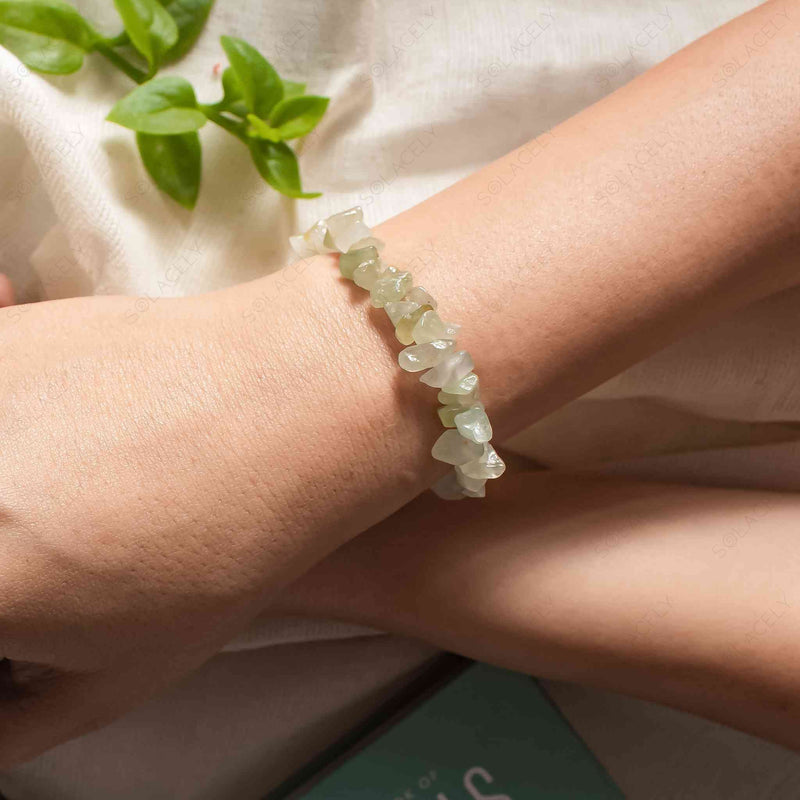
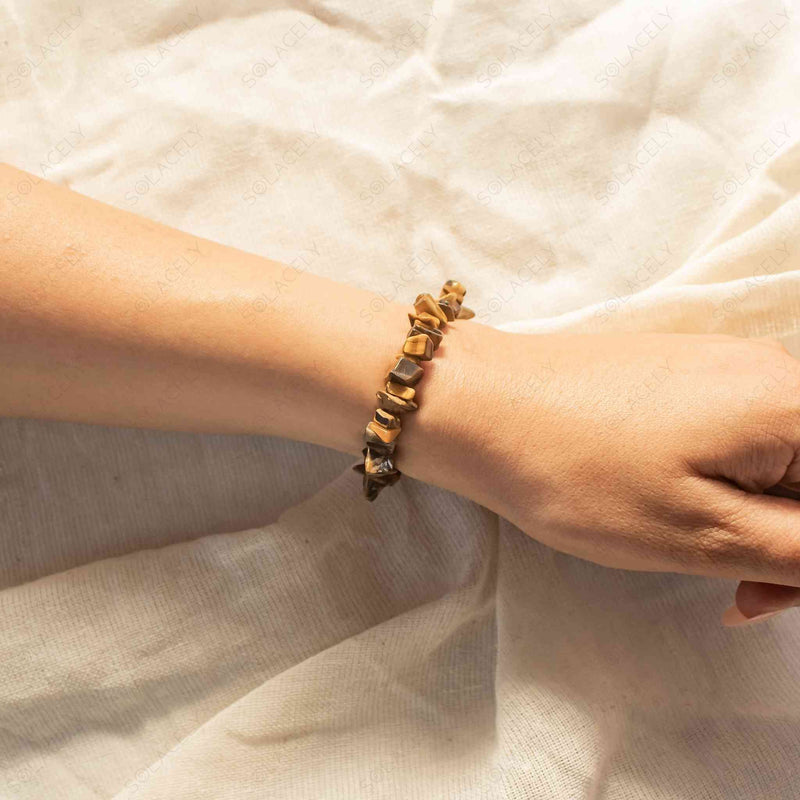
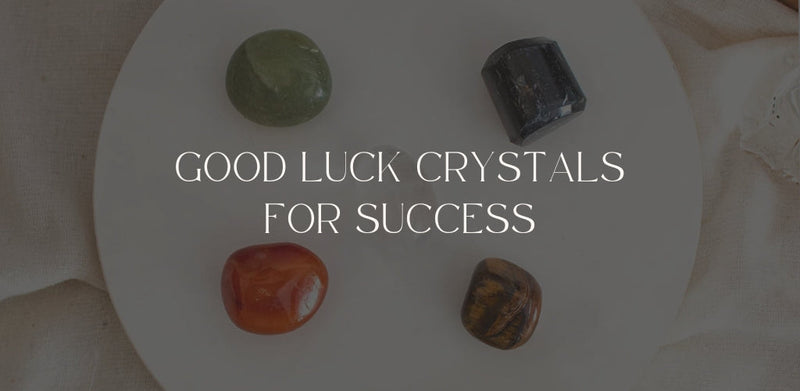
Seven stones carry the tradition, and they are not interchangeable. Green aventurine covers chance and timing, jade covers steady long-term fortune, citrine covers momentum, pyrite covers nerve, tiger's eye covers protected luck, sunstone covers mood and clear quartz is the general amplifier people add to whatever else they are using.
| Stone | The kind of luck it represents | Usual format |
|---|---|---|
| Green aventurine | Chance, timing, openings | Pocket tumble or bracelet |
| Jade | Steady fortune, friendship, longevity | Pendant or keepsake |
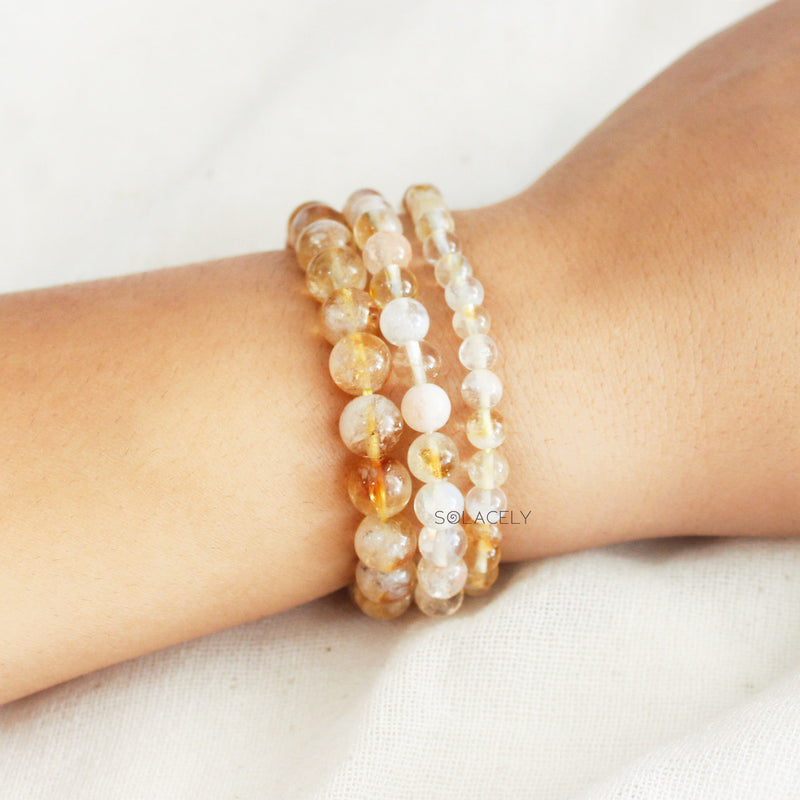
| Citrine | Momentum and enterprise | Wallet stone or bracelet |
| Pyrite | Nerve and self-belief | Raw cube at home, kept dry |
| Tiger's eye | Luck with a protective edge | Bracelet |
| Sunstone | Brightness, warmth, optimism | Bracelet or windowsill piece |
| Clear quartz | Clarity, amplifying an intention | Point or tumble |
Picking two rather than seven is the usual advice. One worn stone and one placed stone is a practice you can maintain, while a drawer of thirty is a collection. Our guide to crystals for happiness and good luck goes further into the mood side of that choice.
Why have people carried lucky stones for thousands of years?
Because the habit is close to universal. An amulet is an object worn or carried to bring good fortune and ward off harm, and the practice is documented across ancient Egypt, Mesopotamia, Greece, Rome, China, India and far beyond. Stones, shells, metal charms and written words all served the same purpose.
What is interesting is how consistent the reasoning stayed. Amulets were chosen for a visible quality: a colour, a shine, a rarity, a resemblance to something valuable. Pyrite looked like gold. Jade felt cool and refused to shatter. Green aventurine had the colour of new growth. The symbolism followed the physical property.
That history is the most grounded way to understand modern crystal practice. A lucky stone is a portable symbol of a decision you have made, and humans have carried portable symbols for as long as we have records of them. Choosing one today puts you in a very long queue of people who did the same.
Is pyrite really lucky, or is it just shiny?
It is shiny, and that is exactly why it became lucky. Geology.com describes pyrite as iron sulfide with a metallic lustre and brassy yellow colour that fooled prospectors so often it earned the nickname fool's gold. It also grows in unusually sharp natural cubes, which look manufactured but are not.
Crystal tradition took the fool's gold story and inverted it. Pyrite became the stone of backing yourself, of nerve, of the confidence to pursue something valuable. That reinterpretation is a comparatively modern one, and it is the meaning carried by every pyrite cube on a shelf today.
Practically, pyrite is a home stone rather than a pocket stone. It tarnishes in humidity, so keep it away from bathrooms and out of sealed containers, where trapped moisture makes the problem worse. A raw cube on a shelf is the traditional placement.
Jade and citrine: two very different kinds of luck
Jade is slow luck and citrine is fast luck. Jade is the name given to two distinct minerals, jadeite and nephrite, both carved and treasured in China for thousands of years and both valued for toughness rather than for hardness. It resists breaking in a way most gems do not.
That toughness shaped the meaning. Jade is associated with longevity, steadiness, friendship and fortune that accumulates rather than arrives. It is the stone people pass down. A jade piece is chosen for a decade, not for a fortnight.
Citrine is the opposite temperament, used for momentum and enterprise. The Gemological Institute of America describes it as the yellow to orange variety of quartz, and warming quartz to draw out those golden tones is a long established and entirely stable practice across the coloured stone trade. Pick the depth of gold you want to wear, from pale champagne through to a deep madeira.
Where should you place luck crystals at home?
Placement follows movement. Stones are traditionally put where energy is thought to enter, gather or leave a home, which in practice means doorways, the main living space, and wherever money and keys pass through. The point is that you notice them daily, so hidden placements do very little.
The entrance
A bowl by the door is the classic setup, usually holding tiger's eye or black tourmaline alongside a green aventurine. It is the first and last thing you pass, which makes it the most reliable reminder in the house.
The living room and windowsills
Sunstone and citrine are the usual choices here, chosen for warmth and brightness in a room where people gather. Keep both out of long direct sun, since prolonged exposure can pale them. Our guide to crystals for positive energy in the home covers room-by-room placement in detail.
The wallet, bag or car
A small citrine or aventurine tumble in a wallet is the everyday-carry version of the same idea. Keep it in a separate pocket so coins do not scratch it, and keep pyrite out of the wallet entirely because it tarnishes against damp leather.
Is luck at home different from luck at work?
The stones overlap, but the practice does not. Home luck is about atmosphere, welcome and long-term fortune, so the pieces are placed and left alone. Workplace luck is about specific outcomes on specific days, so the pieces are carried, discreet, and often chosen for focus rather than fortune.
The practical differences matter. An office needs stones that survive a bag and do not invite comment, which rules out large raw pieces and anything soft enough to chip. Shared desks need something pocket-sized. If that is your situation, our companion guide to crystals for positive energy at work deals with desks, open-plan offices and meetings specifically.
For fortune tied to a defined goal rather than to general good feeling, good luck crystals for success narrows the list further, and crystals for protection and good luck covers the pairing people ask for most often.
How do you set an intention with a luck crystal?
Name one specific thing, then come back to it. A stone attached to a real, named goal stays in your awareness in a way that a general hope for better days never quite manages. Vague wishes let a lucky stone drift quietly into being an ornament, and naming one concrete thing is what keeps it in use.
A simple method works well. Choose one stone, name one outcome and a rough timeframe, and write both down somewhere you will see them again. Revisit it in a month, keep the intention if it still fits, and reset it plainly if the goal has moved on since you set it.
On care, moonlight, sound and a rest on selenite suit all seven stones. Rinse quartz-family pieces briefly and dry them, keep pyrite entirely dry, and store softer stones separately so harder ones do not mark the polish. Skip long sun sessions, which fade citrine and can dull aventurine over time.
The properties described here reflect traditional and cultural belief around crystals. They are not medical claims, they are not financial advice, and no stone influences external events, health or money. If you are managing a health concern or a significant financial decision, speak to a qualified professional.
Sources
Written by Chetena Sharma. Reviewed by the Solacely editorial team.
Frequently asked questions
About the author


Written by Chetna Sharma, crystal healing practitioner and co-founder of Solacely. Chetna has worked with healing crystals for over a decade and curates Solacely's protective stone collection.