Hematite and lapis lazuli are paired because they work at opposite ends of the body. Hematite is the grounding half, dense and quiet at the base. Lapis is the clarity half, kept for clear thought and honest speech. Together they are traditionally worn for staying steady while thinking straight.
Key takeaways
- Hematite sits at the root, lapis at the throat and third eye. The pairing spans the system base to head.
- Kept for work that is demanding and detailed at the same time.
- Hematite is an iron oxide and noticeably heavy; that weight is the point.
- Lapis is softer, around 5 to 5.5, so a tight hematite strand will mark it.
- Keep both dry. Hematite rusts, lapis is porous.
What each stone brings
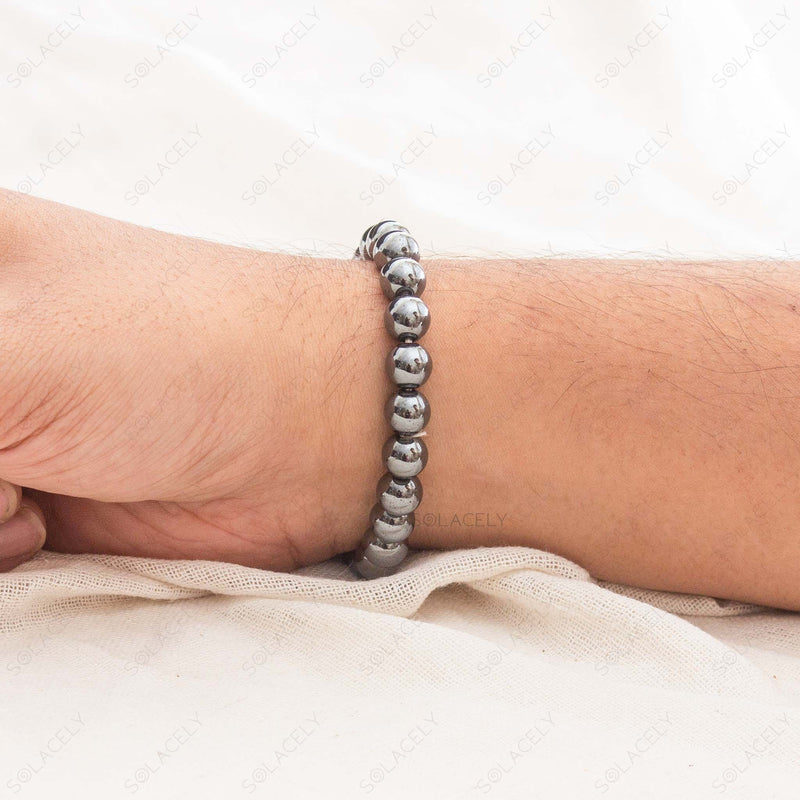
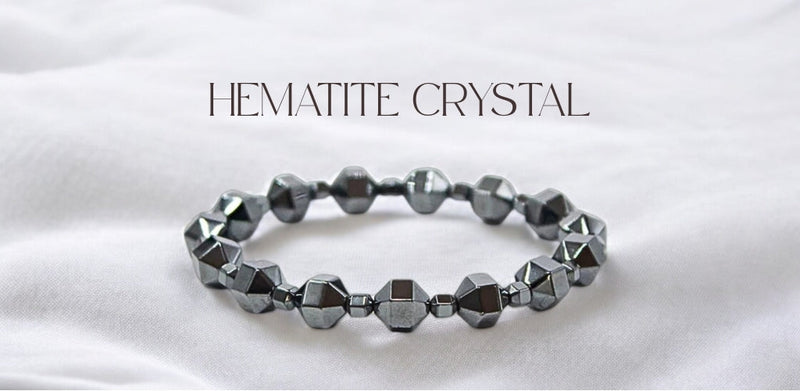
Hematite is iron oxide, and iron is dense. A hematite bracelet weighs noticeably more than a quartz one of the same size, and anyone who picks one up notices immediately. That heft is a large part of why it became the grounding stone in modern practice: it feels substantial in a way lighter stones simply do not. Its name comes from the Greek for blood, after the red brown streak it leaves when scratched, whatever colour the polished surface looks.
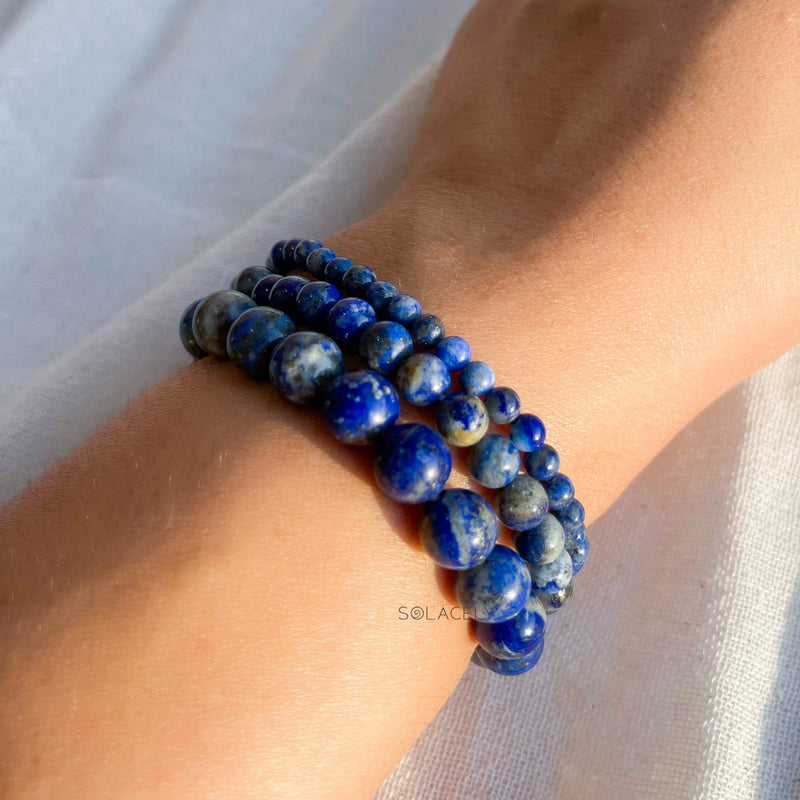
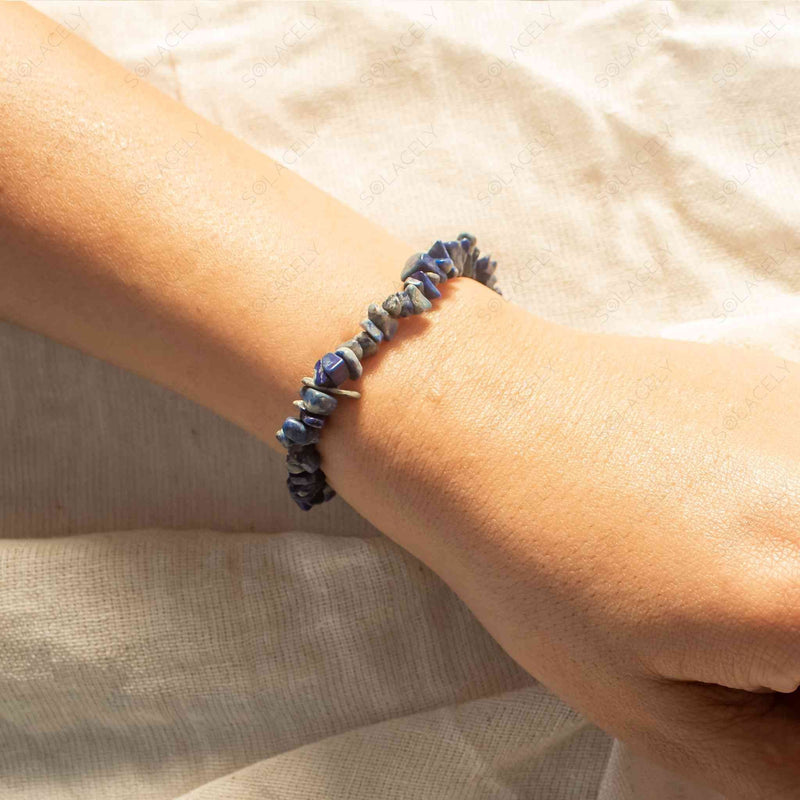
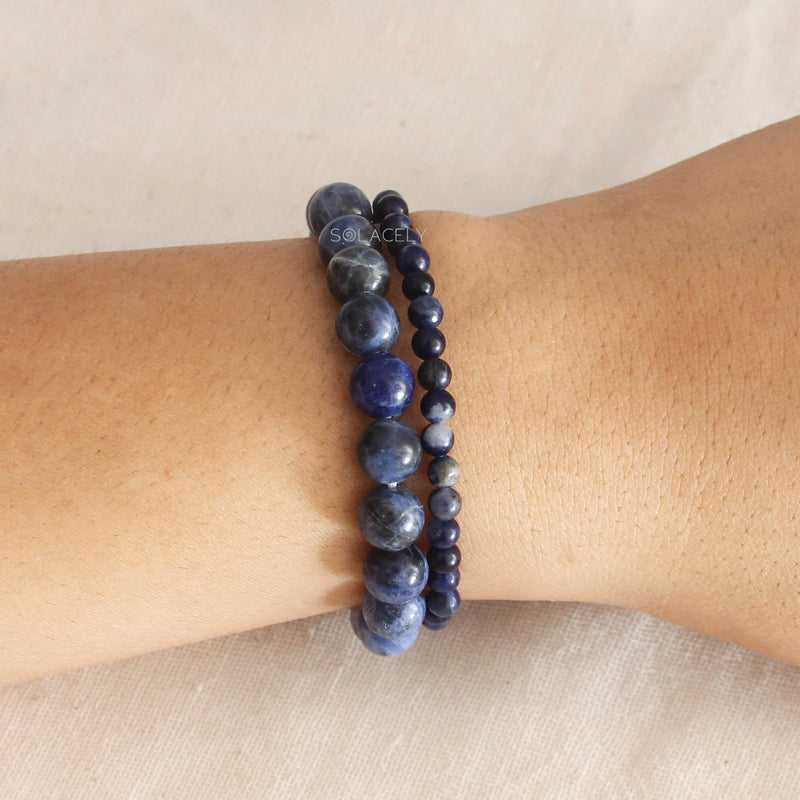
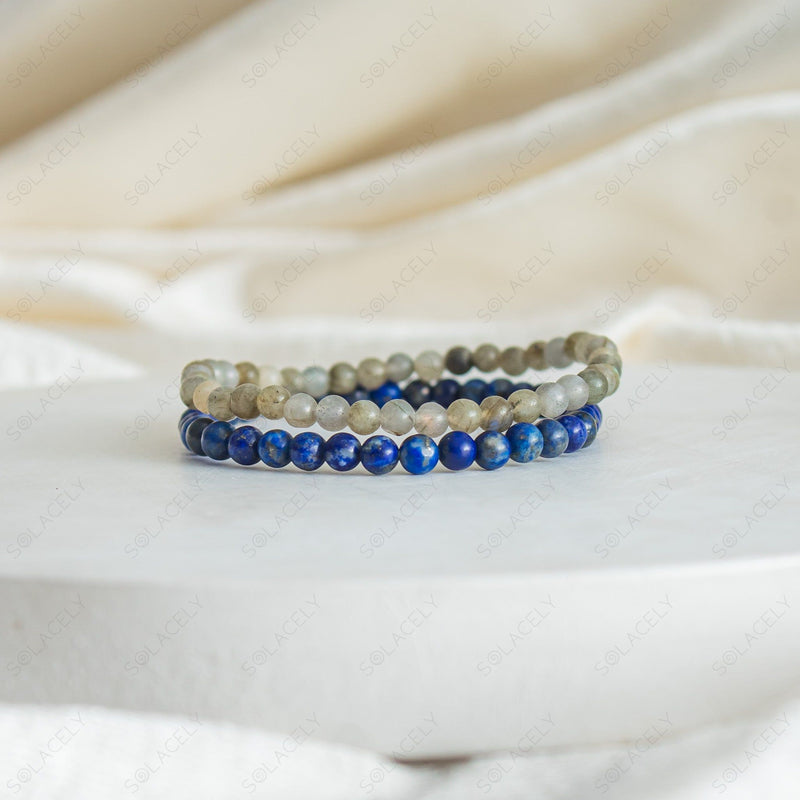
Lapis lazuli is a different thing entirely, and not even a single mineral. It is a rock, built mostly of lazurite with white calcite and glinting flecks of pyrite running through it. Those gold flecks are pyrite, and they are the traditional mark of good lapis rather than a flaw. It has been mined in Afghanistan for thousands of years and ground into ultramarine for Renaissance painters, which is where its long association with scholarship and truth comes from.
Our fuller profiles sit in the hematite guide, and the throat stones are covered in crystals for the throat chakra.
Why the pairing works
The traditional logic is span. Hematite is assigned to the root at the base of the spine, and lapis to the throat and third eye near the head. Putting them together is understood to connect the grounded end of the system to the thinking end, so that clarity has something underneath it.
That combination suits a recognisable kind of pressure: work that is intellectually demanding and also nerve-racking. Presenting findings. Sitting an exam. A difficult meeting where you need to be both composed and articulate. Lapis alone can leave someone sharp but jittery; hematite alone can leave them steady but flat.
People also reach for it during long stretches of study, where the difficulty is staying with something detailed for hours. Our crystals for focus guide covers that use in more depth.
How to wear the pair
| Arrangement | Notes |
|---|---|
| One on each wrist | The safest option; keeps the harder hematite off the softer lapis |
| Stacked on one wrist | Common, but expect the lapis to pick up marks over time |
| Hematite worn, lapis carried | Lapis in a pocket for the meeting, hematite on all day |
| Lapis pendant, hematite bracelet | Puts each stone at its traditional height |
| Both on a desk | Placement rather than wear, for long working sessions |
The hardness difference is the practical thing to know. Hematite sits around 5.5 to 6.5 and lapis around 5 to 5.5, so hematite is the harder of the two and will gradually scuff lapis where they rub. Separate wrists solves it entirely.
Using them in a session
- Lie down. Hematite at the base of the spine or between the feet.
- Lapis at the base of the throat or on the forehead, whichever feels right.
- Breathe into the belly first, four in and six out, until the body settles.
- Then bring attention up to the throat or brow, without changing the breath.
- Ten to fifteen minutes, then sit up slowly.
The order matters in traditional practice: ground first, then clarify. Starting at the head with an unsettled body is understood to be why sessions sometimes leave people more scattered than they began. Our root chakra guide covers the grounding half properly.
Who this pairing suits
People whose work asks for composure and precision at once: teachers, clinicians, lawyers, students in exam season, anyone who presents. It also suits people who have tried a clarity stone alone and found it left them wired rather than clear.
It suits less well anyone looking for warmth or lift. This is a cool, serious pairing by character. For optimism and drive, citrine or sunstone are the more natural companions, and the crystals for confidence selection covers the nerve side.
Caring for both
The single rule that covers this pairing: keep them dry.
Hematite is an iron oxide, so prolonged damp encourages rust spots on the surface and dulls that mirror finish. Wipe it with a dry cloth and dry it thoroughly if it does get wet.
Lapis is porous and softer, and it dislikes soaking, acids and cleaning solutions. Wipe rather than wash, and put jewellery on after perfume and lotion rather than before.
For energetic cleansing, sound suits this pair particularly well since it sidesteps the water question entirely. Smoke, moonlight or a rest on selenite all work equally. Store them separately from each other and from harder stones.
Crystals are offered here for reflection and wellbeing as part of a long standing tradition. They are not a treatment for any medical condition and are not a substitute for professional healthcare.
Sources
Written by Chetena Sharma. Reviewed by the Solacely editorial team.
Frequently asked questions
About the author


Written by Chetna Sharma, crystal healing practitioner and co-founder of Solacely. Chetna has worked with healing crystals for over a decade and curates Solacely's protective stone collection.