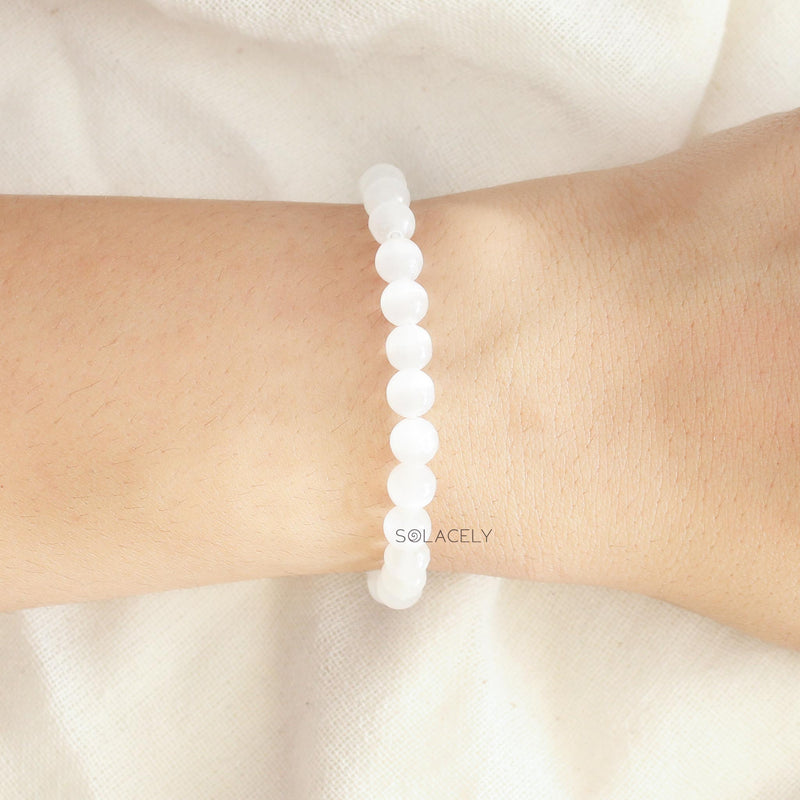
Cleanse a selenite bracelet with moonlight, smoke or sound, and never with water. Selenite is gypsum, a soft mineral that softens, clouds and slowly dissolves when wet, so its care is simply gentler than most. The good news is that the dry methods take minutes, suit the stone beautifully, and ask nothing of you but a windowsill or a bell.
Key takeaways
- Never water, never salt. Selenite is gypsum at 2 on the Mohs scale and it dissolves slowly when wet.
- Three gentle methods: moonlight, smoke and sound. All dry, all a few minutes.
- Cleansing clears, charging restores. A selenite charging plate can hold the bracelet overnight for both.
- Tradition says selenite rarely needs cleansing. A weekly reset is a lovely habit all the same.
Selenite asks for a gentler kind of care
Never water. That is the whole rule, and once you know it, caring for a selenite bracelet is easier than caring for most. The bracelet comes off before the shower, rests somewhere dry, and is cleansed with light, smoke or sound rather than a rinse under the tap. Everything else follows from that one habit.
Most of us learned crystal care with a bowl of water on a windowsill, and for quartz that is fine. Selenite, like pyrite and malachite, asks for a different routine. Our wider guide to how to cleanse and charge crystals covers the general methods. This page is the selenite version.
Can selenite get wet?
No, plainly. Selenite is a crystalline form of gypsum, calcium sulphate with water bound into its structure, and gypsum is slightly soluble. Left in a bowl of water it comes out cloudy and chalky. Worn in the shower every day it softens, pits and eventually thins, and the change does not reverse.
Humidity does the same more slowly, so a steamy bathroom shelf is the wrong home for it. Sweat counts too. Most selenite beads are cut from satin spar, the fibrous variety of the same mineral, and that fibrous structure takes up moisture readily. Dry is not a preference here. It is the care.
The three gentle methods
Moonlight, smoke and sound each cleanse selenite without a drop of water, and each takes a few minutes or a night on a sill. Many people use sound through the week and moonlight at the full moon, and nothing is lost by using all three.
Moonlight
Lay the bracelet on a dry windowsill overnight, indoors and away from damp. The full moon is the traditional night for it, but any clear night works, and a stone named for Selene, the moon, seems made for this. Bring it in before the day warms up; long spells in hot direct sun are better avoided.
Smoke
Pass the bracelet slowly through the smoke of incense, sage or palo santo for a minute. White sage and palo santo come from Indigenous American traditions and are worth using with that lineage in mind. In Indian homes, a stick of agarbatti or a little loban at the evening lamp does the same work. Our guide to sage cleansing covers the practice in detail.
Sound
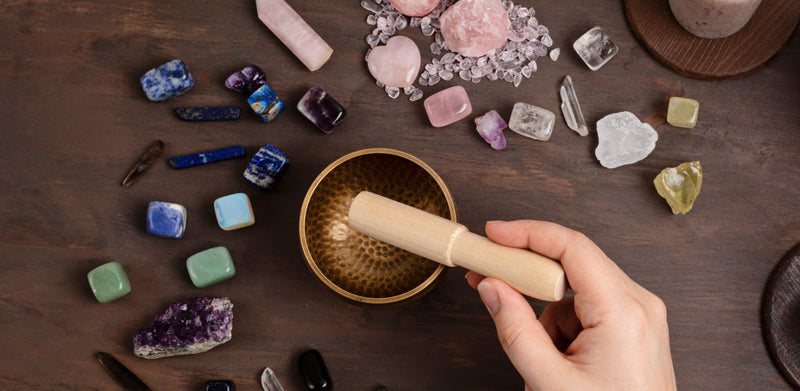
Ring a singing bowl or a small bell near the bracelet for a minute or two. This is the method Solacely uses on every piece before it is packed, so your bracelet arrives already cleansed and charged. Sound touches nothing and needs no setup, which makes it the natural weekly choice.
Charging, not just cleansing
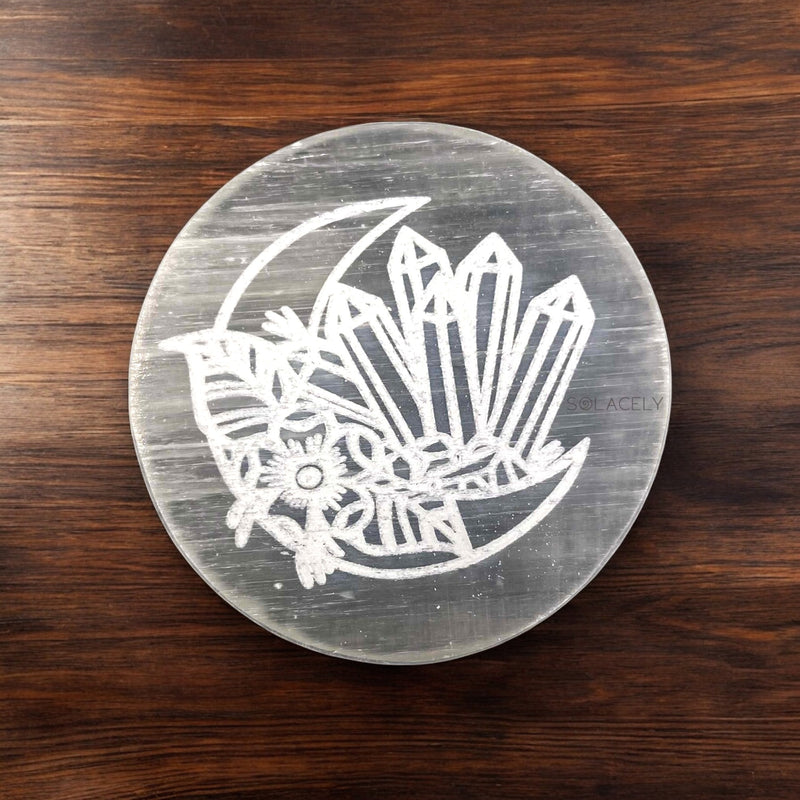
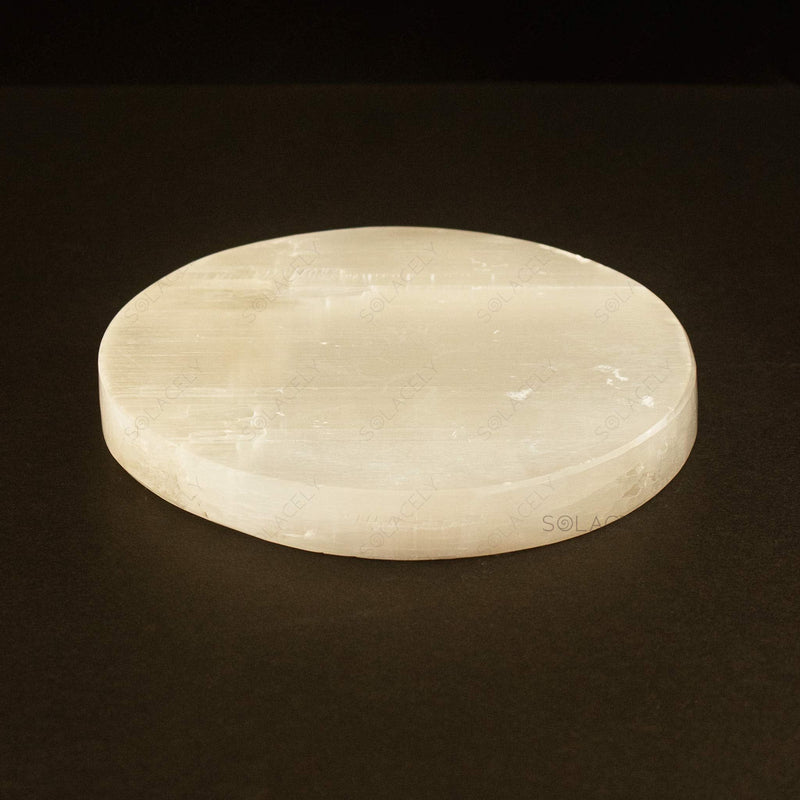
Cleansing clears what the bracelet has picked up. Charging restores it to the purpose you bought it for. In practice the two often happen in the same gesture: moonlight does both, and so does resting the bracelet overnight on a selenite charging plate, which is the gentlest way to hold a selenite piece between wears.
A selenite charging plate is a small flat slab of the same mineral, with the same house rules: dry, cool, away from the bathroom. For the fuller method, our guide to how to use a selenite charging plate walks through it.
A short intention ritual finishes the charge. Hold the bracelet in both hands, take one slow breath, and name what you want the stone to hold for you this week: a clearer head, a kinder pace, a quieter evening. Then put it on or set it down.
If it gets wet by accident
Pat it dry at once with a soft cloth, working gently between the beads and along the cord, then leave it to air dry somewhere cool and dry, away from a radiator or a sunny sill. Expect a little clouding on the beads that were wettest. Do not rub or try to polish the stone while it is damp.
A damp selenite surface is soft, and rubbing moves it rather than cleaning it. Once fully dry, a dry cloth brings some of the sheen back. One splash is very different from a daily habit, and most bracelets come through it with little more than a softer glow on a bead or two.
Everyday care between cleansings
Keep it dry, store it flat, and keep the cord away from perfume. Take the bracelet off before showers, swimming, workouts and washing up, and put lotion or scent on before you put the bracelet on rather than after. The elastic cord dislikes perfume and oils as much as the stone dislikes water.
Store it flat in its own pouch or a lined compartment of the box it came in. Selenite sits at 2 on the Mohs scale, so almost anything else in a jewellery box will scratch it, from a hematite strand to a watch buckle. Treated this way, the selenite bracelet keeps its soft white glow for years, and our complete selenite guide covers the stone's meaning and care in full.
How often should you cleanse it?
Less often than you might think. Tradition holds that selenite rarely needs cleansing, because it is the stone used to clear other stones and is said to keep itself clear. A weekly reset is still a lovely habit, not because the bracelet demands it but because a minute of sound is a minute spent remembering why you wear it.
Many people cleanse by occasion rather than by calendar: after a heavy week, before something that matters, at the full moon. Our guide to crystals for cleansing explains how selenite looks after the rest.
A stone that asks to be kept dry
Most care routines ask nothing of you. Selenite asks for a small daily attention: off before the shower, on again afterwards, and once a week a rest under the moon or beside a bowl. Each time, you hold it for a moment and remember what you put it on for. A gentler kind of care, for a gentler kind of stone. From our space to yours.
The uses described here reflect traditional and cultural crystal practice. They are not medical claims and are not a substitute for professional healthcare or advice. Selenite is a soft, water soluble form of gypsum: keep it dry and never place it in drinking water. Keep small beads away from young children, as loose beads are a choking risk.
Sources
Written by Chetena Sharma. Reviewed by the Solacely editorial team.
Frequently asked questions
About the author


Written by Chetna Sharma, crystal healing practitioner and co-founder of Solacely. Chetna has worked with healing crystals for over a decade and curates Solacely's protective stone collection.