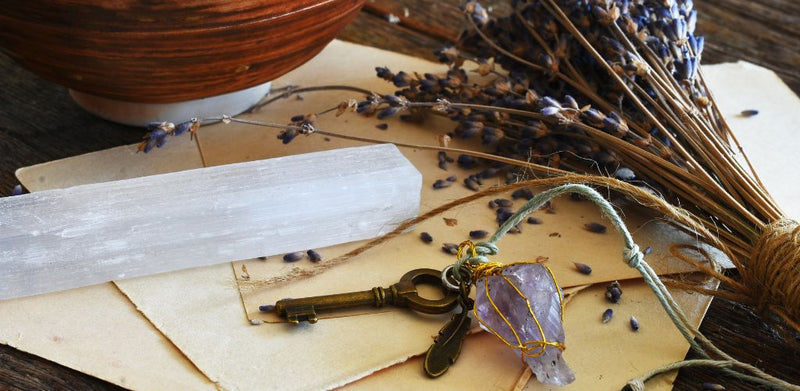
To use a selenite charging plate, lay your bracelets, rings and small crystals flat on it for a few hours or overnight, then lift them off and wear them. No water, salt or sunlight is involved. Keep the plate dry, keep heavy stones off it, and it will quietly reset your collection for years.
Key takeaways
- A selenite charging plate is a flat slab of selenite, a soft gypsum, used in crystal tradition to clear and recharge other stones.
- Rest jewellery and tumbles on it for 4 to 12 hours, overnight being the easiest habit to keep.
- Lay bracelets flat, do not stack heavy pieces, and never put anything wet on it.
- Tradition holds that the plate rarely needs cleansing itself; refresh it with moonlight or sound, never water.
- Keep it on a dry shelf, bedside or desk, away from bathrooms and windowsills that gather condensation.
- Dust it with a dry brush. Small chips and loose fibres are normal for the stone.
What is a selenite charging plate?
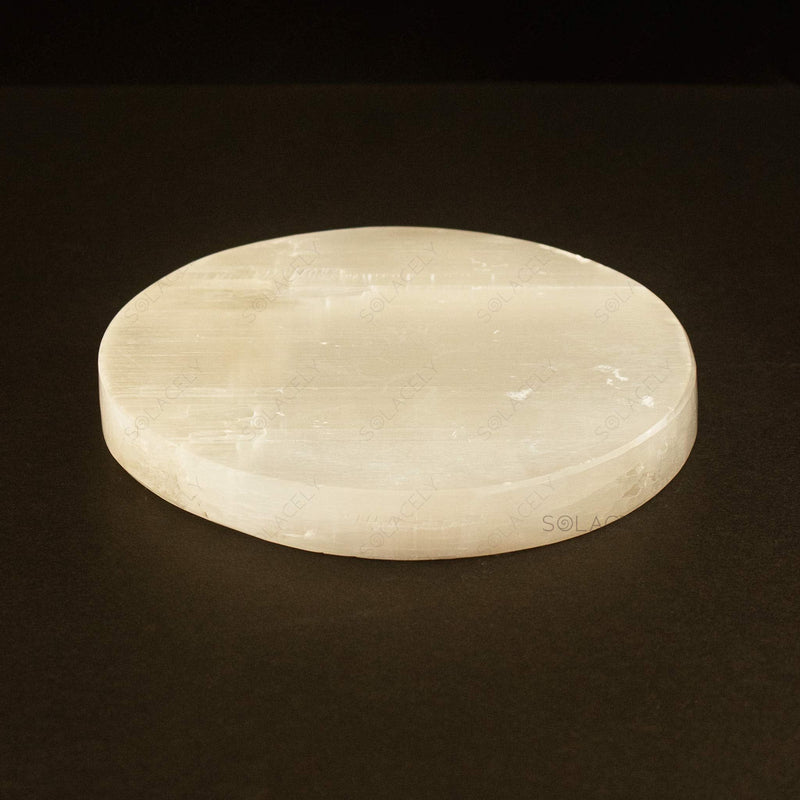
A selenite charging plate is a flat, polished slab of selenite, the crystalline form of gypsum, cut to hold other crystals and jewellery while they rest. In crystal tradition selenite clears whatever sits on it and needs nothing in return, which is why a plate ends up in almost every collection sooner or later.
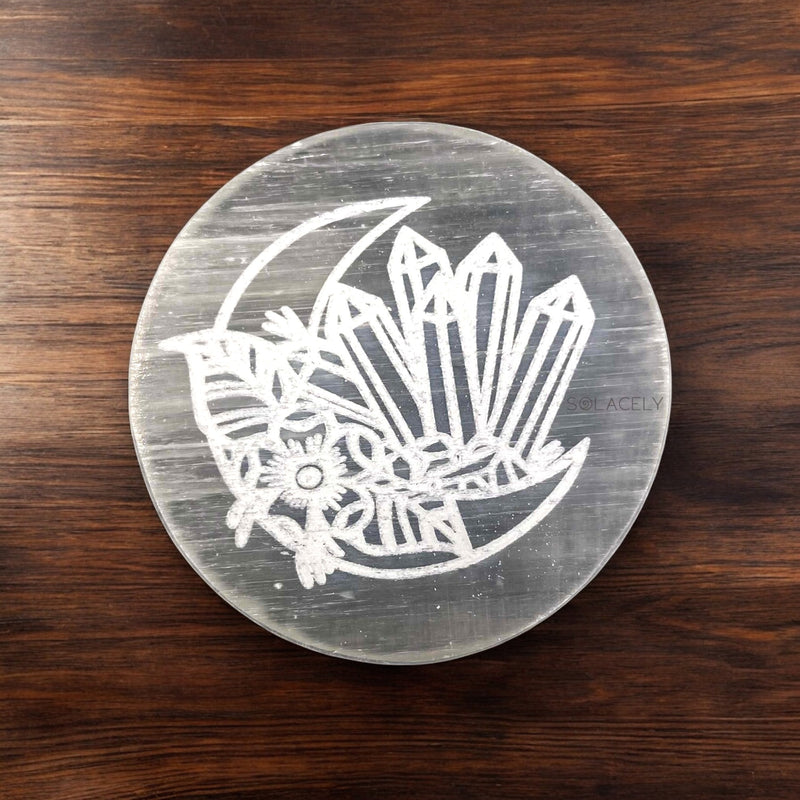
We carry two sizes. The selenite charging plate is about 3 inches across, the right size for a bracelet or two, and comes plain or engraved with a Flower of Life, Lotus, Mandala, Lunar Bloom or Seven Chakra design. The 5 inch selenite plate, round or square, holds a week of jewellery or a small set of tumbles. For an altar, the selenite plate with Shree Yantra carries the sacred geometry of harmony and abundance in Hindu tradition, and is often kept under a deity or a diya rather than under bracelets.
A plate differs from a bowl and a tower only in shape: a bowl holds loose tumbles and rings, a tower is kept for the room and charges a few pieces at its base, and a plate gives bracelets a flat surface to lie on without touching. Our guide to what selenite means and how it is used covers the stone in full.
How to use a selenite charging plate, step by step
Using the plate takes less than a minute at night and none in the morning. Choose a dry spot, lay your pieces flat, leave them for a few hours or overnight, then lift them off and carry on with your day. The five steps below are the whole routine.
- Choose a dry spot. A bedside table, a dresser or a desk shelf, away from sinks, steam and damp windowsills.
- Set an intention, if you like. Some people say a word for each piece as it goes down: rest, clear, steady. Others simply set the jewellery down.
- Lay each piece flat. Bracelets in a loose circle, rings and pendants beside them, tumbles in a single layer. Do not pile pieces up or stack heavy spheres on a thin plate, because gypsum at hardness 2 does not take pressure well.
- Leave them for 4 to 12 hours. Overnight is the easiest rhythm. A full moon night is the traditional favourite, but any night works.
- Lift off and wear. Dust the plate with a dry brush now and then, and that is all.
For the wider picture of smoke, sound, moonlight and which methods suit which stone, our guide to cleansing and charging crystals sets them all out. The plate is the one method that suits everything, because it works dry.
What to put on a selenite plate
Almost anything in your collection can rest on a selenite plate: bracelets, malas, tumble stones, rings, pendants and the small pieces you carry in a pocket. Because the plate works without water, it is the safest option for stones that cannot be rinsed, and kind to cords and knots.
- Bracelets and malas. Lay a bracelet in a loose ring. A mala can be coiled, with the guru bead resting on top.
- Tumbles, palm stones and points. Single layer, flat side down where there is one.
- Rings and pendants. Metal is fine on the plate; just keep a sharp claw setting from dragging across the surface.
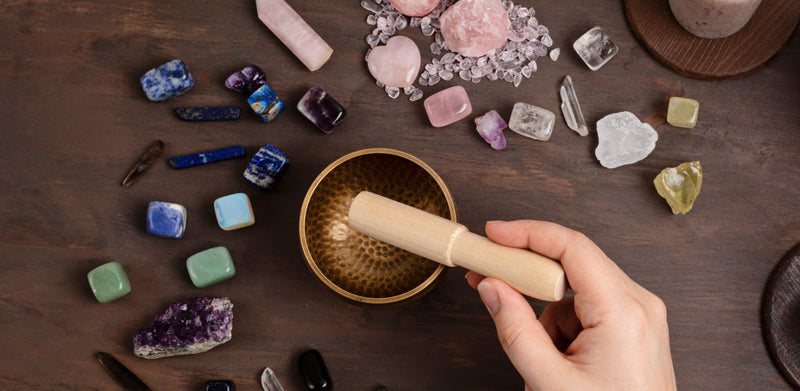
- Singing bowl strikers, a wallet or a notebook. If that is your practice, a plate on the desk is a quiet place to set them overnight.
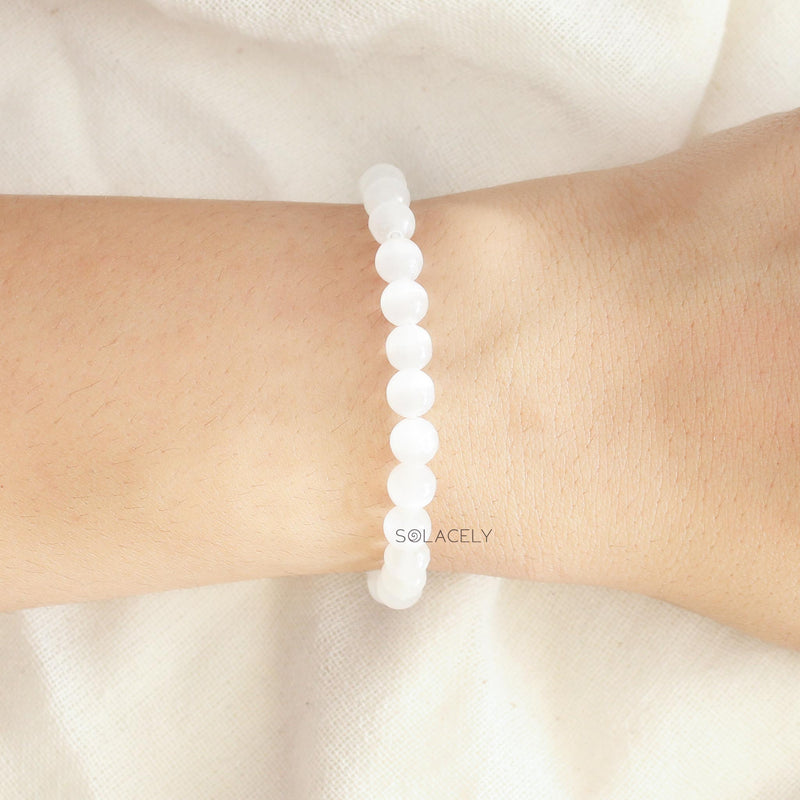
- A selenite bracelet. Yes, a selenite bracelet can rest on a selenite plate. Same stone, same dry rule, and the plate is the right place for it at night.
What to keep off it
Anything wet, anything that will scratch it, and anything you eat or drink. A bracelet straight from the shower will mark the plate and the beads, so dry it fully first. Rough black tourmaline, hematite and quartz points are all far harder than selenite, so set them down gently rather than sliding them. Food, drinks and candles belong elsewhere, since spills, wax and heat all leave their mark on a soft mineral.
How long should crystals stay on a selenite plate?
Tradition puts the range at 4 to 12 hours, and overnight is the version most people settle on. A bracelet worn every day does well with a night on the plate once a week; a piece that has been through a hard day or a crowded commute can go straight on when you get home. Nothing is harmed by staying longer.
Does a selenite charging plate need to be cleansed?
In crystal tradition selenite is the stone that clears others and rarely needs clearing itself, which is why the plate asks so little of you. Many people still refresh it now and then with a dry method: a night in moonlight on a dry sill, the ring of a singing bowl held above it, or a pass of incense smoke. Once a month, or after the plate has carried something heavy, is plenty.
What a plate never needs is water. Gypsum dissolves, so a rinse, a salt bath or a steamy bathroom will dull the polish and leave the surface chalky. The same dry rules apply to a selenite bracelet, and our guide to how to cleanse a selenite bracelet walks through them.
Where to keep your selenite plate
Keep the plate where jewellery naturally comes off at the end of the day: the bedside table, a dresser or the desk. Those spots are dry and they turn the plate into a habit rather than an ornament. The entryway works too, as the place bracelets land when you come home.
In Vastu and feng shui practice, white stones are often placed in the north-east or at the threshold for clarity and a clean start, and a plate by the door fits both traditions. An altar is the natural home for an engraved plate. Wherever it goes, avoid the bathroom entirely, keep it back from windowsills that gather condensation, and set it away from the shelf edge, because a fall onto tile will chip it.
Caring for your selenite plate
Dust it with a soft dry brush or cloth, keep it dry, and handle it gently. That is the full care routine. Selenite is a soft gypsum at hardness 2, so it scratches and chips more easily than almost anything you will rest on it, and it is water soluble, so moisture is the one thing it cannot recover from.
Small chips at the edge and loose fibres on the surface are normal. Most plates are cut from satin spar, the silky fibrous form of gypsum, and the fibres can lift a little where a stone has been set down heavily. Brush them away; they are the texture of a natural stone, not a fault. If the plate gets splashed, pat it dry straight away and give it a day in a warm dry room before jewellery goes back on it.
A place for everything to rest
A selenite plate turns the small moment of taking your jewellery off into a ritual, and putting it on into a fresh start. It asks for a dry shelf and a soft brush, and in return gives every stone you own a place to rest. Lay your bracelets on it tonight and let the morning find them ready. From our space to yours.
Cleansing and charging crystals is a traditional and cultural practice, offered here for reflection and ritual. It is not a medical treatment, and nothing here replaces advice from a qualified professional or any care already arranged for you. Selenite is a soft, water soluble form of gypsum: keep it out of water, never use it in drinking water or crystal elixirs, and keep small chips, beads and loose fibres away from babies, young children and pets.
Sources
Written by Chetena Sharma. Reviewed by the Solacely editorial team.
Frequently asked questions
About the author


Written by Chetna Sharma, crystal healing practitioner and co-founder of Solacely. Chetna has worked with healing crystals for over a decade and curates Solacely's protective stone collection.