The seventh house in astrology is the house of one-to-one partnership. It governs marriage, committed relationships, close business alliances and, traditionally, open opposition. Sitting directly opposite the first house of self, it describes the 'other' you meet across a table. It is linked to Libra, ruled by Venus, and is one of the four angular houses.
Key Takeaways
- The seventh house covers marriage, committed partnership, business alliances, contracts and declared opponents.
- Its cusp is the Descendant, the point setting on the western horizon at your birth, exactly opposite the Ascendant.
- Its natural sign is Libra and its natural ruler is Venus, which brings themes of balance, fairness and attraction.
- In Vedic astrology it is Kalatra Bhava, the house of the spouse, and is central to traditional matchmaking.
- As an angular house it is read as one of the strongest positions in the chart, so planets here are emphasised.
- Nothing here predicts marriage. Astrology is a reflective tradition, not a forecast, and an empty seventh does not mean a life alone.
What the seventh house governs
The seventh house handles the relationships you enter deliberately, as an equal, with someone you have chosen. That is what distinguishes it from the family ties of the fourth house or the friendships of the eleventh. A seventh-house relationship involves an agreement, spoken or otherwise: marriage, a long partnership, a business co-founder, a contract.
Its stranger inclusion is open enemies. Classical astrology grouped declared opponents, litigants and rivals here alongside spouses, on the logic that both involve someone standing directly across from you. A courtroom adversary and a marriage partner occupy the same structural position: known, named, and facing you.
According to Encyclopaedia Britannica, the twelve-house horoscope descends from Hellenistic astrology, with each segment assigned a sphere of life. The seventh has carried partnership and marriage from its earliest formulations. For the full map of the system, see our guide to the 12 astrological houses.
The Descendant: the point opposite yourself
The cusp of the seventh house is the Descendant, the degree setting on the western horizon at the moment you were born. It sits exactly 180 degrees from the Ascendant, which is why the two are read as a pair: the face you present and the qualities you meet coming the other way.
The traditional reading is that the Descendant describes what you look for in a close partner, and often what you keep encountering whether you look for it or not. More pointedly, it is frequently read as the qualities you have not claimed in yourself. A chart with Aries rising has Libra setting, so a self-starting, independent person is said to keep meeting the theme of compromise and diplomacy in their partners.
That framing is the useful part. Rather than a shopping list for a spouse, the Descendant works better as a question: what quality do I outsource to the people closest to me, and could I develop a little of it myself?
Kalatra Bhava: the seventh house in Vedic astrology
In Indian astrology the seventh house is Kalatra Bhava, the house of the spouse, and it carries considerable weight. It governs marriage, the character of the marriage partner, business partnership, and journeys away from home. It is a kendra, one of the four angular houses considered structurally strong.
Traditional matchmaking leans heavily on this house, along with the placement of Venus for a man's chart and Jupiter for a woman's in classical texts. Practices around guna milan, the point-based compatibility matching still widely used in Indian marriage arrangements, draw on this part of the chart among others.
It is worth holding all of this lightly. Compatibility scoring is a cultural tradition with deep roots, and it carries real social weight in some families, but it has no predictive power over whether two people will be happy together. That work is done by the people, not the chart.
Planets in the seventh house
Because the seventh is an angular house, planets here are read as emphasised: partnership becomes a defining theme rather than a background one. Most charts have no planets in the seventh, which is entirely ordinary.
| Planet in the 7th | Traditional reading |
|---|---|
| Sun | Identity strongly bound up with partnership; a tendency to define yourself through the pair |
| Moon | Deep emotional need for closeness; moods rise and fall with the state of the relationship |
| Mercury | Partnership built on conversation; drawn to people who think well and talk straight |
| Venus | At home here; ease with attraction and harmony, though a risk of avoiding conflict |
| Mars | Passion and friction in equal measure; attracted to spark, prone to open confrontation |
| Jupiter | Generosity and growth through partners; relationships that broaden your world |
| Saturn | Seriousness and commitment; slow to enter partnership, durable once there |
| Uranus | Unconventional partnerships; a need for freedom inside closeness, sudden shifts |
| Neptune | Idealism in love; compassion and devotion, with a risk of seeing what you wish for |
| Pluto | Intensity and transformation through partnership; nothing stays superficial |
Read these as patterns to recognise, not fates to accept. A Saturn placement does not condemn anyone to a cold marriage; it describes a tendency toward caution that a person can work with knowingly.
The sign on your seventh-house cusp
Everyone has a sign on the Descendant, so this is the layer most people can actually use. It describes the tone you bring to close partnership and the qualities you tend to be drawn toward.
Fire signs on the cusp (Aries, Leo, Sagittarius) suggest attraction to spirit, confidence and momentum; partnerships that feel alive rather than settled. Earth signs (Taurus, Virgo, Capricorn) point toward reliability, competence and a partner who shows up consistently. Air signs (Gemini, Libra, Aquarius) want conversation, ideas and mental equality. Water signs (Cancer, Scorpio, Pisces) look for emotional depth and are uneasy with anything that stays on the surface.
A practical use: notice the gap between what your Descendant describes and what you actually seek out. Where those diverge is often where a repeated relationship pattern lives.
Crystals traditionally paired with the seventh house
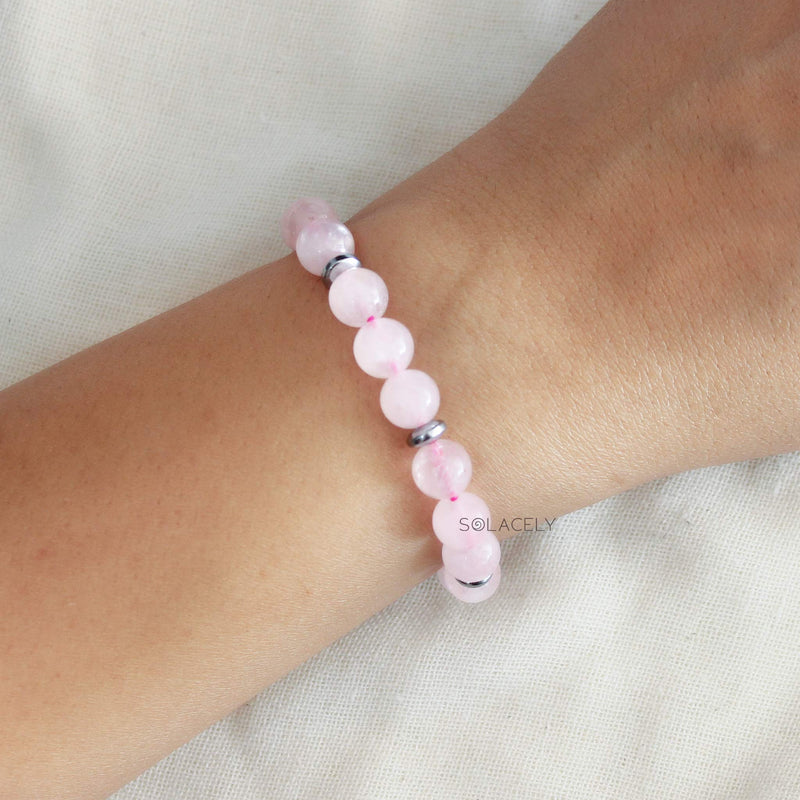
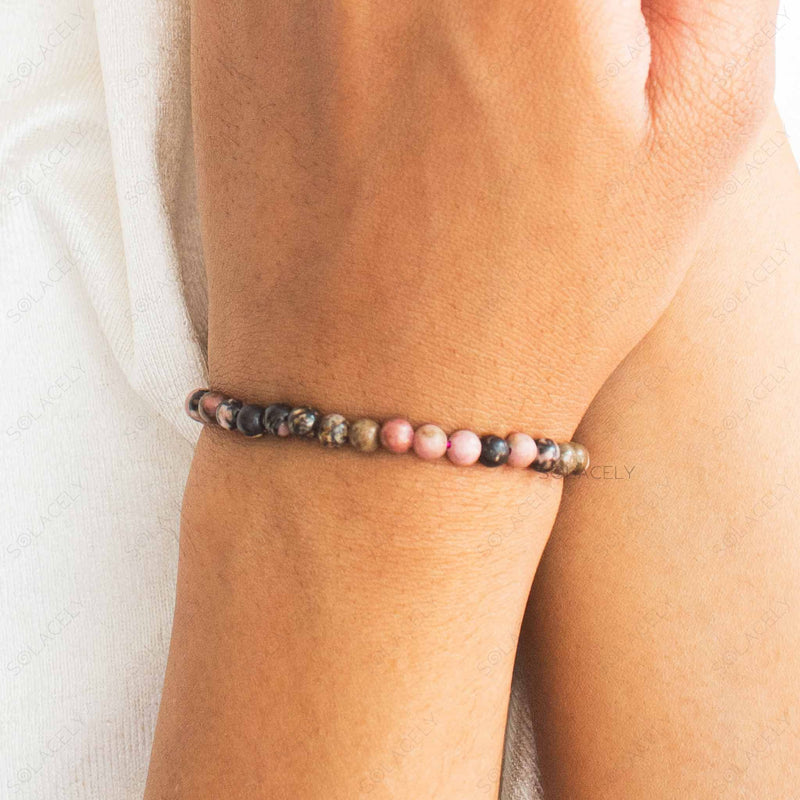
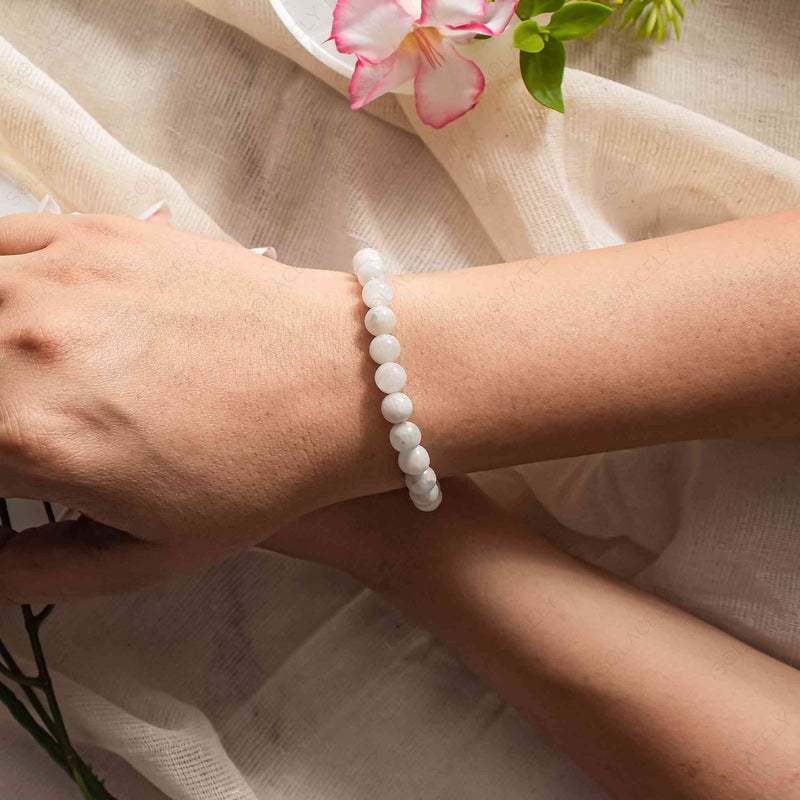
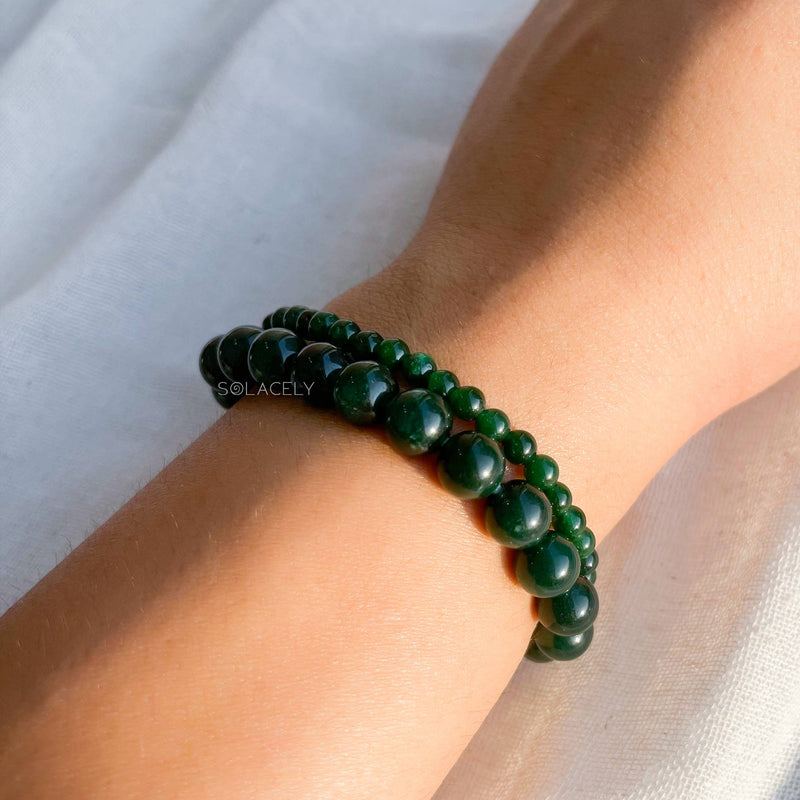
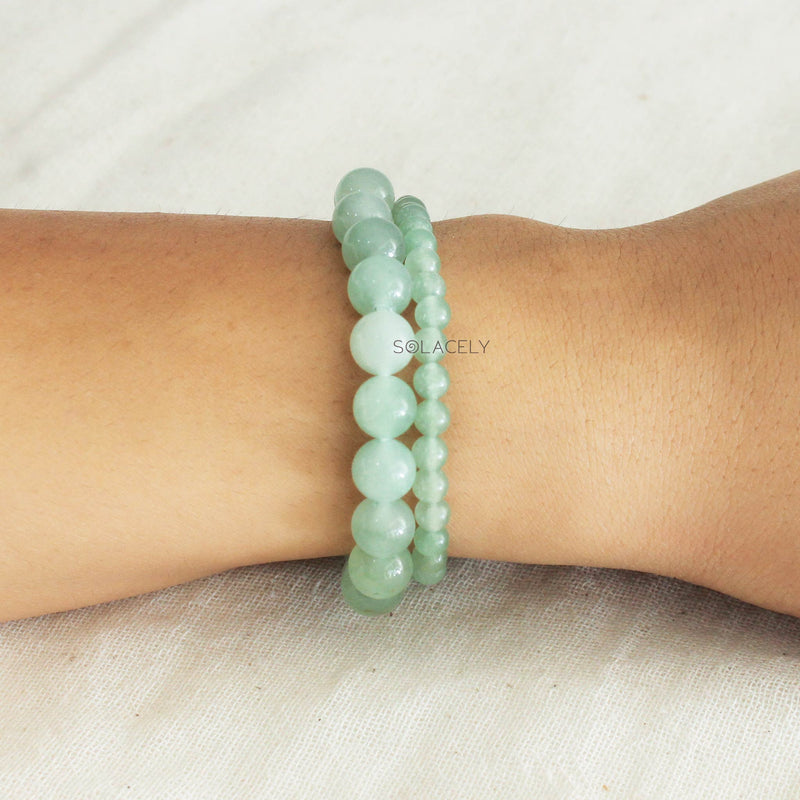
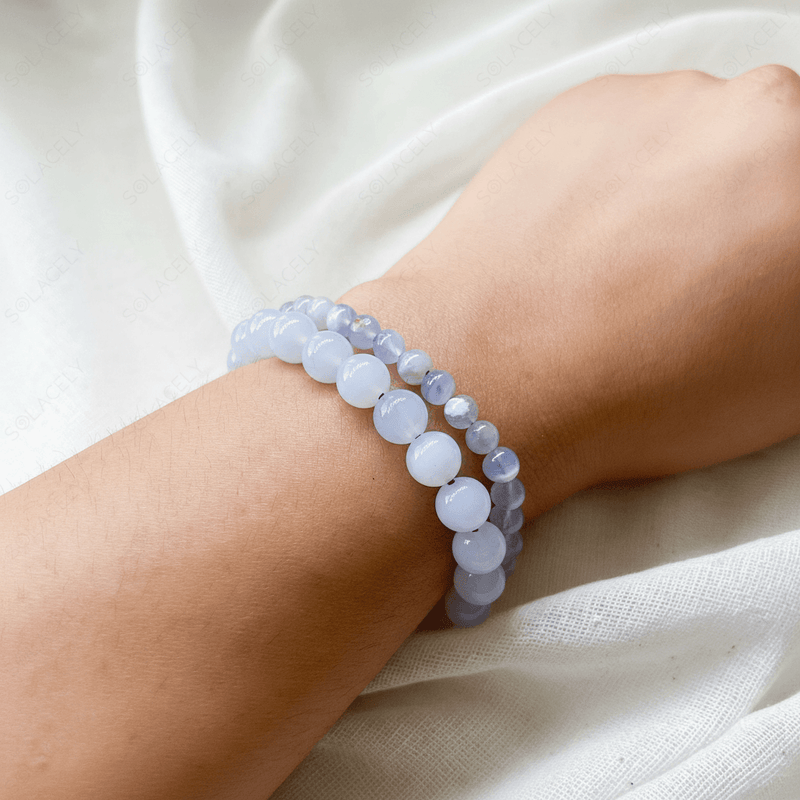
Because the seventh house is Venus-ruled and concerned with balance, the stones associated with it are soft and harmonising: rose quartz, rhodonite, jade, moonstone and blue lace agate. In crystal tradition these are kept as a focus for intention about how you relate, not as a way to attract or hold a particular person.
| Crystal | Traditional seventh-house association |
|---|---|
| Rose quartz | Tenderness, openness, self-love as the basis for partnership |
| Rhodonite | Forgiveness and repair after conflict |
| Jade | Harmony and steadiness across a long partnership |
| Moonstone | Emotional attunement and reading the other person well |
| Blue lace agate | Calm, honest conversation, especially in disagreement |
Worth being plain about this: no stone will make someone love you, and the tradition itself does not claim otherwise. What a crystal offers is a small physical reminder of how you intend to show up. If love is your focus, our guide to crystals for Libra covers the same Venus-ruled themes through the sign.
Working with your seventh house
The seventh house is most useful read as a mirror rather than a forecast. Everything it describes about partners is also, in the traditional view, information about you: what you seek, what you avoid, and what you hand over to other people to carry.
- Look for the repeated pattern. If the same dynamic keeps appearing across different partners, the seventh house suggests the common factor is worth examining.
- Claim your Descendant qualities. Traits you admire or resent in partners are often ones you have not developed yourself.
- Notice the balance. Libra's fingerprint here is fairness. Partnerships that run persistently one-way are the seventh house's core complaint.
- Read business partners here too. The house covers any close alliance, so it applies to a co-founder as much as a spouse.
- Take conflict seriously. Open enemies live in this house for a reason: how you handle direct opposition is part of the same skill as partnership.
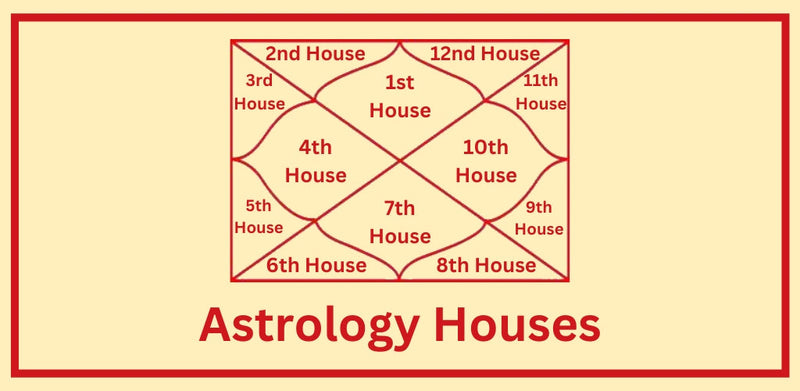
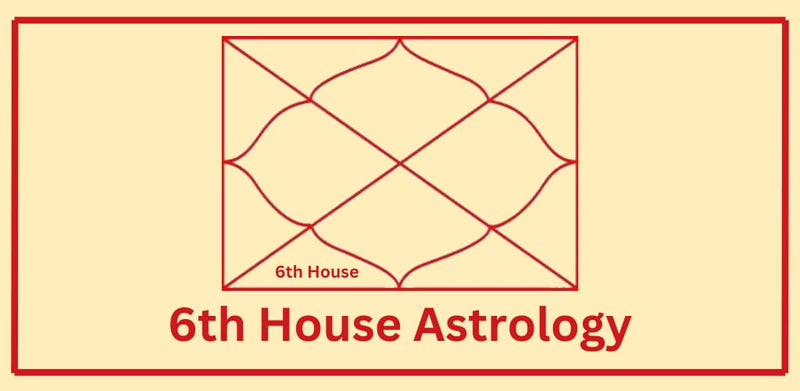
The house directly opposite is the first, which governs the self. Tradition reads the axis as the central tension of a life: how much you remain yourself, and how much you become part of a pair. The sixth house of daily work sits just below it, and the eighth house of shared resources and intimacy follows immediately above.
Sources
- Encyclopaedia Britannica, astrology: the horoscope and the house system. britannica.com
- Encyclopaedia Britannica, horoscope, the chart of the heavens and its twelve houses. britannica.com
- Encyclopaedia Britannica, Ascendant and the rising sign in a natal chart. britannica.com
Frequently asked questions
About the author


Written by Chetna Sharma, crystal healing practitioner and co-founder of Solacely. Chetna has worked with healing crystals for over a decade and curates Solacely's protective stone collection.