Citrine, carnelian, smoky quartz, pyrite and clear quartz are the five stones kept for career clarity. Which one you want depends on what is actually stuck: not knowing what you want, knowing and not moving, or being too tired at the end of the day to think about it at all.
Key takeaways
- Five stones: citrine, carnelian, smoky quartz, pyrite, clear quartz.
- Clear quartz if you do not know what you want. That is the most common case.
- Citrine if you know and cannot see the route. Carnelian if you know and will not move.
- Smoky quartz if the job is draining rather than confusing. Different problem.
- One stone, one fixed spot on the desk. Five stones is a collection, not a practice.
- Pyrite must stay dry. Iron sulphide rusts with repeated water or salt.
Citrine, for seeing a way through
Citrine is the stone for the case where you already know roughly what you want and cannot see how to get there from here. That is a narrower problem than it feels like from the inside, and it is worth naming.
What citrine is traditionally kept for is optimism about your own prospects, which is the thing that goes first when a job has gone flat. It is also the stone associated with prosperity, which makes it the usual pick for anyone thinking about a raise, a move or a step up rather than a change of field entirely.
Keep it on the desk where you can see it, and take it out of any direct sun, since sustained sunlight slowly pales citrine.
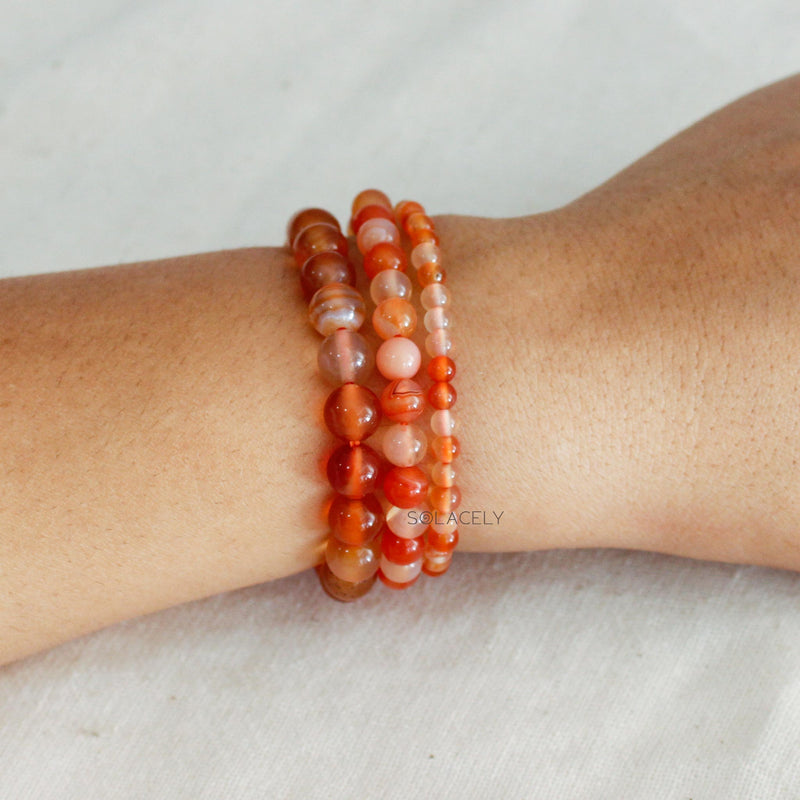
Carnelian, for the move you keep postponing
Carnelian is for the specific and very common situation where you know exactly what to do and have not done it.
The application you have not sent. The conversation with your manager you have rescheduled twice. The message to someone in the field you want to move into, drafted and never sent. Carnelian is the traditional stone for the gap between deciding and acting, and this is the gap most career stuckness actually lives in.
The way to use it is narrow rather than general. Hold it, name the one thing, and give it a date this week. Then wear it until that date. A carnelian worn as a standing wish for a better career does nothing. Attached to one email, it does quite a lot.
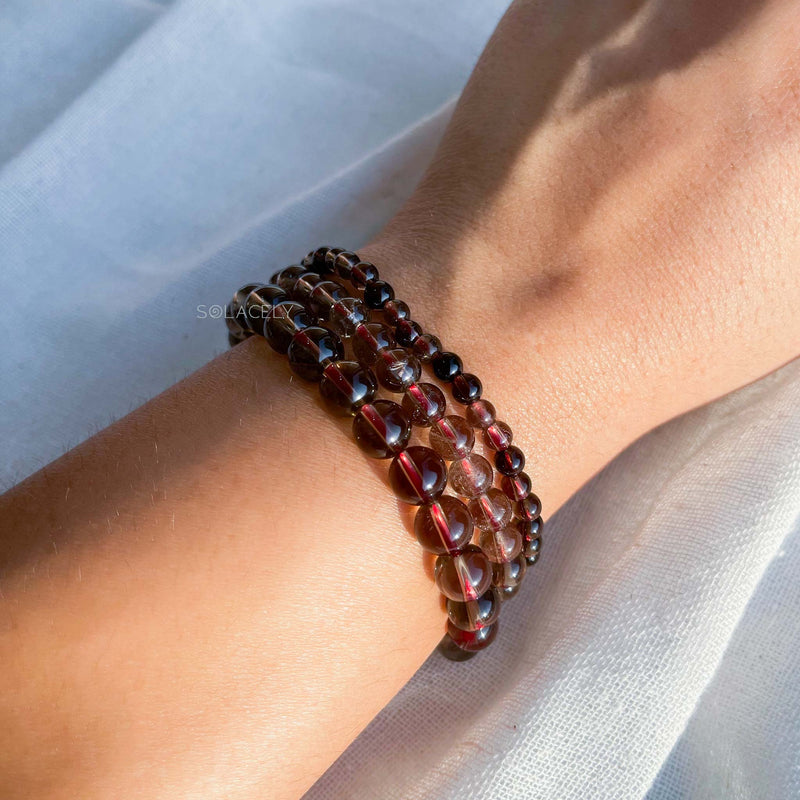
Smoky quartz, for when the job is draining you
Smoky quartz belongs on this list because a great deal of what presents as career confusion is actually exhaustion, and no amount of clarity work helps until that is addressed.
The signs are recognisable. You cannot answer what do you want because you have nothing left over to want with. Every option looks equally grey. You think about the question only at eleven at night when you are least able to think about anything.
Smoky quartz is the traditional settling and grounding stone, and here it is used to mark the end of the working day rather than the working problem. Take it off the desk when you finish. That is the practice, and for many people it is the one that changes something, because it establishes that the day has an end.
Pyrite, for wanting it out loud
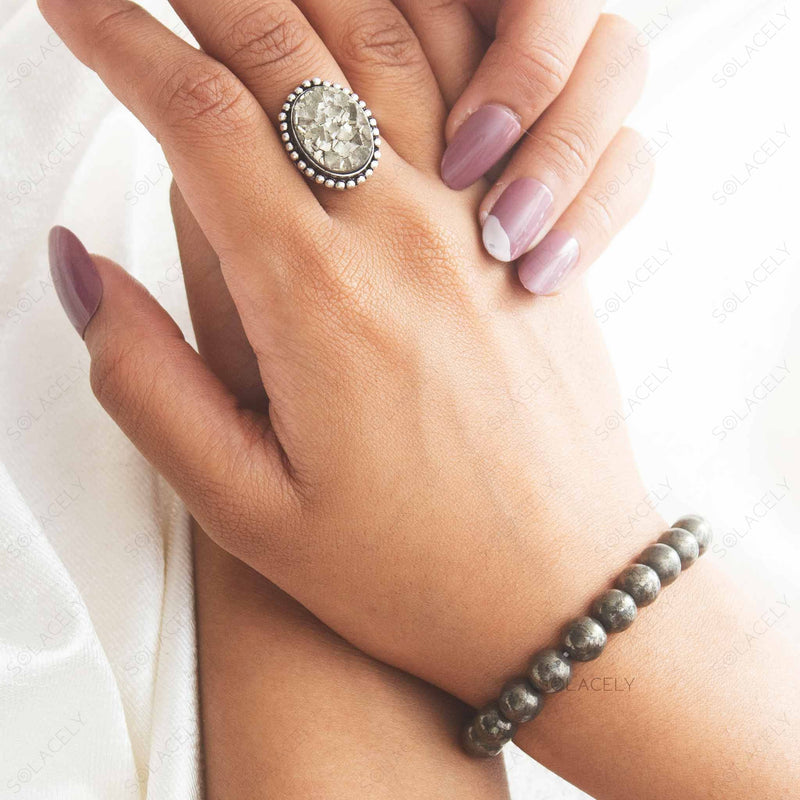
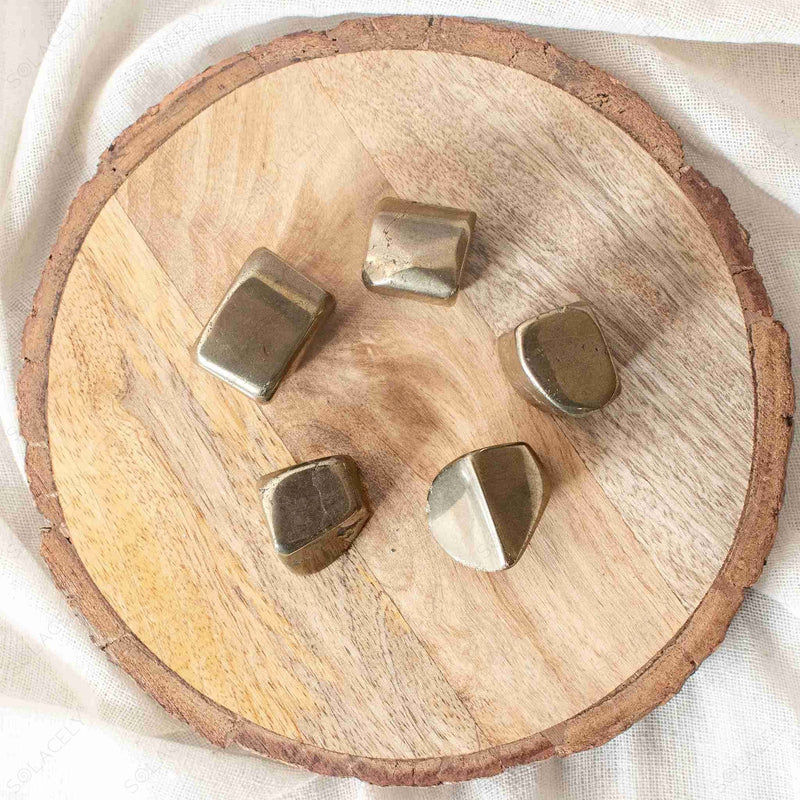
Pyrite is the ambition stone, kept for drive and for work you want to win at rather than merely complete.
It suits the person who is competent, well regarded, and slightly embarrassed about wanting more. The metallic gold of it is not subtle, which is part of the point: it sits on a desk as a small unapologetic statement of intent, and it does that without a word to anyone.
One practical matter. Pyrite contains iron sulphide and it must stay dry. Water and salt will rust it and crumble the edges over months, so keep it off a windowsill that gets condensation, do not wear it in the shower, and cleanse it with smoke rather than water. Kept dry it holds its shine indefinitely.
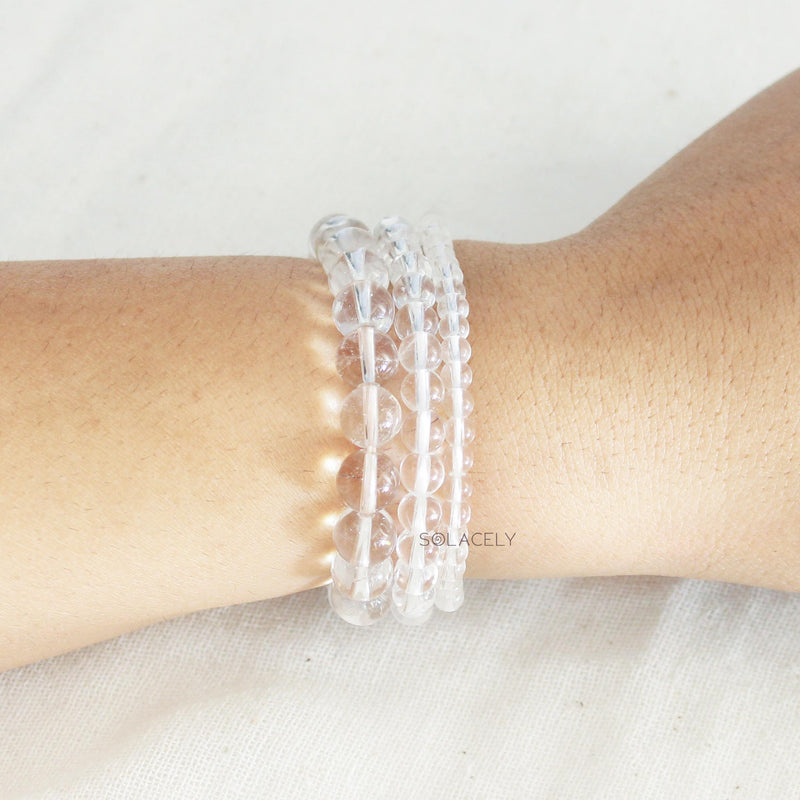
Clear quartz, for not knowing at all
Clear quartz is the one for the hardest and most common version of this: you are unhappy at work, you have been for a while, and you genuinely cannot say what you would rather be doing.
It is the all rounder of crystal practice, kept for clarity in the general sense, and it is the right choice here precisely because the question has no shape yet. A stone chosen for a specific outcome would be premature.
The honest use of it is as a marker for a regular half hour of actual thinking. Same time each week, stone on the table, phone in another room, and write rather than ruminate. The clarity comes from the half hour. The stone's job is to make the half hour happen, which is the part most people never get to.
Choosing one and using it
Pick the one that matches what is stuck, and keep it in one fixed place. This is the whole method.
- One stone, not five. Five on a desk is a collection and reads as decoration.
- One fixed spot. Beside the monitor, in front of the keyboard, wherever you will see it without looking for it.
- Attach it to something specific. An email, a weekly half hour, the end of the working day.
- Give it a month. Rotating stones weekly means nothing becomes familiar enough to work.
If the office is open plan and a stone on the desk is more conversation than you want, wear it as a bracelet instead. It does the same job and nobody asks.
Where this sits alongside the rest
Career clarity is the widest of the work questions and it has narrower relatives worth knowing about.
If the immediate thing is an interview rather than a direction, crystals for a job interview covers which stone to take into the room and what to do in the half hour before. If you are in the middle of a search and want the traditional stones for that stretch, see crystals for good luck in a job.
And if the difficulty is holding attention through the working day rather than choosing a direction for it, crystals for concentration is the more useful page. Clarity and focus are different problems and want different stones.
The uses described here reflect traditional and cultural crystal practice. They are not medical, psychological or career advice, and they are not a substitute for professional guidance. If work is affecting your sleep, your health or your relationships, that is worth raising with a doctor or a qualified counsellor.
Sources
Written by Chetena Sharma. Reviewed by the Solacely editorial team.
Frequently asked questions
About the author


Written by Chetna Sharma, crystal healing practitioner and co-founder of Solacely. Chetna has worked with healing crystals for over a decade and curates Solacely's protective stone collection.