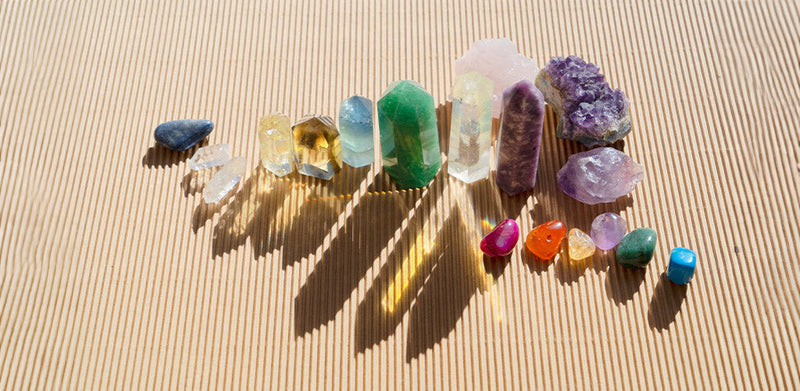
The crystals that suit a child's bedroom are amethyst, rose quartz and clear quartz, kept in tumbled or large palm formats well out of a toddler's reach. Format and placement matter far more here than any property list, and a few rules are worth following exactly.
Key takeaways
- Amethyst, rose quartz and clear quartz are the three sensible choices, all quartz at 7 on the Mohs scale.
- Under age three, nothing loose. Small tumbles are a choking hazard.
- Never under a pillow. A hard object in bedding gets rolled onto and can chip.
- Skip malachite, which is a copper mineral, and selenite, which dissolves and crumbles.
- Frame a stone as a keepsake rather than as something that will fix worry or sleep.
Start with format, not meaning
Most guides to this topic open with a list of properties and mention safety at the end. That order is backwards for a child's room, because the format question decides whether a stone belongs there at all.
The rule is simple. Under three, no loose stones anywhere a child can reach, since anything that fits in a mouth is a choking hazard. From three to six, one large supervised palm stone. From seven upward, ordinary tumbled stones are fine.
Once format is settled, the choice of stone becomes easy, because the quartz family covers everything a child's room needs. For gifts specifically rather than room placement, crystals for kids takes the same approach.
The three stones that suit a child's room
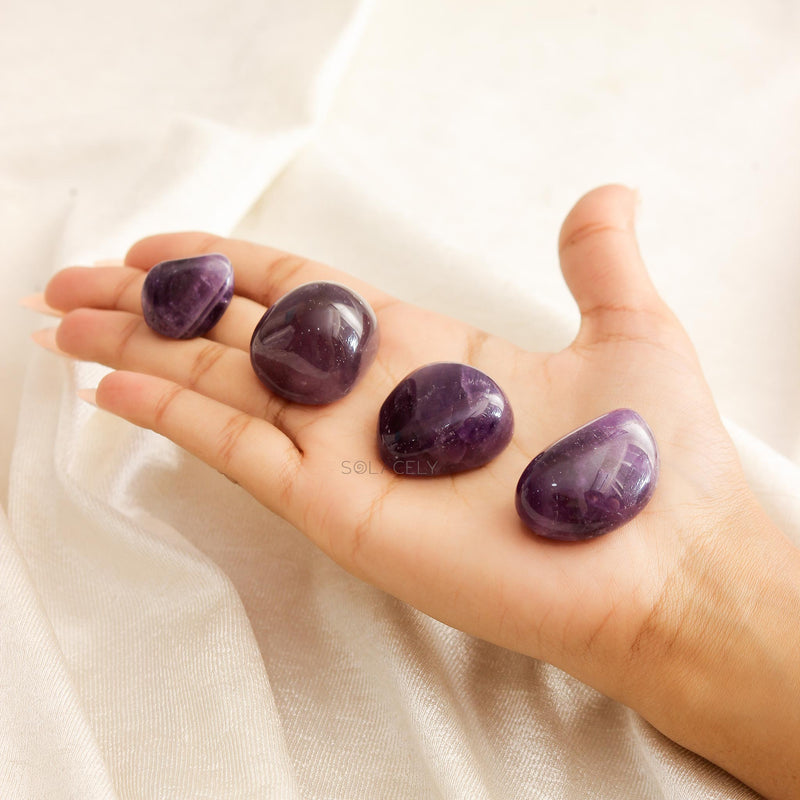
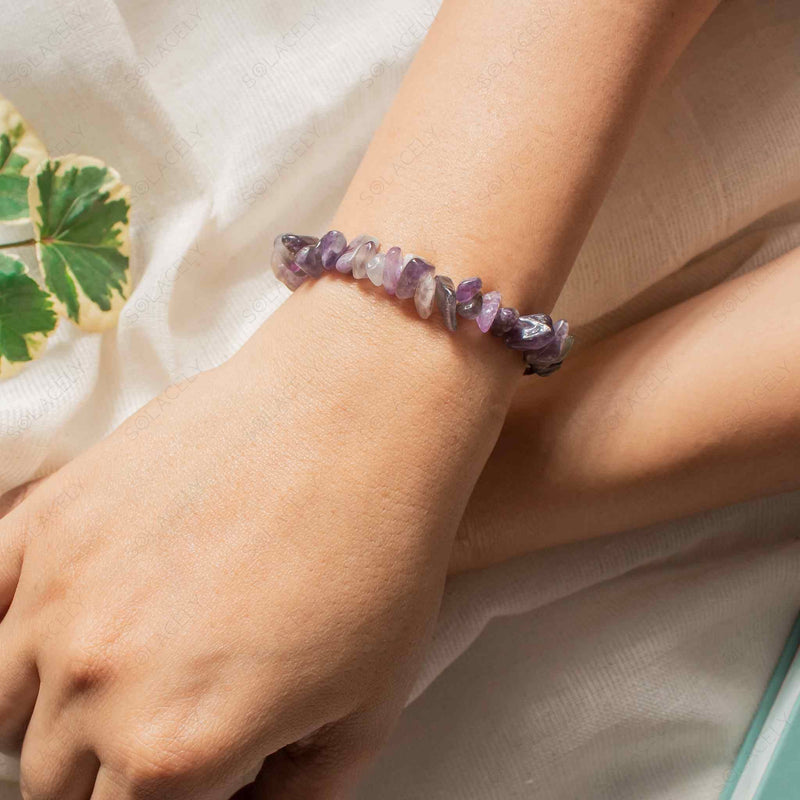
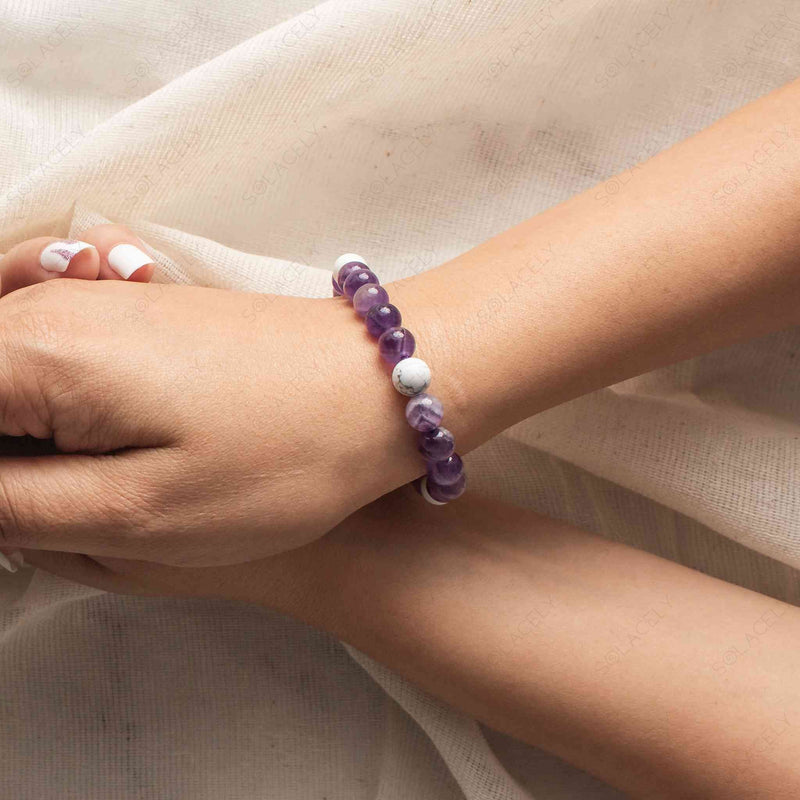
Amethyst is the bedside stone. It is traditionally kept for settling, and in practice it becomes part of a wind-down routine: the stone goes on the nightstand, the light goes down, the day ends. That ritual is the useful part and it is worth being honest about that.
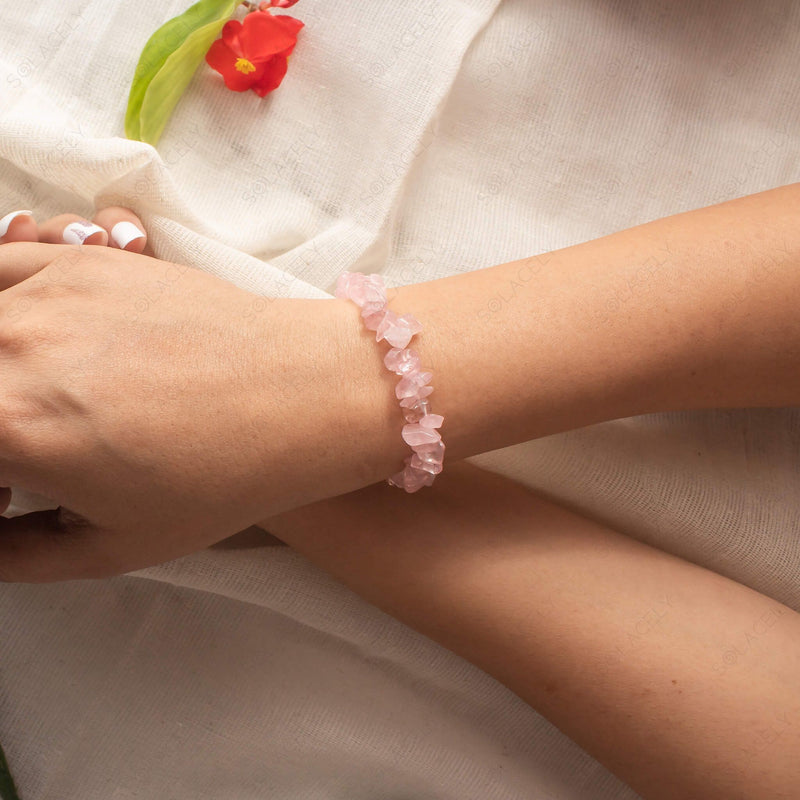
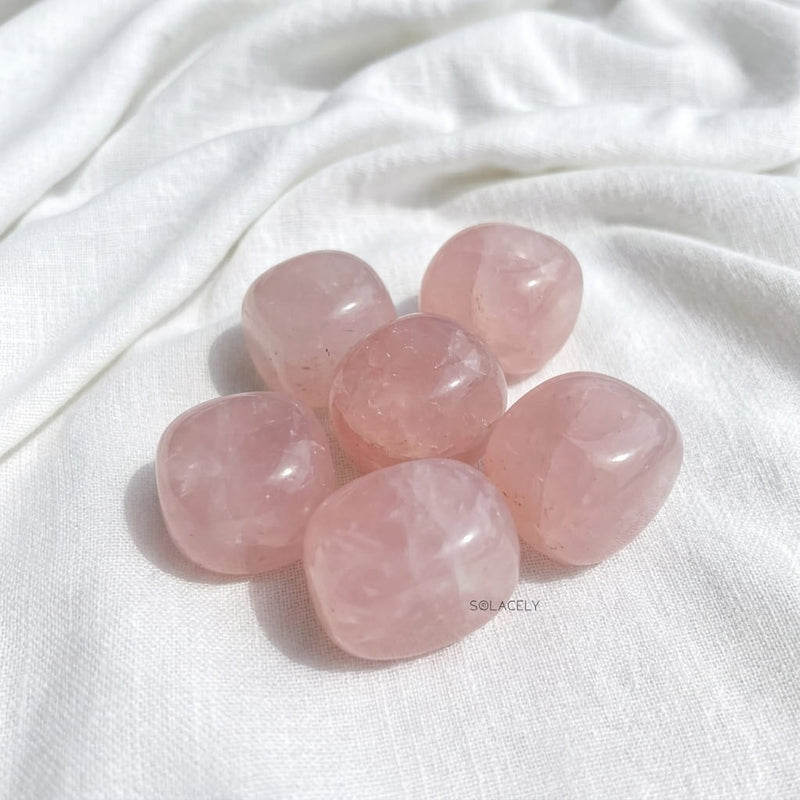
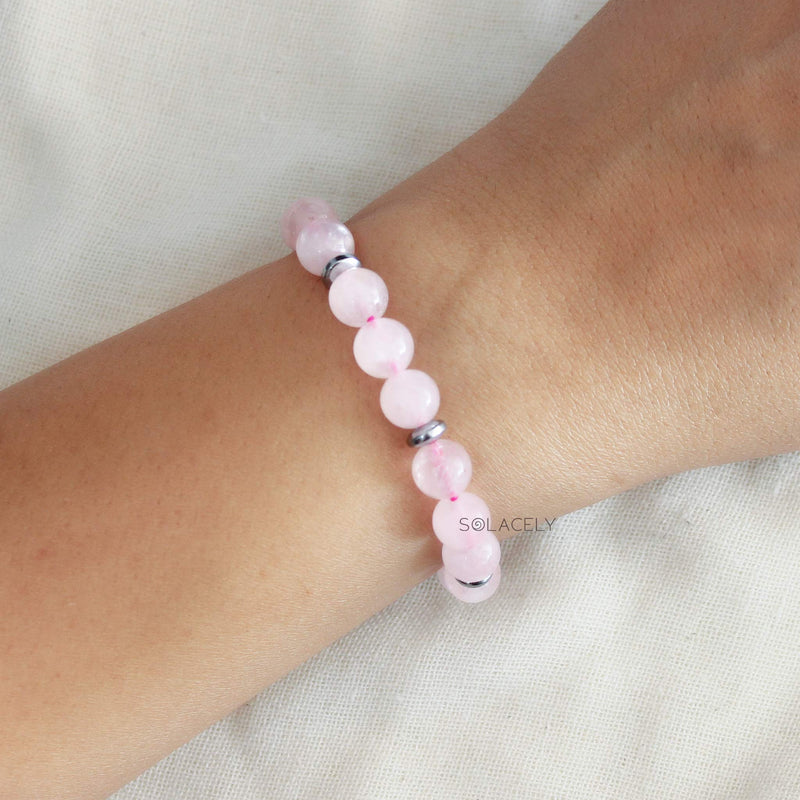
Rose quartz is the reassurance stone, associated with kindness turned inward. It is the one most often given as a keepsake rather than placed in a room, and it suits a child who is anxious about themselves rather than about the dark.
Clear quartz is the neutral option, carrying no narrow association. It is the cheapest of the three and works well for a child who simply likes crystals and does not need a specific meaning attached.
Age by age
| Age | Appropriate format | Avoid |
|---|---|---|
| Under 3 | Nothing within reach. High shelf only, if at all | All tumbles, chips and beaded jewellery |
| 3 to 6 | One large palm stone, supervised | Chips, small tumbles, anything with a clasp |
| 7 to 11 | Tumbled stones, a small cluster on a shelf | Raw points with sharp edges, soft stones |
| 12 and up | Whatever they would choose themselves | Anything framed as a fix for worry or grades |
| Any age | Nightstand or shelf placement | Under a pillow or anywhere in bedding |
The bottom row is the one most often ignored. Putting a stone under a pillow is advice that circulates everywhere and it is genuinely a bad idea, for the child's sleep and for the stone.
Stones to keep out of the room
Two come up often enough to name specifically.
Malachite is a copper carbonate, and while a polished piece handled with dry hands is fine for an adult, it does not belong somewhere a young child might mouth it. Keep it out entirely rather than relying on supervision.
Selenite is the other. It is a gypsum, soft at 2 on the Mohs scale, and it dissolves in water, which means it crumbles, flakes and cannot survive a child's room. It is also the stone most often recommended for children's spaces online, which is worth knowing.
How to introduce it
The framing matters more than the stone. A crystal presented as something that will stop bad dreams sets a child up to feel the stone failed them on the night it does not work.
A keepsake framing works far better and is also more honest. Something as short as this one is for remembering you are alright does the job, and it leaves nothing to be disappointed by.
Let them have a say too. A stone chosen entirely by a parent, with no regard to whether the child likes the colour, tends to end up in a drawer within a fortnight. Offering two options rather than presenting one changes it from something given to something picked. For placement across a whole home, crystals for the bedroom covers the adult version.
Care a child can manage
Quartz family stones are forgiving enough that a child of seven or eight can look after their own. Warm water, mild soap, a soft cloth and a full dry, and that is the whole method.
Teaching that is part of what makes the object theirs. A stone that gets cleaned occasionally, put back in the same place, and noticed is doing considerably more than one that sits on a shelf gathering dust.
Keep amethyst and rose quartz back from a bright window, since long hours of strong sun soften both colours over months. Beyond that there is very little that can go wrong with these three.
Where to place them in the room
Placement matters as much as the stone, and the useful principle is visibility without accessibility for younger children.
- A high shelf. Visible from the bed, out of reach. The right answer for under-sevens.
- The nightstand. From around seven upward, where a stone can be picked up as part of a bedtime routine.
- A windowsill. Fine for clear quartz, less so for amethyst and rose quartz, which fade in strong sun.
- Anywhere in the bed. Never, at any age.
One or two stones is plenty for a child's room. A shelf of fifteen becomes scenery within a week, and the whole value of the object is that picking it up still means something. If bedtime specifically is the difficulty, crystals for insomnia covers the routine side and, more usefully, when to stop treating it as a crystal question.
What a stone can honestly do here
It can mark the end of the day, and for a child who is learning that evenings have a shape, that is genuinely useful. A small object that always means the same thing is a good tool for building a routine.
What it cannot do is treat a worry that needs attention. If a child is persistently anxious, not sleeping, or distressed in a way that is affecting school and friendships, that belongs with a GP rather than a shelf, and no amount of amethyst substitutes for asking.
The properties described here reflect traditional and cultural belief around crystals. They are offered for reflection and wellbeing and are not medical advice, a diagnosis, or a treatment for any condition. Crystals should never be given to a child as treatment for a physical or mental health concern, never used in drinking water, and never placed in bedding. Keep all small stones away from children under three. If your child is struggling with sleep, worry or mood, please speak with a GP or a qualified practitioner.
Sources
Written by Chetena Sharma. Reviewed by the Solacely editorial team.
Frequently asked questions
About the author


Written by Chetna Sharma, crystal healing practitioner and co-founder of Solacely. Chetna has worked with healing crystals for over a decade and curates Solacely's protective stone collection.