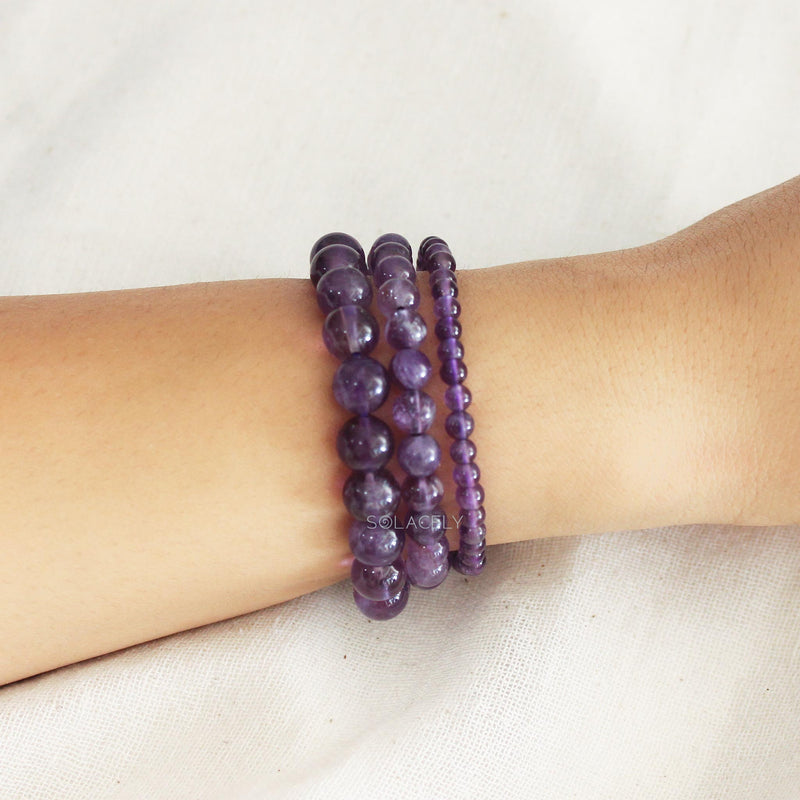
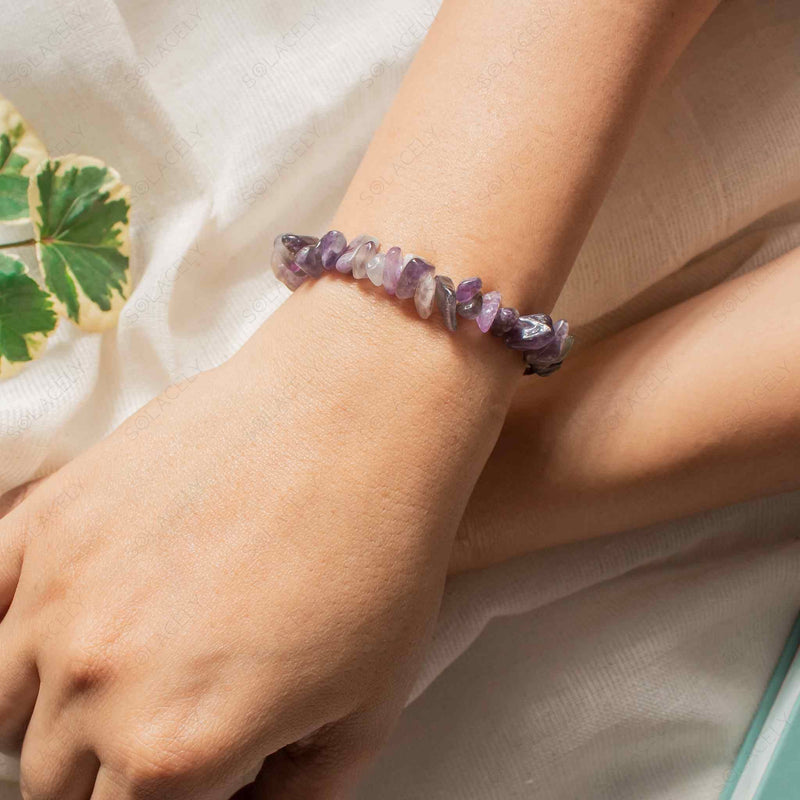
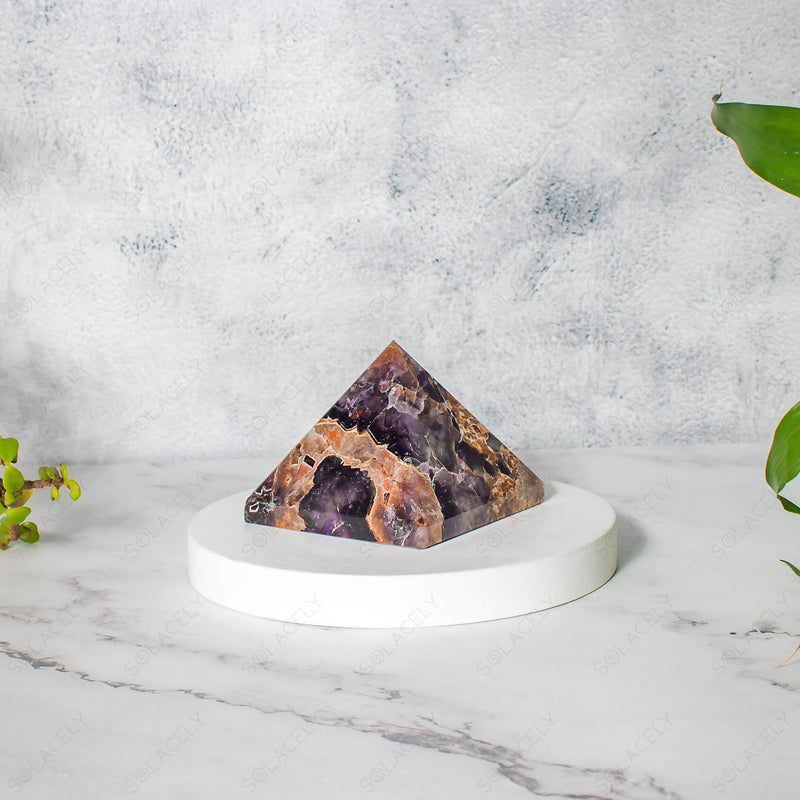
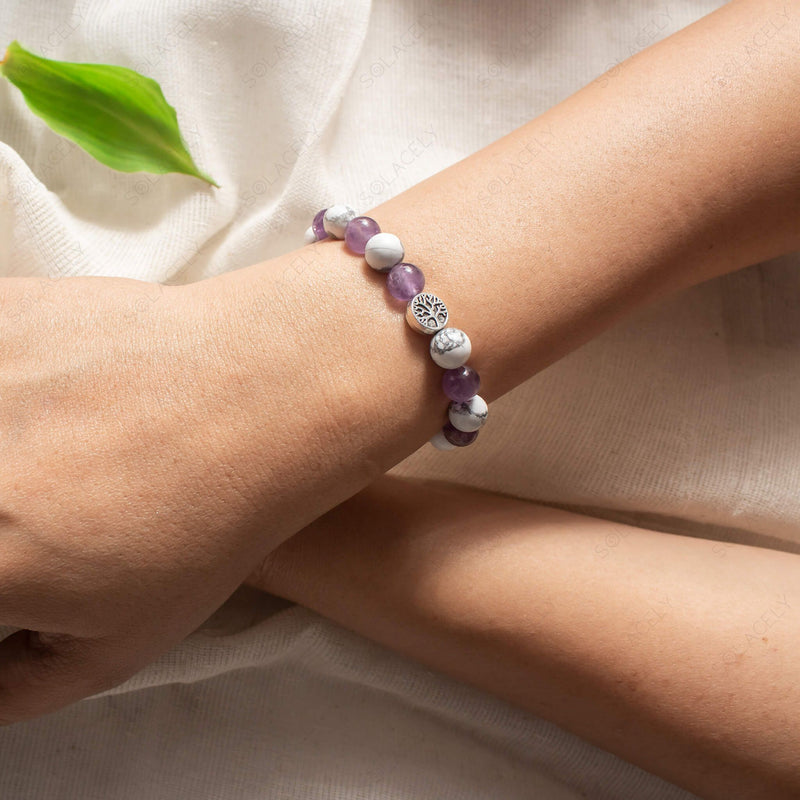
Amethyst is the birthstone for February. It is the purple variety of quartz, hardness 7 on the Mohs scale, and it has held the February slot since the modern birthstone list was standardised in 1912. In crystal practice it is the stone people reach for when the problem is a mind that will not settle.
Key takeaways
- February's birthstone is amethyst, the purple variety of quartz, hardness 7 on the Mohs scale.
- Modern and traditional birthstone lists both give February to amethyst, which is unusual. Most months disagree.
- The purple comes from trace iron plus natural irradiation, not from dye.
- Long spells of direct sunlight can permanently fade the colour.
- Brazil, Uruguay and Zambia supply most of the market. Zambian rough is often the most saturated.
- Traditional meaning is clarity and sobriety, from the Greek amethystos, meaning not drunken.
What is the February birthstone?
Amethyst, and only amethyst. The Gemological Institute of America lists it as February's modern birthstone, and the older traditional lists give the same answer. That agreement is rare. Several other months carry two or three competing stones depending on which list a jeweller works from, so February buyers get an easier decision than most.
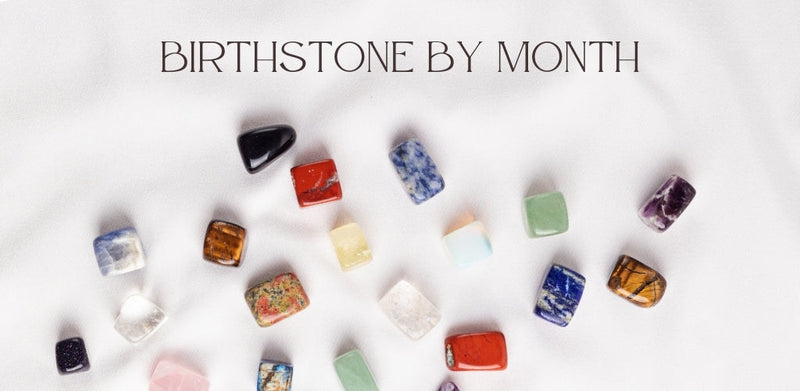
Amethyst is also the recognised gem for a sixth wedding anniversary, which is why it turns up in anniversary jewellery far more often than its February association alone would explain. If you are working through the full calendar, our month by month birthstone guide sets amethyst against the other eleven.
Where amethyst's meaning came from
The name is Greek. Amethystos translates roughly as not drunken, and Greek and Roman drinkers believed a cup carved from the stone, or an amethyst worn at the table, would keep them clear headed through a long night. That is the origin of every later association the stone carries: sobriety first, then clarity, then calm.
The link survived into the medieval church, where amethyst rings were worn by bishops, and into European royal collections. Until the nineteenth century, amethyst sat in the same price bracket as ruby and emerald. Then very large deposits were found in Brazil and the price collapsed. That history is the reason a stone with such a grand past now costs less than a decent dinner.
What amethyst actually is
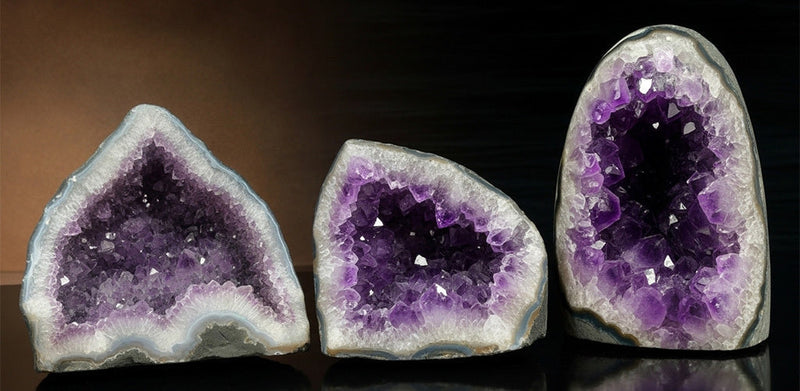
Amethyst is quartz, silicon dioxide, with a purple colour centre created by traces of iron that have been altered by natural radiation in the ground. Heat undoes that colour centre, which is why amethyst turns yellow or orange when it is heated. The rest of the quartz family is covered in our guide to the types of quartz crystals.
| Mineral | Quartz (silicon dioxide) |
|---|---|
| Colour | Pale lilac to deep purple, often colour zoned |
| Mohs hardness | 7 |
| Colour cause | Trace iron plus natural irradiation |
| Main sources | Brazil, Uruguay, Zambia, Bolivia |
| Main care risk | Prolonged direct sun and heat |
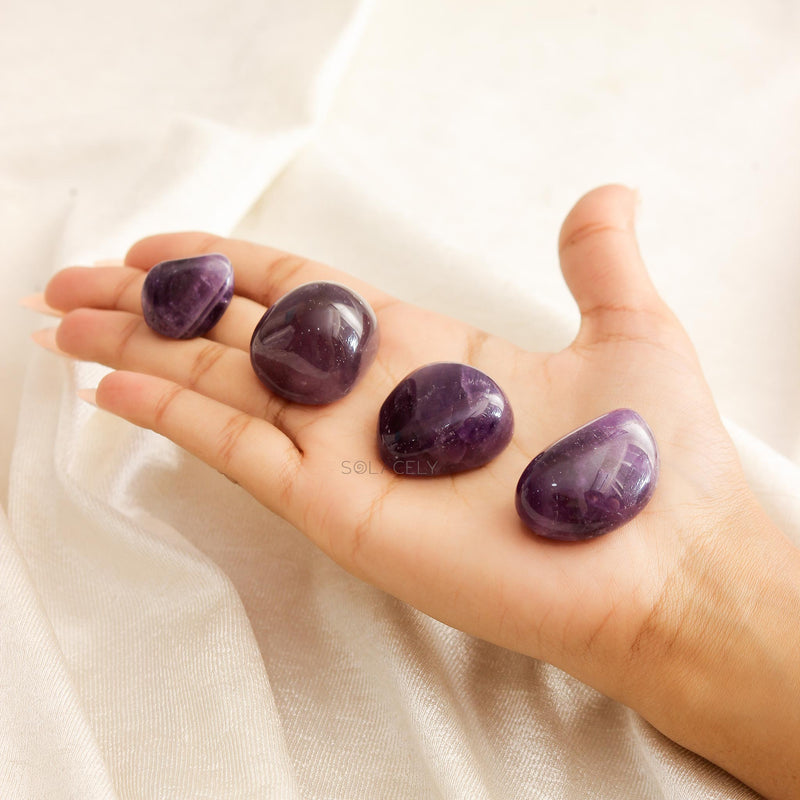
Colour zoning matters when you are buying. Amethyst rarely grows one even shade throughout. Cutters orient the rough so the deepest band sits where the eye lands, and a bead cut from the pale end of the same crystal will look like a different stone entirely.
What amethyst is used for in crystal practice
Amethyst is the standard recommendation for a mind that will not stop. Crystal tradition places it at the third eye and crown, and the practical use people report is simple: a stone kept on the bedside table or held during a few slow breaths before sleep. It is not an energising stone and is rarely suggested for drive or ambition.
None of that is a medical claim. What is supported is the practice around the stone rather than the stone itself. Health researchers have found that relaxation techniques such as slow breathing can help with stress and sleep, and holding something in your hand is a reliable cue to begin one. If overthinking is the specific problem, our piece on crystals for overthinking goes further, and the full amethyst meaning and properties guide covers the tradition in detail.
How to choose a February amethyst
Colour does almost all the work in amethyst pricing. Gemmological grading puts strong, evenly distributed purple with red or blue flashes at the top, and washed out or brownish material at the bottom. Everything else is secondary.
Four practical checks:
- Even saturation. Tilt the stone. If one end is noticeably paler, it was cut from a zoned crystal and it will always read as two colours.
- Eye clean. Amethyst is common enough that you should not accept visible inclusions in a faceted stone. In beads, small veils are normal.
- Cut. A well oriented stone shows its best colour face up. Tilt it under a lamp before you decide.
- Setting. At hardness 7 amethyst does not need a protective setting, so open designs that show the colour work well.
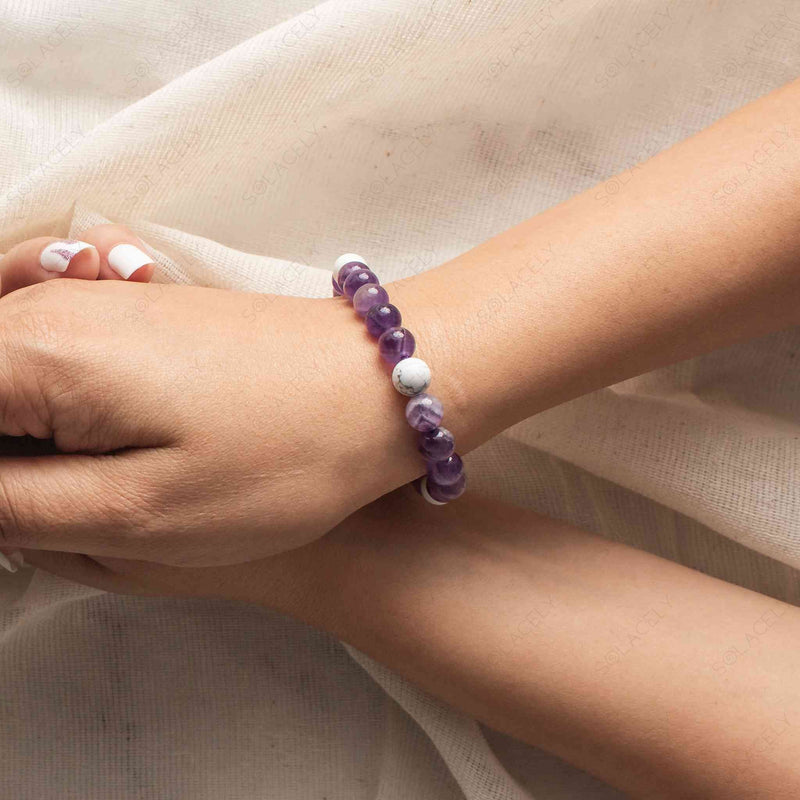
If you are shopping specifically for a piece rather than a loose stone, our notes on amethyst jewellery cover setting styles and what wears well.
How to wear and care for amethyst
At Mohs 7, amethyst is hard enough for a ring you wear every day. It is harder than most household dust, which is what actually scratches gemstones, and it holds a polish well. The two things that damage it are heat and light.
Warm water, mild soap and a soft brush are all it needs. Skip steam cleaners entirely, and avoid ultrasonic cleaning if the stone has any reaching fracture. Keep it off a sunny windowsill and out of a parked car. A pale patch caused by sun exposure does not come back.
Who February amethyst suits
It suits someone who wants a birthstone they can wear constantly without worrying about it. Amethyst is durable, widely available, priced sensibly, and it looks equally right in silver or gold. For a gift, it is one of the safest gemstone choices there is, because the colour flatters almost everyone and the associations are gentle rather than loaded.
It suits less well anyone who wants rarity to be part of the appeal. Amethyst is abundant, and that abundance is exactly why it is affordable. If scarcity matters to you, February is not your month for it.
The uses described here reflect traditional and cultural crystal practice. They are not medical claims and are not a substitute for professional healthcare or advice.
Sources
Written by Chetena Sharma. Reviewed by the Solacely editorial team.
Frequently asked questions
About the author


Written by Chetna Sharma, crystal healing practitioner and co-founder of Solacely. Chetna has worked with healing crystals for over a decade and curates Solacely's protective stone collection.