Hematite is the grounding stone. An iron oxide with a mirror bright polish and a weight you notice the moment you pick it up, it is traditionally kept for composure under pressure and for coming back into the body when everything feels scattered. Its name comes from the Greek for blood, after the red streak it leaves when scratched.
Key takeaways
- Hematite is iron oxide, and its density is the reason it became the grounding stone.
- Named from the Greek for blood, after the red brown streak it leaves on unglazed porcelain.
- Assigned to the root chakra; placement goes low.
- Traditionally kept for composure, focus and steadiness before something demanding.
- Keep it dry. Damp encourages rust spots and dulls the polish.
What hematite is
Hematite is one of the most abundant iron minerals on earth and the principal ore of iron, which means most of the steel around you started as something close to it. Polished, it takes an extraordinary metallic shine that looks more like machined metal than stone, and that finish is a large part of its appeal.
The identifying test is the streak. Drag hematite across unglazed porcelain and it leaves a distinctive red brown line, whatever colour the outside looks. That is where the name comes from, and it is how mineralogists tell it apart from other dark metallic minerals. It sits around 5.5 to 6.5 on the Mohs scale.
What people notice first, though, is the weight. Iron is dense, so a hematite piece is markedly heavier than a quartz of identical size. Hand someone a hematite palm stone and they comment on it every time.
Why weight became meaning
Modern crystal practice treats hematite as the grounding stone above almost all others, and the reason is not obscure. A heavy, cool, dark object in the palm does something immediate and physical. It draws attention downward and outward from the head. Traditions that had no shared vocabulary arrived at the same association independently, and it is hard to separate that from the simple fact of how the stone feels.
People reach for it in recognisable moments. Before an interview or a presentation. Walking into a room full of strangers. On a day when everything feels slightly unreal and nothing has landed. Coming home from something draining and wanting to arrive properly.
Historically it has been used since antiquity, carved into seals and amulets and ground for red pigment. The red ochre in some of the oldest surviving cave art is hematite based, which gives it one of the longest human histories of any mineral here.
Hematite and the root chakra
Chakra practice places hematite at muladhara, the root, at the base of the spine. That centre is described in yogic tradition as governing safety, belonging and the sense of having ground beneath you, which lines up closely with what the stone is kept for.
Placement therefore goes low: at the base of the spine lying down, between the feet while seated, or in a trouser pocket at hip height through the day. People new to crystal work often place everything at the forehead, which suits amethyst and works against a stone whose whole character is about the base. Our root chakra crystal guide covers the full set assigned there.
How people use it
- Held before something demanding. A palm stone in the hand for two minutes, attention on the weight.
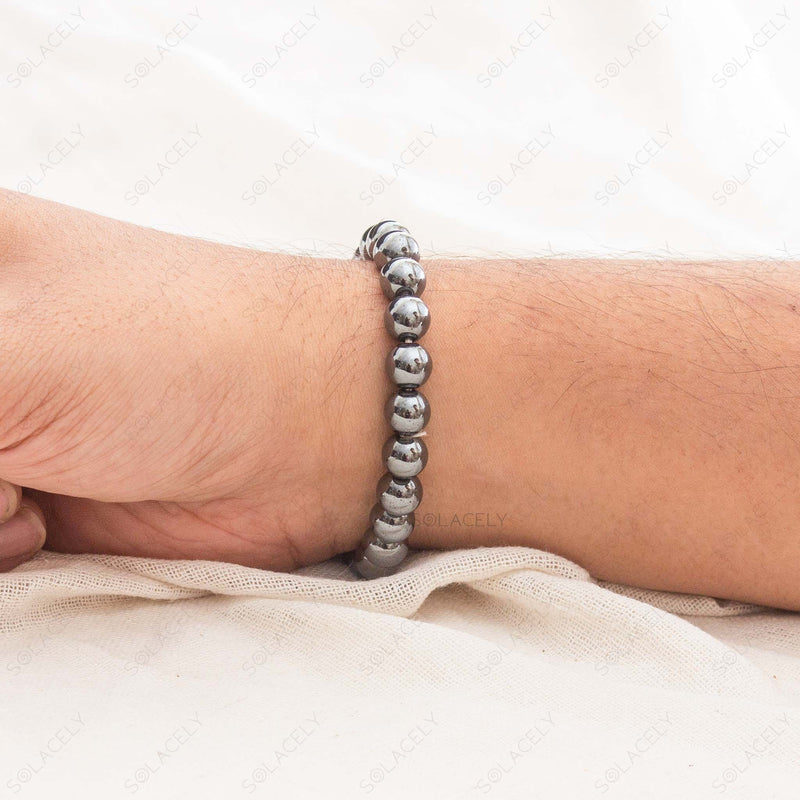
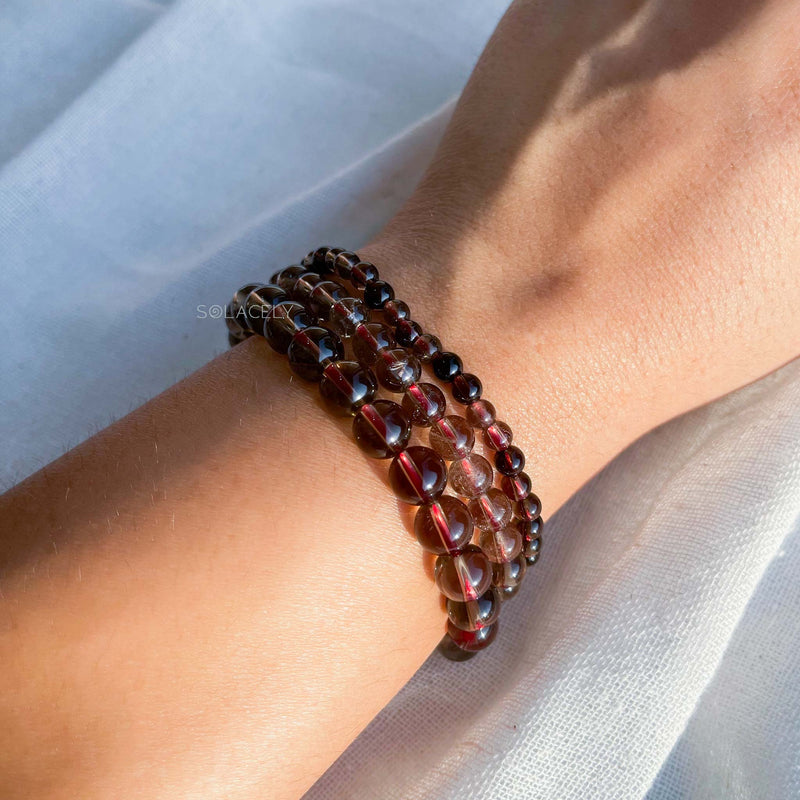
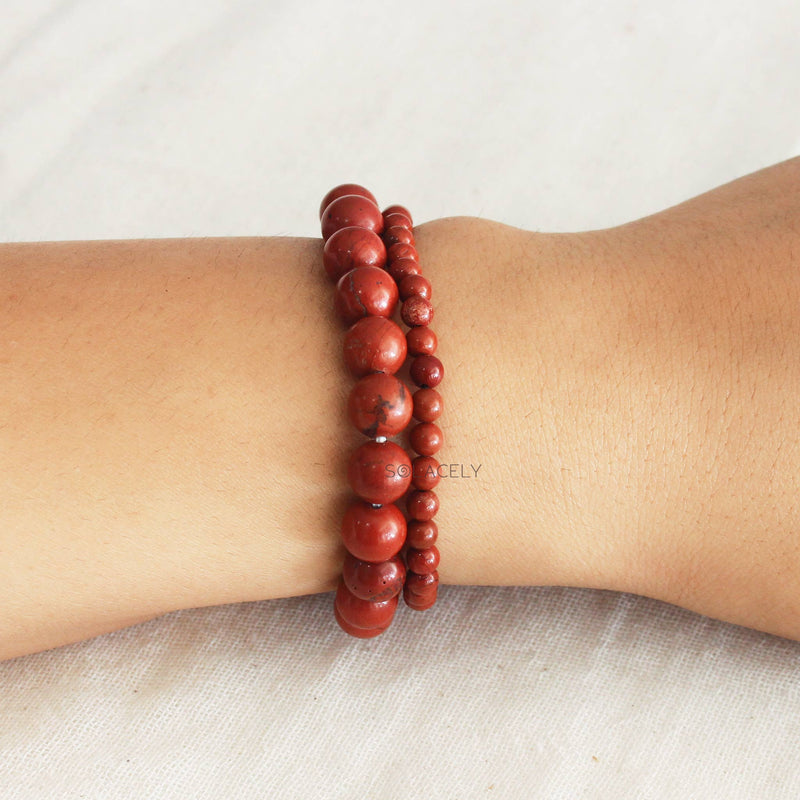
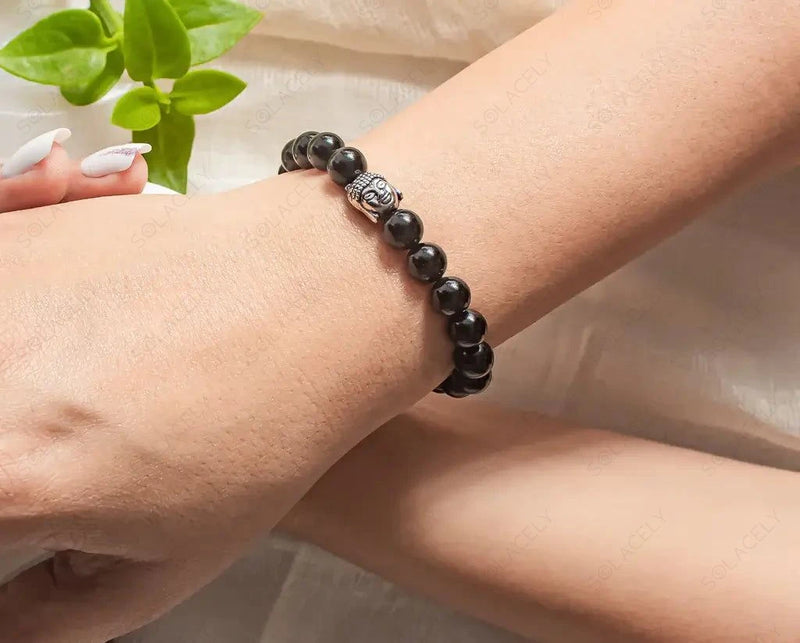
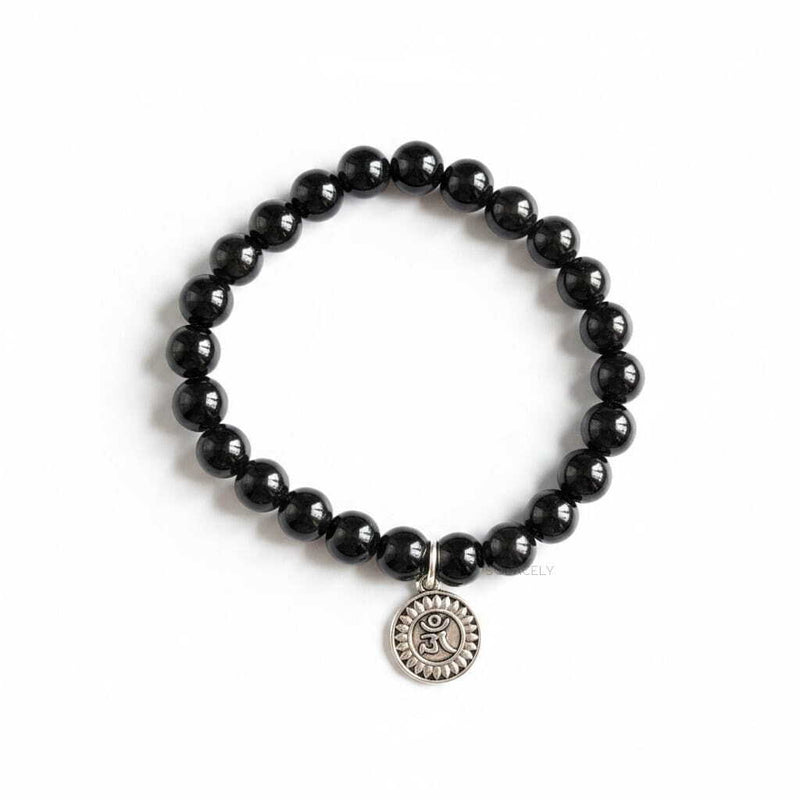
- Worn as a bracelet. The most common format; the beads take a fine polish and wear well.
- Carried at hip height. A trouser pocket rather than a bag, following the root placement.
- On a desk. Within reach for the moment in the afternoon when focus goes.
- In a session. At the base of the spine or the feet, ten to fifteen minutes, breathing into the belly.
The two minute version is the one most people actually use. Pick it up, notice the weight, breathe out longer than you breathe in, put it down. It asks very little, which is part of why it survives in people's routines when more elaborate practices do not.
Pairing hematite
| Pair with | Traditionally kept for |
|---|---|
| Black tourmaline | Grounding plus a boundary; the standard protective stack |
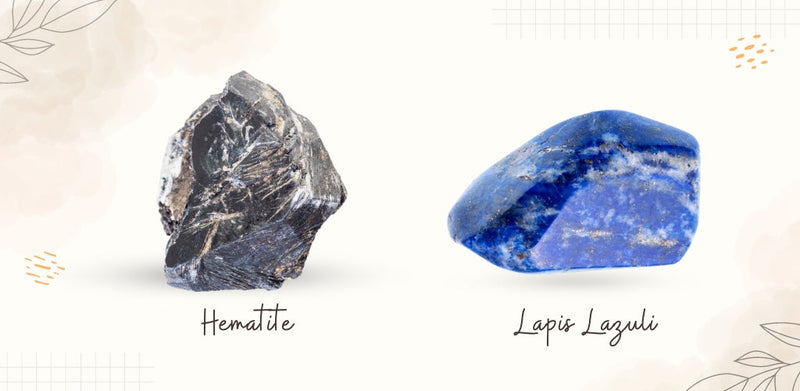
| Lapis lazuli | Steady and clear headed at once |
| Rose quartz | Softening a pairing that has become severe |
| Clear quartz | A general companion that sits with anything |
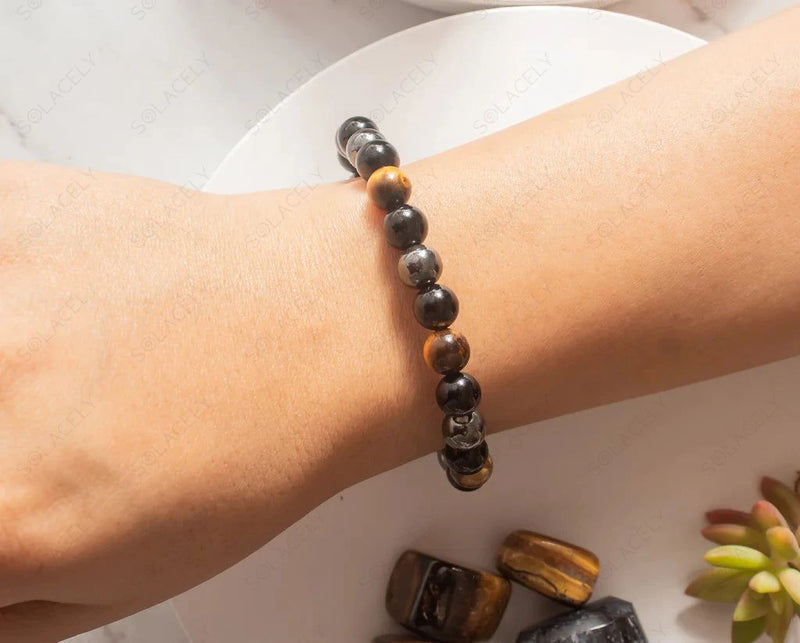
| Tiger's eye | Nerve alongside the steadiness |
Hematite is a stable base that most stones sit comfortably against, which is why it turns up in so many combination bracelets. Our hematite and lapis lazuli guide covers that pairing in detail, and black tourmaline covers the protective partner.
Caring for hematite
One rule matters more than the rest: keep it dry. Hematite is an iron oxide, and prolonged damp encourages rust spots on the surface that dull the mirror polish permanently. Take bracelets off before washing up, and dry the piece thoroughly if it does get wet.
Beyond that it is easy. Wipe with a dry soft cloth. Store it away from softer stones, since at 5.5 to 6.5 it will mark lapis, turquoise and fluorite in the same box. Avoid ultrasonic cleaners.
A note on magnetic hematite: the strongly magnetic beads sold under that name are a manufactured ferrite compound rather than natural hematite, which is only very weakly magnetic. Both are perfectly good to own, and it is worth knowing which one you have so you care for it correctly.
For energetic cleansing, sound, smoke, moonlight or a rest on selenite all suit it and sidestep the water problem. Grounding stones are traditionally cleansed weekly when worn daily.
Who hematite suits
People who spend most of the day in their heads. Anyone whose difficulty is feeling scattered, unreal or slightly above their own life rather than actively anxious. It is also one of the best first crystals there is: inexpensive, durable, and its effect is immediate and physical enough that nobody has to take anything on faith.
It suits less well anyone looking for warmth or lift. Hematite is cool and serious by character, and for optimism, citrine or sunstone are the natural choices, with the hematite holding the base.
Crystals are offered here for reflection and wellbeing as part of a long standing tradition. They are not a treatment for any medical condition, they do not affect blood or circulation, and they are not a substitute for professional healthcare. Magnetic hematite jewellery is best avoided by anyone with a pacemaker or implanted medical device.
Sources
Written by Chetena Sharma. Reviewed by the Solacely editorial team.
Frequently asked questions
About the author


Written by Chetna Sharma, crystal healing practitioner and co-founder of Solacely. Chetna has worked with healing crystals for over a decade and curates Solacely's protective stone collection.