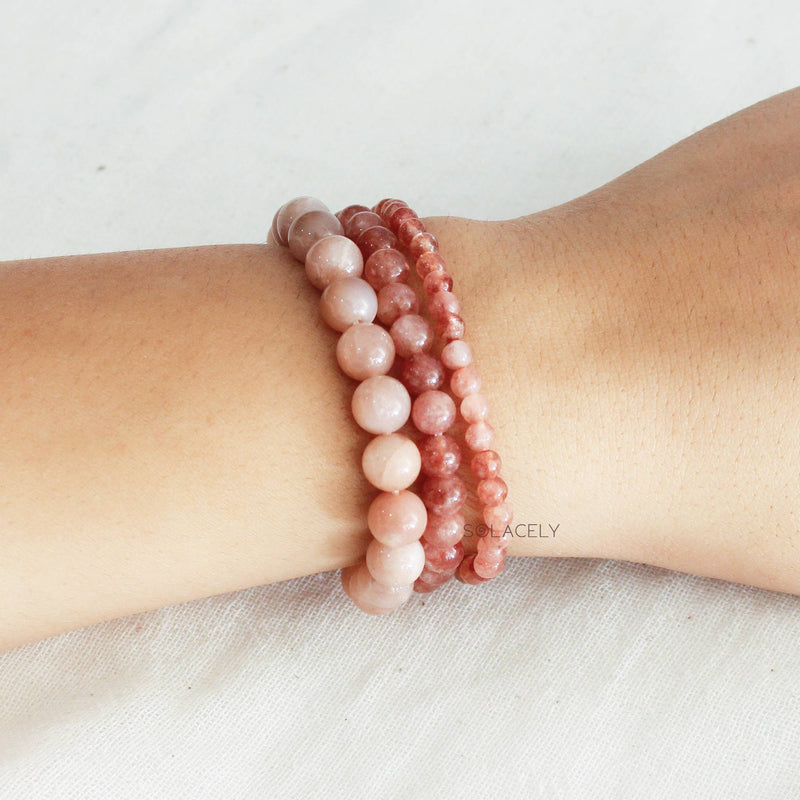
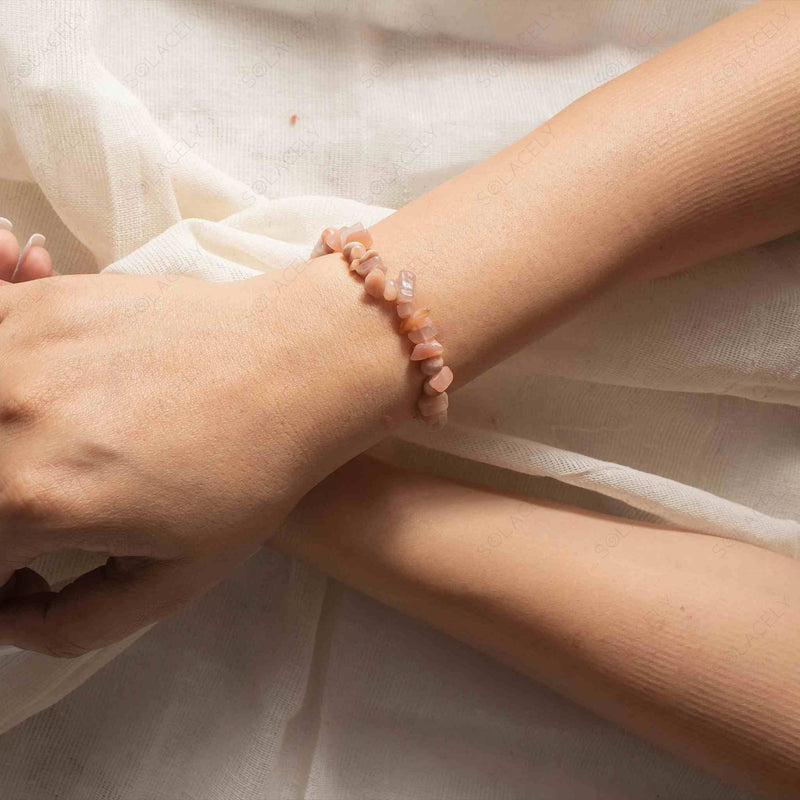
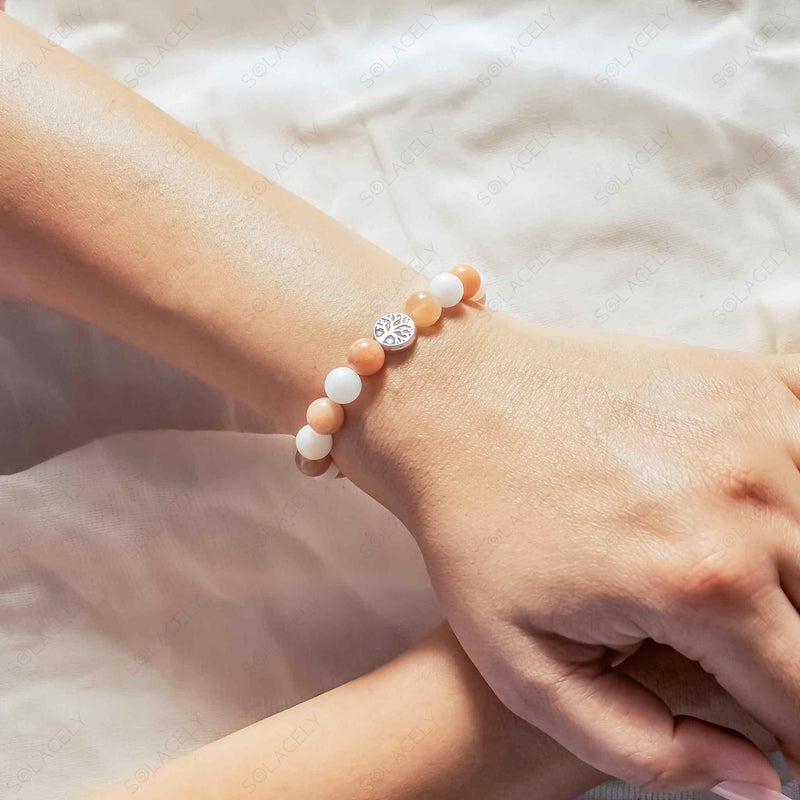
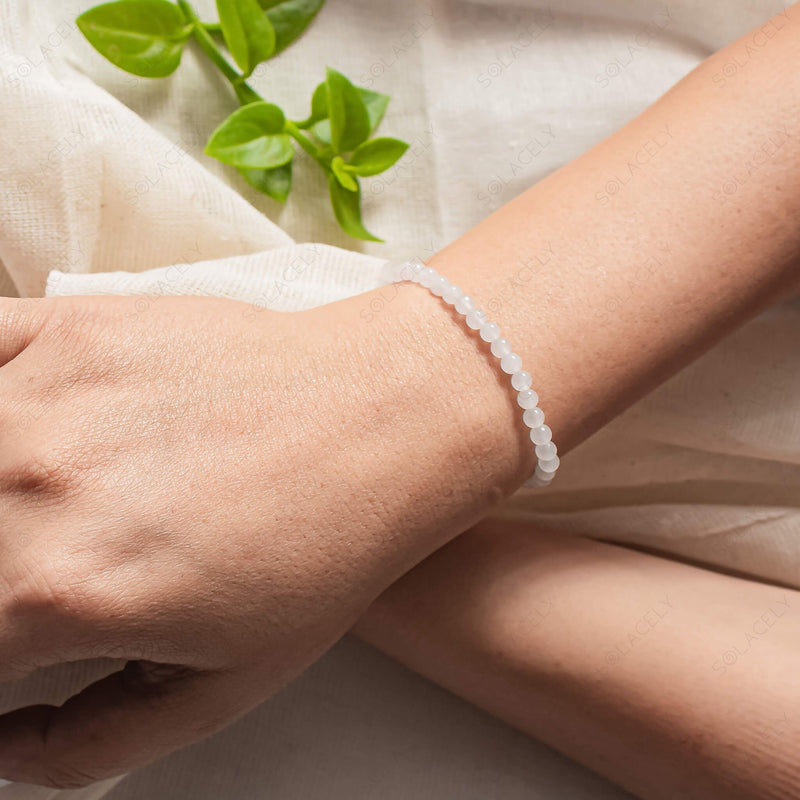
Sunstone is used for positivity because of what it does in the light: a warm, flecked feldspar that catches a beam and throws it back. In traditional crystal practice it is the stone of joy, carried to lift a flat mood, soften self-doubt, and coax someone back out after a withdrawn stretch.
Key takeaways
- Sunstone is a feldspar, not a quartz, and sits at roughly 6 to 6.5 on the Mohs scale.
- Its glitter is called aventurescence, caused by light bouncing off tiny platelets of hematite, goethite, or copper inside the stone.
- It is traditionally the stone of joy: used for low spirits, seasonal flatness, and re-engaging with people after time spent withdrawn.
- The most common pairing is sunstone with moonstone, warmth balanced by quiet.
- Mood and wellbeing uses sit within crystal tradition, and a stone works best alongside proper mental health care rather than in place of it.
Why is sunstone called the stone of joy?
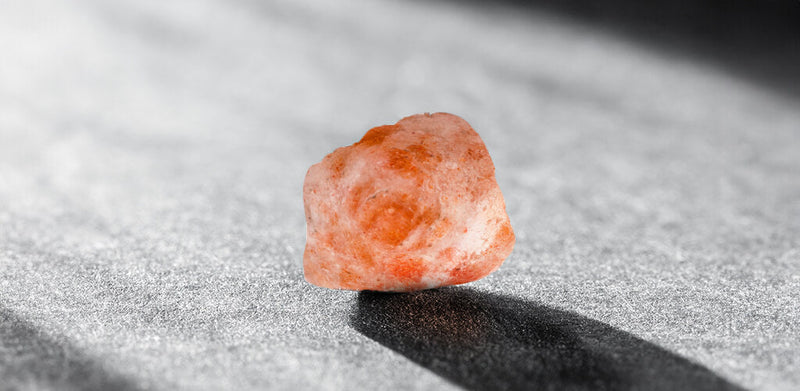
Sunstone carries the name because of the flash. Move the stone and orange light skates across it, an optical effect gemmologists call aventurescence. Ancient Greek and Norse accounts linked that flash to the sun, and the association with warmth, cheer, and open-heartedness followed the light.
What keeps the name alive is how the stone behaves in the hand. Reaching for a warm orange stone on a grey Tuesday is a small, deliberate act, and crystal practice has always been built out of small, deliberate acts. Wearing it keeps the intention in view on the days you would otherwise drift past it.
Folk use across cultures runs in the same direction. In parts of India and Greece the stone was tied to solar deities and to vitality. In Norse tradition, sunstones were associated with navigation and with finding the way when the sky closed over. Different stories, one idea: light when there is not much of it about.
If you want the wider set of stones used this way, our guide to crystals for positivity and happiness covers the alternatives and how they differ.
What is sunstone actually made of?
Sunstone is a feldspar, the same broad mineral family as moonstone and labradorite. The shimmer comes from thin platelets of hematite, goethite, or copper suspended inside the crystal, which reflect light together when the stone is turned and give the surface its moving glow.
Hardness sits around 6 to 6.5 on the Mohs scale, which puts it below quartz. In practice that means sunstone is fine for daily bracelet wear but will scuff if you store it loose with harder stones. Aventurescence is the technical name for the sparkle: a glittery reflection produced by those platy inclusions rather than by the host mineral itself.
Sunstone is sometimes mistaken for carnelian at a glance, since both run warm orange. Carnelian is a chalcedony, even in tone and glassy rather than glittery, so the difference shows up in movement. Turn a sunstone under a lamp and the flecks light up in sequence, one angle at a time. Hold a carnelian to the same lamp and the colour simply deepens.
Colour runs from pale peach through deep orange-red, and Oregon sunstone, the copper-bearing type, can show green or a red core. The full mineralogy and the varieties sit in our sunstone properties guide, so this piece stays on the mood side of things.
How do you use sunstone for positivity every day?
The practices that stick are small and repeatable. Wear it in the morning rather than the evening, keep a tumble where your hand already goes, and put a piece somewhere daylight actually lands. Consistency does more than ceremony, and nobody keeps up a twenty-minute ritual during a bad week.
- Morning wear. Put the bracelet on before you check your phone. That ties the stone to the start of the day rather than to a crisis point later on.
- A tumble in one pocket. Choose a pocket and keep it there. The point is the accidental touch, the reminder you did not plan for.
- A window placement. A piece on a south-facing sill catches the aventurescence properly. In winter this is the most useful placement of the lot, because you notice it exactly when light is scarce.
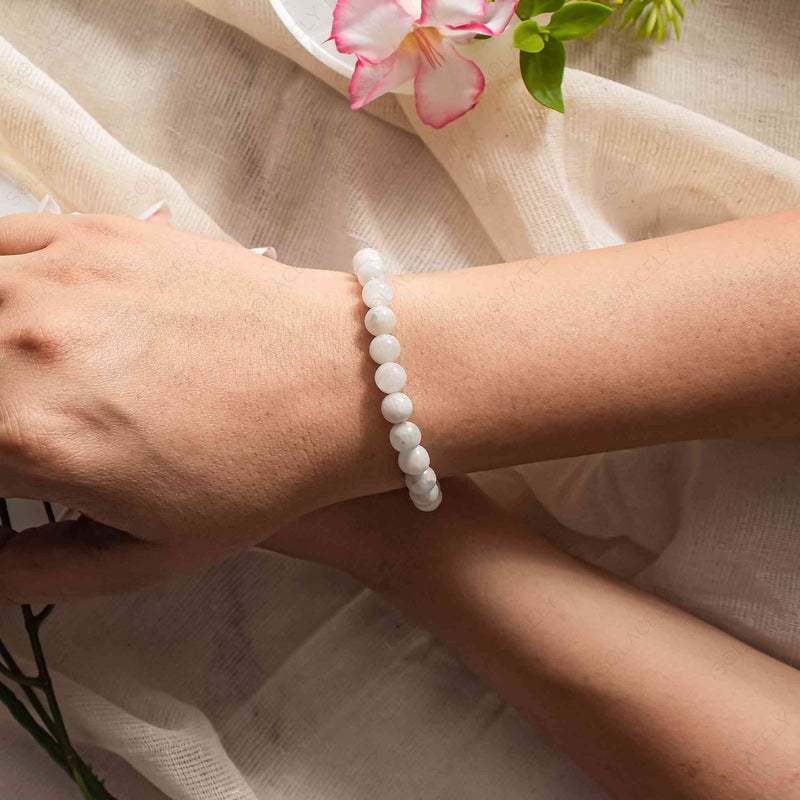
- An evening swap. Move from sunstone to moonstone at night if warm stones feel too busy at bedtime.
One more practice worth trying: hold the stone for the length of one slow breath before something you have been avoiding. A message you have not replied to, a phone call, the walk you keep postponing. The stone marks the moment you decided to start, and it keeps that intention in view while you get on with it.
Two small refinements make the routine stick. Keep the piece you actually like the look of within reach, because a stone you enjoy handling gets handled, while the one that lives in a drawer does nothing for anybody. And tie the stone to something you already do without thinking: the kettle, the commute, the first stretch of the morning. Habits attach to other habits far more reliably than they attach to good intentions.
How often should you cleanse it? Less often than most people assume. A rinse and a night on the windowsill once a month is plenty, and the habit matters far more than the method. For anyone whose difficulty is volatility rather than flatness, the stones listed under crystals for mood swings are the more logical starting point.
What should you pair sunstone with?
Moonstone is the classic partner: cool, quiet, and reflective against sunstone's warmth. Beyond that, the right pairing depends on what the flatness is made of. Anxiety wants a calming stone beside it, self-doubt wants a confidence stone, and grief wants something soft rather than something bright.
| Pair sunstone with | When it helps | Effect people describe |
|---|---|---|
| Moonstone | Warmth feels like too much at night | Balance, softer edges |
| Rose quartz | Low mood tied to grief or hurt | Gentler, less forced cheer |
| Amethyst | Flatness mixed with a busy head | Quieter, more settled |
| Citrine | You want the brightness doubled | Sharper lift, can feel loud |
| Black tourmaline | You feel scattered and ungrounded | Steadier footing |
A note on stacking: two stones per wrist is usually the ceiling before a piece stops feeling like a choice and starts feeling like a collection. Pick the pairing that matches the state you are in this month, not the one that matches your whole personality.
The sunstone and moonstone question comes up often enough to deserve its own read. The ratio, the wear order, and who it actually suits are covered in our sunstone and moonstone combination guide.
Who does sunstone suit best?
Sunstone suits people in a flat stretch rather than an acute one: the seasonal dip, the long grey month, the period after a knock when confidence has not returned yet. It is also popular with people who have gone quiet socially and want a gentle nudge back toward company.
If what you are carrying is agitation rather than flatness, a cooler stone often sits better beside it. Amethyst, howlite, and blue lace agate are the usual choices there. Plenty of people keep both a warm stone and a calm one on the shelf and pick according to the day, which is a perfectly sensible way to do it.
One thing worth saying plainly. If low mood has lasted weeks, is affecting sleep or appetite, or comes with thoughts of self-harm, speak to a doctor or a mental health professional. Low mood is treatable, and that is the route that treats it. A crystal sits alongside that support, never in place of it.
Where the goal is ambition rather than mood, the same stone gets used quite differently. Drive, visibility, and follow-through at work are covered in our piece on sunstone for success.
How do you care for sunstone?
Warm water, mild soap, a soft cloth, and no ultrasonic cleaner. At 6 to 6.5 on the Mohs hardness scale, sunstone is softer than quartz and picks up scratches from anything harder, so it wants its own pouch rather than the shared jewellery dish.
Sunlight is fine in short bursts and is the cleansing method most people default to for this stone. Long repeated exposure is still worth avoiding, mainly because elastic cord and thread degrade long before the mineral does. Keep perfume and hairspray off it, and put jewellery on last, after cosmetics have dried.
Two signs of wear to watch for. A milky film across the surface is usually cosmetic residue rather than damage, and a warm soapy wash lifts it. Chips around a bead's drill hole are structural, and that bead is best retired before it splits on the string and scatters the rest.
The properties described here reflect traditional and cultural belief around crystals. They are not medical claims and are not a substitute for professional healthcare. If you are managing a health concern, speak to a qualified practitioner.
Sources
Written by Chetena Sharma. Reviewed by the Solacely editorial team.
Frequently asked questions
About the author


Written by Chetna Sharma, crystal healing practitioner and co-founder of Solacely. Chetna has worked with healing crystals for over a decade and curates Solacely's protective stone collection.